
How a movement of students brought down Serbia’s Vučić
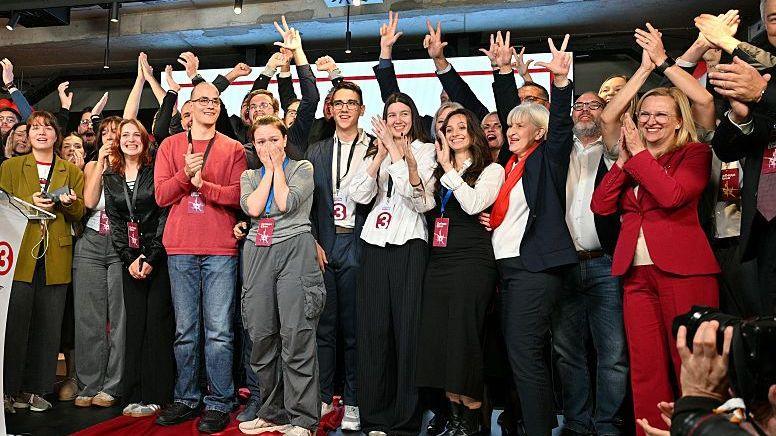 Image source, AFP via Getty Images
-
Published
Theirs is a movement born from tragedy that began with students blockading streets and turned into almost daily protests and a national movement against corruption and government negligence.
In just under two years the students have succeeded in tearing up 14 years of political dominance under Aleksandar Vučić, who has seen support for his Serbian Progressive party (SNS) ebb away and ultimately fail in what became a referendum on the future of Serbia.
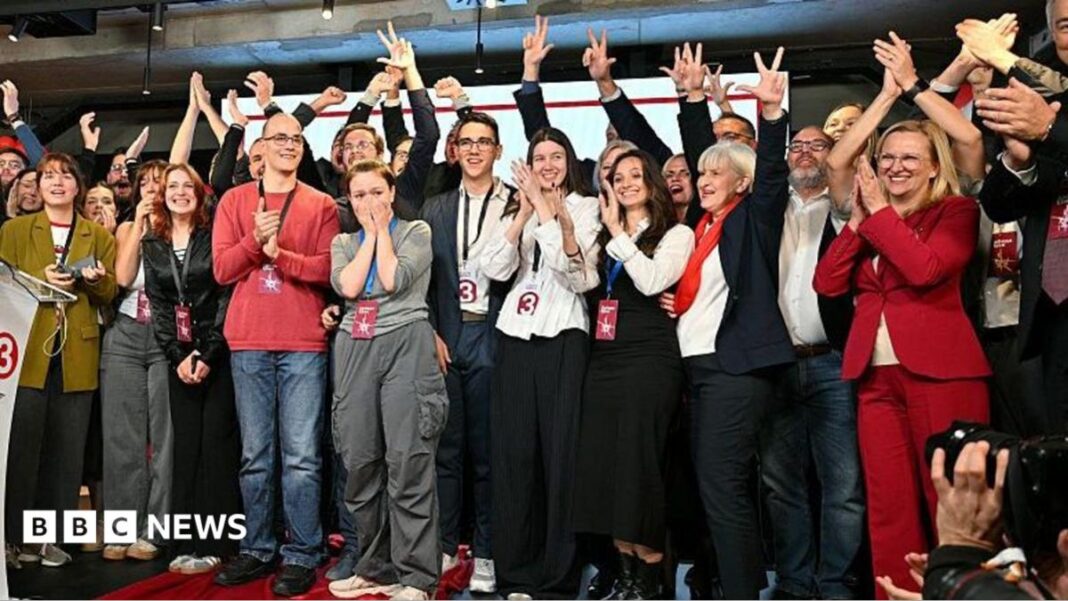
From Belgrade to Novi Sad and Niš, the mood was euphoric as supporters gathered in town centres or in front of Student List headquarters. In a post on social media, the students declared “Serbia is free”.
Most symbolic of all was the demise of so-called Ćaciland, a pro-Vučić tent camp set up 18 months ago at Pioneers Park in central Belgrade in front of the Serbian parliament. Metal fences were torn down amid shouts of “Vučić is leaving”.
How the students changed Serbia
They have no obvious leaders and have no grounding in politics, and yet the “Student List-Students Win” movement attracted anti-government voters across Serbian society.
They fielded candidates for all 250 parliamentary seats, and yet no students were among them.
As he joined the students marching towards Belgrade last week, lead candidate and cardiologist Ilija Srdanović said history was being rewritten: “The energy is unstoppable.”
“We offer our citizens the core values of civilised society, which this previous regime has taken away from our citizens for the last time,” he told the BBC.
It all began on 1 November 2024, when the concrete canopy collapsed outside Novi Sad train station, in Serbia’s second biggest city, killing 16 people.
The tragedy was seen as emblematic of widespread corruption. Critics linked the station’s fatally flawed renovation to a president who had closely associated himself with the project.
“When the canopy collapsed that served as the last straw,” says Helena Ivanov of the think tank the Henry Jackson Society.
It was an emotional moment that triggered a spark and a national campaign of marches and events, she said, that captured the hearts and minds of Serbians in a way no opposition party had been able to do.
-
Serbia’s veteran ruler Vučić concedes election to student-led protest movement
-
Published1 hour ago
-
-
Student movement takes Serbia’s Vučić to the wire in neck-and-neck election
-
Published2 days ago
-
From protests to direct challenge to Vučić
 Image source, EPA/Shutterstock
What started as weekly student protests demanding justice on university campuses and city streets soon became a national movement, often at a local level, that encompassed far more sections of Serbian society, including farmers, actors and judges.
Vučić’s SNS was clearly shaken and by January 2025 his prime minister had resigned “to defuse tensions”. In March 2025 Belgrade saw Serbia’s biggest ever anti-government protest and as the leaderless student movement increased in strength, they organised themselves through student assemblies or plenums.
By the time Vučić had announced snap elections last month, they were ready. “They have been able to take that emotional momentum into a proper organisation and have people learn how to protect fairness at polling stations,” Helena Ivanov explained.
“The message was clear: the rule of law and not ruled by the law,” said Gordana Delić, head of the Balkans programme at the German Marshall Fund of the US, who said Sunday’s vote was in effect a referendum.
Initially Vučić sought to praise the protesters as “well-intentioned”, but ahead of the elections he accused them of trying to “bring down” Serbia. Even after conceding victory on Sunday night he made the unfounded allegation that they had the support of unnamed “European countries and the American deep state”.
Who will run Serbia now?
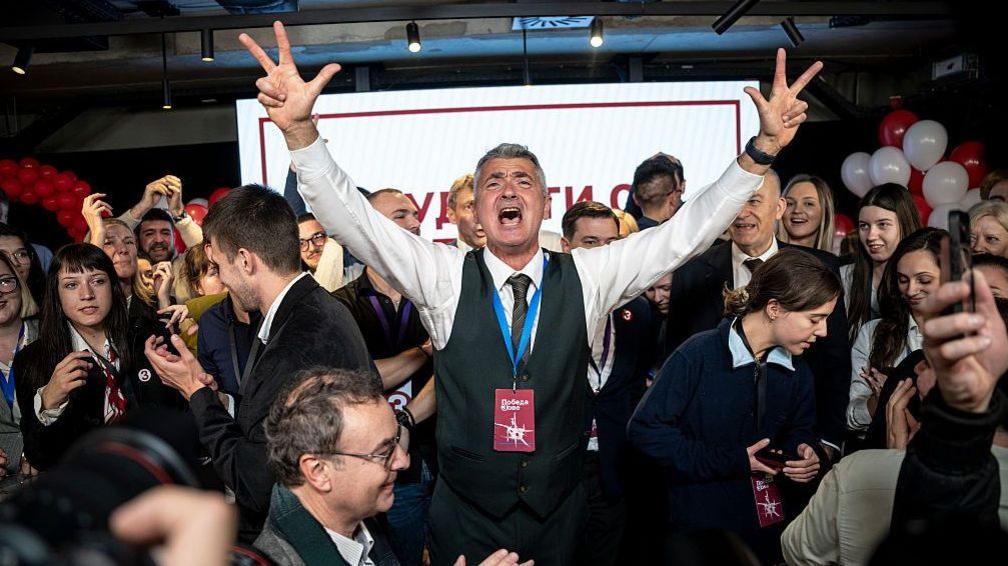 Image source, Getty Images
One thing is clear, it will not be the students, as they were not standing for election. That was a calculated decision as the electorate would probably not voted for a list of candidates with little life experience.
Although their top candidate was Ilija Srdanović, a cardiology professor in Novi Sad, he is not really seen as a likely prime minister.
Few candidates stand out as potential leaders.
At least 135 people on the list are thought to have won seats in parliament, and they include ex-basketball star Dejan Bodiroga (24th on the list), renowned actor Tihomir Stanić (8th), opera singer Nikola Mikić (46th), former National Bank of Serbia governor Dejan Šoškić (27th), and a rather large number of professors.
Šoškić’s name has been mentioned in connection with the top post. He has spoken out about reforms he would make to the economy, and he has been widely criticised in pro-government media.
What is their programme?
The elected MPs will have the task of fulfilling what is in effect a manifesto.
In the words of the students themselves, they were looking for people who could enter institutions “do their jobs responsibly and not forget why they are there”.
Under an 11-point programme, , externalthe student movement wants to:
-
Eradicate corruption by forming a police unit to arrest those responsible for it
-
Purge officials in the internal affairs ministry of anyone who broke rules on cracking down on protesters, or anyone linked to organised crime
-
Reform Serbia’s skewed media scene and free the public broadcaster of political control
-
Stop recruiting party loyalists to head public enterprises.
Vučić and the SNS party deny corruption and seeking to influence the media.
Will it still be a student movement, without students?
Although they have not been elected, it is the students who have made the promises to the Serbian people and they will come under pressure to follow through on their manifesto.
The ordinary Serbian citizens they chose to represent their movement have “been entrusted with transferring part of the struggle we have been waging on the streets for the past year into the institutions”, the students say.
In his speech on Sunday evening, Vučić told party supporters that the students had destroyed two years of life in Serbia and they would be defeated “faster than they think”.