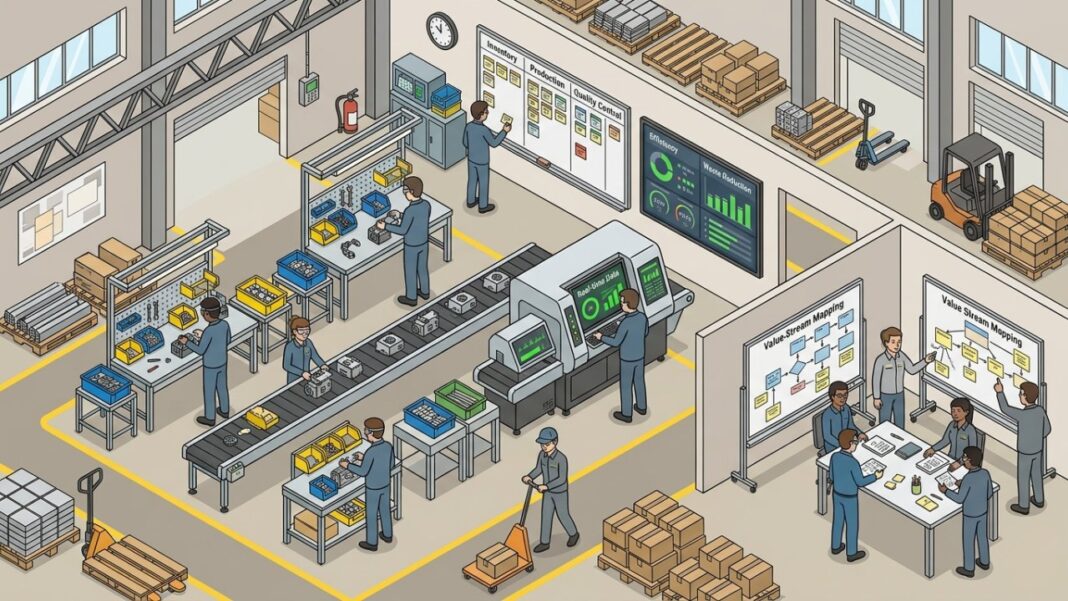

Lean manufacturing techniques focus on maximizing value while cutting waste. To start, define what your customer values most. Next, map your processes to spot non-value-adding activities. Implement practices like Just-In-Time production and Kanban to boost efficiency. Don’t forget continuous improvement methods like Kaizen, which can help your team adapt and grow. As you explore these strategies, consider how you can measure success and sustain these practices over time. What changes could you make today?
Key Takeaways
- Lean manufacturing maximizes customer value by minimizing waste and optimizing resource use through systematic processes and continuous improvement.
- The 5S methodology organizes the workplace by sorting, setting in order, shining, standardizing, and sustaining to enhance efficiency and accountability.
- Just-In-Time (JIT) production aligns manufacturing schedules with actual customer demand, reducing excess inventory and lowering holding costs.
- Value Stream Mapping identifies inefficiencies in production processes, allowing for targeted improvements and streamlined workflows.
- AI enhancements in lean manufacturing leverage data analytics and real-time insights to further optimize processes and reduce waste.
What Is Lean Manufacturing?

Lean manufacturing is a systematic approach aimed at maximizing customer value while minimizing waste. The lean manufacturing definition highlights its focus on efficiency and resource optimization.
So, what does lean manufacturing mean for you? It’s about understanding customer needs and aligning production processes to meet those demands efficiently.
Start by identifying value from the customer’s perspective. Then, map your value stream to pinpoint and eliminate waste—like overproduction or waiting times.
Create flow by ensuring that products move smoothly through each stage without interruptions. Establish a pull system, where production is driven by actual customer demand instead of forecasts, reducing excess inventory.
Finally, pursue perfection through continuous improvement, or Kaizen, which encourages regular, small changes that lead to significant gains over time.
Breaking Down the 5 Core Principles of Lean Manufacturing

Let’s break down the core principles of lean manufacturing to help you streamline your processes effectively.
First, focus on defining value from your customer’s perspective; this guarantees every step in your workflow is necessary and justified.
Next, analyze and map your value streams, identifying areas where you can eliminate waste, making your operations more efficient.
Value Definition Strategies
Defining value in manufacturing is essential for streamlining processes and meeting customer needs effectively. In lean manufacturing concepts, value is assessed from the customer’s viewpoint, focusing on delivering products or services that fulfill their requirements while minimizing costs.
To implement value definition strategies, start by mapping the value stream. Identify each step in your production process, pinpointing non-value-adding activities, or waste. Collaborate with team members to streamline these steps and enhance efficiency.
Additionally, establish a pull system based on actual customer demand instead of forecasts. This approach reduces excess inventory, promoting flexibility.
Embrace a culture of continuous improvement, regularly reviewing processes and engaging employees to find better ways to deliver value, ensuring your organization remains competitive and responsive.
Streamlining Value Streams
A streamlined value stream is essential for enhancing your manufacturing processes and meeting customer needs. Start by applying lean manufacturing techniques like Value Stream Mapping to visualize your entire production process. This helps you identify waste at every step, from raw materials to finished products.
Next, focus on creating flow; guarantee that your production moves smoothly without interruptions. Implement a Pull System, where production aligns with actual customer demand, reducing excess inventory and overproduction.
Finally, embrace a culture of continuous improvement—encourage your team to suggest changes that enhance efficiency. Regularly review performance metrics to track progress and make necessary adjustments.
The Role of Continuous Improvement (Kaizen) in Lean Manufacturing

To truly embrace continuous improvement, or Kaizen, you need to engage your employees actively.
Encourage them to share ideas for incremental enhancements in daily processes, making it a part of your company culture.
Employee Engagement Strategies
Employee engagement is essential for a successful lean manufacturing environment, and Continuous Improvement (Kaizen) plays a significant role in fostering this engagement.
To effectively implement lean management techniques, consider these strategies:
- Encourage Participation: Involve all employees in Kaizen events, allowing them to identify and solve problems, which boosts ownership and morale.
- Provide Training: Regular workshops on problem-solving skills enhance your workforce’s capabilities, making them active participants in the lean transformation.
- Promote Teamwork: Form cross-functional groups to collaborate on improvements, strengthening communication and relationships across departments.
Incremental Process Enhancements
Continuous Improvement, or Kaizen, drives the heart of lean manufacturing by focusing on small, consistent enhancements in processes.
To effectively implement Kaizen, engage your team in regular improvement meetings where everyone can share ideas. Encourage collaboration to identify waste and streamline operations.
Instead of making large changes, focus on manageable adjustments that you can measure over time. This approach not only makes implementation easier but also boosts morale as everyone sees their contributions valued.
Track progress and celebrate successes to reinforce this culture of continuous improvement.
Harnessing the 5S Methodology for Workplace Organization

Harnessing the 5S methodology for workplace organization can considerably boost efficiency and productivity. By applying this lean methodology, you can create a structured and clean workspace, which is essential for using lean production tools effectively.
Here’s how to get started:
- Sort: Remove unnecessary items from your workspace. This reduces clutter and helps you focus on what’s essential.
- Set in Order: Organize tools and materials logically. Make sure that everything has a designated place, making it easy to access what you need when you need it.
- Shine: Keep your workspace clean. Regular cleaning promotes accountability and helps you spot potential issues before they escalate.
Value Stream Mapping: Identifying and Eliminating Waste

In value stream mapping, you’ll start by outlining each step in your process to see how materials and information flow.
Identify sources of waste by looking for steps that don’t add value and analyze where improvements can be made.
Once you’ve mapped the current state, you can create a future state map that focuses on a smoother, more efficient process.
Key Steps in Mapping
To effectively identify and eliminate waste in your production processes, start by utilizing Value Stream Mapping (VSM). This lean tool visualizes the flow of materials and information, helping you see both value-adding and non-value-adding activities.
Follow these key steps in mapping:
- Map the Current State: Begin by documenting the existing processes, noting every step, and identifying areas of waste.
- Analyze the Flow: Look for bottlenecks, delays, and waste categories like overproduction and defects, so you can understand where improvements are needed.
- Envision the Future State: Create a map that reflects an optimized process, focusing on efficiency and eliminating identified wastes.
Identifying Waste Sources
Identifying waste sources is essential for enhancing efficiency in your production process. Use Value Stream Mapping (VSM) to visualize the flow of materials and information, highlighting both value-adding and non-value-adding activities.
Start by mapping your current state, then collaborate with your team to pinpoint inefficiencies. Look for common lean process improvement examples, like excess inventory or waiting times, and prioritize actions to eliminate them.
[embedded content]
Lean production tools and techniques, such as 5S and Kaizen, can support this effort by organizing workspaces and promoting continuous improvement.
Regularly reassess your processes using VSM to guarantee you’re adapting to real-time data and feedback. This ongoing practice fosters a culture of efficiency, making waste reduction a collective goal.
Analyzing Process Flow
Analyzing your process flow using Value Stream Mapping (VSM) can greatly enhance efficiency in production.
This powerful lean production planning tool allows you to visualize material and information flows, helping you identify waste and inefficiencies.
Here’s how to get started:
- Map Current Workflows: Create a visual representation of your existing processes to understand every step involved.
- Identify Non-Value-Added Activities: Highlight areas that contribute to waste, such as defects or waiting times.
- Envision Future State: Develop an improved workflow that reduces lead times and enhances product quality.
Just-In-Time (JIT) Production: Meeting Customer Demand Efficiently
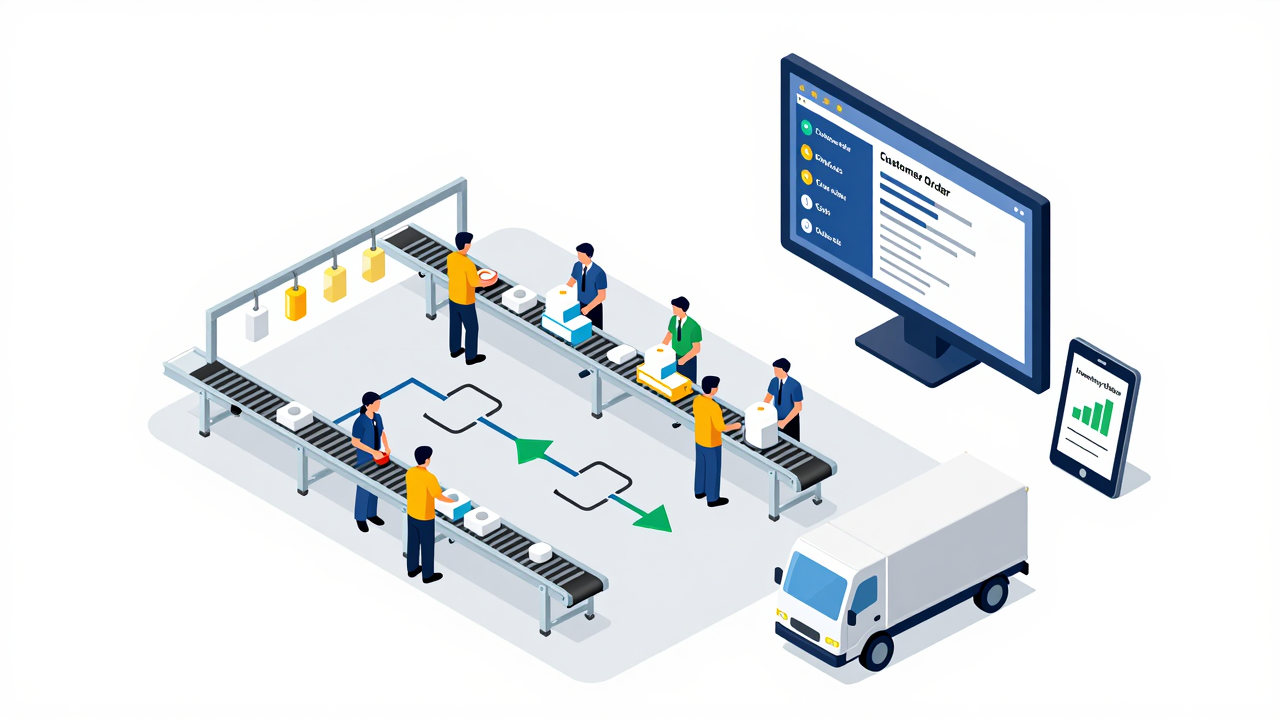
Just-In-Time (JIT) production transforms how companies meet customer demand by minimizing waste and optimizing efficiency.
With just in time manufacturing, you produce goods only when needed, aligning your production schedules directly with customer demand. This lean production technique reduces excess inventory and lowers holding costs, freeing up resources for better allocation.
To implement JIT effectively, establish strong relationships with suppliers, ensuring timely delivery of materials.
Use signal systems, like Kanban, to trigger replenishment based on real-time consumption. This approach not only shortens lead times but also enhances product quality, as it allows for immediate adjustments based on customer feedback.
How Kanban Enhances Lean Manufacturing Efficiency

Kanban can notably enhance your lean manufacturing efficiency by streamlining production flow and reducing inventory levels.
By using visual signals to indicate when to produce or move items, you can respond quickly to changes in demand, keeping your processes agile.
This method also helps limit work in progress, making it easier to spot bottlenecks and improve overall productivity.
Streamlined Production Flow
Streamlining production flow is essential for maintaining efficiency in lean manufacturing. One effective way to achieve this is through Kanban, a key lean manufacturing tool that aligns with the just-in-time manufacturing concept.
It helps you control production by signaling when to produce or replenish items based on actual demand. Here are three steps to implement Kanban effectively:
- Visualize Workflow: Use Kanban boards to display tasks, enabling your team to prioritize and track progress.
- Identify Bottlenecks: Regularly assess the workflow to pinpoint issues that slow down production.
- Encourage Continuous Improvement: Foster a culture of Kaizen by having teams review and optimize workflows regularly.
Reduced Inventory Levels
Reducing inventory levels is essential for improving lean manufacturing efficiency, and implementing a Kanban system can make a significant impact.
By using Kanbanize cards, you can regulate the flow of materials based on actual demand, ensuring you only order what you need. This approach aligns perfectly with just-in-time (JIT) production, minimizing excess inventory and cutting holding costs.
To start, create visual signals that indicate when new materials are required, which can help you reduce inventory by 30% to 50%.
Regularly review your workflow to identify bottlenecks and adjust your processes accordingly.
With Kanban, you’ll improve efficiency, shorten lead times, and better respond to market changes, all crucial for successful lean manufacturing.
Enhanced Responsiveness to Demand
A well-implemented Kanban system can dramatically enhance your responsiveness to demand in manufacturing. By using visual signals like cards or boards, you can guarantee that production aligns closely with actual demand, making it easier to manage workflows.
Here are three key benefits:
- Reduced Lead Times: Kanban can cut lead times by up to 50%, allowing you to respond swiftly to changes in customer demand.
- Lower Inventory Costs: By minimizing excess inventory, you free up cash flow for other operational needs, which is vital in just in time lean management.
- Enhanced Workflow Efficiency: Kanban minimizes bottlenecks, resulting in smoother shifts between production stages.
Boosting Equipment Efficiency With Total Productive Maintenance (TPM)
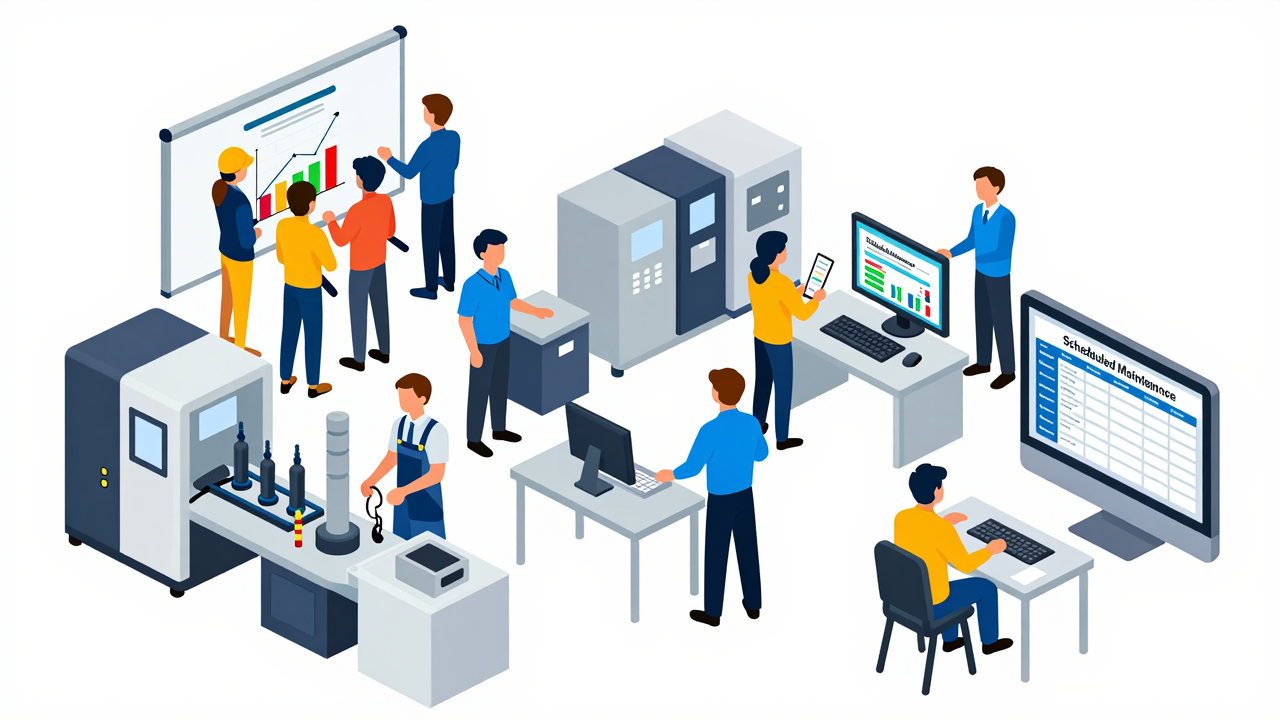
To boost equipment efficiency with Total Productive Maintenance (TPM), start by involving everyone in your organization in maintenance activities. This holistic approach guarantees that all employees take ownership of their equipment, which enhances accountability and operational efficiency.
Begin by training your staff on the basics of TPM, focusing on proactive and preventative maintenance techniques. Encourage them to perform routine checks and minor repairs, which can considerably reduce unexpected breakdowns.
Utilize lean manufacturing tools to track Overall Equipment Effectiveness (OEE) and identify major losses, like equipment downtime, slow cycles, and defects. By addressing these issues, you can optimize productivity and reduce inefficiencies.
Many organizations report efficiency improvements of 20-30% after implementing TPM. So, foster a culture of continuous improvement, where everyone is engaged in maintaining equipment, and watch your productivity soar.
Gemba Walks: Observing Real Processes for Improvement
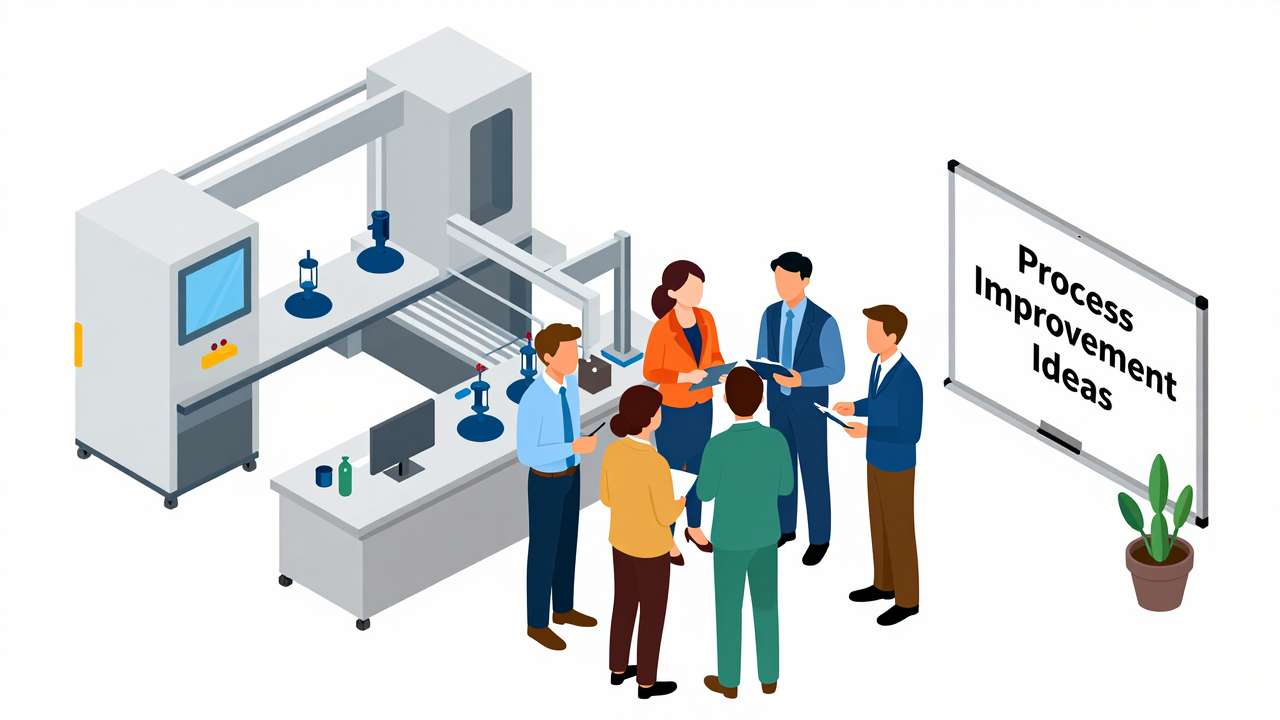
Gemba walks offer a powerful way to observe real processes and identify areas for improvement directly on the shop floor. By engaging with employees in their environment, you can foster open communication and collaborative problem-solving.
Here’s how to make your Gemba walks effective:
- Preparation: Before your walk, identify specific goals and areas to focus on, such as waste or inefficiencies.
- Observation: During the walk, observe processes, ask questions, and listen to frontline workers. Look for opportunities to apply lean manufacturing tools and techniques.
- Follow-Up: After the walk, discuss your findings with the team. Set actionable steps to address identified issues and monitor progress.
Standardized Work: Creating Consistency in Operations

Creating consistency in operations hinges on standardized work, which is essential for streamlining manufacturing processes. This approach involves documenting your best practices and procedures, defining the sequence of tasks, required tools, and time needed to complete each task.
By implementing standardized work, you not only promote efficiency but also reduce variability, leading to fewer errors.
Make this documentation a living document; regularly update it to reflect any process improvements or insights from continuous improvement activities. Use it as a baseline for training and performance evaluation.
As part of your lean manufacturing tools list, standardized work enhances employee understanding and compliance with established procedures. Incorporating this method leads to improved quality and higher productivity, contributing to overall operational excellence.
Start by identifying key tasks, documenting them clearly, and guarantee everyone is trained accordingly. Consistency is the key to effective operations.
Utilizing Takt Time for Balanced Production
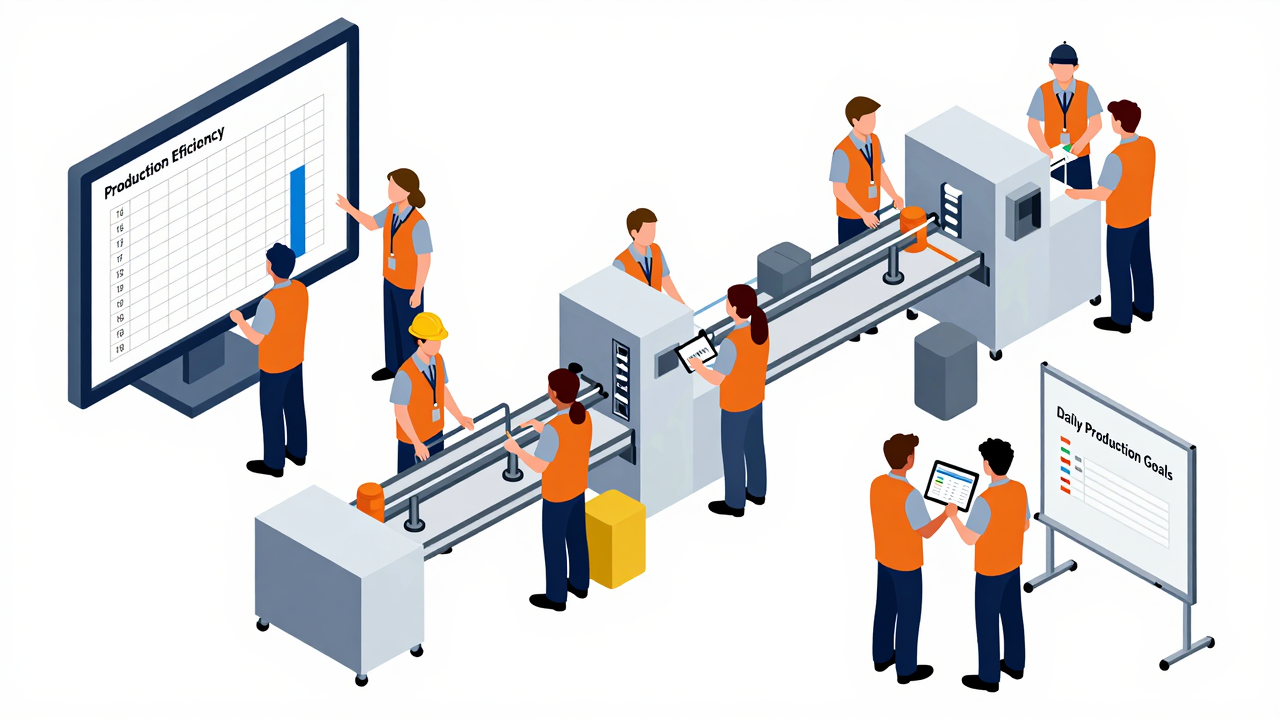
Understanding and applying takt time can greatly enhance your production process. Takt time is the maximum time you can spend producing a product to meet customer demand. By establishing this vital metric, you can align your production rates with what your customers need, avoiding overproduction.
Here are three key steps to effectively utilize takt time:
- Calculate Takt Time: Divide available production time by customer demand within that timeframe. This gives you a clear target for production speed.
- Balance Workloads: Use takt time to distribute tasks evenly across your team, minimizing idle time and creating a smoother workflow essential for lean manufacturing methods.
- Adjust Schedules: Regularly revisit and adjust production schedules based on takt time to identify bottlenecks and inefficiencies, fostering continuous improvement.
How AI Improves Lean Manufacturing Processes

AI can markedly enhance your lean manufacturing processes by providing real-time insights and data-driven solutions. By harnessing AI, you can identify and eliminate waste, improving efficiency and reducing lead times by up to 50%. For example, predictive maintenance can forecast equipment failures, ensuring continuous production flow.
Here’s a quick overview of how AI impacts lean operations:
| Area | AI Contribution | Benefit |
|---|---|---|
| Waste Reduction | Data analytics identify inefficiencies | Increased efficiency |
| Inventory Management | Demand forecasting optimizes stock levels | Reduced carrying costs |
| Quality Control | Visual AI detects defects in real-time | Enhanced customer satisfaction |
Implementing these AI-driven tools aligns with just-in-time principles, allowing you to adapt quickly to changes. Explore these lean manufacturing examples to streamline your processes and drive continuous improvement in your operations.
Addressing Common Challenges in Lean Implementation
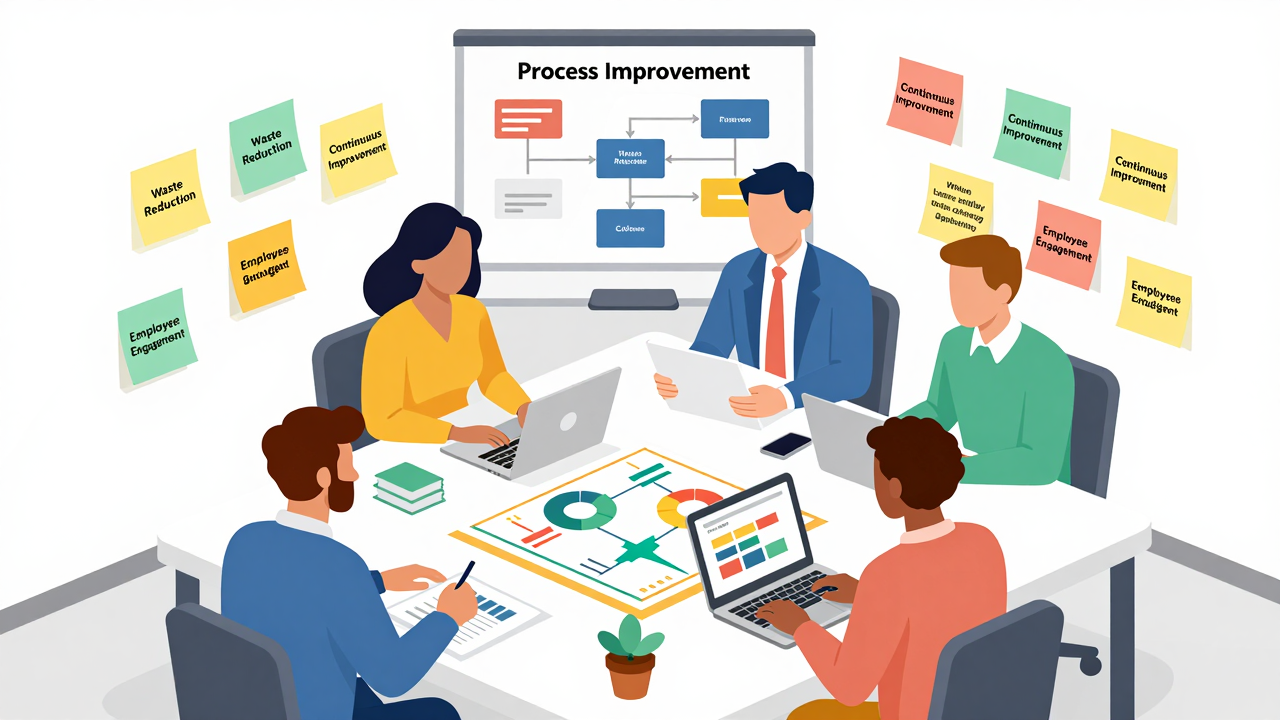
Implementing lean manufacturing isn’t without its challenges, and addressing these hurdles is key to success. You’re likely to face resistance from employees fearing job loss or changes in routine. To combat this, consider these steps:
- Communicate Effectively: Clearly explain the benefits of lean tools, fostering an understanding of how these changes enhance efficiency and job security.
- Standardize Processes: Continuous training is essential. Make certain everyone is on the same page to avoid inconsistencies in implementation. Utilize visuals and hands-on training to reinforce learning.
- Prioritize Safety and Well-Being: While focusing on waste reduction, make sure that employee safety isn’t overlooked. A balanced approach will create a supportive work environment.
Lastly, collaborate with your lean manufacturing supply chain to address inefficiencies. Engaging suppliers in your lean journey can release further potential and streamline processes.
Measuring Success: Key Performance Indicators (KPIs) for Lean Practices

Measuring success in lean manufacturing hinges on Key Performance Indicators (KPIs) that reflect how well your processes are performing. To gauge your lean manufacturing production, focus on metrics like Lead Time, which tracks the total time from order to delivery, and Overall Equipment Effectiveness (OEE), evaluating productive manufacturing time.
First Pass Yield (FPY) is another critical KPI, indicating the percentage of products made correctly without rework. Additionally, monitor the Inventory Turnover Ratio to understand how efficiently you’re managing stock.
Don’t overlook employee engagement; a motivated workforce can greatly boost your lean initiatives. Regularly review these KPIs to pinpoint areas needing improvement, helping you make informed decisions that align with your business goals.
Case Studies: Real-World Examples of Successful Lean Implementations

When exploring successful lean implementations, you’ll discover that real-world case studies offer valuable insights into practical applications. These examples show how lean manufacturing and just-in-time (JIT) manufacturing techniques can transform operations.
Here are three remarkable cases:
- Toyota Production System: By reducing production lead times by 50%, Toyota demonstrated the power of JIT manufacturing in automotive production, greatly cutting waste.
- Boeing’s Lean Initiative: In the 787 Dreamliner project, Boeing achieved a 30% reduction in production time, highlighting how lean methodologies streamline complex processes.
- Virginia Mason Medical Center: This healthcare provider reduced patient wait times by 45% and cut costs by 20% using lean principles, proving that lean can also benefit service industries.
These case studies illustrate how adopting lean practices can enhance efficiency and drive considerable improvements in various sectors.
Implementing these strategies can yield similar results for your organization.
Tips for Sustaining Lean Practices Long-Term

Sustaining lean practices over the long haul requires ongoing commitment and proactive strategies. Start by scheduling regular training sessions for your team, focusing on lean management tools and encouraging them to identify waste.
Use visual management tools, such as Kanbanize boards, to clarify workflows and quickly spot issues. Establish key performance indicators (KPIs) aligned with your lean production goals, allowing you to measure progress and adjust as needed.
Conduct periodic value stream mapping reviews to reassess and eliminate non-value-adding activities. Promote cross-functional collaboration, ensuring everyone shares responsibility for lean initiatives.
Implement Just-In-Time (JIT) practices to streamline inventory management and enhance responsiveness to customer demands. By continuously engaging your team and refining processes, you’ll foster a culture of continuous improvement that sustains your lean efforts over time.
Follow these steps, and you’ll create a robust framework for lasting lean transformation.
The Future of Lean Manufacturing in a Digital Age

As you implement and sustain lean practices, consider how digital advancements are reshaping the landscape of lean manufacturing. Embracing these technologies can amplify your efforts in achieving just-in-time production and minimizing waste.
Here are three key areas to focus on:
- Real-Time Data Analysis: Utilize IoT and AI to gather and analyze data instantly, allowing you to make informed decisions that enhance efficiency.
- Predictive Maintenance: Leverage digital tools for predictive maintenance to reduce downtime, keeping your operations smooth and aligned with lean principles.
- Digital Twin Technology: Implement simulations to identify inefficiencies in processes without disrupting actual operations, paving the way for better lean practices.
Frequently Asked Questions

How Does Lean Manufacturing Work?
Lean manufacturing works by focusing on eliminating waste and maximizing value.
Start by identifying what adds value for your customers. Use tools like Value Stream Mapping to visualize processes and spot inefficiencies.
Implement a pull system to produce only what’s needed, reducing excess inventory. Encourage continuous improvement through regular feedback from your team.
Standardize procedures to guarantee consistency, and regularly review performance metrics to identify areas for enhancement.
What Is the 80 20 Rule in Lean Manufacturing?
The 80/20 rule in lean manufacturing means you should focus on the 20% of processes that cause 80% of your problems or defects.
Start by identifying these key areas through data analysis. Once you know where to channel your efforts, implement targeted improvements.
[embedded content]
For example, streamline the most problematic workflows or address frequent defects. This approach maximizes your impact on overall efficiency while minimizing wasted resources and time.
Does Chick-Fil-A Use Lean?
Yes, Chick-fil-A uses lean manufacturing techniques to optimize their kitchen workflows.
You can see this through their Just-In-Time inventory management, which guarantees fresh food with minimal waste. They implement standardized work procedures for consistent food quality and quick service.
[embedded content]
Additionally, they engage employees in continuous improvement by providing training and feedback opportunities.
Visual management in their kitchens, like clear signage and organized stations, further enhances efficiency and productivity.
What Are the 5 Stages of Lean Manufacturing?
The five stages of lean manufacturing are: Define Value, where you identify customer needs; Map the Value Stream, which involves analyzing your production steps to find waste; Create Flow, ensuring a smooth, uninterrupted process; Establish a Pull System, producing based on actual demand to avoid excess inventory; and Pursue Perfection, focusing on continuous improvement.
Conclusion
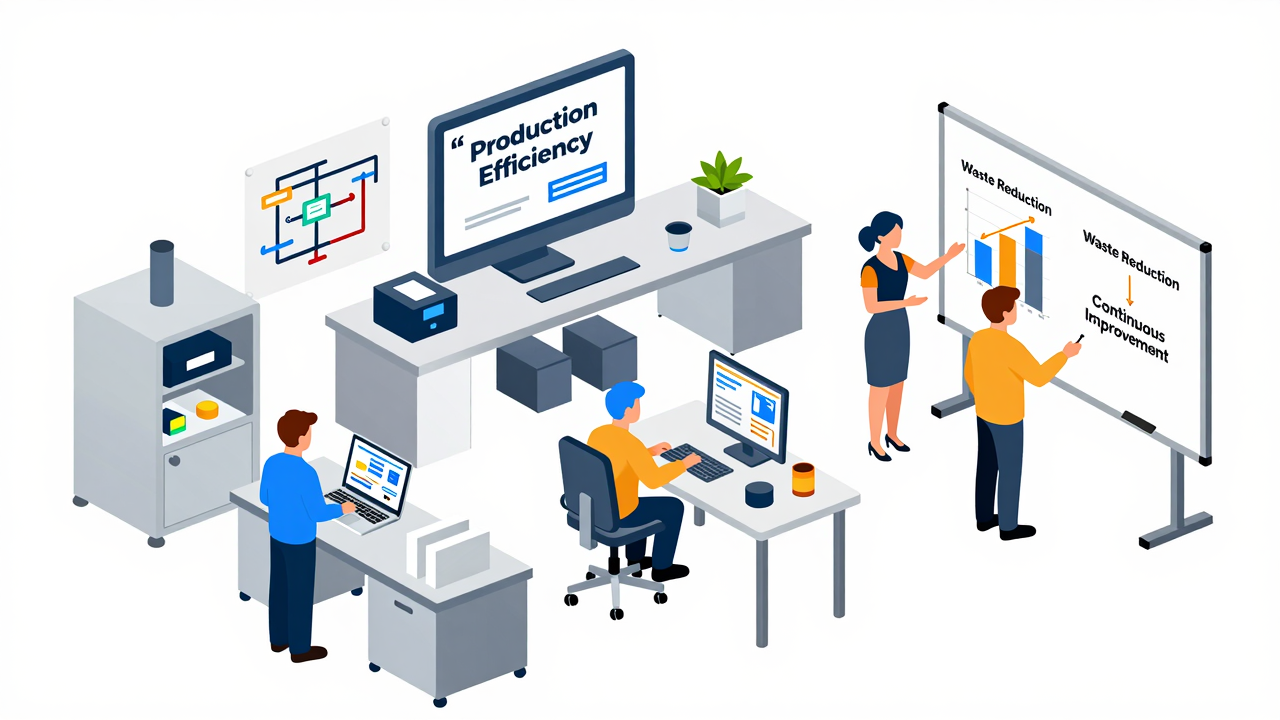
Lean manufacturing techniques can transform your operations by focusing on value and reducing waste. Start by implementing the core principles, such as continuous improvement and value stream mapping, to identify areas for enhancement. Utilize tools like 5S to keep your workplace organized and efficient. Regularly measure your success with key performance indicators to track progress. As you adapt these practices, remain flexible to changes in your industry, ensuring your processes stay relevant and effective over time.
Image via Google Gemini and Small Business Trends