
This post was originally published on this site.
How much parents could save from September’s new school uniform rules
-
Published
A new law coming into force in September means parents in England should have to buy fewer branded items of school uniform, which the government says will save them money.
From September, uniforms will be limited to three items with a school logo, like a blazer, jumper or sportswear – plus a tie for secondary schools.
Schools are already advised to keep these items to a minimum, meaning many are already within the rules, but about a quarter of schools will need to make changes by the time the law comes into effect.
The government says the changes will save some families “up to £50 per child”, but schoolwear suppliers say they now face uncertainty in demand for this year’s uniforms.
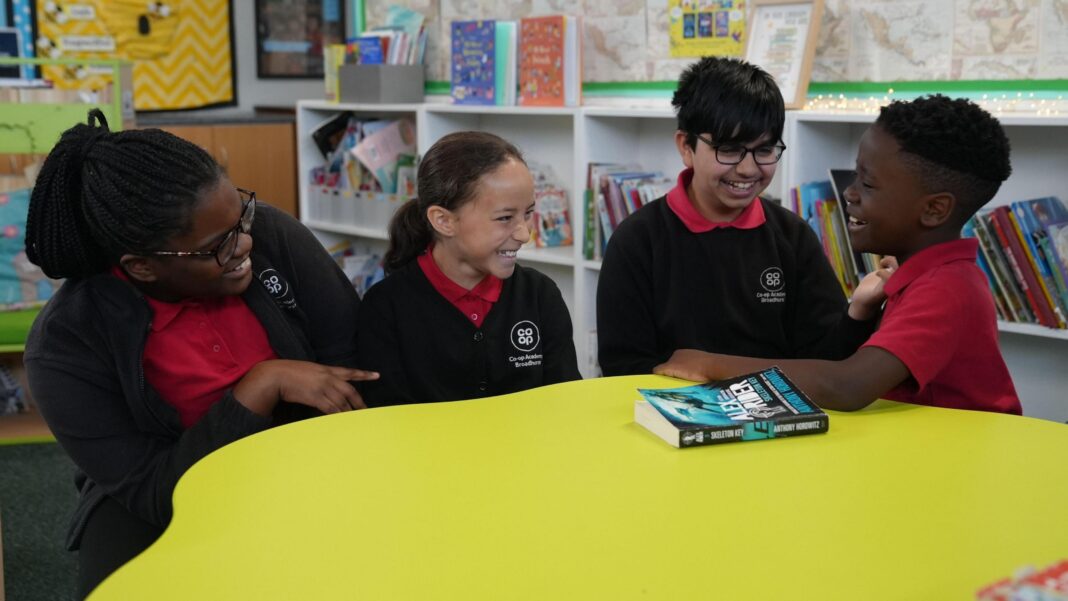
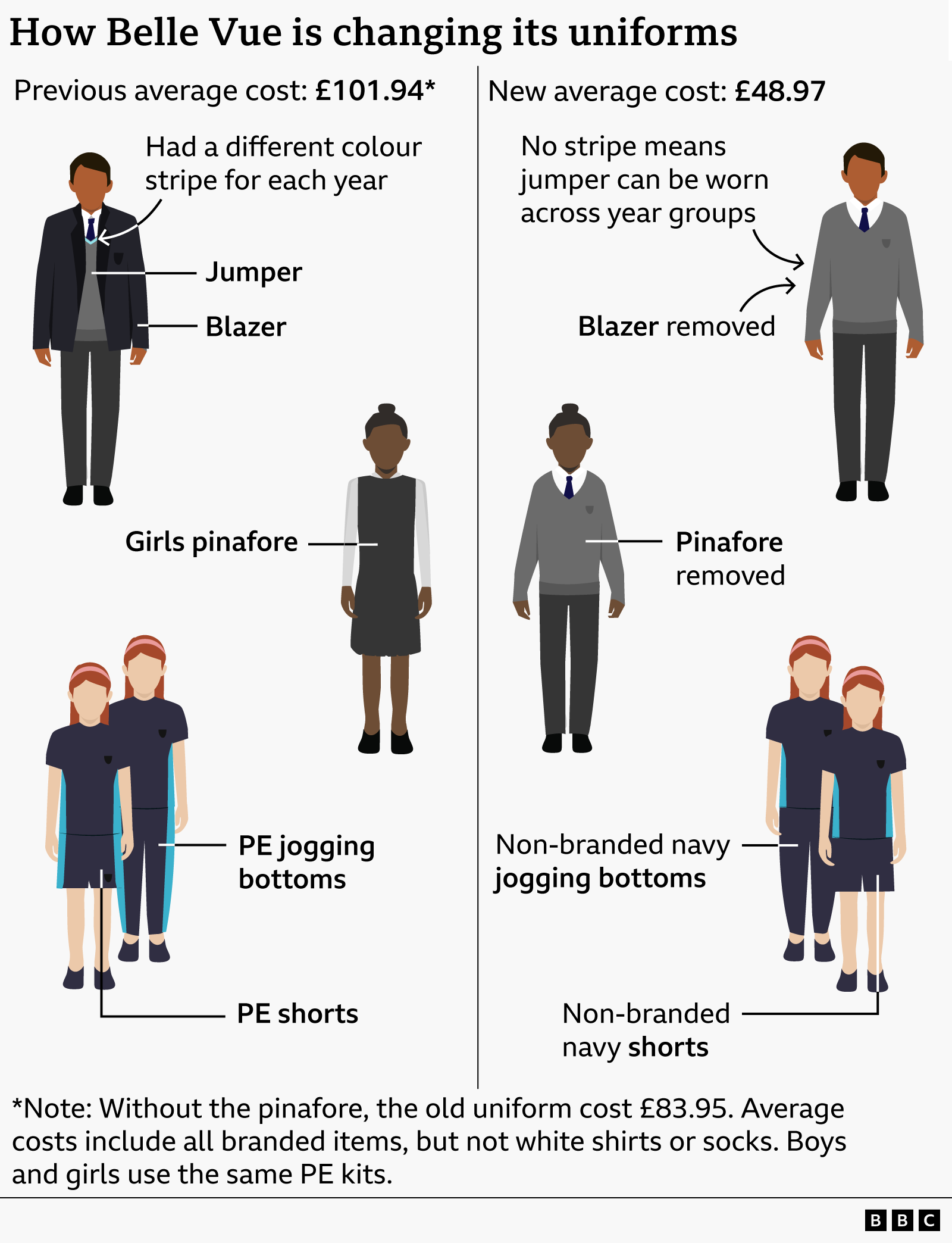
Co-op Academy Belle Vue, in Manchester, is planning to drop the number of its compulsory branded items from seven to three, plus a tie.
It estimates the average cost of the branded parts of the uniform last year was £101.94 with a pinafore, and £83.95 without – but this year it will cost families an average of £53.97.
Next year, when the school switches to a new supplier, it says it will fall further.
The school has decided to get rid of its branded blazer, the branded pinafore, branded shorts and PE jogging bottoms.

The school’s branded jumper currently has a coloured stripe, which is different for every year group, but this will switch to a plain one so parents will not have to buy a new jumper every year.
Parents must now buy a branded jumper, a tie, and two branded PE tops for summer and winter.
Linda Ubawike, who has three children at the school, says her uniform bill has dropped by £70 this year.
“It has honestly saved me so much,” she says.
“I can now get more of the uniform in the local supermarket, and my son who is starting in September is getting the whole uniform for free – it works so much better.”
Because every school sets its own uniform policy, parents can still face very different expectations and costs.
Lorraine, who lives in London, has two children in secondary schools and is frustrated that her school has not changed any of its uniform policy this year.
She says several items are still compulsory, including the branded blazer, tie, branded polo shirt, branded shorts and two-toned PE socks.
Even the plain grey trousers or skirt have to be purchased from one of the school’s suppliers, she says.
Both her sons have been through a growth spurt this summer, so she is expecting to spend more than £200 on their branded items alone.
“I’m just frustrated, for me it’s not even about the money,” she says.
“I feel these inconsistencies do not make a difference to education and are really blinkered.”
But mum-of-five Carol, from Stockport, welcomes the changes at her children’s school. She says her son’s secondary school only requires a branded blazer, a branded jumper and tie, with everything else available from a range of shops.
She tries to get most of her children’s uniforms second-hand anyway, but always buys the blazer, which costs around £30, as she likes them to have a new one.
She says anything that makes it more affordable for parents is a good thing.
But others are not seeing the changes they would like.
One father from Oxfordshire, who did not want to be named, says his daughter still has to have seven branded items – three for the uniform, three for PE and a summer polo shirt – as there are no alternatives allowed.
“It’s ridiculous and unfair. We are paying £200 which we can’t afford,” he says.
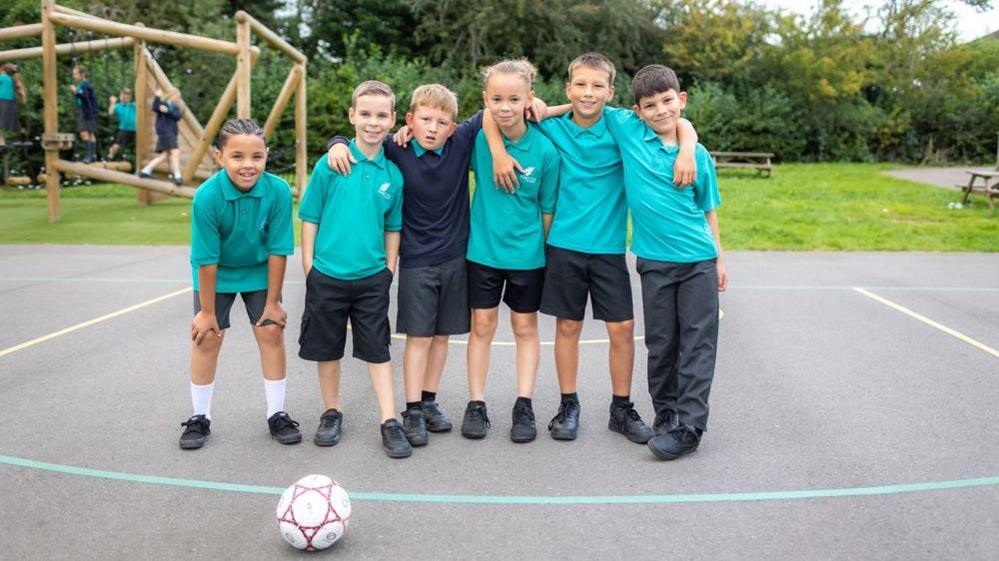 Image source, Cabot Learning Federation
Most primary schools already have very few branded items.
At Broadhurst Primary, in North Manchester, only the school jumper – and, from 2027, the PE T-shirt – are branded, which the school says brings the total cost of its uniform to £13 per child.
Around 23% of secondary schools will have to change their uniform lists for September to comply with the new rules, according to the latest government survey.
The education secretary has legal powers to direct schools to comply if they are not sticking to the new rules.
One head teachers’ union, the Association of School and College Leaders, says the actual difference in cost is likely to be marginal for most families.
Its general secretary Pepe Di’Iasio says schools are already trying to balance the cost to parents with maintaining a sense of identity. He says it’s also important to keep expensive fashion brands out so no one feels excluded.
Some schools have been phasing their changes in over the last few years.
King’s Oak Academy, in Bristol, has one compulsory item left on its uniform list – a branded PE T-shirt.
The school, which goes from reception right through to Year 11, used to have a branded jumper, tie and a shirt, which together cost about £41.
Students are now asked to wear a plain polo shirt – which changes colour for the lower, middle and upper school – a sweatshirt or cardigan, and grey skirt or trousers, with all pupils also wearing black trainers. The school says it now costs about £10 to £25, depending on where parents buy the uniform.
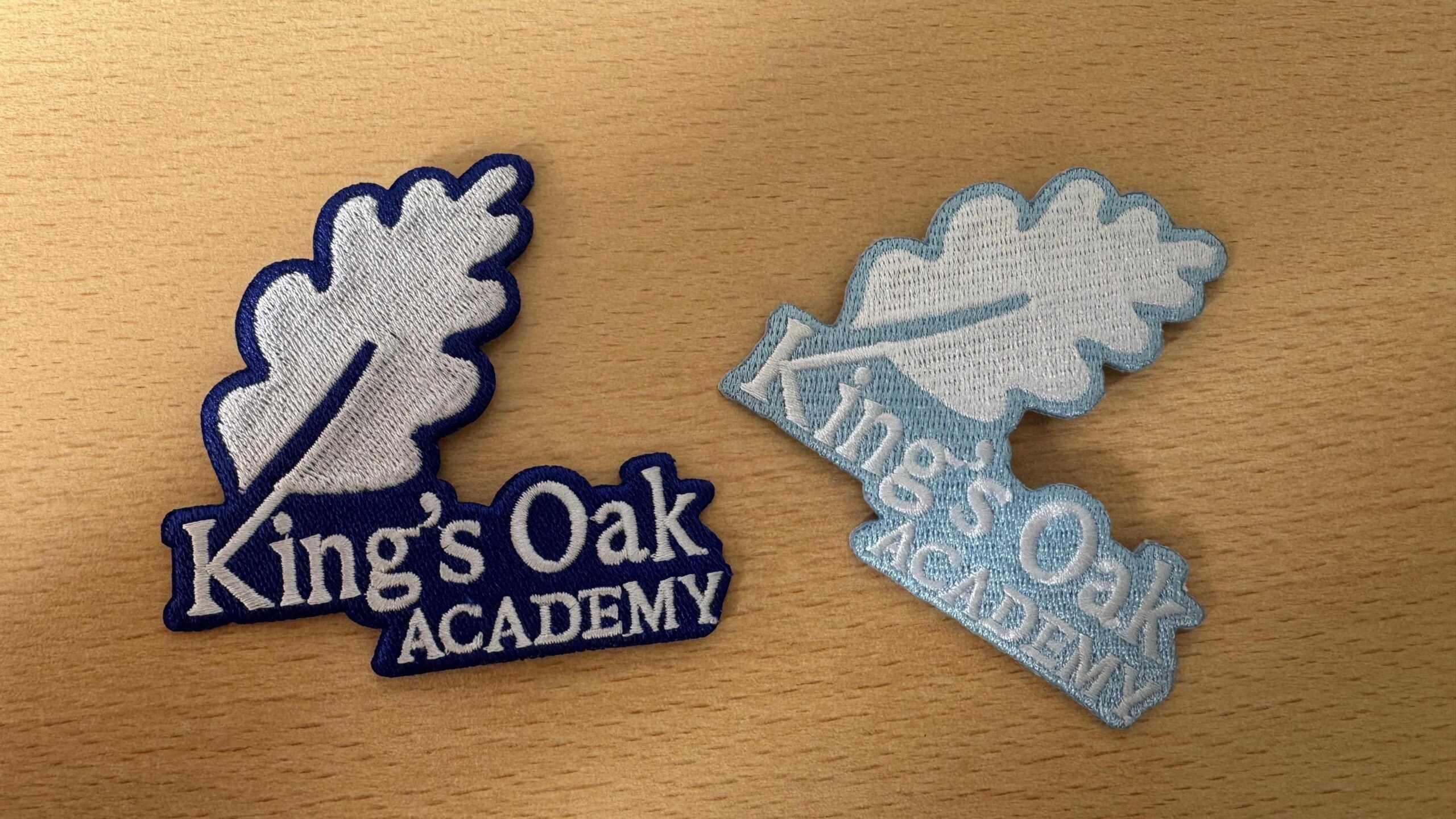 Image source, Cabot Learning Federation
Principal Katherine Ogden, a former PE teacher, wanted to make the uniform practical and comfortable, but says parents can buy other optional items with the school logo on if they wish.
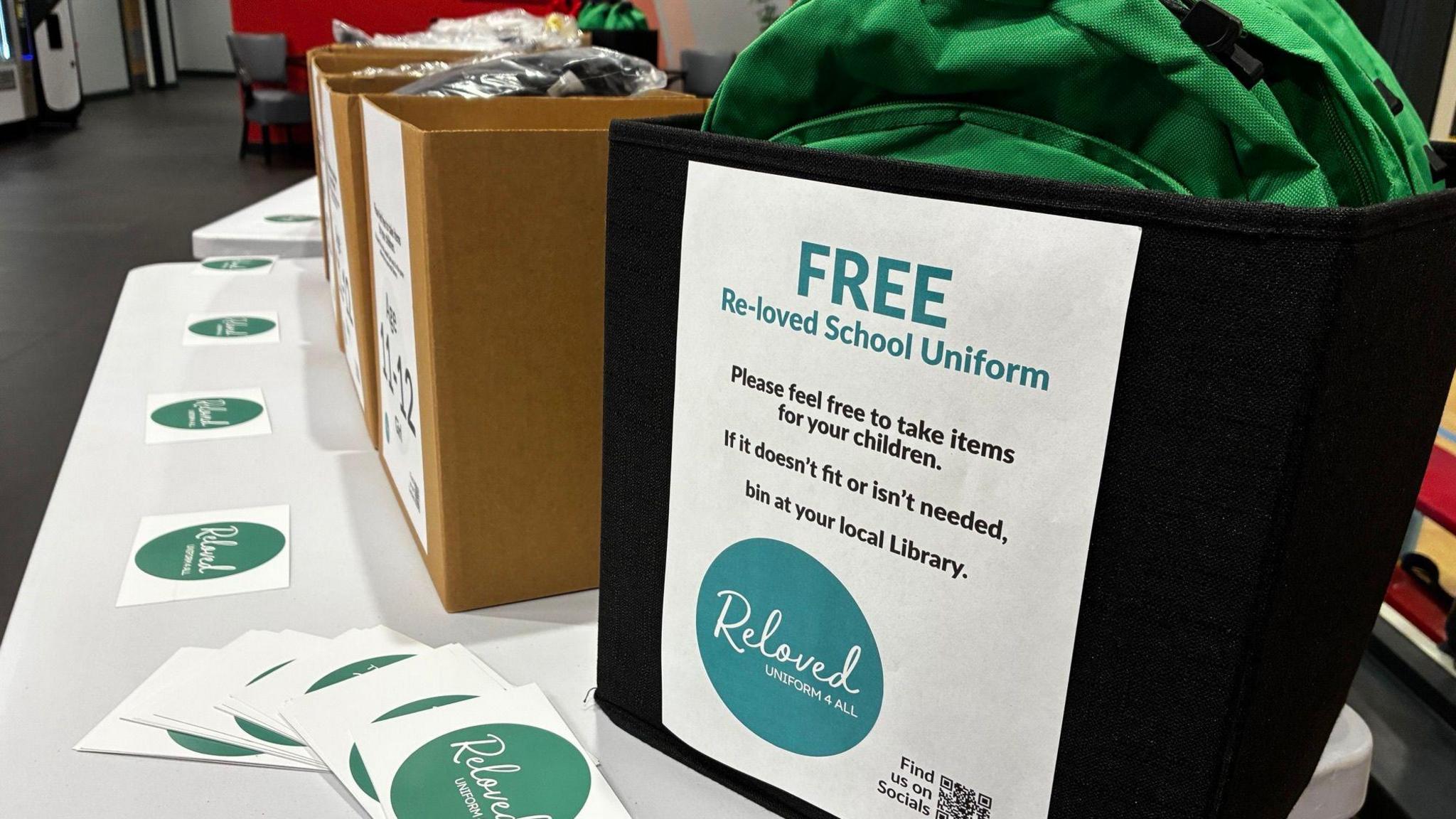
Some of England’s largest academy trusts have told the BBC they are also keeping a number of optional branded items on the uniform list, which the new law allows.
Uniform retailers have long argued the changes might increase costs for families.
The Schoolwear Association says the plans could mean parents spend more on replacing lower-quality generic garments, which might not last as long as branded ones.
Chair Matthew Easter says it will also create “division” in schools, because branded uniforms help to reduce inequality and improve behaviour.
He says some suppliers are also finding it harder to plan this year as it is not clear how many parents will want the optional branded items.
Scotland, Wales and Northern Ireland do not have a cap on branded school uniform items, but guidance in each nation encourages schools to keep uniforms affordable for families.
A spokesperson for the Department for Education said some families would save “up to £50 per child” due to the changes, and that it is supporting schools to take more steps to bring down the cost of individual items.
Get in touch
How will you be affected by the issues in this story? Share your experiences
-
-
Published22 February
-
-
-
Published28 April 2025
-