
This post was originally published on this site.
 Getty Images
Whenever we hear that one football club has been spying on another, it conjures images of classic, covert espionage.
Shadowy figures creeping through bushes, climbing trees and taking photographs with a telephoto lens.
But, as Middlesbrough have found out, sometimes it is not that difficult.
The English Football League (EFL) has charged Southampton with spying on their Championship play-off opponents 48 hours before their semi-final first-leg match at Riverside Stadium on Saturday (12:30 BST).
It brings back memories of 2019, when Leeds United manager Marcelo Bielsa said he had sent a member of his staff not to just spy on Derby County, but every team they played that season.
What supposedly happened at Boro’s training ground? And what punishment might Southampton expect?
What did Southampton allegedly do?
 BBC Sport
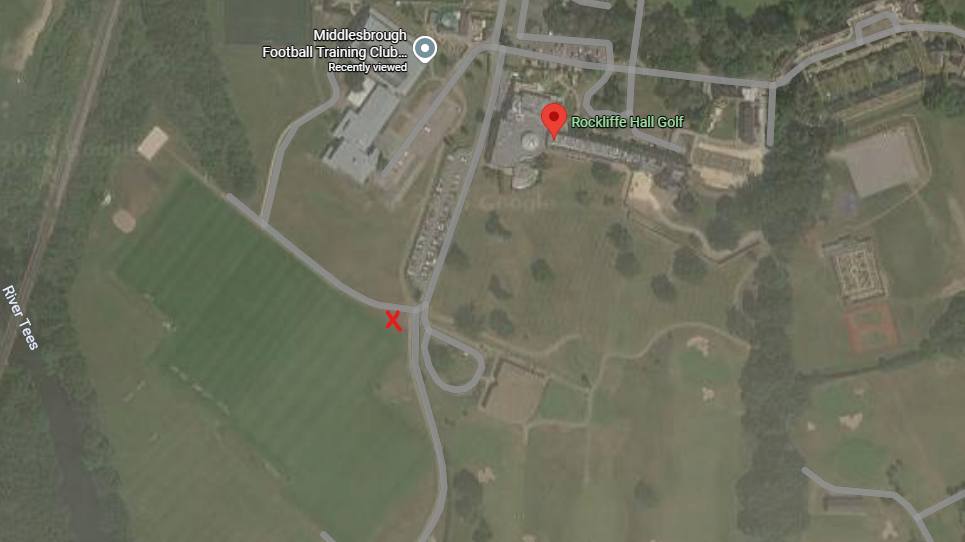
Middlesbrough train on the sprawling grounds of Rockliffe Hall in Hurworth-on-Tees, just outside Darlington.
But this is not your classic training base, hidden away among trees and walled off from the prying eyes.
Rockliffe Hall is also a luxury hotel, spa and golf resort built by Middlesbrough owner Steve Gibson. The complex is open to the public.
If you want to sneak in and watch the players training, it would appear you do not have to try too hard.
According to BBC sources, this is what happened late on Thursday morning.
Both clubs have been approached for comment. So far Southampton have made no public statements on the matter.
The supposed spy, who Middlesbrough allege to be a Southampton analyst, is said to have parked at the golf club, then walked a couple of hundred yards down a road which leads to the top of a small hill.
The training pitches and golf course are next to each other with just a hedgerow separating them.
While there have been reports that the so-called spy was found hiding in bushes, the real story is apparently not so dramatic.
Sources told the BBC that the accused simply stood at the top of the hill, which slopes down to the training field and gives a clear view overlooking the pitches. Perfect for not-so-covert ops.
At one stage the suspicious individual is alleged to have been pointing his mobile at the training session, while wearing in-ear headphones. Middlesbrough staff believe he may have been live-streaming the session via a video call.
What happens next sounds more like a comedy sketch than a cunning spy operation.
A member of Middlesbrough’s staff approached, say BBC sources, but the person would not identify himself. Then, he quickly deleted some content off his phone before running off into the golf club.
He jogged into the toilets, changed his clothes and hurriedly left the site.
Middlesbrough’s photographer took photos – and, allegedly, matched him to a profile on the Southampton website. And, of course, the individual was all over CCTV.
Staff were furious and quickly reported it to the EFL.
Southampton’s squad were not due to fly to the north east until Friday, so if the so-called spy was from the club it suggests an early reconnaissance mission.
To play this video you need to enable JavaScript in your browser.
This video can not be played
What punishment might Saints face?
Cases of spying – those that are proven and that we get to hear about – are few and far between.
It was pretty much unheard of until 2019, when Leeds United were fined £200,000 by the EFL for “not acting in good faith” by watching opponents train before matches.
Leeds boss Bielsa was bullish, admitted it, and even paid the fine himself.
Remarkably, before that time there was no specific regulation covering spying.
The EFL acted by bringing in rule 127, which states that “no club shall directly or indirectly observe (or attempt to observe) another club’s training session in the period of 72 hours prior to any match”.
Late on Friday, Southampton were charged with a breach of rule 127 and also rule 3.4, which requires clubs to “act towards each other with the utmost good faith”.
Saints would usually have 14 days to respond to the charges, but the EFL has asked the independent disciplinary commission to fast-track the case.
It is unclear what disciplinary measures will be open to the EFL, if the case is proven.
The fine handed to Leeds provides precedent, but that came before the specific regulation existed.
The EFL does not comment on active cases but there appears to be no suggestion at the moment that Southampton could be thrown out of the play-offs.
Perhaps football’s most high-profile case of spying came at the 2024 Olympics in Paris.
New Zealand’s women’s team spotted a drone flying above their training session before the opening game against Canada.
French police tracked it and it led them to its operator – a member of the Canada team’s staff.
Canada head coach Bev Priestman was suspended and two members of staff were sent home.
Fifa deducted six points from Canada and fined Canada Soccer 200,000 Swiss francs (£189,000).
Priestman and the two members of staff were banned from football for a year.
How do clubs protect training grounds?
As Middlesbrough’s case proves, keeping your training under wraps very much depends upon your surroundings.
While Rockliffe Hall is out in the countryside, the public nature of the leisure facilities makes it almost impossible to create a secure base.
And with the hill next to it, it is not like screens would help.
But you will not find this at the top Premier League clubs.
You would need a long lens to get any shots of Manchester United training at Carrington.
Security was upgraded after incidents with anti-Glazer protests in 2021.
There are huge fences and bushes surrounding the perimeter of the training ground, the site of which is massive with ditches on the public side.
The club are aware of the threat posed by drones – which they use to film their own training sessions – and in 2018 banned them from flying nearby.
Chelsea have electric gates, fencing and thick hedges to stop unwanted visitors entering their training ground in Cobham.
There is also a fabric sheet that blocks the view of Chelsea’s first-team training from a bridge at a nearby railway station.
Even with those measures, they still reportedly had trespassers in May 2025.
Arsenal’s training ground entrance is manned by security and behind a barrier.
There are security staff around the training ground, with high fences and bushes shielding the pitches.
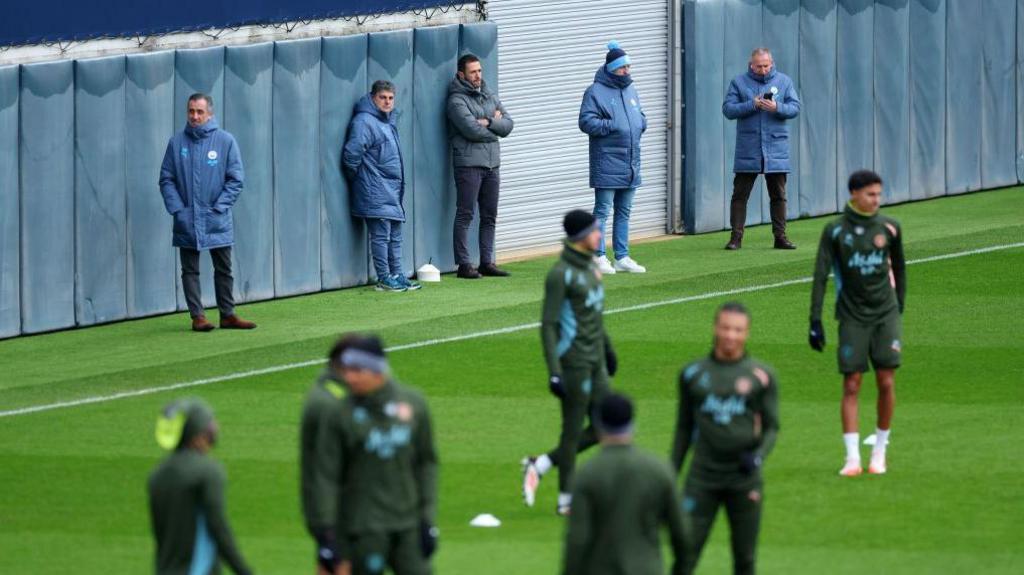
At Etihad Campus, Manchester City’s training takes place within a walled setting with 3,000 metres of security fencing. There is no way anyone can see anything unless they are taken through by security.
The main pitches at Liverpool’s AXA Training Centre in Kirkby are secured with special fencing to help ensure privacy.
Screens are an option used by teams who train in open areas, especially on international duty.
At the 2018 World Cup in Russia, England increased the height of the steel security fences at their Zelenogorsk base from 6ft to 13ft to keep out prying eyes.
But sometimes, as Middlesbrough seem to have discovered, you are restricted by your surroundings.