
This post was originally published on this site.
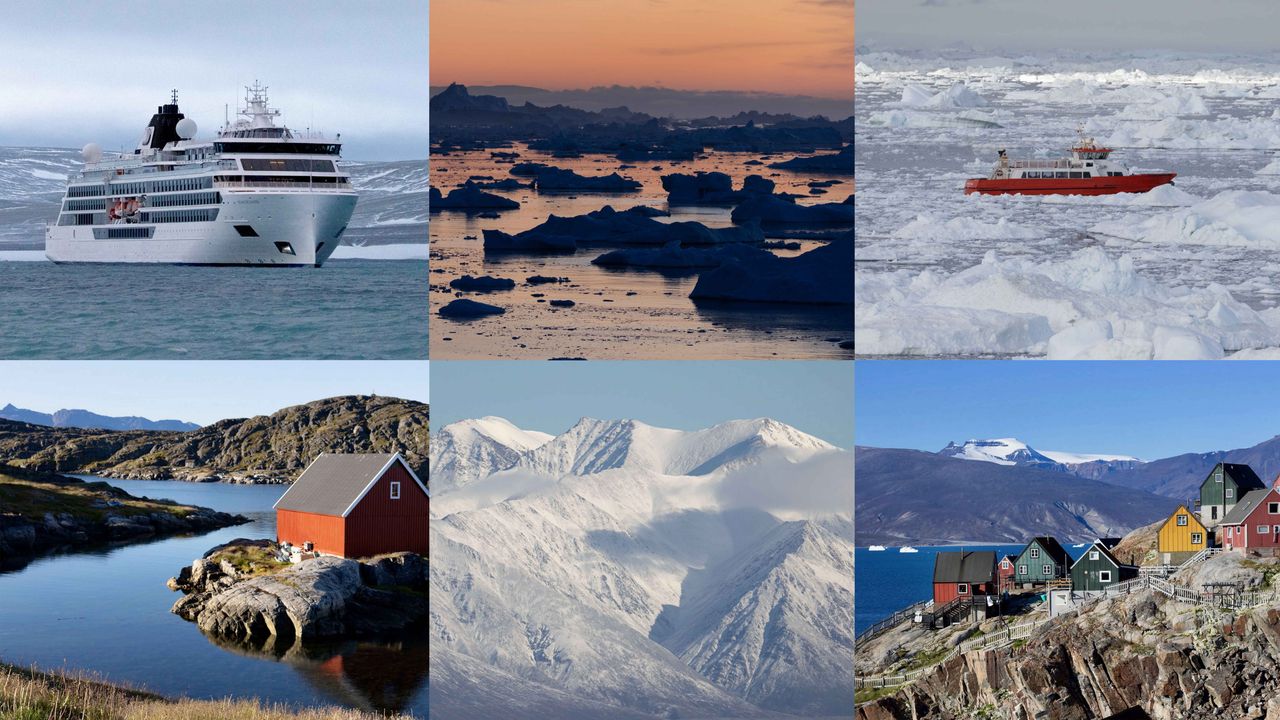
As we sailed through Disko Bay on Greenland’s west coast, I woke to a persistent, muffled crunch. The root of all the ruckus: floating disks of pancake ice strewn across a pastel sunrise-tinted sea.
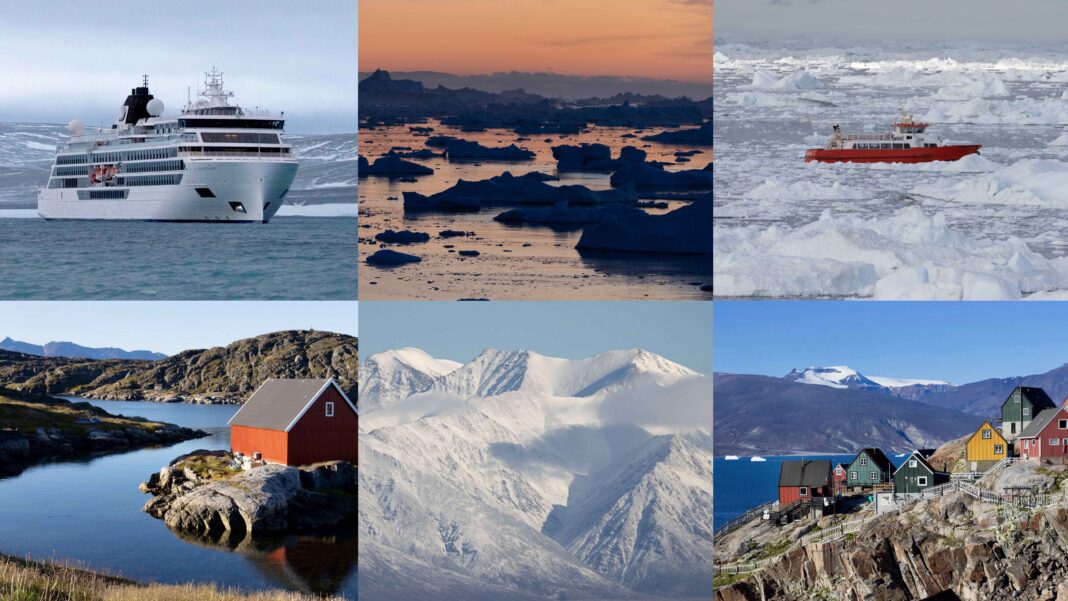
The frozen scenery was a result of the Ilulissat Icefjord—a UNESCO World Heritage Site—that’s fed by the Sermeq Kujalleq, one of the world’s fastest flowing glaciers. We had just reached the second stop of Viking’s inaugural Northwest Passage sailing, a 12-night roundtrip journey split between Greenland’s west coast and the Canadian High Arctic.
As I peered out from the retractable window in my Deluxe Nordic Balcony cabin, I couldn’t help but liken the scenery to Wilhelmina Bay in Antarctica, an expedition I joined with the cruise line two years earlier. Just three days into this sailing, I had already overheard several other passengers swap similar Arctic versus Antarctic comparisons, and swiftly came to learn that the majority of my fellow travelers had booked this journey following an outstanding Antarctica trip with Viking.
“Traveling into the Northwest Passage itself is inherently thrilling,” says Aaron Lawton, Viking’s head of expedition operations. “This legendary route has captured the imagination of explorers for centuries, and experiencing it firsthand brings that history to life.”
The opportunity to visit one of Earth’s most remote polar regions—let alone both—is a recent phenomenon for leisure travelers. The southern Antarctic and northern Arctic were historically accessible only by explorers, who then paved the way for researchers, and were followed by rugged expedition travelers. Then came the rise of luxury polar-class vessels like the Viking’s Polaris and Octantis expedition ships, which can simultaneously navigate thick ice sheets while swaddling its passengers with the comforts and amenities of a five-star resort.
For years, though, luxury cruise lines have offered far more options in the Antarctic than the Arctic, largely due to lack of port infrastructure, air connectivity, and mercurial weather. In 2024, 87 cruise ships passed through the Arctic Polar Code area versus the 58 cruise ships recorded in 2013, according to Arctic Ship Passage Data (ASTD). The stark increase over a decade is still significantly below the statistics of its south pole counterpart, where the 2023-2024 season witnessed 569 voyages and over 117,000 passengers, according to the International Association of Antarctica Tour Operators (IAATO).
Eight countries comprise the Arctic, and though some have long been popular cruising destinations, like the circumnavigation of Iceland or sailing the Norwegian fjords, travelers’ ever-growing obsession to journey off-the-beaten-path have drawn operators further north. When the Nuuk International Airport opened at the end of 2024, Greenland officially emerged as an embarkation hotspot for luxury and expedition lines including Viking, Ponant, HX, Silversea, and Quark.
As polar enthusiasts consider the new array of Arctic sailings on offer, travelers should understand that while the two polar regions share some similarities, of course, an Arctic cruise is much different from an Antarctic expedition. Mainly: the Arctic’s landscape varies from rugged, lichen-covered rock face to incomprehensibly-sized icebergs. Antarctica mostly presents a consistent, frozen tundra. In the Arctic, the excursions are culture-centric, whereas Antarctica promises days filled with wildlife.
“In the Arctic, encounters with Inuit communities in places such as Greenland or the Canadian Arctic add a powerful human dimension to the experience,” Lawton says. “These interactions provide cultural context that deeply influence our guests’ understanding of the region.”
In the 91-person settlement of Itilleq, Greenland, for example, we joined locals for morning coffee and cake in a ritual called kaffemik, a tradition typically held for birthdays or special occasions. Crossing over to Canada’s Arctic archipelago and landed in Nunavut, the traditional lands of the Inuit, an elder led us through an exploration of Inuit music via seal-hide drum as the next generation showcased native sports like the One Foot High Kick. And on Nunavut’s Beechey Island, we were the only people at the gravesite of Arctic explorer Sir John Franklin’s three crewmen—a fragile archaeological site we were only allowed to access thanks to Viking’s onboard archaeologists (made all the more authentic due to an impending snowstorm).