
This post was originally published on this site.
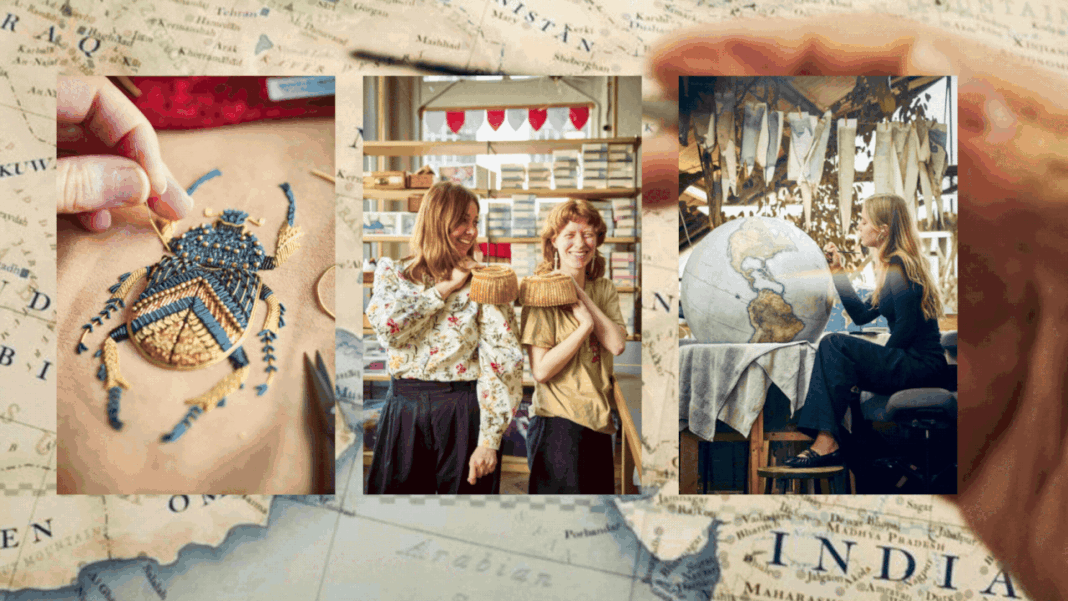
When London Craft Week, an annual celebration of the handmade, unfurled across the center of the city this past May, the work of a thousand or so makers bloomed out of every corner. Glassblowers opened up their Deptford workshops. Batik textiles filled the walls of St. James’s galleries. Ancient ceramics populated storied auction houses. What’s more, long lines amassed to see the works, an undeniable testament to the growing interest in traditional crafts movements and the makers behind them. Case in point: When London Craft Week was launched by founder Guy Salter in 2015, it recorded around 20,000 visitors; this year approximately 250,000 came.
But London has always been a makers’ town. The city’s tailors and textile artists have shaped global fashion, and its craft heritage has deep roots stretching back to the 12th century, when artisans and merchants founded guilds to protect their skills and commercial interests. Over the centuries that followed, groups of tailors, pewterers, furniture makers, and dyers formed and, after growing in power and influence, built livery halls—grand, palatial spaces layered in history. In 2026, 114 of these legacy collectives still remain, supporting a new generation of makers working to meet the moment. In the face of an increasingly automated, AI-generated world, more of us are seeking objects and experiences that are human, with provenance and a sense of place.
This hunger for the handmade is being met well beyond Craft Week. Since the fair began 11 years ago, others have launched: Collect gathers 300 artists and makers at neoclassical Somerset House each February; basketry, which is enjoying a widespread revival, has its own annual summer festival, Tear Up. Meanwhile, The Great Pottery Throw Down, a reality show in which amateur ceramists are pitted against one another in hands-on challenges, has a prime-time spot on British television, and many makers are now offering bookable workshops to create greater access to London’s creative pulse. In perhaps no other city can you visit a royal-family-approved Savile Row tailors, a seamster for Europe’s biggest Carnival, and Britain’s oldest embroidery house all in one day.
None of this, of course, would exist without the centuries of craft heritage that transformed London into a global design influence and that lingers with whatever purchase you may bring home from the city’s workshops and ateliers. At Lock & Co. Hatters, a 350-year-old hat shop in St. James’s, “you’re buying into a little piece of history,” says milliner Awon Golding. “And that’s so much more special.” —Clare Coulson