
This post was originally published on this site.
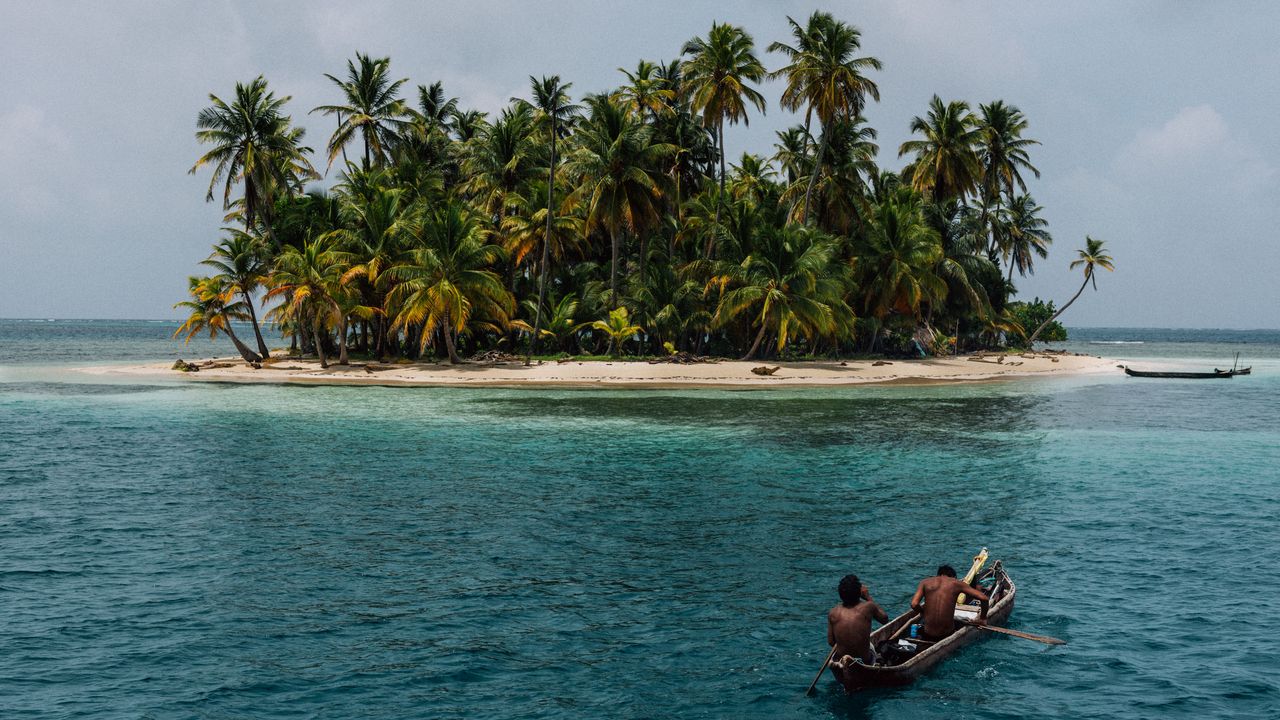
The following day Haghnazarian anchors the boat near a small island that, like so many, the Guna people farm as a coconut plantation.
“Feel like swimming with some sharks?” he asks.
Peering over the ship’s stern, I see a half dozen nurse sharks circling, each larger than I am. I edgily enter the warm seawater. The panic is piercing, at least initially. But once I just take the plunge, I realize this is one of those singular thrills that could happen only during opportunities like this.
From the Guna Yala Islands we drive into Panama’s interior, ending the day in El Valle de Antón, a town of rugged charm built inside the nearly four-mile-wide caldera of an extinct volcano. Here the air is cooler, drier—a welcome respite after the unrelenting humidity of the Caribbean. Come nightfall, the chatter of a dizzying array of bird species (tanagers, toucans, motmots) gives way to a symphony of croaking frogs.
While Panama has long been a mainstay among backpackers, the country has historically lagged behind its northern neighbor, Costa Rica, in offering lodging to lure a wider spectrum of travelers. An exception to that is La Compañía del Valle, which opened just a few weeks before our arrival. Among its most striking features are the hundreds of art installations that, confoundingly, seem to have been airlifted in from Burning Man. Out in the lawn, surrounding a stately tree, enormous white fiberglass fingers emerge from the grass as if trying to communicate some message I can’t decode.
“I made all that with AI,” says La Compañía del Valle’s owner, a garrulous Canadian named Chris Lenz, a former Hong Kong nightlife entrepreneur. “Something comes into my head and—boom—I type it into my phone and have it made.” After our days spent immersed in Panama’s more traditional cultures, El Valle de Antón takes some getting used to; still, it’s a posh and whimsical retreat for exploring an area that remains off the radar of most tourists.