

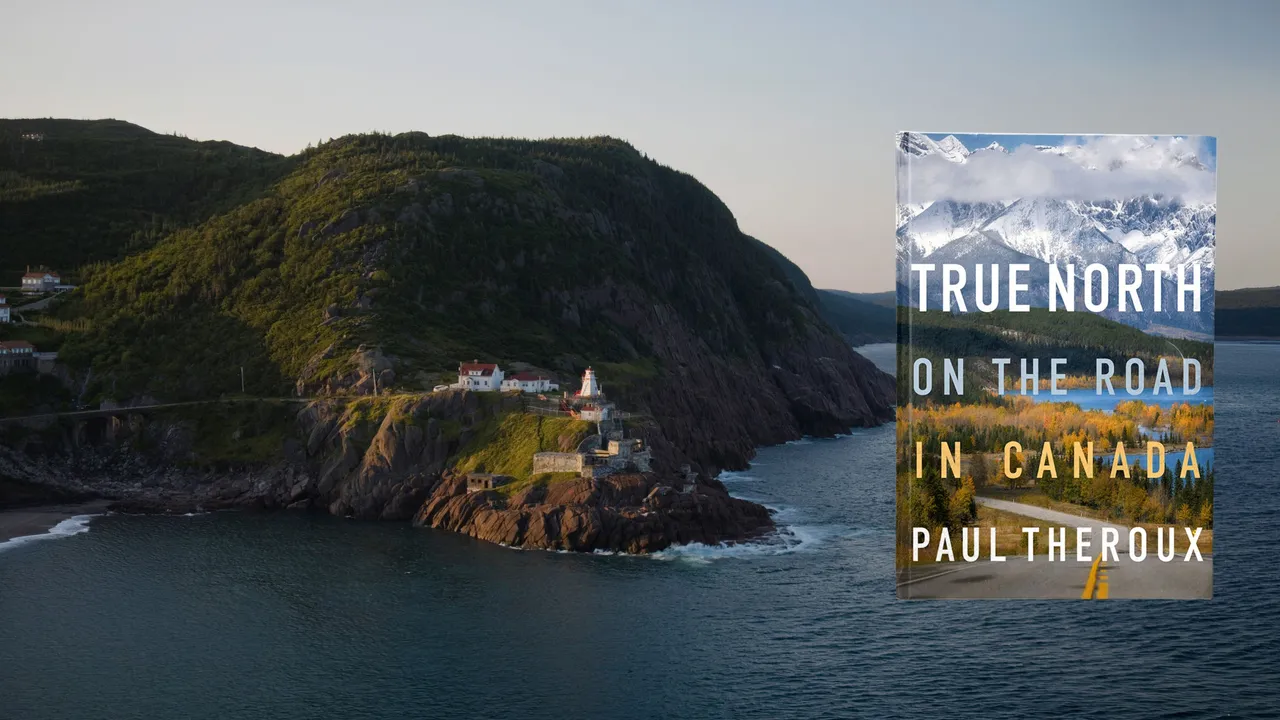
The big, buttocky, ten-deck-high car ferry Ala’suinu (“Traveler” in Mi’kmaw) sailed every day between the Marine Atlantic terminal in North Sydney in Cape Breton, across the 110-mile channel at the mouth of the Saint Lawrence, to Port-aux-Basques on the southwest of Newfoundland. In this rain and stiff wind, under a dark sky, from one bleak port to another.
I’d always wanted to go to Newfoundland, ideally in my own car, to travel its length and visit the thousand-year-old Viking settlement, L’Anse aux Meadows, at the northern tip. On a map, Newfoundland is a vast, asymmetrical island, cloven by bays and inlets, semi-detached to appendages of land deformed by ancient glaciers scraping over it, leaving glacial striations, grooves and gouges on its granite face. This vast misshapen island was traditionally noted for ghosts, folktales, eccentricity, fish, and friendliness. With this in mind, I’d mentioned to a number of people I’d encountered in New Brunswick and Nova Scotia that I was headed to Newfoundland, and had they been there?
“Never” was the usual response.
“What about Florida?”
“Many times,” I heard often, from the same people.
Negotiating the clammy back streets of the port at North Sydney, the scruffy bars, and battered storefronts, the business of securing a ticket for myself and my car, all of that as well as the delay reminded me for the first time in Canada of the tedium I’d had to put up with in previous travel elsewhere. Virtually all those trips involved hassle that was a bore to write about and just as boring to read. So let’s move on. I rarely felt inconvenienced in Canada, or menaced, or plagued with uncertainty—no armed youths, no risky detours, no necessity to bribe an official, no infuriating obstructions, nearly always a welcome—a traveler’s dream.
The ferry didn’t leave until quarter past eleven at night, and I couldn’t check in early. I had arrived in daylight and had six hours to kill. I did what most Canadians did in such a situation. I found a corner table at the nearest Tim Hortons and sipped coffee among the other yawning idlers. Around nine, I drove to the ferry port, was greeted with efficiency and given a place in line. I waited in the terminal until being summoned to drive up the ramp into the bowels of the ferry.
No berths or cabins are available on that trip. I paid $23 for a reclining seat, and at departure time the ferry hooted and slid into the darkness for the crossing, the sky blackened by dense clouds. We might have been gliding through outer space, nothing visible but the glare of the ship’s own running lights. I dozed in my seat, in the sealed-off saloon section, with children and dogs, and people snoring, wrapped in the feet stink of folks with their shoes off. I now understood why locals in Nova Scotia seldom went to Newfoundland: It was travel in the old laborious way, and many of the vehicles below decks were not tourist cars but big rig trucks and workmen’s vans. A chart posted on an upper deck showed the straight line of our route. The bay facing the western shore of Newfoundland is the mouth—the gaping estuary—of the Saint Lawrence, Newfoundland on the chart detached and apparently drifting out to sea.
No passengers complained, they were patient in rumpled clothes, fat shaggy men, and women in woolly hats, handsome boys, and wins girls. They seemed to me like a great crowd of commuters sailing off to work, which in many instances was the case—manual workers, students, truckers, and returning residents: farmers, fishermen, and nurses. Eight hours later, in gray daylight, an announcement was made in two languages for us to go to our vehicles. The ferry docked, and I drove off the ferry ramp and into Port-aux-Basques for breakfast.