
Ask a busy roofer whether he needs a website and you will often hear the same answer: “I get my work from Checkatrade and word of mouth.” It’s a fair point. A website on its own doesn’t make the phone ring. Nobody stumbles across it, and a site that just sits there is a cost, not an asset.
But that misses what a website is actually for. It’s not the thing that brings customers in. It’s the thing everything else stands on.
Think of it as the foundations
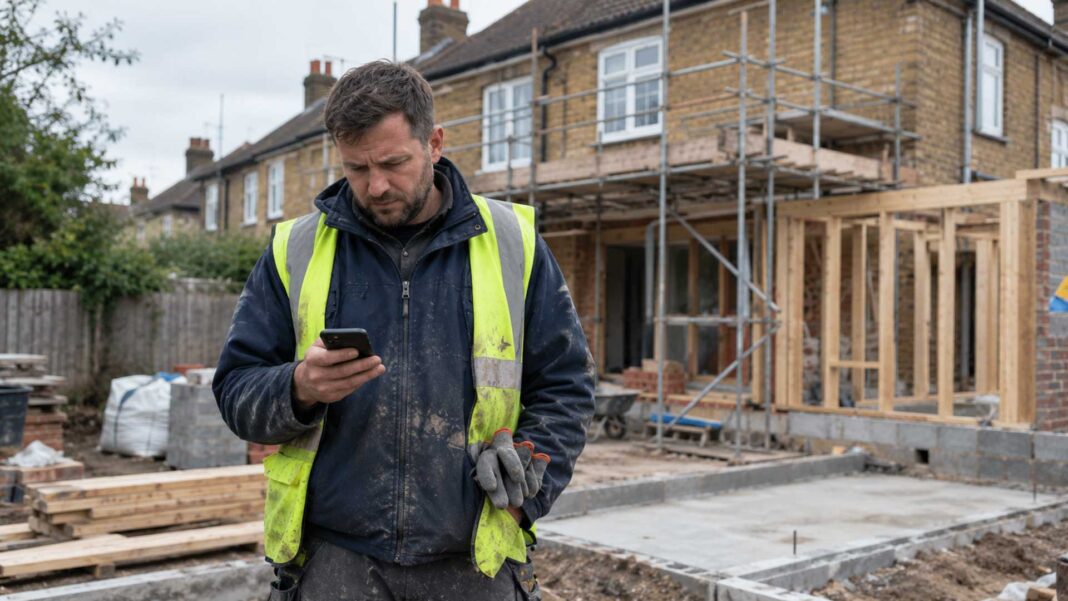
Every tradesperson knows you don’t build an extension on poor footings. The work above might look fine for a year or two, then the cracks appear.
Your online presence works the same way. Google Ads, your Google Business Profile, Facebook, lead sites and word-of-mouth referrals are the walls and the roof. They are what customers see first. But when someone is about to trust you with a £20,000 kitchen or a loft conversion, most will look you up before they pick up the phone. Wherever they start, they end up checking whether you are the real deal.
If what they find is slow, out of date or hard to use, the work you put in everywhere else leaks away.
Renting versus owning
There is another reason the foundations matter: who owns the building.
Lead platforms can work, but you are renting customers. Trade pricing research published by Whito in 2026 puts Checkatrade membership at roughly £600 to the low thousands a year, and pay-per-lead sites such as MyBuilder and Rated People commonly at £10 to £50 per lead, often shared with other trades. Stop paying and the leads stop. The platform sets the price, the rules and where you appear.
Your own website and your Google Business Profile are the places online that you own. Your reviews, your photos, your service areas and your phone number sit on ground nobody can take away or put the rent up on. One tip, whoever builds your site: make sure the domain, the website and your Google accounts are registered in your name, not theirs.
Money down the drain
The most expensive mistake we see is paying for adverts that point at a weak website. Every click on a Google advert costs money, often several pounds in competitive trades. If the page it lands on loads slowly or has no obvious way to get in touch, you pay for that click and get nothing back.
In October, Westgate Web took a snapshot of 67 websites belonging to builders, roofers, loft conversion firms and kitchen fitters that rank on Google around Croydon, Purley and Sutton. Of the 55 that loaded properly in our mobile test:
- 47% had no enquiry form on the homepage
- 62% took more than 10 seconds to load completely, images and all
- 27% used a Gmail, Hotmail or Outlook address as their main contact
It’s a small local sample, not a national survey, but the pattern was clear. Plenty of these firms obviously do excellent work. Their websites just weren’t built to turn a visitor into an enquiry.
The woodworm you can’t see
Foundations are not the whole story. A house also needs protecting once it’s built.
Most small business websites run on WordPress, which is a good, flexible system. But its popularity makes it a constant target. Most attacks are not aimed at you personally. They are automated tools scanning millions of sites at once for a weak spot, like woodworm working quietly through every timber it can reach.
AI has made those attacks faster. In July 2026, two serious flaws in WordPress itself, nicknamed WP2Shell, were being exploited within hours of the fix being released. One research team had found the flaws using an AI model in about ten hours, and once the fix was public, another team recreated the attack within minutes. Security firm Patchstack says more than 60% of attacks it sees exploit weaknesses that already had a fix available but hadn’t been installed, and that around a third of vulnerabilities across WordPress plugins and themes never get a fix at all, which makes choosing and pruning plugins just as important as updating them.
In other words, most hacked trade websites are not unlucky. They are unmaintained. A hacked site can redirect your customers to scam pages, send spam from your email address and get your business flagged by Google as unsafe, often without you noticing for weeks.
What a solid setup looks like
None of this needs to be complicated or expensive. A website that earns its keep has three layers:
- Solid foundations. A fast, mobile-friendly site with a clear first screen saying what you do, where you work and how to get in touch, plus an enquiry form for people who won’t phone.
- Something to bring people in. That might be Google Ads, local search rankings or a well-kept Google Business Profile with a steady flow of reviews, all of them pointing at a site that converts.
- Ongoing maintenance and security. Updates, backups, as few plugins as possible and someone keeping an eye on things: the website equivalent of an annual boiler service. You can do it yourself, or hand it over on a monthly care plan. Ours includes a security plugin we built in-house to monitor site activity and flag problems early.
So, is it worth it?
If your diary is full from referrals and you have no plans to grow, perhaps not yet. But for most trade businesses that want bigger jobs, fewer time-wasters and less dependence on lead sites, the answer in 2026 is yes, as long as the site is built properly and looked after.
If you’d like to know how your current site measures up, or see what it could look like, Westgate Web offers trade businesses a free website check and homepage mockup, with no obligation.
Build the foundations once, keep the woodworm out, and everything you build on top will last.
Westgate Web builds websites and runs SEO and Google Ads for home-improvement businesses across London and the South East.