
This post was originally published on this site.
 Getty Images
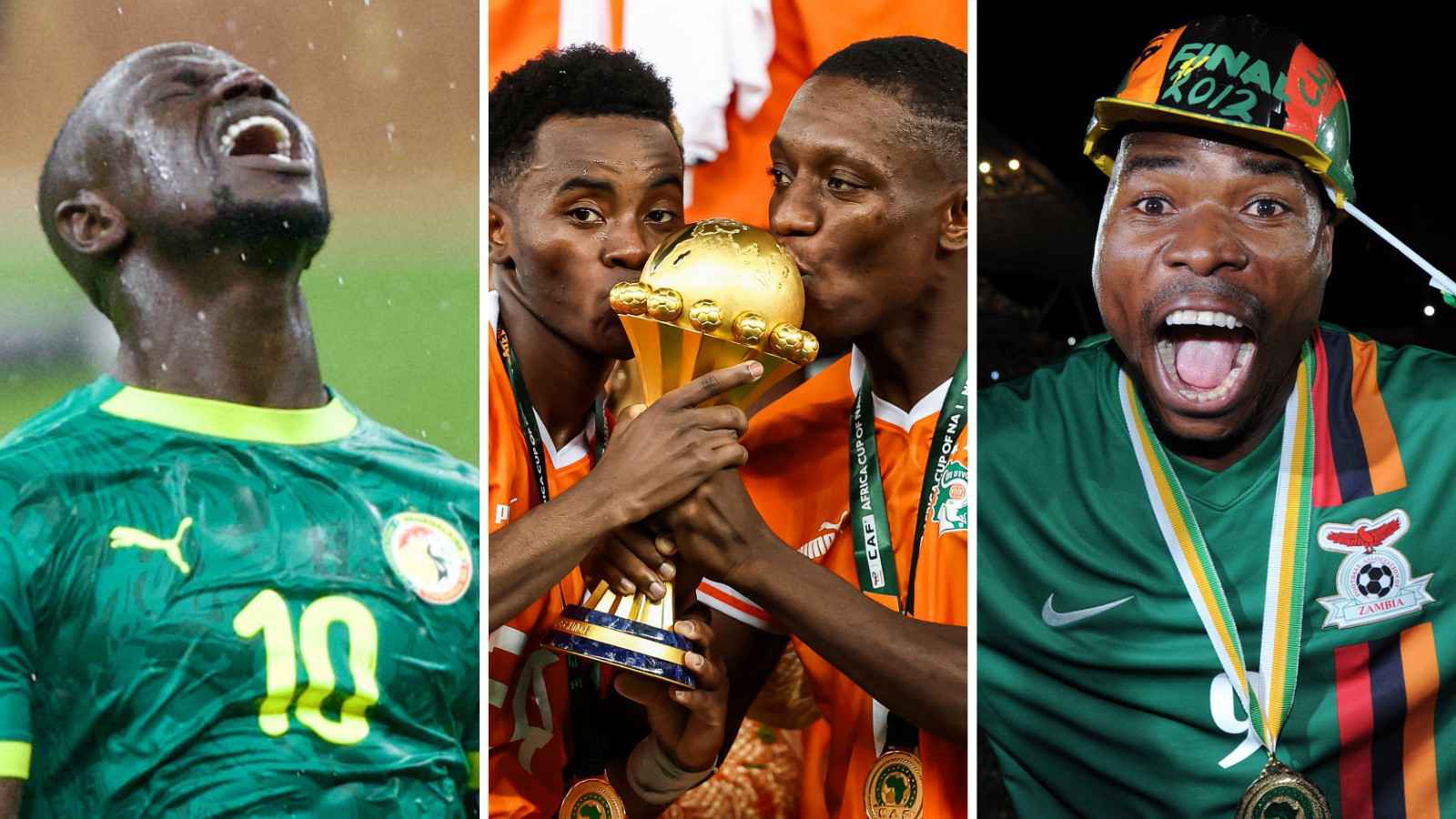
After a 2025 Africa Cup of Nations which delivered more goals than ever before but saw controversy mar the final, fans can look forward to two more editions in quick succession in 2027 and 2028 – even if the exact dates of those tournaments, and who will host the latter, are yet to be announced.
After that Afcon will be hosted every four years instead of biennially.
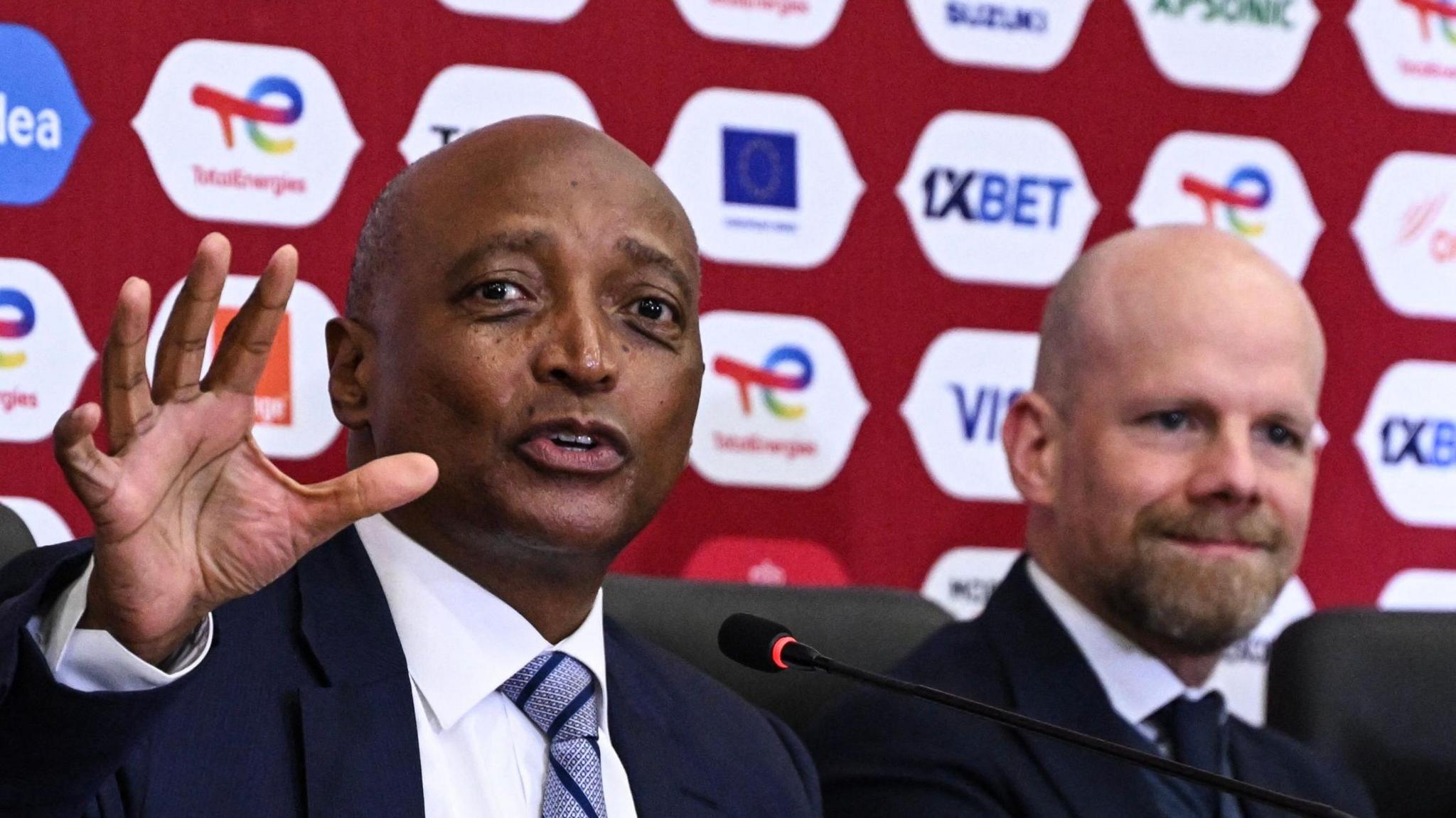
Confederation of African Football (Caf) president Patrice Motespe dropped that bombshell on the eve of the recently completed finals in Morocco, as well as announcing the creation of a new African Nations League which will be introduced in 2029 and played annually.
The decision was made after consultation with world governing body Fifa and the announcement sparked division and debate, with Mali coach Tom Saintfiet labelling it “totally wrong”.
However, Motsepe has doubled down, stating that Caf is “convinced” the decision is in “the best interests of African football”.
He also believes the Nations League will provide a “better competition” than Afcon.
BBC Sport Africa explores some of the key topics of discussion surrounding the changes.
A Caf decision or a Fifa decision?
 Getty Images
Fifa president Gianni Infantino first publicly proposed holding Afcon every four years in February 2020, an idea Motsepe rejected after he was elected as Caf president 13 months later.
“This is one area where there are different views among different people – I have no doubt it [Afcon] has to be every two years,” Motsepe said then.
One respected former manager, with extensive experience across the continent, said Infantino “wants to kill African football”.
With the Fifa World Cup expanded to 48 teams and nine African sides guaranteed spots, the Swiss has clearly turned Motsepe to his way of thinking on Afcon over the past five years.
Motsepe’s argument now is that Caf had to compromise to help make the global calendar “significantly more synchronised and harmonised”.
Yet the South African reacted spikily after facing accusations from some members of the media that Fifa, not Caf, runs the African game.
“We have got to move on from this inferiority complex,” he said.
“What saddens me is Europeans and Fifa people have more respect for us than some of our own people [in Africa].
“At times you need to make concessions. Sometimes we have to take unpopular decisions.”
Changing football heritage
Afcon has been a biennial tournament since its inception in 1957, barring a three-year gap between 1959 and 1962 and one year separating the 2012 and 2013 editions.
It has become a compelling watch known globally for its dramatic storylines and unpredictability.
Yet the ever-increasing number of Africans plying their trade in Europe has caused scheduling issues, with clubs consistently losing players mid-season.
A pledge to stage Afcon in June and July has fallen by the wayside, first because of climate concerns and then the introduction of Fifa’s expanded 32-team Club World Cup last year.
“We look too much to please the big clubs in Europe,” Belgian Saintfiet, who has coached seven African nations, told the BBC World Service.
Opinion appears split, with Egypt’s Hossam Hassan also saying the move “would serve the interests of European leagues”, while Ivory Coast boss Emerse Fae believes it can be “a good thing” if African football continues to develop.
The Nations League could potentially provide that chance to improve for smaller nations.
“I don’t know that them losing games 5-0 or 6-0 really raises the level of African football,” Fae said.
“If they play against other teams of their level with the aim of being promoted, I think everyone will be a winner.”
-
Playing Afcon every four years ‘easier’ – Fae
-
10 July 2024
-
Show me the money
 Getty Images
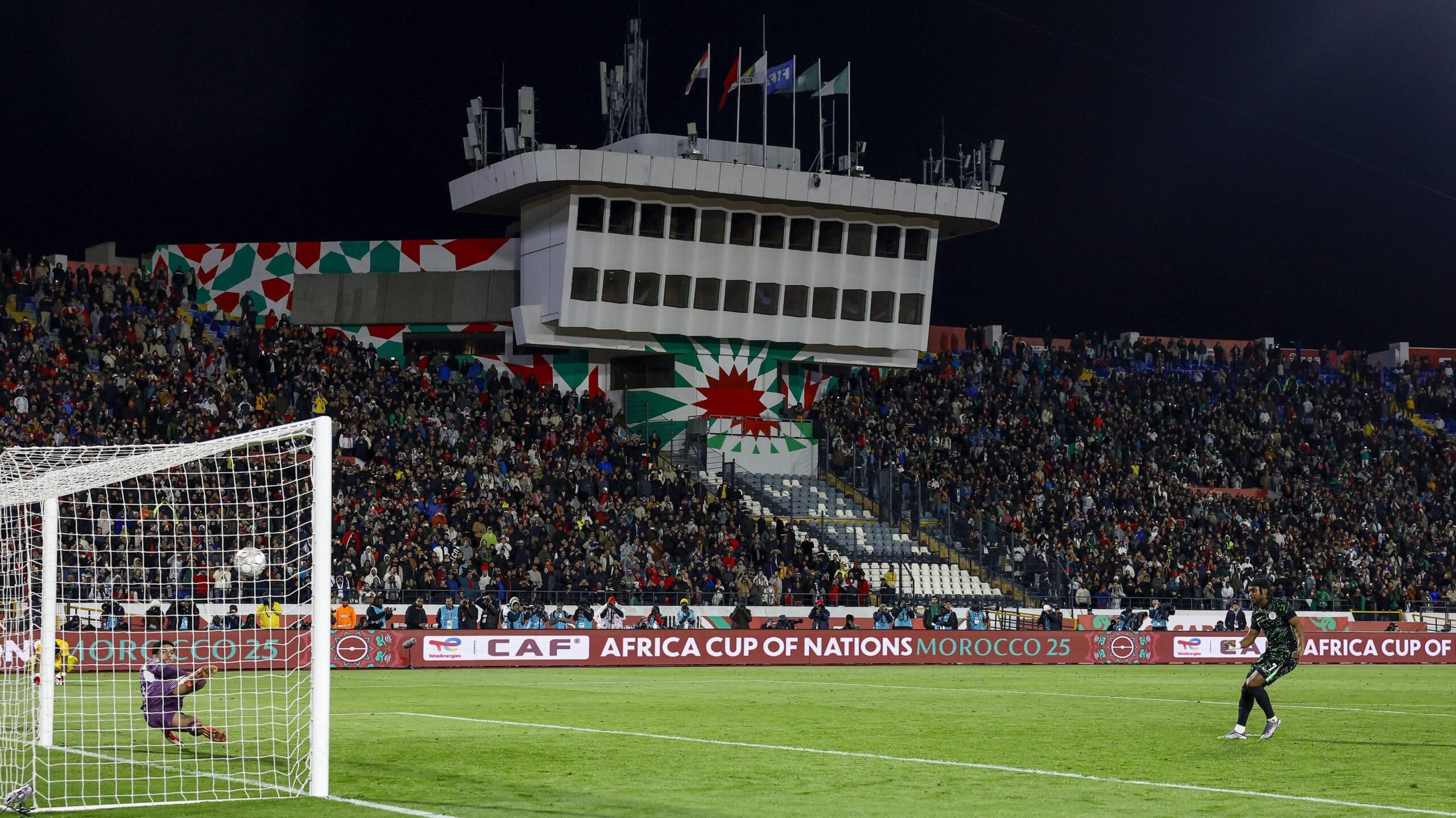
Since Motsepe took office, Caf has vastly increased the money it generates from Afcon.
A profit of $114m (£85m) was forecast for Afcon 2025, up from $75m (£56m) for the Ivory Coast and what was less than $5m (£3.7m) for the 2021 edition in Cameroon.
Regular hosting has encouraged the development of football infrastructure, although upkeep of those facilities can prove challenging.
“We know that it’s really important to have the [Afcon] every two years for the development of the continent,” Senegal captain Kalidou Koulibaly said.
“For our continent, I think that every two years was amazing. But now, if the decision is like this, we’re going to see what the future is going to be.”
It begs the question ‘Why change?’, especially having established a slick product.
However, Motsepe says Afcon revenue “is significantly less” than that which Caf has “implemented” for the African Nations League.
Whether the balance sheets stack up to the forecasts is another matter – yet the fact the Nations League will be played on a regional basis could revive dormant rivalries.
Motsepe raised the example of Ghana facing Nigeria every year – a huge derby which has seen just five competitive meetings in two decades.
The shop window and the end of CHAN
 Getty Images
Afcon has often provided a shop window for players to secure potentially life-changing, lucrative transfers.
“We are the luckiest [generation] because the youngest, they’re going to wait every four years to play an Afcon,” Burkina Faso captain Bertrand Traore, who featured in his sixth Afcon in Morocco, told BBC Sport Africa.
“Some players will be more receptive about this decision but in the other end some need this competition to show themselves to the world.”
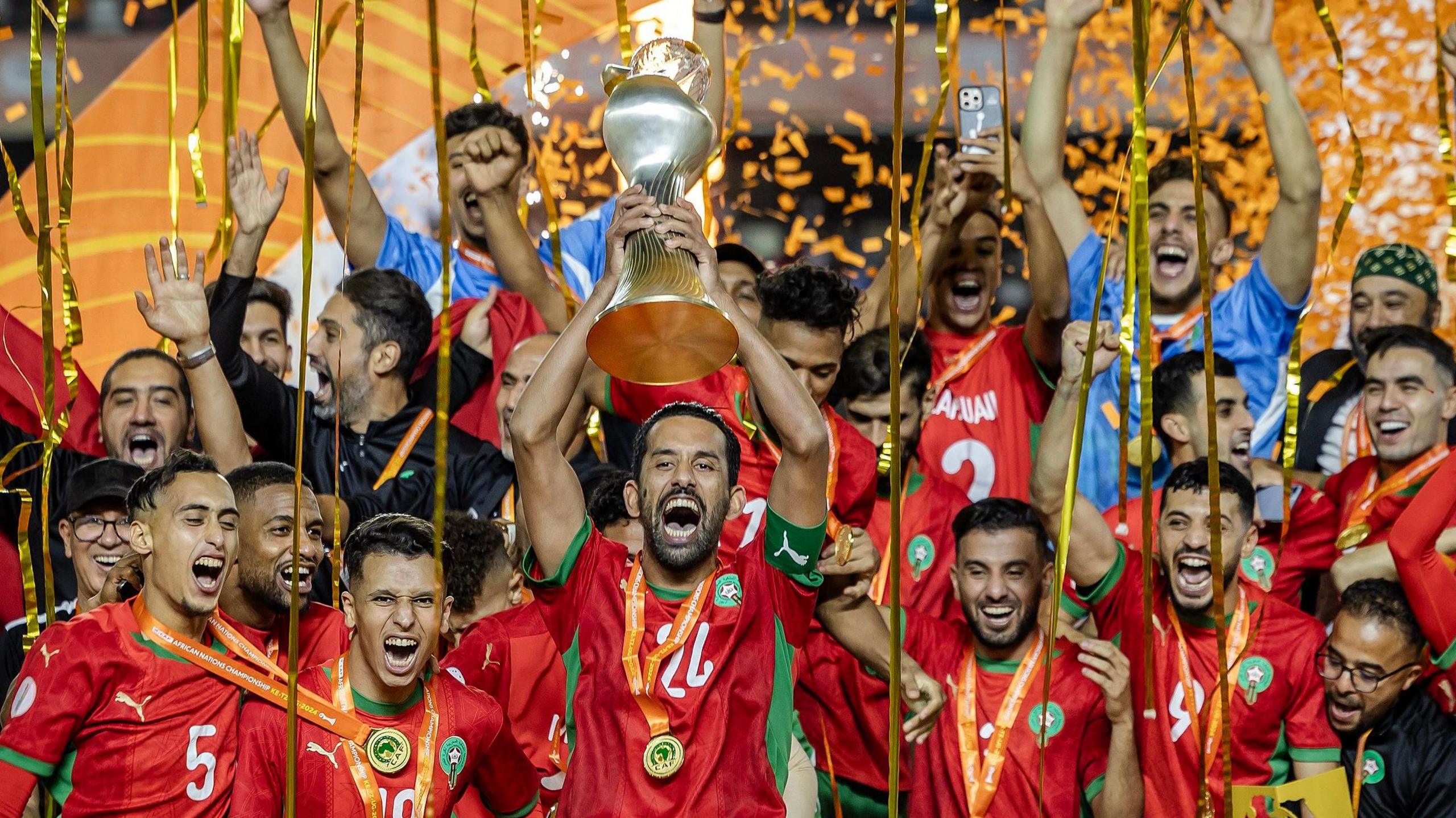
Caf’s changes also mean the death knell for the African Nations Championship (CHAN), the tournament for domestic-based players.
The past two CHANs have felt like ugly ducklings – with some nations not even entering qualifying, an odd number of finalists, Morocco withdrawing from the 2022 edition because of diplomatic tensions and the 2024 finals delayed because the hosts were not ready.
Motsepe described CHAN as a “spectacular money-loser”, yet it helped launch the international careers of Morocco forward Ayoub El Kaabi and Senegal midfielder Lamine Camara, who both featured in the 2025 Afcon final.
Winning coach Pape Thiaw, meanwhile, gained experience leading the Teranga Lions to the 2022 title.
Meanwhile, when it comes to the Women’s Africa Cup of Nations, no mention has been made about a possible move to a four-year cycle.
Former South Africa midfielder Amanda Dlamini believes the women’s game in Africa is “different” and still trying to establish itself as a “product”.
“I hope it does stay as two years, because if it is four years they are going to forget about us,” she told BBC Sport Africa.
A communications issue
What Motsepe has accepted is that Caf could have done a better job of explaining its decision and the manner of its announcement.
It certainly served as a bolt from the blue during what was a near two-hour news conference in Rabat last month.
“We didn’t do as good a job in preparing the ground on this Afcon every four years,” Motsepe admitted on Saturday.
“We must make sure that our everyday people, who we account to, understand what we have done is good for them.
“We know that in two, three years people will see what we are talking about.”
The Nations League may prove to be a success, but Afcon is unlikely to lose its lustre as the continent’s greatest prize.