
This post was originally published on this site.
The broadcasting industry has had an eventful time of it recently, having been “disrupted” by upstart streaming platforms. Just a few years ago, the wars for audiences and dominance between the streamers had triggered a production boom, and people were talking about a “golden era” of “peak TV”.
Yet just five years on, the future for the streaming industry looks a lot less rosy. The predicted imminent demise of traditional broadcasting failed to materialise and streaming shows signs of plateauing.
People are wondering if the wider broadcasting format can survive at all in the face of competition from social media – let alone from the seemingly relentless rise of artificial intelligence. Still, the evidence seems to suggest that, although people may be changing what they watch on the TV screen, “they are not abandoning it”, as Mark Browning, CEO of Zinc Media Group, puts it. The industry may have fallen out of fashion, agrees Matthew Dolgin, a senior equity analyst at Morningstar, but “things should generally get better” for the sector in the future.
Sign up to Money Morning
Don’t miss the latest investment and personal finances news, market analysis, plus money-saving tips with our free twice-daily newsletter
Don’t miss the latest investment and personal finances news, market analysis, plus money-saving tips with our free twice-daily newsletter
Don’t write off legacy broadcasting firms
There is no doubt that what is known as the “legacy media” – the traditional terrestrial broadcasting companies in the UK and the networks and cable companies in the US – is under pressure, from both streaming services and social media, especially YouTube and TikTok.
Indeed, the legacy broadcasters have gone through the five stages of grief, says Ben Barringer, head of technology research at Quilter Cheviot. First, they denied that the new formats posed a threat (denial), then blamed other factors such as sales strategies, the macroeconomic environment and regulatory moves for their woes (anger and blame). Then they started their own on-demand services (bargaining) or merged with competitors (depression). But managers proved to be too invested in a dying industry and lacked agility. Now we’re at the final stage (acceptance): investors may have to be content with the companies being gradually run down while raking in what remains of the cash flows.
Others aren’t quite so ready to write off the legacy broadcasters. The core business of the main TV and cable companies “is producing good content”, says Srinivasan (Srini) KA, co-founder and president of Global Business at Amagi, and although the way in which that is delivered may be changing, the underlying demand for it is not. So, provided broadcast companies are willing to evolve and embrace new methods, they should have a good future. ITV in the UK and NBC in the US have already changed how they distribute their content, says Srini, and have a strong presence on social media.
Such efforts are already having an impact, says Browning. Ofcom’s sixth annual Media Nations report suggested that traditional broadcast television viewing fell by 4% in 2024, but the introduction of on-demand content through digital platforms has largely managed to stem the losses. Legacy media (that is, live channels plus broadcaster on-demand services) still accounted for 56% of all measured in-home viewing in 2024, only slightly down from 57% in 2023. The broadcasters that have a future are the ones with the “most developed on-demand platforms and with a highly diversified audience”, he says.
Streaming services know their audiences
Streaming services should also do better than people might expect. They may increase their revenue at a slower rate than the breakneck expansion they have experienced in the last decade, says Dolgin, and “the biggest services have become somewhat saturated in their biggest markets when it comes to subscribers”, but they nevertheless “definitely have room to grow” thanks to opportunities in international markets in Asia, Latin America, Africa or the Middle East.
As well as adding more subscribers, the big streamers can also boost their revenue by simply increasing prices. They have to date managed to do this without losing customers or hurting the bottom line. Advertising is of course another potentially lucrative source of revenue. Netflix has had a lot of success with its advertising-supported service. At the same time, the streamers should be able to raise profits higher than revenue by pushing down costs, by exploiting the scale they have achieved and by “being a little bit more disciplined”.
Streamers have one big advantage when it comes to advertising, says Sonia Baschez, founder of Bend Growth Co, a marketing consultancy for start-ups. They have developed advertising platforms that make it far easier for them to get to know much more precisely just who is watching each show, thus enabling advertisers to precisely target particular demographics in a way that legacy television companies weren’t able to do. With the exception of large events such the World Cup or awards ceremonies, which still tend to attract high numbers across the board, Baschez’s clients are increasingly spending their budgets with streaming services.
Cinemas are back

(Image credit: Igor Suka/Getty Images)
The cinema industry may still have some life left in it, too. It has obviously struggled in recent years, not least because the window of exclusivity (between films appearing on cinema and then on TV) has narrowed, as Randeep Somel, deputy fund manager at M&G Investments, points out. You can now get pretty much any film that you want on demand in the comfort of your own home without having to be tied down by the cinema’s timings. Making the trek to the local cinema also looks less attractive during a cost-of-living crisis, and the decline of large American shopping centres mean that parents no longer leave their children at the cinema while they do their shopping.
Still, it’s undeniable that you cannot get the same experience at home as you can on the big screen, and many cinemas have begun to recognise that they are now basically in the hospitality as much as the show business. The quality of the experience has thus improved, from better seats to cleaner venues. How we view films may have changed, but going to the cinema can still be a very good experience.
Indeed, “as our lives become more entrenched in the digital world, people are starting to crave that human interaction a bit more, and there’s still something very magical about the cinema experience that a lot of people still really connect with”, says Matt Celia, co-founder and creative director of Light Sail VR. Cinema chains could draw a lot of inspiration (and comfort) from the growing popularity of music concerts and experiences such as the Las Vegas Sphere. If cinema chains are going to survive and thrive, then there must also be something worth going to see, of course. It’s not up to audiences to save cinemas, but to the studios to make films that people want to watch, and it’s becoming increasingly obvious that producing superhero films with special effects and big bangs is not going to be enough on its own going forward. Still, there are a lot of people who love cinema, as shown by the box office success of many independent films, and you can still find cinemas that have long queues of people waiting to watch classic films. Cinema has a future if it can get its offering right.
Some of the biggest streaming services are also able to leverage their technology to maximise the appeal of their in-house content, says Baschez. Apple, for example, spent around $300 million to make F1: The Movie, then made large sums selling advertising space on the cars in the film. Similarly, Amazon has used its knowledge of book sales to spot authors who are popular “and then directly approach them to see whether they would be willing to turn their bestsellers into a movie or TV series”.

Brad Pitt and Damson Idris attending a movie premiere in Leicester Square
(Image credit: Gareth Cattermole/Getty Images for Warner Bros. Pictures)
The rise of AI
The big elephant in the room is the rise of artificial intelligence (AI). Some argue that it is already radically reshaping the film and television industry, especially at the lower end. Producers are already using AI to create all the backgrounds, says Amir Ahmed, operations manager at Sugarland, a London-based film and video equipment rental company. Film shoots that would once have cost a fortune in design, location permits, travel days and much more can now be done faster and cheaper with AI.
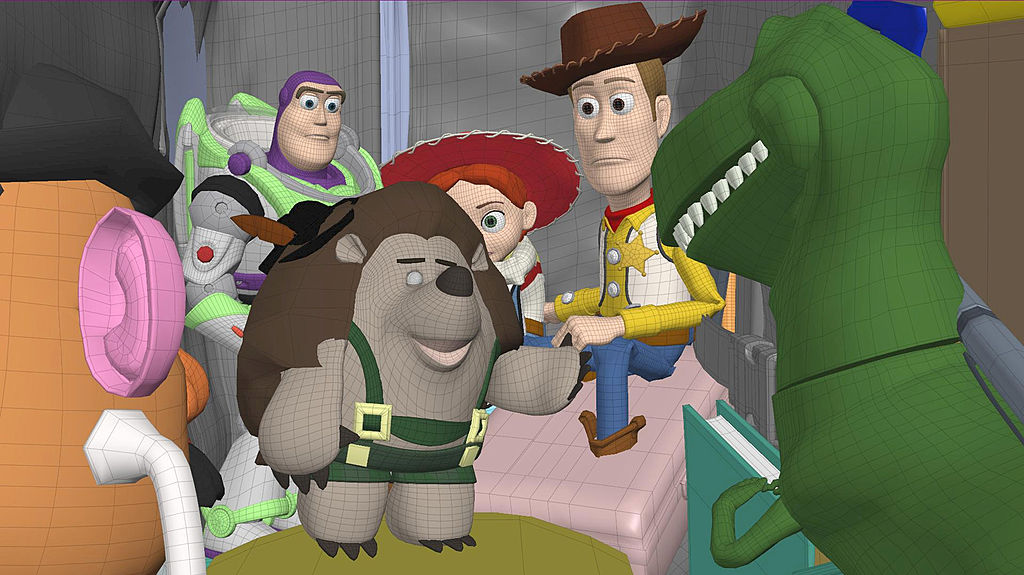
The technology has some way to go before it threatens the wider industry, however. M&G’s Somel points out that AI in a broad sense has been around a long time. Pixar has been using CGI technology to replace animation in films such as Toy Story for many years already, without really taking away from the role of studios. That probably won’t change. As Somel argues, would Sky have been willing to pay such a premium for ITV if it thought that the future was one of AI-generated content?
(Image credit: Disney/Pixar via Getty Images)
Evan Bogart, the CEO of Seeker Music, is similarly optimistic about the continued need for content that is professionally created by humans. His experience in the music industry, seen by many as the canary in the coal mine for television and film, says that, although AI can now produce music that is “quite good”, he has “never heard an AI-created track that has genuinely made me cry”. Given that he helped create award-winning hits for artists including Beyoncé, Rihanna and Eminem, he should know what he’s talking about. The younger generation are also increasingly anti-AI and are saying that they don’t want their music created by a computer. The future is bright.
The music and film industries learned from what happened with Napster and illegal downloads in the 2000s and are quickly working out how to deal with the disruption threatened by AI, says Bogart. This will involve defensive measures, such as “putting a stop to the bad actors and making sure that regulations and guardrails are in place and that artists and producers are protected”.
In the longer run, however, it will also involve striking agreements and partnerships with AI companies so that the technology can be channelled into areas where it can genuinely boost productivity.
Intellectual property will become more, not less, important in an AI-driven world, says Browning, especially if the property in question is in a format that is hard to copy. Brands will become more important, including those of the platform and production company. Companies with “strong and recognisable intellectual property” will be in a particularly strong position “to dictate the future of how AI is used within the entertainment industry”, agrees Beringer.
The death of the TV may have been exaggerated
So it seems that talk that we have passed through the era of “peak TV” into a period of managed decline is premature. “For the last 30 years people have predicted the death of television,” says Pat Murphy, founder and CEO of advertising firm Murphy Cobb & Associates. It would be more accurate to say that what happened is that video has won – it’s video that is “everywhere on every screen and in every format”. We may have passed “peak channels”, but “we’ve not reached peak content and certainly not peak demand”. Indeed, people are consuming more video content today than they ever have before “and that’s just going to keep on growing”.
People are in “constant search of community, and when the community building is real, the medium almost doesn’t matter”, says Willie Roberson, managing director at FGS Global, which advises some of the world’s leading media, entertainment and financial institutions. Broadcast sports, for example, continue to set new TV viewership records. So although the media landscape may be more “fragmented” than it used to be, this means that companies will just have to pursue a multi-channel approach, one which includes television. Overall, the companies that win “won’t just have the biggest budgets, but will know how to build and sustain community no matter where it goes”.
(Image credit: Mike Coppola/Getty Images for Universal Pictures)
The best investments to buy into now
We look at some of the best bets for investors in this sector.
Netflix (Nasdaq: NFLX) is not only one of the big winners in the television industry, or the broader entertainment sector, but is seen as a technology stock, part of the “FAANG” (Facebook, Apple, Amazon, Netflix and Google) phenomenon. Its shares have fallen by around a half over the last year, says Ben Barringer, head of Technology Research at Quilter Cheviot, but Netflix is “now a scaled player with a broad and strong content slate” which bodes well for the future. Netflix is “exploring new markets at the same time – such as sports, gaming and merchandise” – so there should be “further scope for Netflix to expand its subscriber base internationally”. Despite double-digit revenue growth, Netflix still trades at only 19 times projected 2027 earnings.
Disney (NYSE: DIS) has a huge amount of intellectual property, but is not a pure play media company, making around 40% of its money from theme parks and the like. It also owns a large number of channels, including its own streaming service, Disney+. The stock looks undervalued, says Matthew Dolgin, senior equity analyst at Morningstar, given that its parks business “is worth nearly as much as the market is pricing in for the entire company”. Disney’s media and entertainment side of the business should also deliver much better growth than many people are expecting. Disney currently trades at 12.8 times expected 2027 earnings.
Dolgin also likes Fox Corporation (Nasdaq: FOXA). Until recently the company has been highly dependent on pay TV and traditional programming, both of which are in structural decline. Its decision to buy streaming service Roku caused the shares to plunge over concerns that it overpaid, but Dolgin thinks that the deal not only gives Fox access to a “great business”, but also diversifies Fox’s revenue stream, while giving it a platform for distributing its broadcasting once pay TV is no longer economical. Fox trades at 9.6 times 2027 earnings and on a dividend yield of 1.1%.
Dolgin also likes Fox Corporation (Nasdaq: FOXA). Until recently the company has been highly dependent on pay TV and traditional programming, both of which are in structural decline. Its decision to buy streaming service Roku caused the shares to plunge over concerns that it overpaid, but Dolgin thinks that the deal not only gives Fox access to a “great business”, but also diversifies Fox’s revenue stream, while giving it a platform for distributing its broadcasting once pay TV is no longer economical. Fox trades at 9.6 times 2027 earnings and on a dividend yield of 1.1%.
Another conglomerate worth considering is Comcast Corporation (Nasdaq: CMCSA). Comcast provides broadband, but also owns a media and entertainment business, including film studios, theme parks and various television companies, including Sky. Last month it announced plans to split the company into two separate firms: Comcast and NBCUniversal. This is a “logical move”, says Randeep Somel of M&G Investments, which could unlock value for shareholders, as the broadband business “has been seen as a drag on the rest of the company”. Even though Comcast’s revenue has continued to grow, the shares trade at a bargain-basement 6.5 times 2027 earnings, and offer a dividend yield of 5.83%.
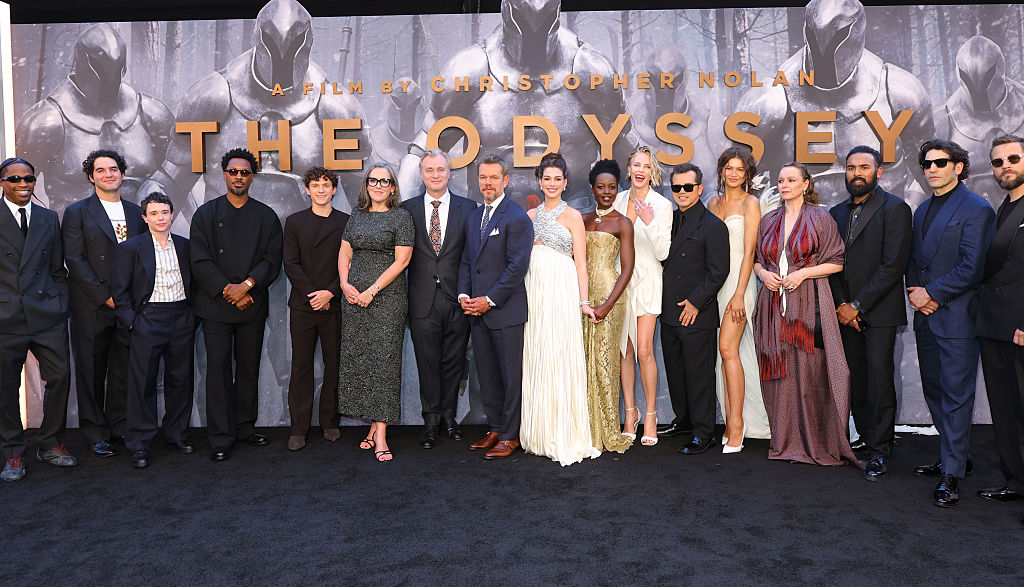
Film lovers’ enthusiasm for spectacular films will be good for IMAX (NYSE: IMAX). It specialises in large, immersive cinema screens, appearing in 1,798 multiplex locations in 91 territories. Revenue has been growing at a strong rate of around 13% a year since 2021, and is expected to keep on growing thanks to the release of films such as Chris Nolan’s The Odyssey, which was shot on an IMAX camera. After a rocky few years in the aftermath of the pandemic, IMAX is now profitable and trades at 19.7 times expected 2027 earnings.
This article was first published in MoneyWeek’s magazine. Enjoy exclusive early access to news, opinion and analysis from our team of financial experts with a MoneyWeek subscription.