
Covid failings in care homes: What the inquiry says
-
Published
The sixth report of the Covid inquiry is highly critical of the way the government tried to protect people in care settings in the UK.
Around 500,000 people were living in care homes at the start of the pandemic – with another million receiving care in their own homes.
The inquiry said action to protect them came too late, causing devastating consequences.
There were more than 43,000 recorded deaths involving Covid in care homes between March 2020 and July 2022. Here are the key findings of the 287-page report.
There was no ‘protective ring’
At the start of the pandemic, the then-health secretary in England, Matt Hancock, said the UK government had placed “a protective ring” around care homes.
But the inquiry says this was not the case, listing a catalogue of failings.
It says the care sector appeared to be “something of an afterthought”.
A lack of personal protective equipment (PPE) meant staff had to resort to makeshift workarounds, including bin bags, festival waterproof ponchos and painters’ overalls.
The report is also critical of the way hospital patients who may be infected with Covid were moved to care homes to make space for others.
The decision was understandable given the need to free up beds for Covid patients.
But, without sufficient testing, it was important to keep these people separate and isolate them from others in case they were infected.
Official guidance in March 2020 in England, Wales and Northern Ireland did not request this. That, the report says, was a significant oversight.
Long-standing weaknesses undermined response
When the pandemic started, high levels of staff vacancies and turnover in the social care sector meant that the workforce was “fragile and lacking resilience”.
This undermined the ability of the sector to respond to the pandemic, the inquiry says.
For example, care homes tend to rely heavily on agency staff who work in a variety of different homes. But a desire not to have staff going into multiple homes, to reduce the risk of infection transmission, meant staff shortages got even worse.
Financially, care providers struggled too, as the number of people using services dropped.
And for a sector that uses zero-hours contracts, there was a lack of financial support to help care staff stay off work if there was concern they might be infected.
The response also suffered because of the fragmented nature of the system, with thousands of different providers and services overseen by councils. It meant the sector was more distant from government than the NHS.
The pandemic, the inquiry said, exposed and exacerbated these existing weaknesses.
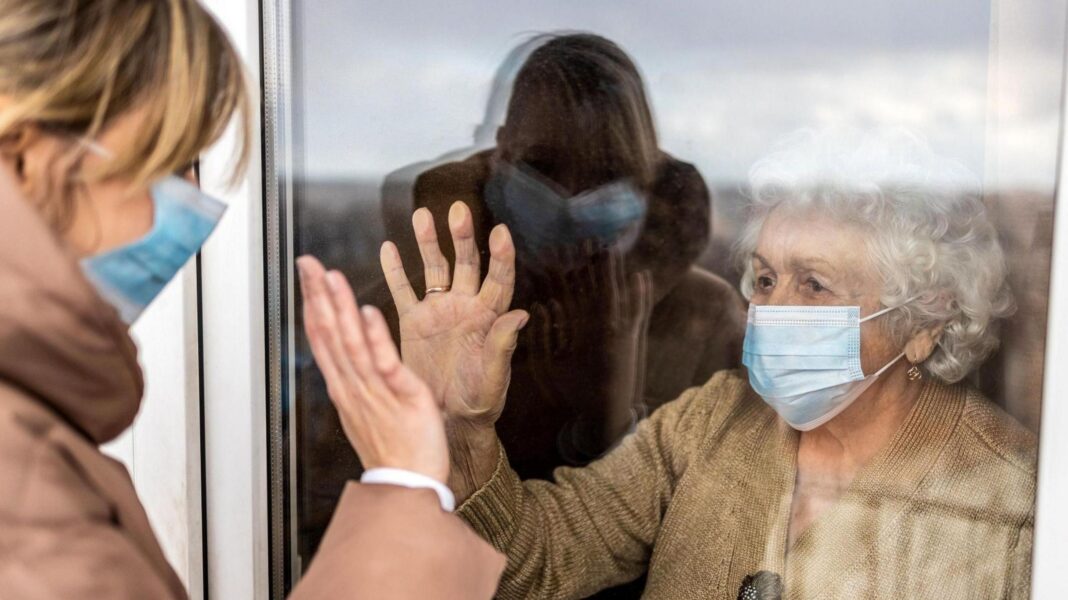
Visiting restrictions were too tough – and caused harm
The report is clear that precautionary steps taken to restrict visiting, as part of infection control, went too far.
It acknowledges there was little choice to introduce bans on visitors at the start of the pandemic, saying that was rational.
But as the pandemic progressed, so did the balance between the benefits and harms of restrictions.
Visits are extremely important, allowing loved ones to help residents with everything from personal care to maintaining their mental health.
By September 2020, evidence suggested visitors posed a “marginal risk” – staff were judged to be the key entry point for infections.
The four UK nations then started to relax their guidance, but many care homes failed to implement this and visiting remained heavily restricted.
This, says the inquiry, resulted in a significant decline in the health and wellbeing of residents.
Concern over blanket do not resuscitate orders
CPR (Cardiopulmonary Resuscitation), including chest compressions, can be life-saving if a person’s heart has stopped beating.
But doctors can sometimes opt not to resuscitate people – as can individuals themselves in advance – for example, if the individual is extremely frail or has a life-limiting illness.
This should be done on an individual basis and the use of blanket do not resuscitate orders (DNACPR) is considered unlawful.
The inquiry says it heard evidence of GPs imposing blanket DNACPRs on care home residents.
And it pointed to records showing a sharp increase in orders being put in place – they jumped from 16,800 to 26,500 in the first nine months of the pandemic.
This concern mirrors an earlier Care Quality Commission investigation which found evidence of unacceptable and inappropriate DNACPRs being put in place.
The ‘deep distress’ of care staff
The impact on staff working in care homes was huge, affecting their mental health and wellbeing, the inquiry said.
Some moved into the care homes where they worked, in an attempt to protect residents from infection. One care home owner in Wales described how 39 staff moved in for a fortnight at the start of the pandemic.
Seeing so many residents die placed an enormous strain on workers, who often had to provide end-of-life care to multiple people at the same time.
One care home, for example, lost half of its residents over the course of three weeks.
Staff told the inquiry of the deep distress they suffered.
“Staff were sitting on video calls with families, saying their last goodbye to loved ones. That was horrendous… staff were crying with the residents, because it was just so emotional for them,” one said.