
This post was originally published on this site.
King hails ‘unprecedented’ Bayeux Tapestry exhibition in London
-
Published
King Charles has hailed the “unprecedented loan” of the Bayeux Tapestry to the British Museum, calling it the “best possible symbol” of the closeness between the UK and France.
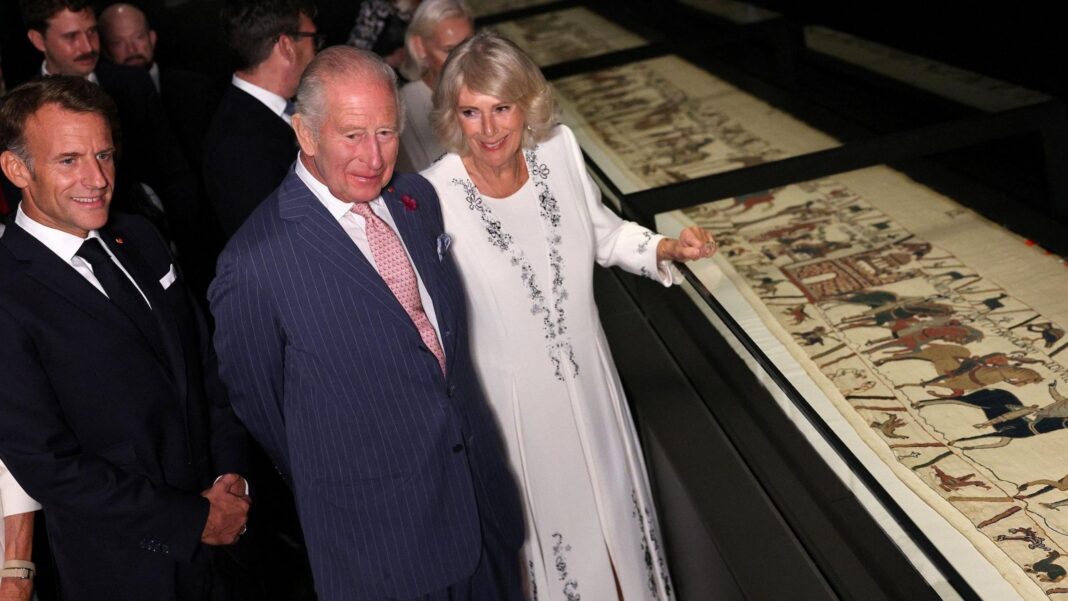
After viewing the medieval tapestry in London on Wednesday a week before it goes on public display, he spoke in French and English to guests including President Emmanuel Macron of France and Prime Minister Andy Burnham.
The King said he was the direct descendant of one of the key figures in the tapestry, William, Duke of Normandy, whose army invaded and defeated King Harold at the Battle of Hastings in 1066.
The tapestry “tells the story of the beginning of what I like to think of as the French side of my family’s history in these islands”, he added.
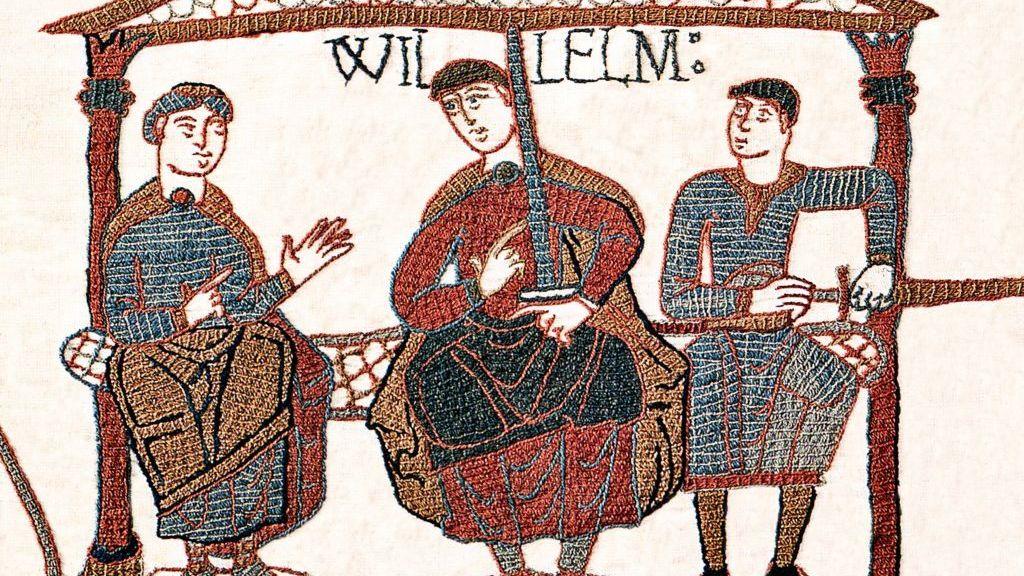 Image source, Getty Images
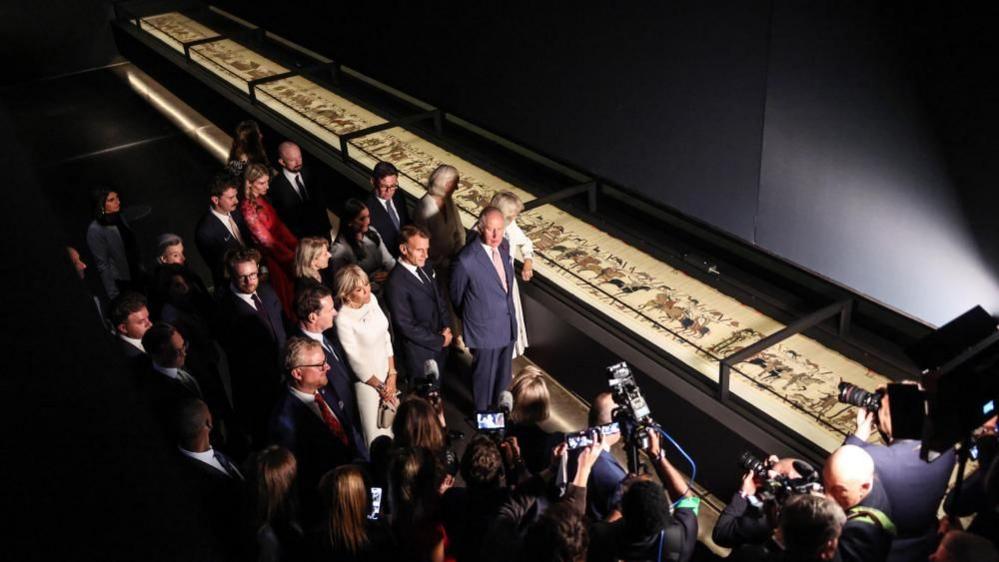 Image source, The Times/PA
The King, speaking inside the Great Court of the British Museum, said the opponents depicted in the tapestry – Normans and Anglo-Saxons – would have been delighted to see this togetherness between France and the UK – “two great nations, which share such fundamental values”.
“The tapestry’s story is one of ambition and uncertainty, of oaths and journeys, of ships, councils, kings, comets and consequences,” said the King.
“Yet it is not merely an English story, nor only a Norman one. Indeed, from the moment of its creation, it may have brought together our two peoples,” he said, weaving in the historic importance of the artwork.
Burnham joked about his own new role as prime minister – saying the tapestry “showed a new leader emerging from a northern territory and travelling to the south of England”.
Describing the tapestry as a “masterpiece”, President Macron said a loan had first been proposed in the 1930s, but he was delighted that the idea had come to fruition.
He spoke of the exhibition in London as an example of how “we are united” and a “reminder of what our countries can do if they join forces”, addressing an audience including historian Dame Mary Beard and former prime minister Theresa May.
The 70m (230ft) tapestry, originally embroidered in England but kept for centuries in France, tells the story of the Norman Conquest and the Battle of Hastings in 1066.
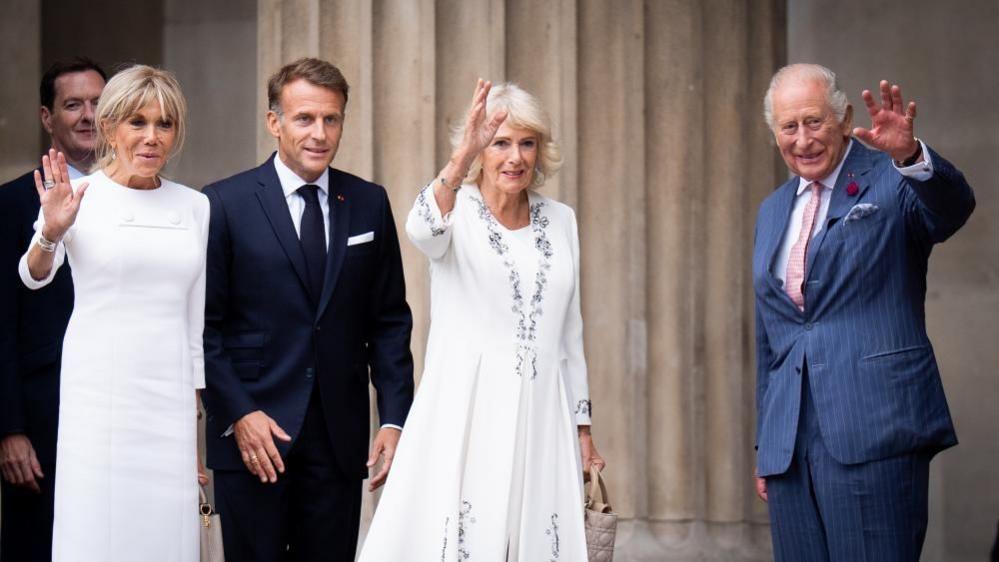 Image source, PA Media
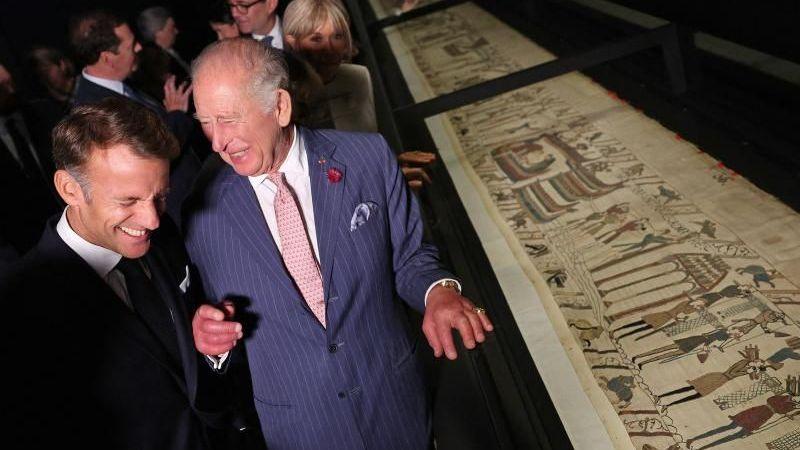 Image source, Reuters
The King and Queen, Macron and his wife Brigitte, and Burnham and his wife Marie-France van Heel were given the chance to see the historic embroidery in the atmospheric darkness of the British Museum.
They had a close look at key scenes in the tapestry, including the Coronation of King Harold and his death in battle.
Sending the tapestry to the British Museum was announced by Macron during a state visit to the UK in July 2025, as an emblem of the strong partnership between the countries.
There had been fears that moving the fragile tapestry could risk causing damage, but French government sources said display conditions at the British Museum were “ideal”.
The French authorities welcomed the way that visitors in London would see the tapestry lying flat, rather than upright, with this believed to be better for the conservation of the fibres, sewn more than 900 years ago.
It is believed the final scenes of the tapestry have been lost or destroyed, as it has not always had such careful owners. In the 18th Century, during the French Revolution, it was rescued from being cut up to make covers for soldiers’ carts.
At a state banquet hosted by King Charles in Windsor, Macron had said the missing end of the tapestry was a symbol that “in the great mural of Franco-British history, the end is yet to be written – it is up to us to do it”.
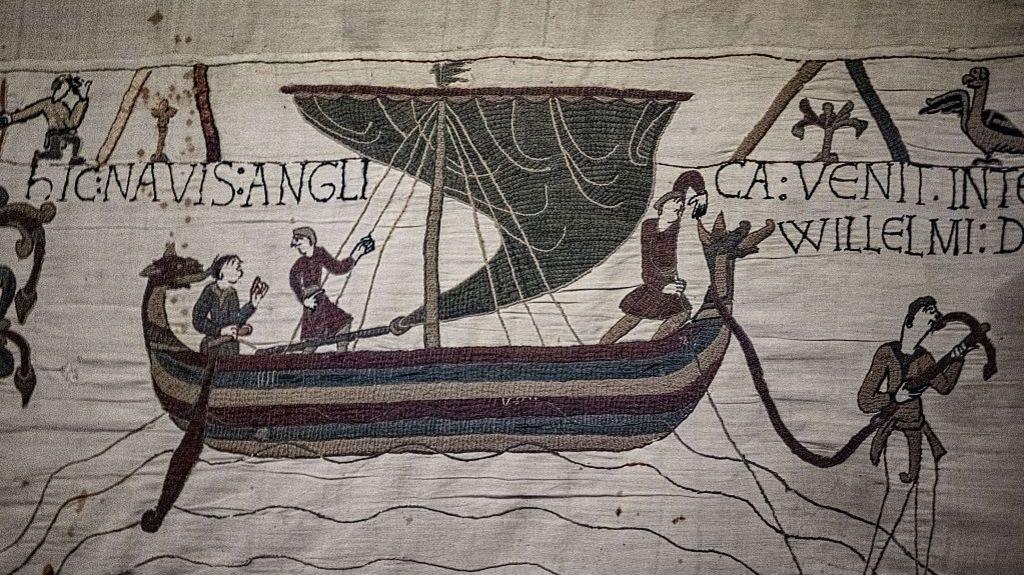 Image source, Getty Images
This trip to the British Museum is the first official joint engagement carried out together by the King and Burnham since he became prime minister in July.
French government sources said the occasion was also an opportunity for President Macron to get to know Burnham.
Support for Ukraine, the conflict in the Middle East, and relations with the European Union were among the topics for the two leaders, said French sources.
Small boats crossing the Channel were likely to be discussed, as well as those Norman versions embroidered on the tapestry.
The Bayeux Tapestry records a much earlier chapter in Anglo-French relations, when King William of Normandy fought King Harold for the throne of England.
Using dyed wool stitched onto linen, it shows the competing claims to the throne, the Normans sailing across the Channel and the decisive Battle of Hastings, in which Harold was killed, allowing William the Conqueror to become monarch.
The tapestry, believed to have been embroidered by English women for the new Norman rulers in the 1070s, includes 58 separate scenes, with 627 human figures, 737 animals, 37 ships and 23 trees, with a Latin narration accompanying the images.
As part of this cultural diplomatic exchange, the UK is lending France one of the British Museum’s prize exhibits – treasures from the Anglo-Saxon Sutton Hoo burial.
Culture Secretary Lisa Nandy said: “Britain and France have a unique shared history and nothing symbolises it more than the Bayeux Tapestry.
She said “a generation of British children will remember it for the rest of their lives”.
There was strong demand for tickets to see the tapestry, with the exhibition already sold out until the end of 2026.
The next tickets, covering visits between January and March 2027, will be available from the British Museum from 21 October.

Get in touch
Do you have any views, comments or questions about this story?
-
‘Nothing left to chance’ for Bayeux Tapestry’s journey to London
-
Published4 June
-
-
Five key scenes from the Bayeux Tapestry, and the story they tell
-
Published11 July
-

Sign up here to get the latest royal stories and analysis every week with our Royal Watch newsletter. Those outside the UK can sign up here.