
This post was originally published on this site.
Luigi Mangione appears in court as questions remain in case ahead of murder trial
-
Published
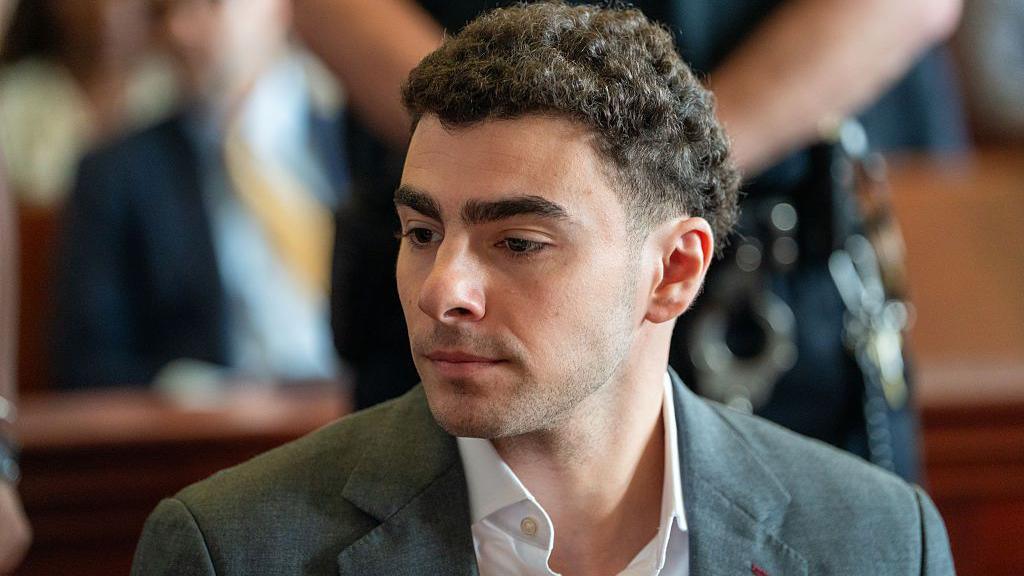
The judge overseeing the state trial of Luigi Mangione, the man accused of killing UnitedHealthcare chief executive Brian Thompson, has laid down the ground rules for court public and media access to the high-profile case.
Mangione returned to court on Tuesday ahead of his murder trial, which begins next month in New York.
The case has attracted national attention, and has also created an online frenzy, with both his backers – many of whom see Mangione as a symbol of the backlash against US healthcare costs – and his critics analysing everything from his intentions to his appearance.
The spectacle is likely to intensify when jury selection for the trial begins on 8 September.
Mangione, if found guilty, could face decades behind bars. He has pleaded not guilty to all charges, including second-degree murder and weapons-related offences.
He faces a separate federal trial next year, in which he has also pleaded not guilty.
Much of what is expected at the state trial – the prosecutor’s case, Mangione’s defence, and obstacles both parties face – were previewed in months of court filings and arguments, but some questions remain unanswered.
Will the prosecution win battle over evidence?
One of the most crucial elements of the Mangione case was decided earlier this summer, after a multi-day hearing in December where the judge weighed which evidence prosecutors could present during trial.
Mangione’s team mounted an aggressive bid to exclude evidence recovered from his Pennsylvania arrest. It alleged that state police improperly seized and searched Mangione’s possessions, and did not properly advise him of his constitutional rights before questioning him.
The defence succeeded in excluding some items, including a gun magazine, cell phone, passport, wallet and computer chip found in Mangione’s backpack.
But Judge Gregory Carro allowed at trial a gun and notebook with Mangione’s purported writings, viewed as vital to the prosecution.
Prosecutors have unveiled surveillance footage showing the moment Thompson was shot from behind by a hooded individual. They also used footage to piece together Mangione’s alleged movements after the shooting, and ballistics and fingerprint evidence they claim bolsters their case.
What might Mangione’s defence look like?
As trial approaches, Mangione’s team has yet to unveil its full strategy. So far, his lawyers have not offered a robust alternative theory to the one prosecutors have put forth.
“We do not have, like in ‘The Fugitive,’ the idea of the one-armed man who’s the real killer,” said former federal prosecutor Mitchell Epner, referencing a 1993 thriller about a man wrongly convicted of killing his wife.
Earlier this summer, Mangione’s lawyers proposed, then quickly withdrew, an “extreme emotional disturbance” argument.
In such a defence, New York law requires lawyers to show a defendant “acted under the influence of extreme emotional disturbance for which there was a reasonable explanation or excuse”. Extreme emotional disturbance would allow the jury to consider the less severe charge of manslaughter, rather than second-degree murder. But jurors would have to be convinced of the accused’s state of mind at the time.
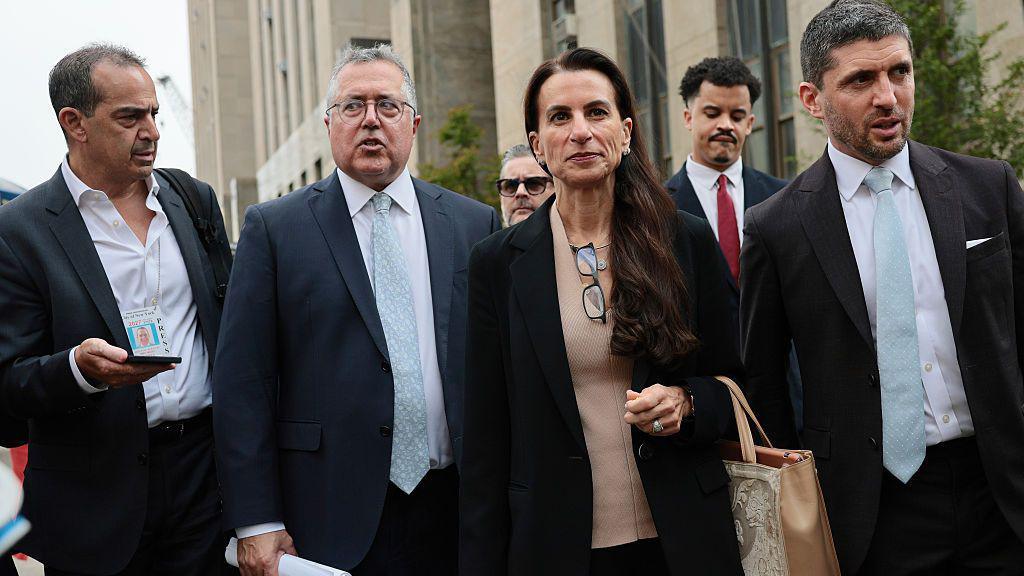 Image source, Getty Images
Some experts wondered if Mangione would argue a full insanity plea – different from emotional disturbance, but his lawyers have not proposed it.
“Short of being delusional, or having no understanding of the nature of what one is doing, an insanity defence is not likely to be successful,” said Cheryl Bader, who leads the Criminal Defence Clinic at the Fordham University School of Law.
Mangione’s team did not immediately respond to a request for comment.
As in every US criminal trial, the burden rests on the prosecution to prove its case to the jury beyond a reasonable doubt, a high legal bar.
“The more his case is about the question of who killed the victim, the easier it is for the prosecution,” said Epner.
Epner cited other themes, including healthcare in America, as potential narrative threads that could sway a jury in Mangione’s favour.
“The more it’s about the other peripheral issues, the harder it is for the prosecution,” he said.
Who will be able to watch?
In recent weeks, Mangione’s lawyers and prosecutors have traded terse court filings debating just how much access the public will have to the trial.
The trial is expected to generate coverage across traditional outlets, social media, and streaming platforms. Mangione’s supporters have demanded more transparency, and frequently post and broadcast from outside court.
On Tuesday, Carro said the court would open an overflow room during the trial, which will allow more members of the public and press to attend in person.
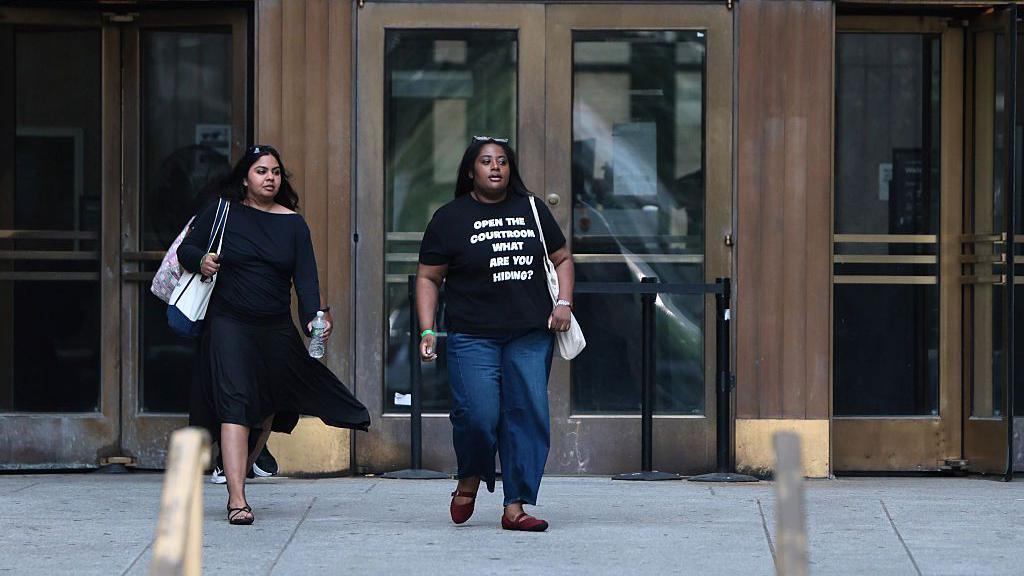 Image source, Getty Images
In earlier court filings, Mangione’s lawyers had questioned the court’s press procedures, and why the court had not yet established an overflow room to meet public demand. They also implied – and later walked back – that prosecutors were influencing the court’s media policies, which the Manhattan District Attorney’s office denied.
Carro took to the bench to rebuke Mangione’s attorneys for their filings, saying “any suggestion the district is involved is simply incorrect”.
He also chastised prosecutors for raising security concerns about an overflow room, telling them it was not the court’s “first rodeo” with blockbuster cases.
While the public can be admitted to court in New York, space is often limited at high-profile trials.
The court and its press office “remain firmly committed to providing the greatest possible access for both the media and the public”, spokesman Al Baker said, adding that the court is “evaluating the complex logistical and safety considerations involved”.
-
-
Published25 April 2025
-
-
-
Published10 December 2024
-