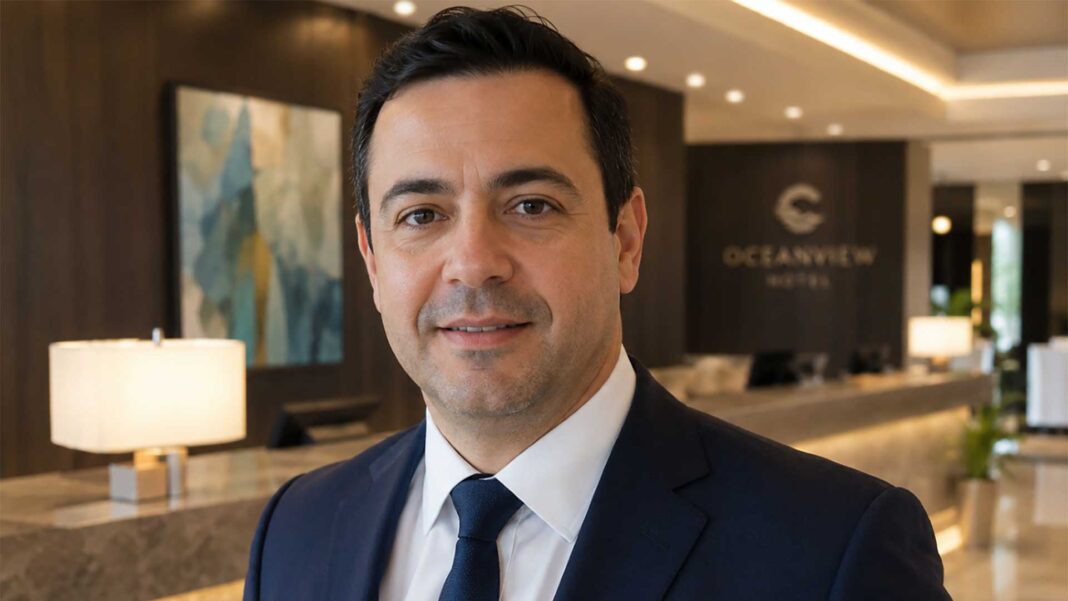

Rodrigues started in entry-level guest services, working front desks and reservations desks before moving into supervisory roles. From there he took on positions as a front office supervisor, guest relations manager, operations manager, and assistant general manager, before stepping into his current role as hotel manager.
Across resort properties, luxury hotels, and full-service operations, Marcos built a reputation for hands-on leadership. He is known for staying close to the daily mechanics of a property: the front office, housekeeping, maintenance, and food and beverage teams that guests never see coordinated behind the scenes. His approach favours steady financial oversight and clear staff training over quick fixes, and he treats guest satisfaction metrics as a working tool rather than a report card to file away.
Marcos studied hospitality management and business administration, with a focus on hotel operations, revenue management, and customer experience strategy. He has since added certifications in hospitality leadership and hotel technology systems, which he applies directly to how his properties run day to day.
Outside the hotel, Marcos supports local tourism initiatives in Florida and mentors people entering hospitality management. He is a regular presence at hospitality networking events focused on workforce development within the state’s tourism sector. His outlook on the industry is shaped by years spent watching how small operational decisions, a staffing schedule, a maintenance checklist, a training session, add up to whether a guest has a good stay or a forgettable one. In this interview, Marcos talks through how his sense of hotel management developed and what he pays attention to on a property today.
Interview with Marcos Neves Rodrigues
Let’s start at the beginning. What drew you into hospitality in the first place?
I grew up around people who took service seriously, not as a performance but as a way of treating others well. That stuck with me. When I took my first guest services job, I noticed how much a single interaction could shape someone’s whole impression of a trip. That’s what kept me in it. It wasn’t a grand plan. It was noticing that this work mattered to people more than I expected.
You moved through several roles before becoming a hotel manager. What did each stage teach you?
Front desk work teaches you patience and pattern recognition. You see the same problems repeat and you learn what actually fixes them versus what just delays them. As a front office supervisor, I learned how to translate that into a schedule and a set of expectations for a team. Guest relations taught me how to listen for the complaint behind the complaint. Operations management widened the lens to housekeeping, maintenance, budgets. By the time I became an assistant general manager, I was thinking less about single interactions and more about how departments hand off to each other.
What does a typical day look like for you as a hotel manager?
There isn’t a single typical day, but most start with a walk through the property before I look at anything on a screen. I want to see the lobby, check in with the overnight team, get a sense of occupancy for the day. Then it’s budgeting, staffing checks, and usually a conversation with at least one department head about something that needs adjusting. I try to keep afternoons open for whatever the property actually needs that day rather than filling them with meetings for their own sake.
How has your education in hospitality management shaped how you run a property now?
It gave me a structure for things I might have otherwise learned only by trial and error, revenue management, financial planning, marketing basics. But the classroom part is maybe a third of it. The rest came from certifications in areas like hotel technology and safety compliance, which I’ve kept adding to over the years because the tools change even when the fundamentals don’t.
Is there a part of hotel management that gets less attention than it should?
Financial performance and occupancy numbers get most of the attention because they’re easy to measure. Staff training programs get less credit, but they’re where a lot of the actual quality comes from. A well-trained team catches small problems before they become guest complaints. I’ve come to see training less as an onboarding task and more as ongoing maintenance, the same way you’d maintain equipment.
You’ve mentored people coming into hospitality. What do you tell them?
I tell them to spend real time in the roles that seem unglamorous, front desk, housekeeping support, before they aim for management. You can’t lead departments well if you’ve never done the work inside them. I also tell them that guest service isn’t a script. It’s closer to problem-solving under time pressure, and the people who do it well are usually just good at staying calm and paying attention.
What keeps you engaged in this industry after so many years in it?
Florida’s tourism market moves constantly, new travel patterns, new expectations, and I like that the work never fully settles. I also still get something out of watching a team come together during a busy season. When you see the pieces you spent months training on click into place during a fully booked weekend, that’s satisfying in a way that doesn’t wear off.
Any final thoughts on where the industry is heading?
I’d rather not guess too far ahead. What I do know is that the properties that keep investing in their people, not just their amenities, tend to hold up better over time. That’s been true throughout my career, and I don’t expect it to change.