
This post was originally published on this site.
McColgan might have ‘one more’ Games in her
-
Published
Eilish McColgan found the Commonwealth Games women’s 10,000m final on Monday hard to watch.
As defending champion, she should have been on the track, in her home country, rather than in the stands. A stress fracture in her foot, sustained in the London Marathon in April, put paid to that and prevented her taking part at Scotstoun.
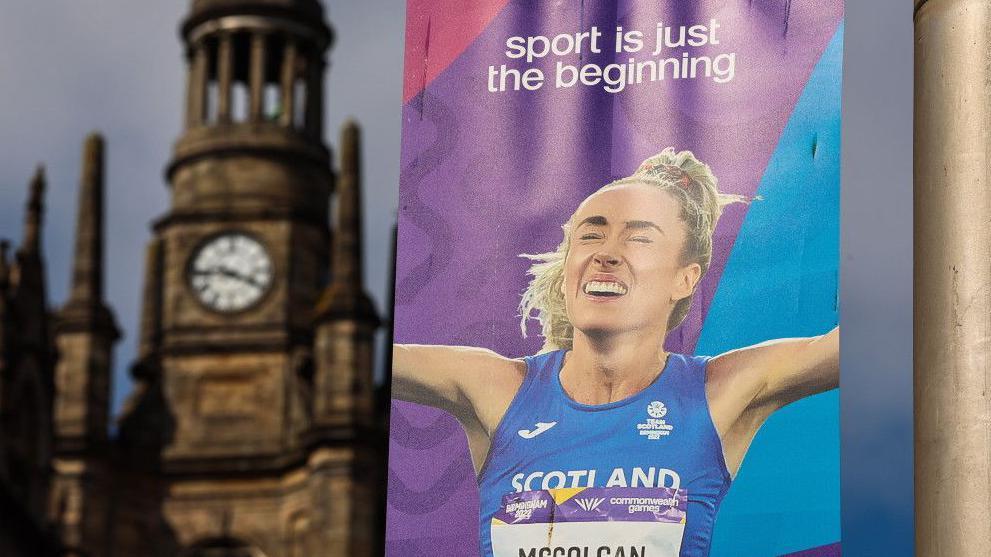
Scotland’s McColgan, 35, emulated mother Liz by roaring to gold in Birmingham four years ago in one of the most iconic moments of that event.
In an injury-scarred spell since, she transitioned to road racing but committed to returning to the track so she could compete at a second home Games in Glasgow after doing the steeplechase in 2014.
She won’t do that again. But the Dundonian has suggested she might still have “one more” Games in her, should her preferred marathon event be included in the programme for the edition in the Indian city of Ahmedabad in 2030.
-
McColgan to miss Glasgow Games defence after foot fracture
-
Published3 days ago
-
-
Why is it so special to be part of Team Scotland?
-
Published5 days ago
-
In the meantime, she is in Glasgow for the next few days to revel in an event which looked like it might not happened at all not all that long ago.
And she says that what the city has done in the 18 months since agreeing to take on the Games when the Australian state of Victoria withdrew has set a template for future multi-sport events.
“It’s not the big shiny games that we’ve had in previous years, but it’s been done on tight timeframes so I think they’ve done well to pull it together,” McColgan said.
“Glasgow has stepped up. And I hope that other countries now see that it doesn’t need to have this huge, huge budget to make it work. We don’t need brand-new infrastructure or stadiums and all the athletes staying in a big village.
“There’s still mass-market appeal. And I do hope this gives the Games a bit of life to continue, because it would be sad to lose it, and lose the opportunity to represent Scotland.
“Growing up, I didn’t have a lot of confidence. For me, making a Scotland team felt like it might be doable because there’s a smaller number of people to get selected. That’s what the Games can do.”