

Meta’s new sustainability report buries the lead: The company is almost certain to miss its own goal to reach net zero by 2030, and it’s refusing to commit to a new timeline.
“We are re-evaluating our timelines, sequencing, and interim milestones — including the 2030 timeframe for our net zero emissions goal and our near-term intensity targets — so our approach reflects current operating realities while keeping progress transparent year over year,” wrote Rachel Peterson, vice president of data centers at Meta, and Blair Swedeen, global head of net zero and sustainability at Meta, in the introduction to the company’s 2026 sustainability report.
That’s a lot of words to say that Meta will continue to pollute if that means it can continue its AI rollout.
Such is the risk of voluntary targets. Companies can make and break them with little to lose, betting — often rightly — that they can ignore them with just a small hit to public opinion, which is fickle anyway. (Remember the Cambridge Analytica scandal? Most people don’t.) There’s almost no risk to the bottom line.
“We remain committed to net zero, but are re-evaluating the 2030 timeline and interim milestone. We’ll continue investing in emissions reductions and reporting our progress annually,” a Meta spokesperson told TechCrunch.
A few years ago, Meta was arguably one of the better corporate stewards of the climate. The company has been one of the largest purchasers of clean power, and it set ambitious goals for water conservation.
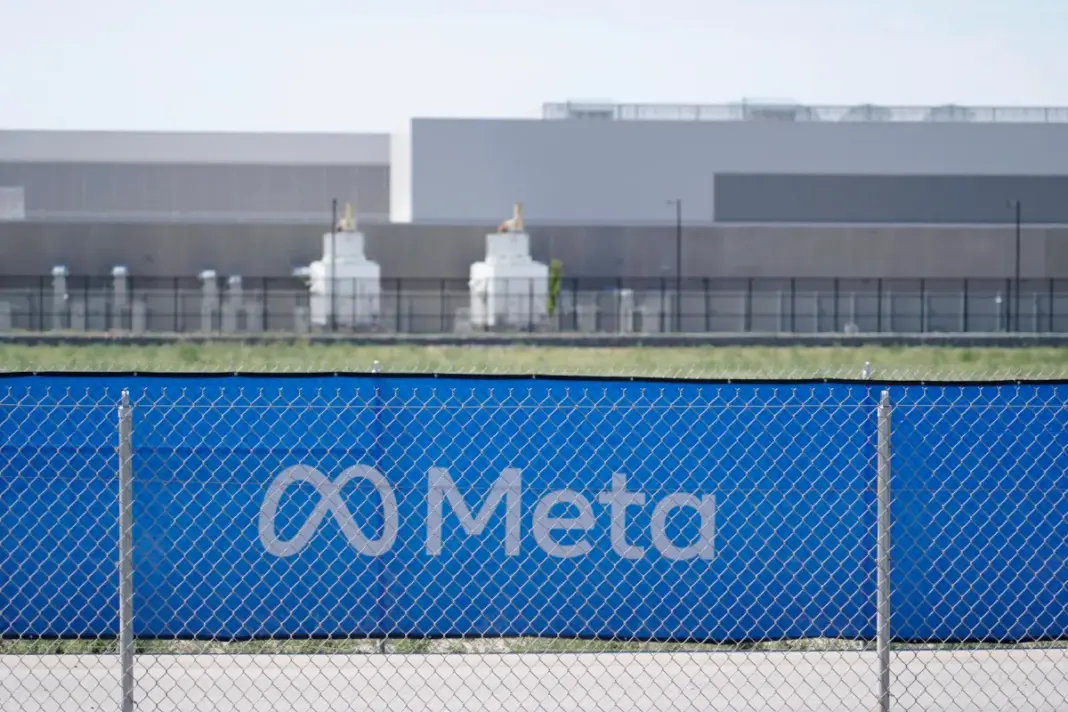
More recently, though, its multi-billion-dollar bet on natural gas at its Hyperion data center in Louisiana has undone much of that progress. Natural gas may burn cleaner and more efficiently than coal, but its impact on global warming can be just as bad when the leaky infrastructure needed to burn it is factored in.
Despite years of clean power procurement, Meta’s greenhouse gas emissions have more than doubled in the last four years. Between 2024 and 2025, its data center emissions increased more than 12 times, and Hyperion isn’t online yet.
That commitment to natural gas led to the company’s departure from RE100, a corporate renewable energy initiative, in July. The company had been part of the group for a decade, though the two split after RE100 started requiring more rigorous reporting toward renewable energy targets.
“When we set our net zero emissions goal, we anticipated steady growth, falling clean energy costs, and changes in the broader system that would enable progress at the pace we envisioned,” they added. “The reality has been far more complex. Demand for AI infrastructure has grown faster than almost anyone projected, arriving on a timeline measured in quarters rather than decades, and meeting it has meant building at a pace and scale the industry has never attempted.”
That’s all true, but when put that way, it sounds like Meta has little agency in the matter. But the company’s decision to chase AI was a conscious one.
You could argue that Meta has a fiduciary duty to chase after its peers, which have also dived headfirst into AI. But there’s precious little data to support the idea that AI will be a profit driver for a company like Meta, which is almost entirely consumer-focused.
CEO Mark Zuckerberg is optimistic that improving Muse’s energy efficiency will turn that around, but how much will everyday people be willing to pay for software that translates your offhand thoughts into surreal memes? Or monitors your emails so you won’t forget to reply to your mom? Meta is betting that it’ll be enough to support a $200 billion-plus data center, and probably more.
The choice of the fuel to power those AI ambitions was also a conscious one. Natural gas power plants, besides being able to run 24/7, are actually not a great fit for AI data centers. Turbines like to run at constant speeds, while AI data centers’ energy requirements surge and sag depending on the load. They need batteries as a buffer, which begs the question: Why not just connect to the grid and use batteries to bridge any gaps during times of peak demand? That’s what one expert recommends.
Meta’s bet on natural gas appears mistimed. Long-duration energy storage is coming into its own — and geothermal energy appears poised to become the next major power source on the grid in the U.S. Companies like Fervo, Mazama, and Quaise have been logging milestones at a rapid clip, potentially unlocking tens of gigawatts of capacity. The technology isn’t competitive with natural gas today, but it very well could be in the mid-2030s, just a few years after Meta completes Hyperion. Geothermal is also not vulnerable to supply chain shocks, like what happened with natural gas and the Iran War.
Beyond that, the company’s decision to abandon its 2030 net zero goal risks fomenting the sort of backlash that leads to regulations with real teeth. Such regulations won’t just apply to Meta, and the broader industry would be justified in their frustration.
In that light, Meta’s timing couldn’t be worse. Surveys show the general public doesn’t hold AI or data centers in high esteem, rightly sensing that the infrastructure development is driving a rapid and often-unchecked expansion of polluting infrastructure.
The tech industry has spent over a decade trying to prove that it would be different from previous industrial juggernauts like oil and gas or automobile manufacturing. In a single PDF, Meta might have undone much of that goodwill. After this, who will trust another tech company’s voluntary net zero goals?
When you purchase through links in our articles, we may earn a small commission. This doesn’t affect our editorial independence.