
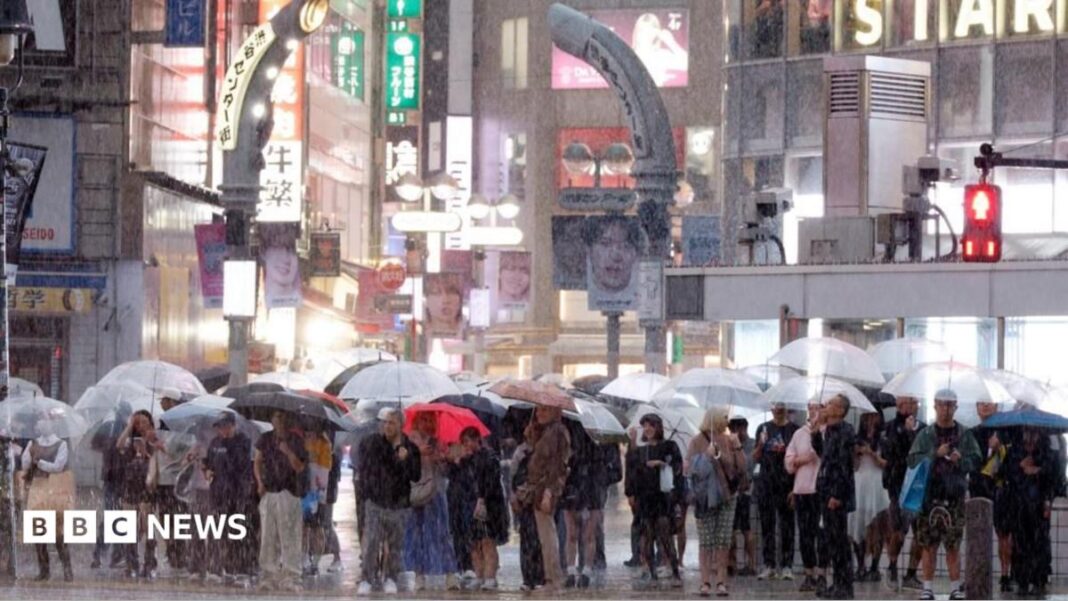

Millions urged to evacuate as powerful Typhoon Dujuan hits Japan
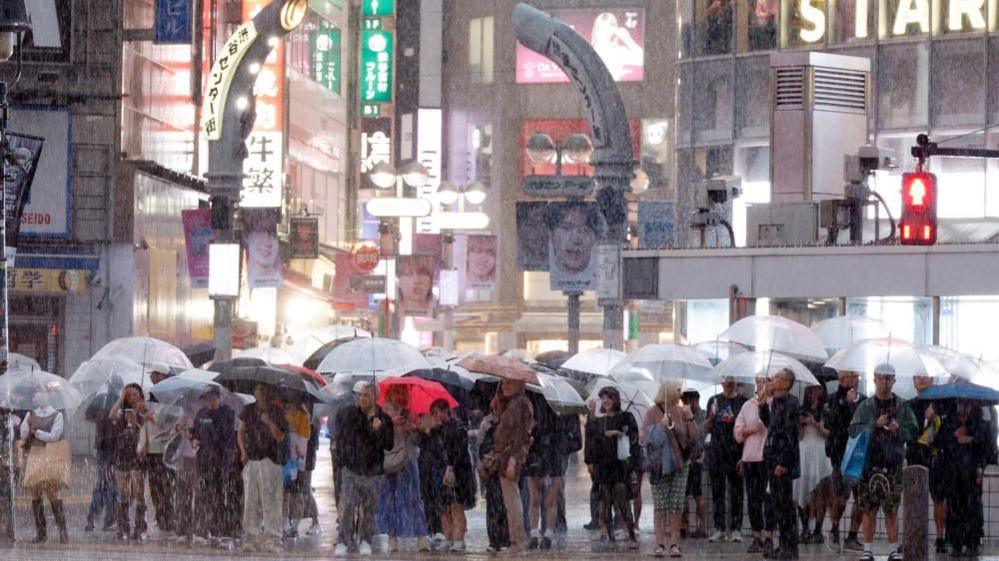 Image source, EPA
-
Published
Almost two million people are under evacuation orders in Japan as Typhoon Dujuan batters a number of the country’s prefectures.
Japan’s Meteorological Agency had warned of an “imminent threat to life”, but several warnings have now been downgraded, with the danger to life warning remaining in place in Oshima Town.
Strong winds caused power cuts for more than 50,000 people, while hundreds of flights have been cancelled and rail services have been suspended.
Dujuan has had sustained winds of 130km/h (80.8mph) and gusts of 194 km/h. It is the latest in a series of storms in the Pacific, made more intense by the “super El Niño”, which has warmed the ocean, fuelling the formation of storms.
The level three warnings, for heavy rain, and the level four warnings, for landslides have now been either downgraded or lifted by the Japan Meteorological Agency in most areas.
The level four warnings remain in Shinagawa Ward, Toshima Village, and Niijima Village.
Authorities have advised the public to pay attention to weather information.
Dujuan, which is Japan’s 25th typhoon of the year, has hit in the midst of a five-day holiday and forced the cancellation of several events.
Concerts scheduled for Monday at the Rock in Japan music festival have been cancelled, while the Tokyo Game Show, a video game convention, has also cancelled Monday’s programme.
Japan’s Prime Minister Sanae Takaichi has reportedly delayed her trip to the United States this week to monitor the effects of the typhoon.
She had been due in New York on Tuesday to meet with US President Donald Trump and speak at the UN General Assembly.
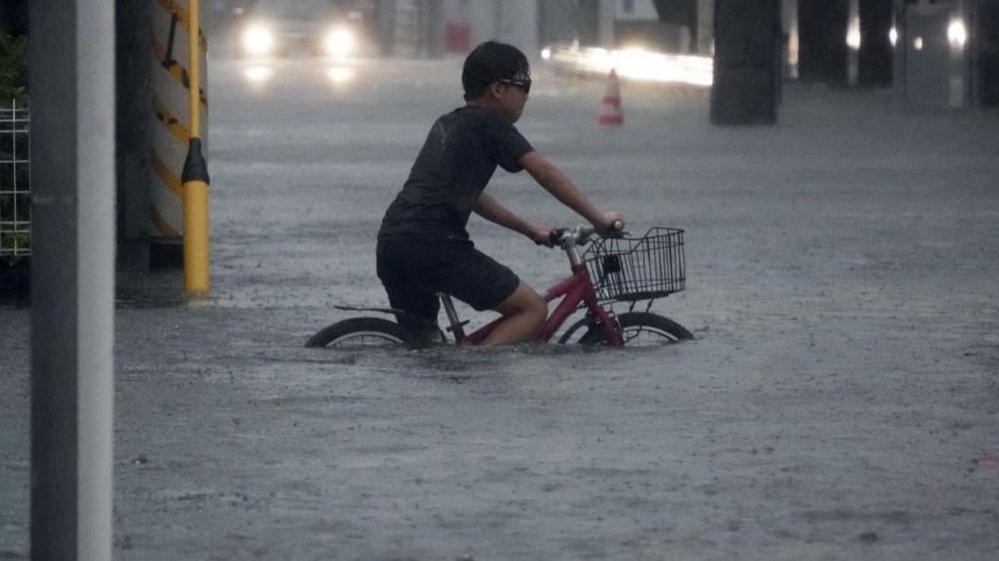 Image source, Reuters
The Yokosuka City Fire Department told the BBC that a woman who lived in the house, aged in her 60s, may have been swept away and is believed to have been buried alive.
Separately, Sodegaura City Fire Department in Chiba prefecture told the BBC a man in his 50s was rescued after getting trapped while working to clear debris at a landslide site.
The department said the worker fell into a bamboo thicket, along with some heavy machinery. He was then taken to hospital.
Firefighters in Kanagawa prefecture said they received a call from a man who reported his house had been crushed by a landslide.
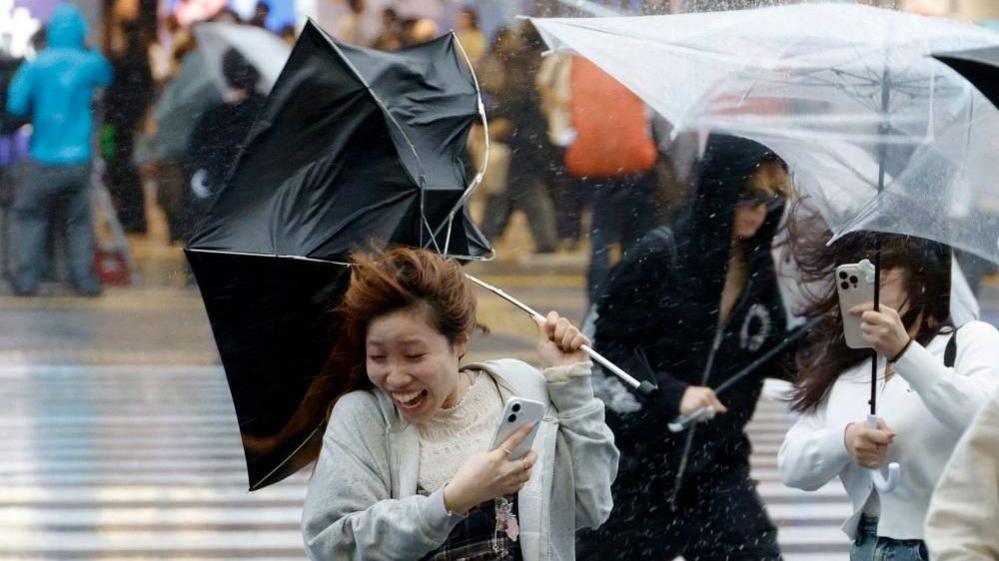 Image source, EPA
Some research suggests that Japan has become more exposed to destructive storms, but climate change is not thought to be increasing the number of these storms globally, and could even make them less common in some regions.
As temperatures rise, typhoons that do form are likely to become more intense on average, however.
Warmer ocean waters mean storms can pick up more energy, leading to higher wind speeds.
And because a warmer atmosphere can hold more moisture, these storms could also bring heavier rainfall.
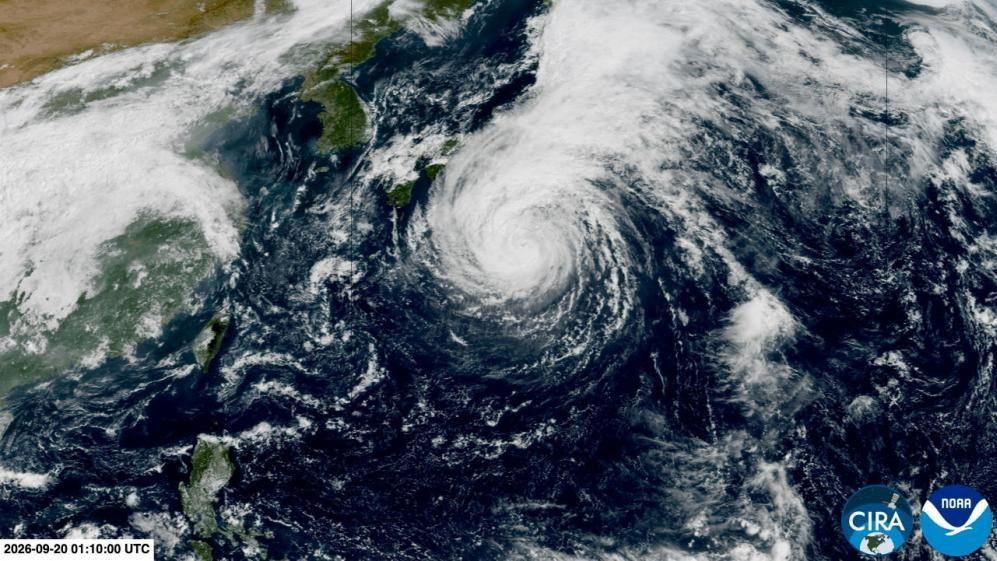 Image source, Reuters
This year, El Niño – the natural weather phenomenon bringing warmer water to parts of the tropical Pacific – is another factor.
El Niño doesn’t have a clear effect on the total number of typhoons, but it can affect where typhoons form, their strength and which countries they hit.
Some El Niño events may expose Japan to stronger typhoons, for example.
The typhoon is continuing to travel along the country’s Pacific coast, heading north. The extent of the damage today may not be known until Tuesday.
Additional reporting by Mark Poynting, climate reporter


