
This post was originally published on this site.
Hafsa Khalil
The father of a teenager who took her own life after viewing suicide and self-harm content online has said banning under-16s from social media would be wrong.
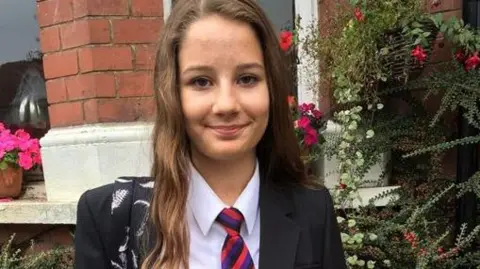
Ian Russell, the father of Molly Russell, told BBC’s Newscast that the government should enforce existing laws rather than “implementing sledgehammer techniques like bans”.
The foundation he set up in Molly’s honour is among a number of children’s charities and online safety organisations to sign a joint statement opposing such a move.
Prime Minister Sir Keir Starmer has not ruled out an under-16 social media ban, after Australia imposed one in December.
The House of Lords is set to vote on proposals for a more nuanced ban next week, which could be added to the Children’s Wellbeing and Schools Bill as an amendment.
Many Labour MPs and officials have said they expect the UK government to follow Australia’s example, with several other European nations weighing similar laws.
Health Secretary Wes Streeting this week indicated he was in favour of a ban, while Conservative leader Kemi Badenoch has said she would bring one in if her party won the next election.
But Ian Russell – who has campaigned for better online protections for children since his daughter took her own life in 2017 aged 14 – says bereaved families are “horrified” at the way politicians had capitalised on the issue.
“Many of them have said things like: ‘this is not something that should be a party political issue’.”
The government should instead be enforcing laws already on the books more robustly, he argued.

Russell expressed concerns about the “unintended consequences” of a ban, which he said would “cause more problems”.
“At the heart of it are companies that put profit over safety,” he said. “That has got to change – and I don’t think that we’re that far away from it changing it – which is why its slightly exasperating that we’re going through these same arguments again now about bans.
“It’s not far away – we can build on what we’ve got far better than simply implementing sledgehammer techniques like bans that will have unintended consequences and cause more problems.”
An inquest in 2022 found social media content contributed “more than minimally” to Molly’s death.
The Molly Rose Foundation, a suicide prevention charity named after Russell’s daughter, and organisations including the NSPCC, Parent Zone and Childnet, called a ban the “wrong solution”.
“It would create a false sense of safety that would see children – but also the threats to them – migrate to other areas online,” they wrote in a joint statement.
“Though well-intentioned, blanket bans on social media would fail to deliver the improvement in children’s safety and wellbeing that they so urgently need.”
Instead of this “blunt response”, a “broader and more targeted” approach was needed, said the statement, which was also signed by two child mental health practitioners.
Existing law should be “robustly enforced” to ensure social media sites, personalised games and AI chatbots were not accessible to under-13s, it said, while all social media platforms should have evidence-based blocks for features that are considered risky for children of different ages.
The statement urged the government to strengthen the Online Safety Act to compel online companies to “deliver age-appropriate experiences”.
It suggested: “Just as films and video games have different ratings reflecting the risk they pose to children, social media platforms have different levels of risk too and their minimum age limits should reflect this.”
Within the first few days of Australia bringing in its under-16s ban, Meta – which owns Facebook and Instagram – said around 550,000 accounts had been blocked. Teenagers expressed different reactions to the ban, ranging from feeling freer to it having little image on their online habits.
Sir Keir said this week that he had been watching Australia’s ban and that “all options are on the table” for the UK.
After announcing her support for a ban last week, Badenoch defended her position to the BBC on Saturday.
“It is quite clear that a lot of social media spaces are not for children, and we don’t let children go into a nightclub, so why are we letting them go to places where the content is not suitable for them?”
The Lib Dems’ proposal, due to be considered in the Lords, would see social media platforms graded like age ratings for films.
Under the plan, platforms using addictive algorithmic feeds or hosting “inappropriate content” would be restricted to users aged over 16, while sites with “graphic violence or pornography” would become adult-only.
If you have been affected by the issues raised in this article, help and support is available via BBC Action Line.