
This post was originally published on this site.
More than 170 migrants rescued after boat catches fire in Channel
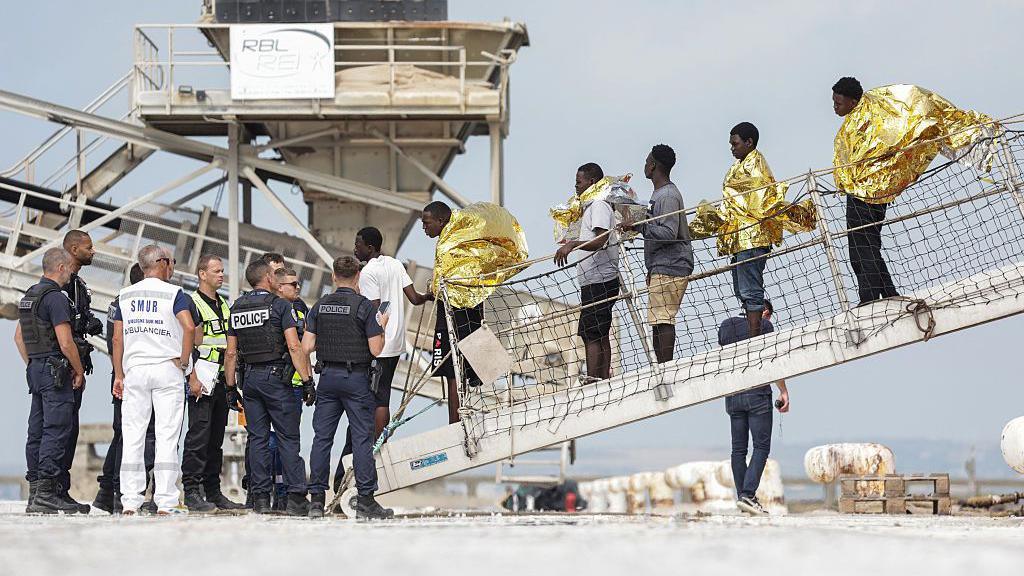 Image source, AFP via Getty Images
-
Published
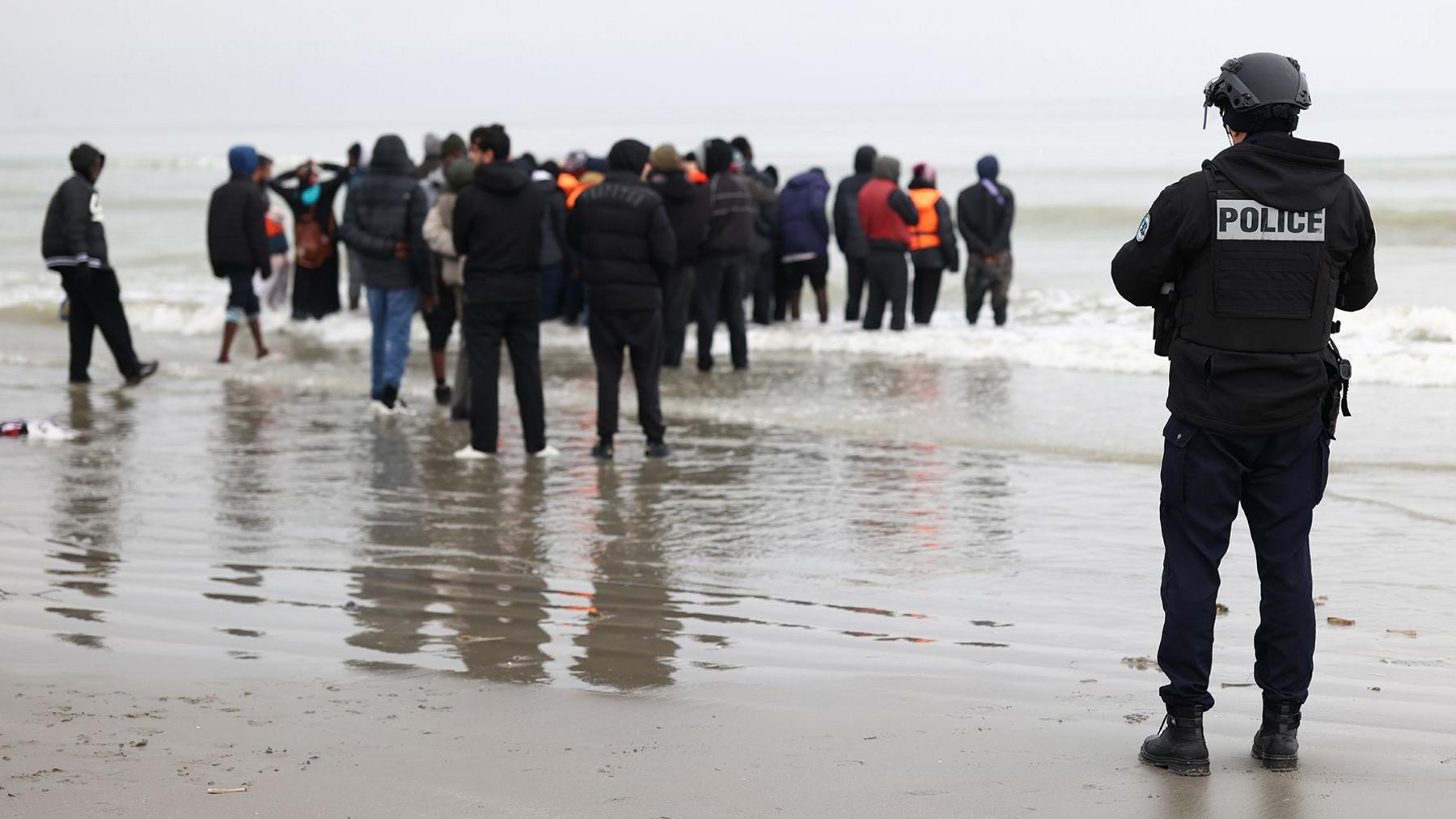
More than 170 migrants have been rescued after the boat they were using to cross the Channel caught fire on Tuesday morning, as the UK government said “all will be returned” to France.
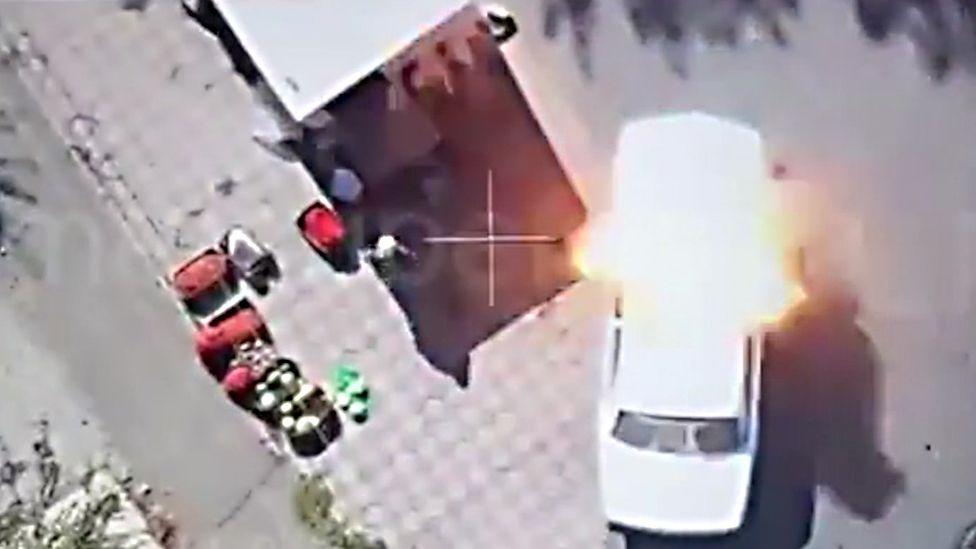
The boat was attempting to cross to the UK when its engine caught fire, according to the French maritime prefecture of the Channel and North Sea.
It had originally reported 157 migrants were rescued, but has since revised that figure up to 173. All have been taken to Boulogne-sur-Mer in France, with 11 people suffering from minor injuries.
French prosecutors have opened an investigation, and an Egyptian national has been taken into policy custody in connection with the incident.
Border Security Minister Anna Turley said the incident “shows the dangers of these illegal crossings and the ruthless gangs behind them”.
“That’s why we are bearing down on them,” she said.
French authorities said the boat left France on Monday night.
Overnight “five people on board the vessel required rescue… the remaining people on board refused the assistance offered by the French patrol boats”, the French maritime prefecture said.
“Determined to reach the United Kingdom, migrants crossing the Channel in small boats refused assistance offered by French emergency service, accepting it only in situations of extreme emergency,” it said in a statement.
Because of the “structural fragility” of boats used to cross the Channel, it said they decided not to intervene further at that stage.
But this morning the engine caught fire and the “vessel’s integrity deteriorated very rapidly”.
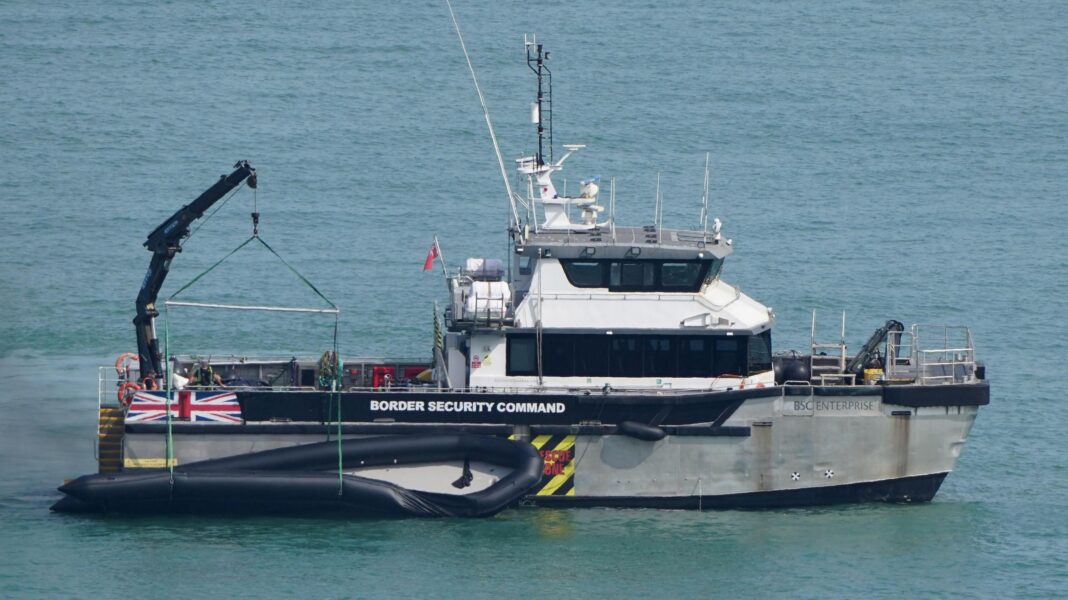
Rescue boats went to the scene from France and the UK, including the RNLI Eastbourne lifeboat and the UK Border Force vessels BSC Contender and BSC Courageous.
The French maritime prefecture said the operation involved 40 firefighters, 13 police officers, seven interpreters, and a number of medical personnel.
It had previously reported that 157 migrants were rescued, but on Tuesday afternoon revised that figure up to 173.
On top of the initial five rescued, two French boats rescued 105 migrants and the British boats rescued 63. All of them were taken to Boulogne-sur-Mer for treatment.
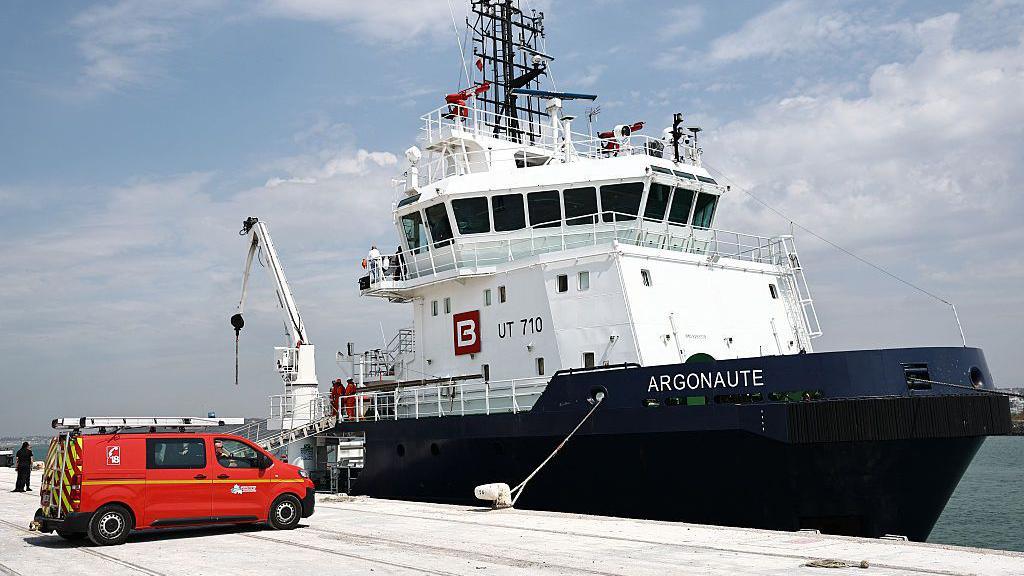 Image source, AFP via Getty Images
A UK government spokesperson said the Border Security Command was alerted to an incident in the Channel this morning “concerning a migrant small boat in distress in French waters”.
It said British vessels assisted in the operation, adding that so far there have been no fatalities reported.
They added that the incident “underlines the terrible dangers of small boat crossings”.
“We continue to work relentlessly with the French and our partners overseas to prevent these perilous journeys,” they said.
How many people cross the English Channel in small boats?
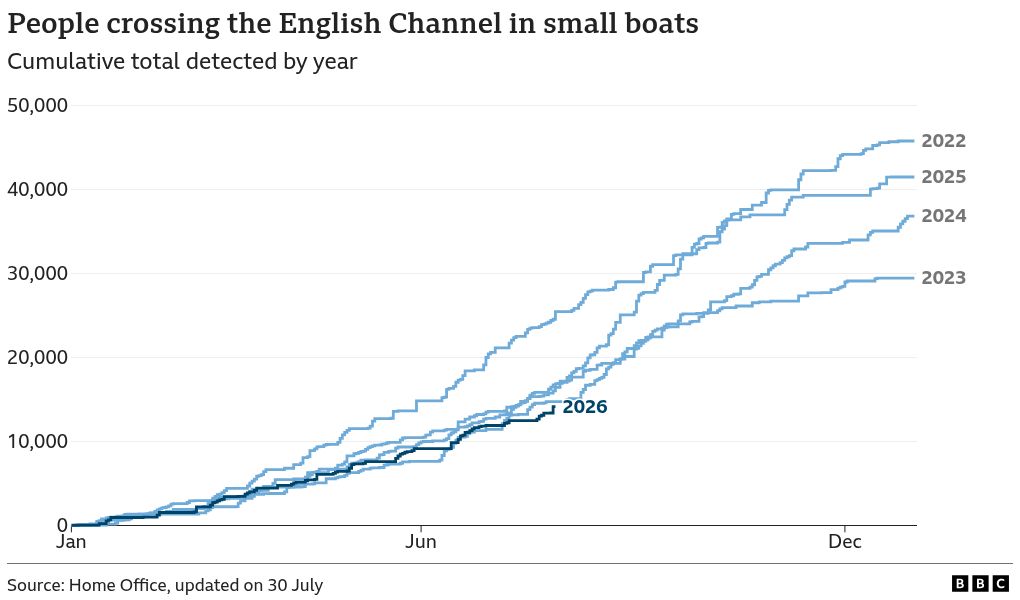
Between 1 January and 3 August 2026, a total of 14,561 people crossed the English Channel by small boat from France. This was down by 43% on the same period the previous year.
These crossings have become the most common way for people to be detected entering the UK illegally since 2020.
Nearly all those who arrive by small boat claim asylum. Under international law, this means they are allowed to stay in the country while their asylum application is considered.
Small boat arrivals made up 42% of asylum applications between April 2025 to March 2026.
Boats that arrived in the UK from 4 August 2025 to 3 August 2026 carried an average of 67 people. This has more than doubled since 2021.
Experts say overcrowding in boats makes crossings riskier. At least 84 people died while attempting to cross the Channel in 2024, according to the United Nations (UN).
When looking at the scale of small boats crossings, the number of these arrivals is about 5% of the size of total immigration into the UK from January 2025 to December 2025.
The government has pledged to “smash the gangs” behind these crossings in order to reduce the numbers.
Who is arriving in the UK on small boats?
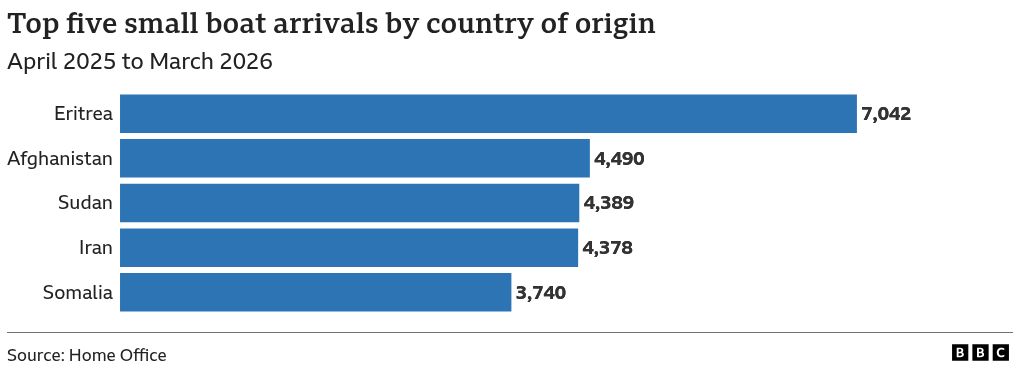
People from Eritrea accounted for 18% of all arrivals from April 2025 to March 2026.
In the latest figures covering January 2025 to December 2025, at least 2,000 people who arrived by small boat were found to be potential victims of human trafficking or other forms of modern slavery, according to the Home Office.
How else do people stay in the UK without permission?
Another 4,535 people were detected entering the UK without permission via other methods including hiding in vehicles, travelling on ferries or through airports from April 2025 to March 2026. This was down by 22% on the same period the previous year.
There are also individuals who arrive legally, for example via a work or study visa, and then overstay their limit.
The total number of people who live in the UK illegally after arriving legally is not known.
Shadow home secretary Chris Philp said: “This is why it’s so wrong that French police stand by and do nothing while the illegal migrant boats embark – lives are being risked.”
Reform UK leader Nigel Farage said in a post on X: “We must put a stop to this. Our plan will save lives.”
Earlier this week, his party said if in government it would deploy the navy to ward off crossings.
Political discussions around the UK’s policies on illegal migration have resurfaced since tens of thousands of migrants swam into the Spanish exclave of Ceuta on Thursday.
The Conservatives have said that Labour has not delivered on its promises on migration, while the Lib Dems said the government should increase efforts to improve relationships with Europe and cut down the asylum backlog.
The number of migrants who have arrived in the UK on small boats since Burnham became prime minister a fortnight ago surpassed 2,000 on Saturday.
Last Wednesday was the busiest day for crossings so far this year, with 752 migrants arriving in the UK.
Most people attempt the crossing in the summer when conditions are better. It’s also become the most common way for people to be detected entering the UK illegally.
Home Office figures show the number of crossings so far this year are down about 43% compared to this time last year. The number peaked in 2022 and has been on a downward trend ever since.
During a visit to Dover on Monday, Prime Minister Burnham pledged his government will be “relentless” in curbing the number of people arriving in the UK on small boats.
He said progress had been made in curbing the number of people arriving in the UK on small boats, adding that “people want to see this issue addressed”.
Burnham said enforcement officers tackling people-smuggling gangs have been doubled on both sides of the Channel, but “a system that offers safe routes for people” needs to be built as well.
In April, the UK and France struck a £662m (773m euro) deal aiming to stop illegal migrants from crossing the Channel.
The three-year agreement included plans to send riot-trained police to French beaches to tackle violence and “hostile crowds”, as well as France deploying millions of pounds of drones and two helicopters as part of a system to intercept people smugglers and illegal migrants.
UK ministers have also said about £100m in funding could be redirected or withdrawn after a year if not enough journeys are stopped – but the government has not confirmed what targets the French would have to meet.
-
-
Published1 day ago
-
-
-
Published2 hours ago
-
-
-
Published23 April
-
-
-
Published24 July
-