
This post was originally published on this site.
Meghan OwenWork and money correspondent, BBC London

 BBC
BBCThe family of a man who say he took his own life after placing more than 600 bets in an hour have told the BBC that his inquest was a “battle” from beginning to end, as they struggled to persuade the coroner to consider gambling as a factor in his death.
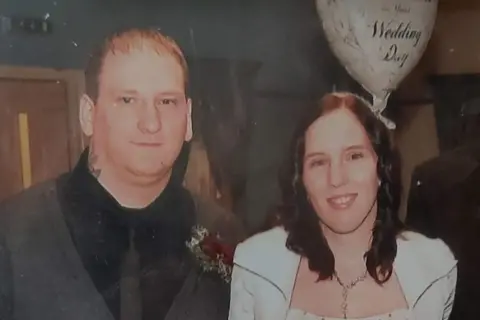
In the early hours of 24 July 2020, 36-year-old Lee Adams placed hundreds of bets on an online slots website shortly after receiving his monthly salary, according to his family. Within hours, the south Londoner had taken his own life.
More than five years later, in November 2025, a coroner concluded that a gambling disorder had contributed to his death.
Adams’s cousin, Natalie Ashbolt, said the family had to instruct lawyers in an effort to have the coroner consider the impact of his gambling, and is calling for better support for families affected by gambling-related deaths.
Ashbolt, whose family also had the backing of a campaign group called Gambling with Lives, said she was shocked by how hard the process was, and worries other bereaved families will struggle to achieve a similar outcome at inquest.
The family’s solicitors Leigh Day believe Adams’s inquest at Southwark Coroner’s Court was only the third time the role of gambling had been considered in depth at an inquest – despite there being up to nearly 500 gambling-related suicides in England a year, according to a report by the Office for Health Improvement and Disparities.
 Family handout
Natalie lived with Lee in Streatham for most of his adult life following the death of his mother.
“He liked his own company but he also liked time with family and friends, and work colleagues,” she told BBC London. “Always keeping busy. But generally fun-loving and up for a laugh. Didn’t take things too seriously in life.”
She added: “I’d always known he’d gambled a little bit on slot machines, or put £10 on here online over the years, but it wasn’t a noticeable issue until after he’d had his big win.”
In March 2020 Adams won just short of £100,000, and from this point his gambling behaviour “continued to spiral”, his cousin said.
“Thousands and thousands went back on sites. We obviously said the normal things: ‘Stop while you’re ahead, don’t put any more back on. Be sensible.’
“As the weeks went by, he’d put loads back on and felt very bad about that.”
The coroner also ruled that in the months before his death – which happened during the Covid lockdown – Adams had been suffering from a long-term depressive illness and became increasingly reliant on and involved with gambling.
The coroner found Adams was contacted in late March by the operator about his deposits, and had stated he was fine. He continued to gamble and was not identified as being at increased risk.
The coroner, who gave a narrative verdict, said there were missed opportunities by the gambling operator at the time although these did not contribute to Adams’s death.
“We didn’t have any concerns about leaving Lee on his own. We had no knowledge of how bad things were or how bad things could get in that situation,” Ashbolt said.
When she found out about her cousin’s death she was “numb… in complete shock”, she told BBC London.
The family were not able to properly grieve until the inquest concluded, she said.
- If you have been affected by any of the issues raised in this story, information and support can be found at the BBC’s Action Line
“We’ve been surprised at how difficult the inquest process has been,” Ashbolt told the BBC.
“We need to recognise it was an achievement to have gambling disorder listed as the causing factor – as a family we’ve known it all along,” she said, adding that she felt the operator “wasn’t held to account”.
Ashbolt said “it was even a push to get the coroner consider it [gambling]”, but enlisting lawyers had helped.
She believes that the system is “failing” and “isn’t set up to consider gambling”.
“Unless you have private funding and the support and the ability to have a coroner even accept that they’re going to look into gambling… to get to the point we did isn’t going to happen for all the families it should do.”
‘For justice’
Leigh Day solicitors told BBC London this was only the third inquest they were aware of since 2022 at which the coroner had recognised the contribution of gambling to someone taking their own life.
The law firm’s Dan Webster believes these deaths are “the tip of the iceberg”.
The nature of a gambling disorder is that it is “hidden at times from loved ones”, making it challenging for bereaved families, but he said that when they raised concerns with the coroner there was a “resistance to investigating those concerns”.
Webster said that before he began to support the family, they had been told the coroner “had all of the evidence he required and intended to proceed with the inquest without seeking anything further”.
According to Webster, the inquest was originally listed to proceed in March 2022 but the coroner adjourned the hearing at the last minute. The inquest was then subjected to repeated delays.
He added: “I think it’s really important that coroners become more aware of the link between gambling and gambling disorder and suicide.”
 Gambling with Lives
Leigh Day solicitors are also representing the family of 40-year-old Gareth Evans, from Croydon, who was found dead in his flat in November 2021.
A coroner is investigating the potential contribution of gambling to Evans’s death. The inquest has yet to conclude.
In January 2025, the National Institute for Care and Health Excellence published guidelines about the treatment and identification of gambling, recommending that GPs ask about a patient’s gambling in routine check-ups as they would about drinking and smoking.
“It means not only should the coroner be investigating but there is an evidence base… if it’s there on medical records,” said Charles Ritchie, founder of Gambling with Lives, which raises awareness of problem gambling.
It was set up by Ritchie and his wife Liz after their son Jack killed himself in 2017 while battling a gambling addiction.
In 2022, the coroner ruled the 24-year-old teacher from Sheffield had been failed by “woefully inadequate” warnings and treatments.
“Jack’s was the first substantial gambling inquest there had ever been. It was a very long process,” Ritchie said. “It shouldn’t be a battle, and yet it is at the moment.”

He told BBC London that coroners “often do not know that the national suicide prevention strategy recognises gambling as a suicide risk factor, or know that they have the capacity to include evidence of the gambling that preceded the suicide within the scope of the inquest”.
“Families usually do not have the legal knowledge to explain why or how gambling should be within scope unless they have specialist legal representation.”
Ritchie added: “We want to ensure every death is investigated… for justice, for the individual.
“We believe these people have been abused throughout their life by gambling and gambling operators. As a society we need learning from their deaths too.”
Ritchie said that in supporting about 150 bereaved families, the biggest challenge had been “convincing the coroner that gambling does need to be considered”.
He said there were instances where families were “very sure” gambling was the “number-one cause of death”, adding: “And the coroner has still not been prepared to look at it.”
How does the inquest system work?
- By law, the purpose of an inquest is limited to establishing who has died, when, where and how they died, where the death has occurred in certain circumstances – for example, suddenly or suspiciously
- The findings and determinations made during an inquest are final and form part of the official record
- Where coroners believe that change could mitigate the risk of other deaths, they are required to issue a Prevention of Future Death Report
- The BBC understands the Chief Coroner’s Office has shared a briefing with all coroners that was provided by the gambling regulator, which outlines what it is and what it does
- The 2023 suicide prevention strategy for England identifies gambling as a key risk factor. It states “new and better-quality evidence has emerged pointing to links between suicide and risk factors such as harmful gambling and domestic abuse”
Currently, gambling licensees must notify the Gambling Commission – the industry regulator – if they become aware that a person who has gambled with them has taken their own life.
A spokesperson for the regulator said: “When we become aware that a person has taken their own life and that gambling may have been a factor, we consider whether this points to evidence of regulatory failings by a gambling company. Where they have failed to comply with our rules we will take regulatory action against them.”
A Ministry of Justice spokesperson said: “While we understand the desire for better information about links between gambling and suicide, simply asking coroners to record motivation would not provide a reliable picture, as they are often working with limited or incomplete information.”
The Court and Tribunals Judiciary was contacted by BBC London but did not wish to comment. Southwark Coroner’s Court was also contacted for comment.