
This post was originally published on this site.
Nepal death toll crosses 1,000 as rescuers race to find workers trapped in mud-filled tunnels
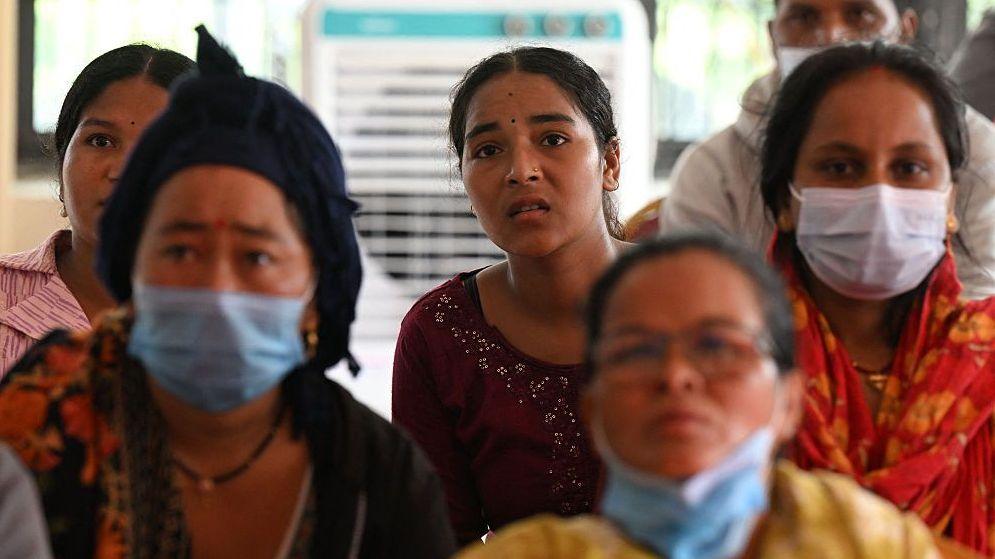 Image source, AFP via Getty Images
-
Published
The death toll in Nepal from devastating floods on the border with Tibet has crossed 1,000, according to the country’s disaster agency.
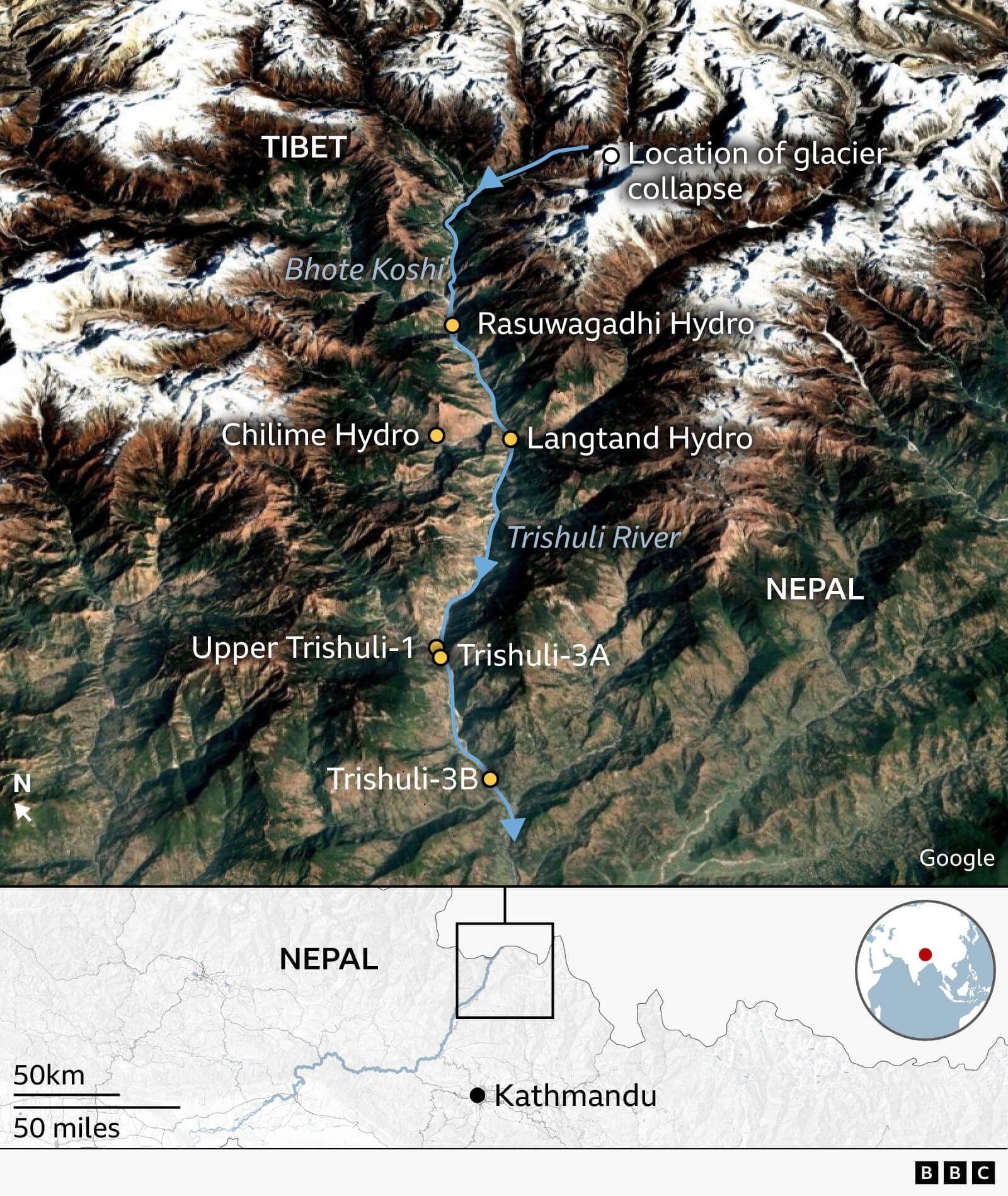
More than 3,900 people remain missing – of whom more than 600 are workers believed to be trapped in a vast network of mud-filled tunnels at hydropower sites along Trishuli River.
Engineers have been pumping air into the tunnels – and while a team did manage to gain entry to one of them, it withdrew after finding no-one there.
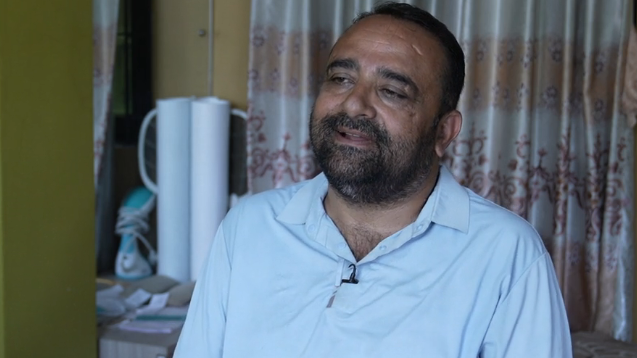
“I wish we could find him. I wish he would come home,” Anushila Bhandari, wife of Aurus Bhandari, a 33-year-old engineer missing on a project site, told BBC Nepali.
Nepalese Prime Minister Balendra Shah said on Monday that 279 people had been rescued from the sites.
The rescue operation is being spearheaded by an international team made up of Chinese and Nepalese military personnel, while experts from India, Korea and Australia are also involved.
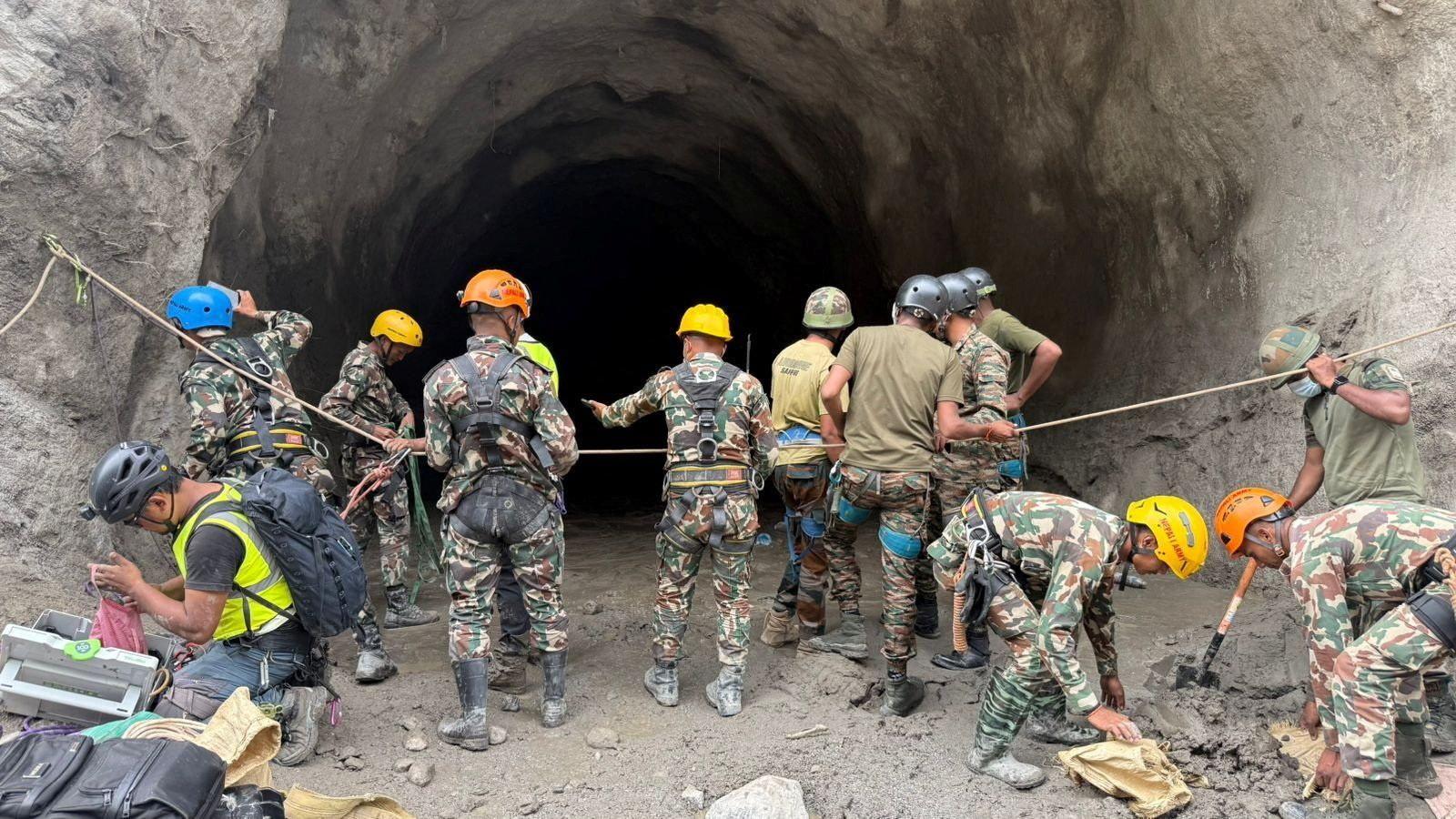 Image source, Nepal Army/Reuters
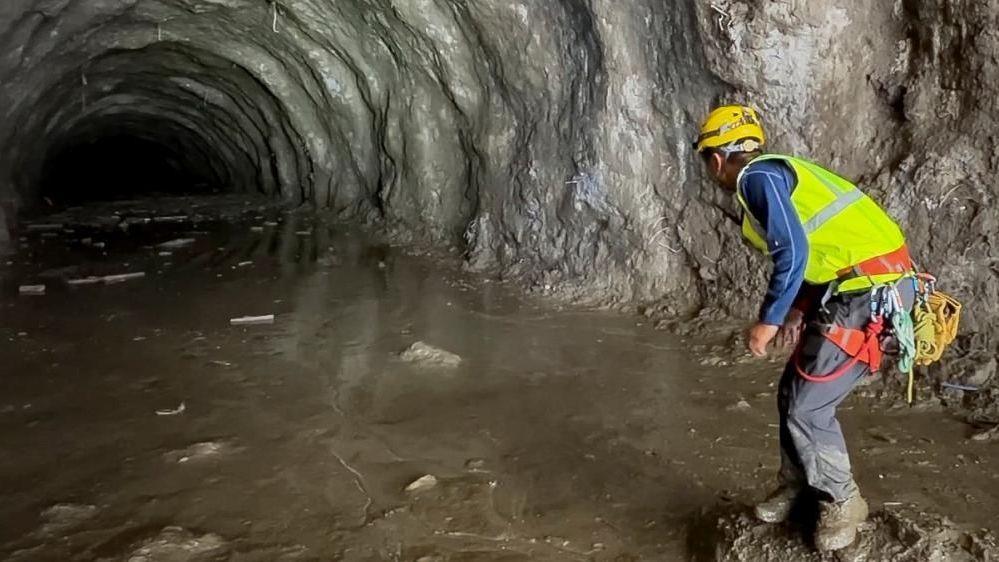 Image source, Reuters
“I still have a 50% hope that he is alive because there is an oxygen system inside,” Sita Pandey, whose husband was working in the plant when the floods hit, told Nepalese daily Kantipur.
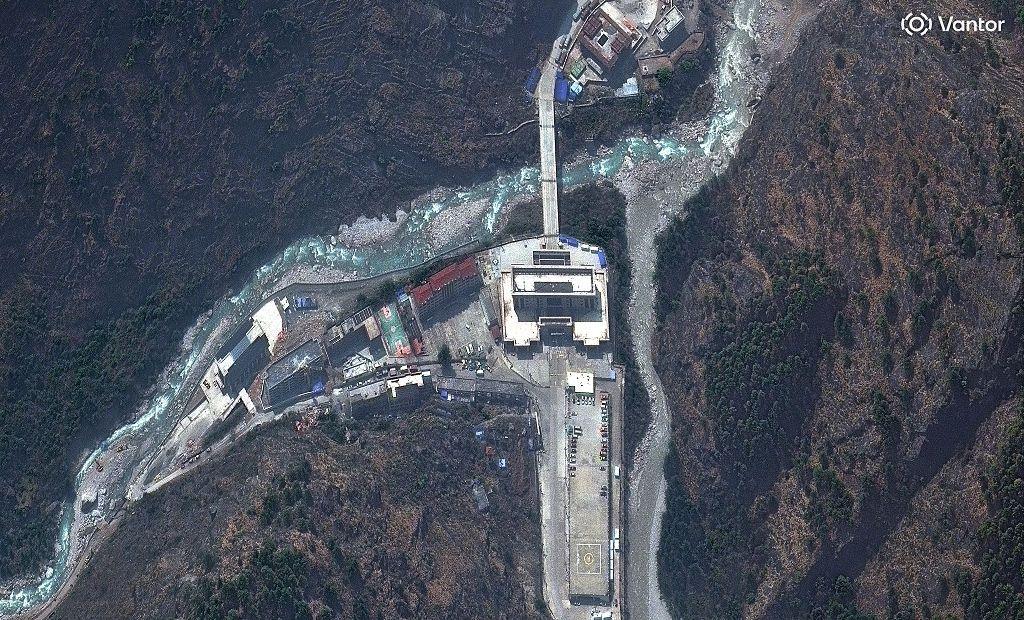
Nepal relies heavily on hydropower and has spent years developing the projects along its mountainous river systems. At least 11 projects either completed or under construction were damaged in the floods, authorities said.
Rescuers began pumping air into a tunnel over the weekend, but the families of those trapped say that should have been done earlier.
A team was able to get into a tunnel leading to one hydropower plant earlier on Monday, but retreated after no one was found there.
“The longer it takes, the more our hope dies. This operation must move much faster because every second is meaningful to us,” Jiban Khadka, whose relative is also trapped inside the plant, told Kantipur.
“It’s a frustratingly slow operation,” Khadka added.
Rescue operations had been “intensified”, Nepalese leader Shah said, noting that the floods were “not an ordinary” event.
“This incident indicates that the risks we face in the Himalayan region are increasing alongside climate change.
“It is now time for us to strongly raise with the international community the issue of the disasters we are experiencing as a result of climate change,” Shah wrote in a Facebook post late on Monday.
Another family member anxiously awaiting news is Priya Kharel, whose brother Milan was working as an engineer in the Upper Trishuli-1 plant when the floods hit.
“Those who returned from the hydropower site said there were people inside the tunnel,” she told BBC News Nepali. “So there is hope that if the army reaches them quickly, they can be saved.”
Australian engineer Arnold Dix, who has been helping Nepalese authorities with the underground search operations remotely, said rescuers had been struggling to find the tunnels.
“The actual signature of them has gone – everything is just missing. It looks like a lunar landscape,” he told BBC Radio 4’s World at One.
Once rescuers knew where the power stations were, Dix said they could then decide the best way to access them, which typically involves digging and “blasting boulders”.
“There’s boulders bigger than houses. I’ve never seen that before in my life. It’s just an extraordinary operation,” the former head of the International Tunnelling Association said.
He said he still has some hope for those trapped underground, given the protection the subterranean environment might have offered from the deluge above.
To play this video you need to enable JavaScript in your browser.
This video can not be played
Only 4% of the 900 bodies that have been found so far have been identified, a spokesperson from the Ministry of Health told BBC Nepali.
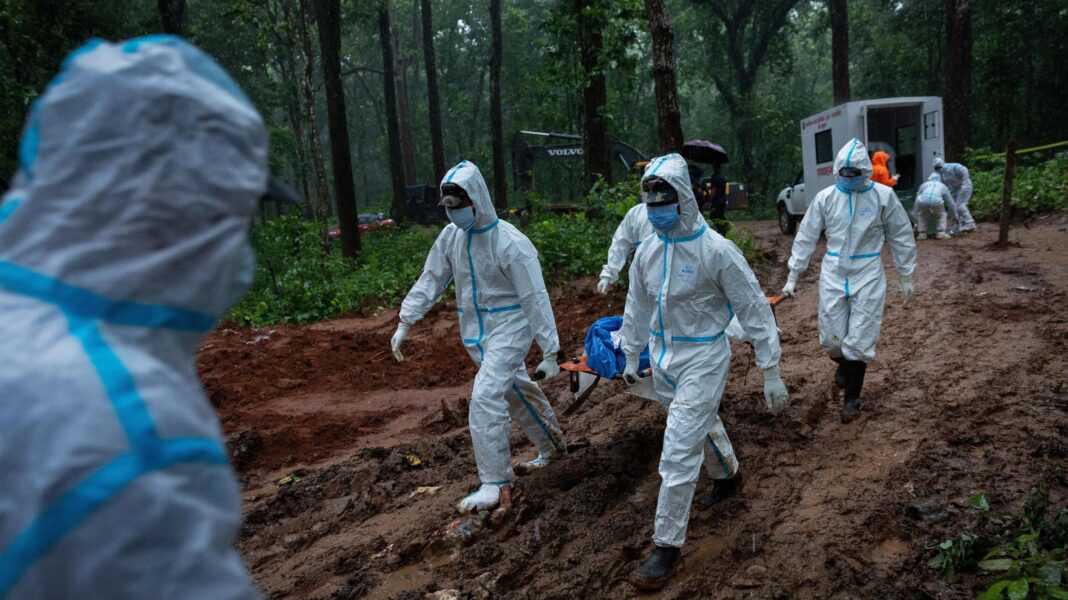
In Chitwan, a district far downstream from where the floods first hit, makeshift burials were taking place after the Himalayan nation’s river systems brought nearly 300 dead bodies to its banks.
The air was thick with the smell of decay, as men wearing white Personal Protective Equipment (PPE) including masks carried unidentified corpses into trucks.
Over the weekend, a large portion of the forest outside the city was dug up. Medical staff and volunteers worked to extract DNA from the unidentified remains.
Ganesh Aryaal, the chief district officer, told BBC Nepali that relatives will still be able to extricate the remains of their loved ones, once they are identified through DNA testing.
“We don’t have enough freezers here… We had to choose this last alternative of temporary burial system. We are really overwhelmed,” he said.
In Tibet, the Chinese-appointed Panchen Lama – who is the second-highest spiritual leader in Tibetan Buddhism – held a memorial service as search teams continued to wade through waist-high mud.
The official death toll on the Tibetan side is 16, with 546 reported missing, according to Chinese state media. Footage of the floods has been heavily censored in China.
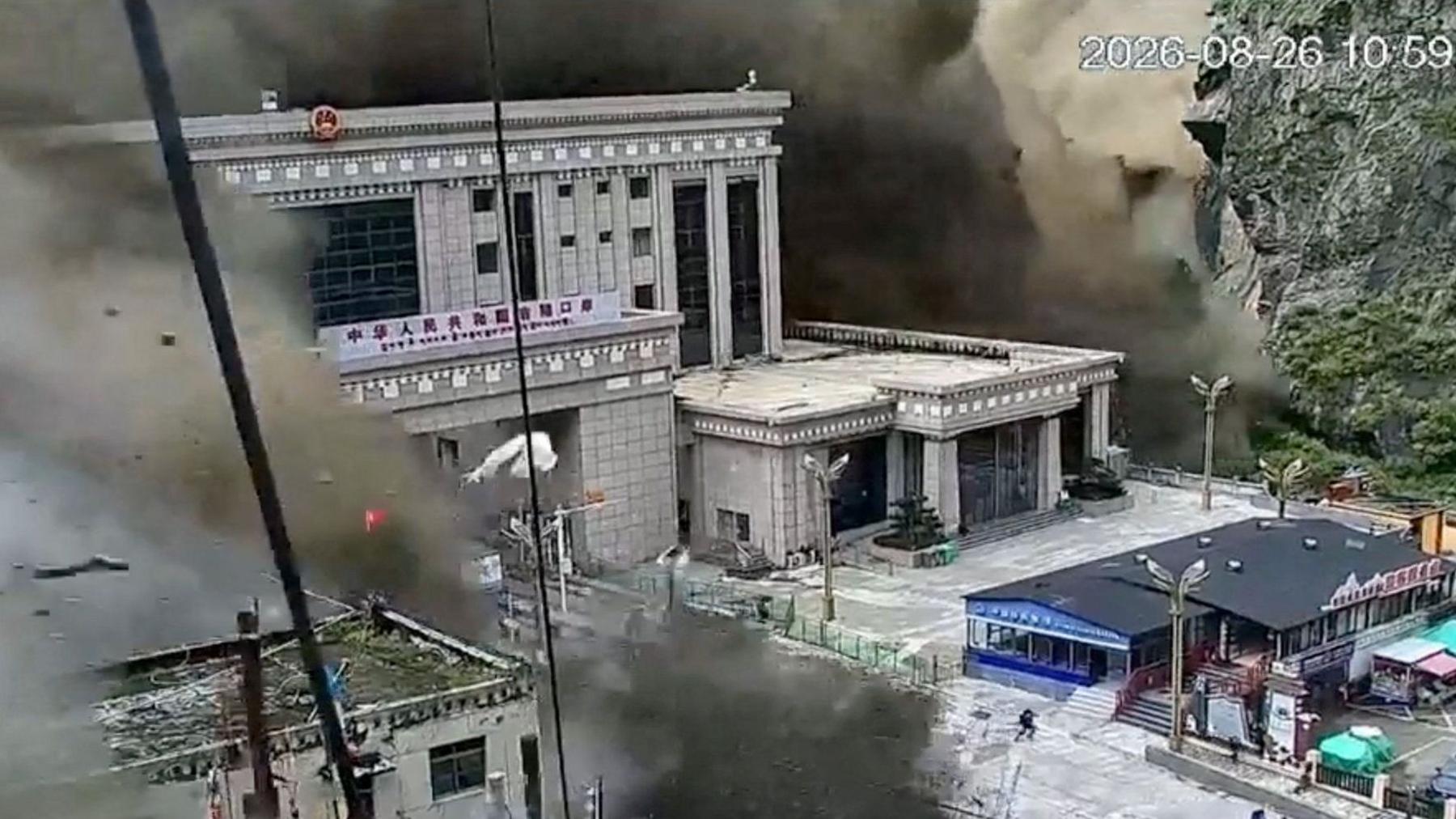
The base of a single water tower is the only structure still standing in the once bustling border crossing with Nepal, state media report.
Chinese authorities have imposed “administrative penalties” – which can range from warnings and fines to short detentions – on people speculating online that the casualty numbers are a lot higher than reported.
In Nepal, authorities have also ordered the removal of online content that they deem to be misinformation about the floods.

Get in touch
How have you been affected by the events in Nepal? Let us know.
Additional reporting by Jugal Purohit in Chitwan and Binita Dahal, BBC Nepali
-
-
Published1 day ago
-
-
-
Published3 hours ago
-