
This post was originally published on this site.
New filming guidelines used at Europeans for first time
-
Published
New guidelines for broadcasters on using more respectful camera angles when covering live athletics events have been implemented for the first time at the European Athletics Championships in Birmingham.
The European Broadcasting Union (EBU) developed the guidelines following discussions with female athletes to avoid sexualising the sporting action with unnecessary camera angles.
The first European Athletics Championships to be held in Great Britain got under way at Alexander Stadium on Monday morning.
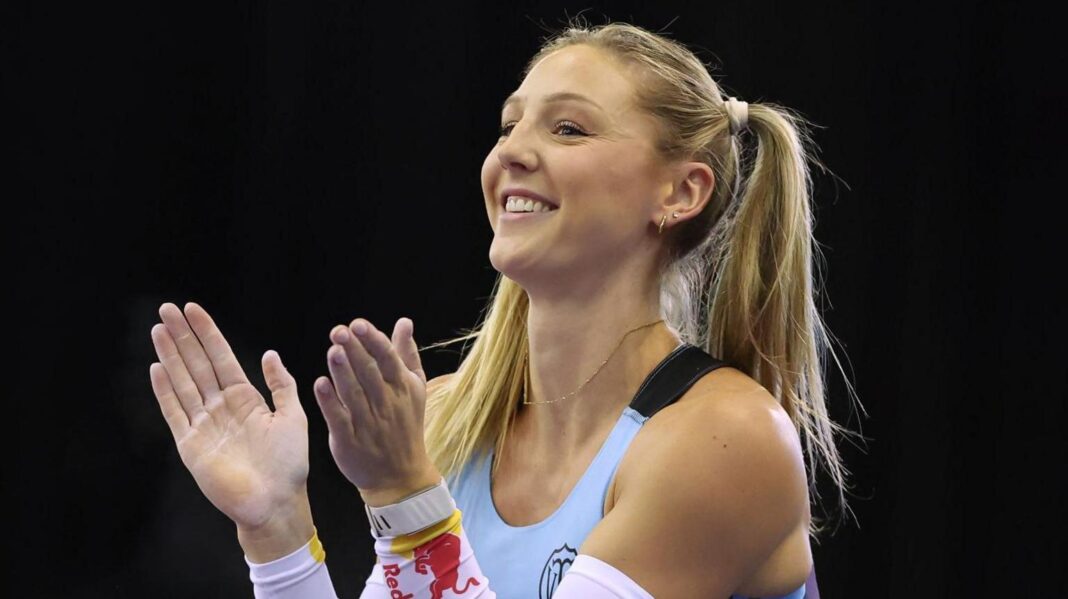
British pole vaulter Molly Caudery, a two-time world indoor champion, told BBC Newsbeat: “It’s not controversial, it’s a very sensible decision. It is a positive guidance and change.
“I have experienced it. For this to change for up-and-coming athletes is such a positive change.
“In pole vault, there are so many angles you can film from, so just taking one out is not going to be an issue.
“It will hopefully lead to everyone just focusing on performance.”
The guidelines, released last month, give advice on how broadcasters should use more respectful camera angles when covering live athletics events.
-
The team behind Hodgkinson’s golden rise and the hunt for a world record
-
Published9 hours ago
-
-
European Athletics Championships: Key events, timetable & BBC coverage
-
Published4 hours ago
-
The rules were created in consultation with athletes including former British pole vaulter Holly Bradshaw, Serbian long jumper Ivana Spanovic, and Croatian high jumper Blanka Vlasic.
It details ‘positive’ and ‘negative’ angles that could arise in various sporting scenarios. Things to avoid include low camera angles underneath athletes in events such as the high jump or pole vault, which have a high chance of generating compromising images.
Former middle-distance athlete Hannah England, who was involved in developing the guidelines, said: “To be blunt, if you go on the internet and search certain athletes, you get bombarded with clips of them competing in compromising positions. That’s just not OK.”
On the implementation of the guidance, England added: “It is hard to broadcast athletics. You could be on a safe shot of an athlete and they then need to tie their shoe or pick up a piece of equipment, and you can’t anticipate that.
“You can’t hold people to a super-high standard in an environment that’s impossible to police, so I think guidelines are 100% the way to go.”
TV coverage of female athletes a ‘significant concern’
British Olympic bronze medallist Bradshaw was among the athletes to advise the EBU. The pole vaulter says she has been sent abuse on social media and has seen inappropriate videos of herself online because of revealing camera angles during live coverage of her competitions.
“How our sport is displayed during live broadcast can be incredibly powerful, yet sometimes harmful to the women competing and the women [and] girls watching,” she said.
“I first-hand have received social media abuse and witnessed inappropriate videos online of myself and colleagues when slow-motion content of us competing is captured.
“Many athletes, myself included have been in competitive scenarios where they are more focused on the cameras instead of their own performance.
“On too many occasions cameras are zoomed in, showing super slow-motion action replays of athletes in undignified positions.”
Serbian Olympic long jumper Spanovic, who also gave advice to the EBU, said certain cameras not only cause discomfort during events but can have “serious long-term effects on an athlete’s mental health”.
EBU Sport executive director Glen Killane said: “The sexualisation of women athletes through selective camera angles and editing choices continues to be a significant concern across many sports broadcasts.
“Lingering shots on bodies, low-angle cameras that capture revealing views, and excessive slow-motion replays that serve no technical or storytelling purpose are among the issues observed in the media coverage of women’s athletics competitions today.”
The BBC is a partner in the EBU, which provides coverage of sporting events to 57 countries, reaching audiences of more than a billion people.
While the new guidance has been implemented at the European Athletics Championships, the Diamond League – which is also broadcast on the BBC – does not go through the EBU and so would not necessarily have to adhere to the guidance.