

This post was originally published on this site.
New law to force tech firms to stop children taking or sharing nude images
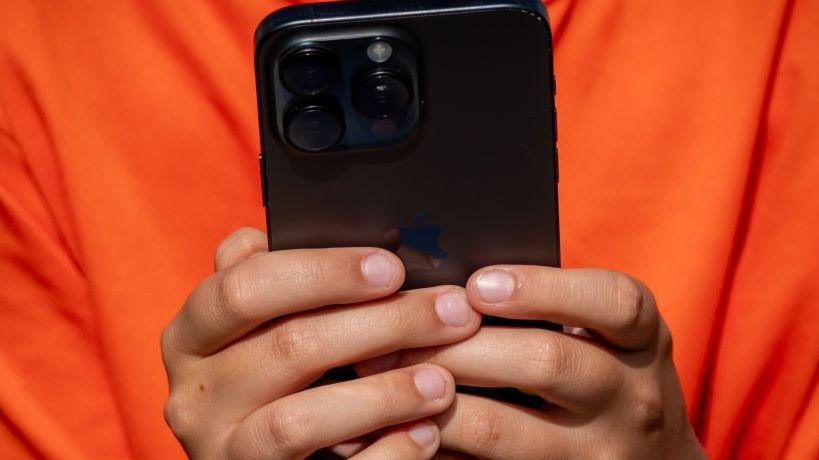 Image source, Getty Images
-
Published
The government has said it will introduce a new law to force tech firms to prevent children from taking or sharing nude images on mobile devices.
Apple and Google, which develop the operating systems of most smartphones used in the UK, were given three months in June to block access to nude images on smartphones and other devices used by under-18s.
But culture secretary Lisa Nandy MP told MPs on Tuesday that despite “significant commitments” from both companies, current proposals “do not meet the scale of this crisis”.
She said ministers would look to legislate “as soon as they can” – with the caveat it may reassess these if firms develop and implement solutions sooner.
Alongside making tech firms block nudity on devices used by children at device-level, the government said its draft legislation would also make providers of apps used by children introduce similar blocks on nude imagery.
“This will ensure that the whole ecosystem changes, tackling the means by which children are most often abused or groomed in the online world,” Nandy said.
She told MPs that Apple and Google had already made “meaningful changes” to block nudity on smartphones used by children at the core of their systems, but more action was needed.
An Apple spokesperson said it launched its Communication Safety feature in 2021 to help stop children from seeing or sharing imagery containing nudity – and had since “continued to expand its capabilities”.
“We share the UK’s commitment to combating exploitation and abuse online, and have shared with UK officials future plans to strengthen Communication Safety and other tools even further to help keep kids safe,” they said.
A Google spokesperson told the BBC it was an “industry leader in combating non-consensual intimate imagery and advancing child safety across our products”.
They added Google was pleased to have “made progress” and remained committed to working on efforts to keep children safe online.
Calls for swift action
The government proposals have been welcomed by organisations and charities calling for tougher measures and technical solutions to stop children from not just seeing, but also capturing and sharing nudity on smartphones.
Ofcom data suggests that a growing proportion of younger children in the UK own a smartphone – and that the number of those do increases with age.
According to children’s charity the NSPCC, content filmed on a child’s device can be the starting point for grooming, sexual extortion and other forms of online child sexual abuse.
UK police chiefs have previously said restricting the ability of children’s devices to take or share nude images would be a key step in preventing sextortion – crimes where a child is groomed into sharing explicit images and blackmailed.
Chris Sherwood, NSPCC chief executive, said legislative plans were a “necessary move” after tech firms failed to meet the three-month deadline.
But he said “children cannot face more delays, so Government must act swiftly and ensure these measures are enshrined in law at the earliest opportunity”.
Andy Burrows of the Molly Rose Foundation said while the new proposals were “fundamental to their objective”, it had been “a needlessly long and torturous road” to secure them.
“Ministers will need to demonstrate they are committed to delivering robust legislation without further delay,” Burrows added.
Government proposals to prevent nude images being shared taken and shared by children were originally proposed as part of the government’s violence against women and girls strategy.
But it faced criticism within its own ranks for being slow to enact it.
Its plans for a new law to enforce the measure would not prevent adults from accessing naked imagery on their device.
However, implementing solutions to block it for children may require checking whether the user of a phone, or app, is an adult or a child.
Online rights campaigners at the Open Rights Group have previously warned that implementing the change would mean “every adult would be forced through a digital ID checkpoint, and private images could be scanned by default”.
The government has denied that the move would amount to surveillance.

Sign up for our Tech Decoded newsletter to follow the world’s top tech stories and trends. Outside the UK? Sign up here.
-
-
Published25 March

-