
This post was originally published on this site.
New storm names for 2026-2027 released by Met Office
-
Published
The first of September marks the start of meteorological autumn, and with it the start of the UK’s storm season.
In preparation for potential stormy spells, the Met Office has released a new list of names for the 2026-2027 season which have been chosen by members of the public.
This year, expect to hear the names Austen, Boelo and Chloe, which are the first three on the alphabetical list, followed by Dano and Evelyn.
Storms are named by the UK Met Office, Ireland’s Met Éireann or the Netherlands’ KNMI when they are forecast to cause “medium” or “high” impacts.
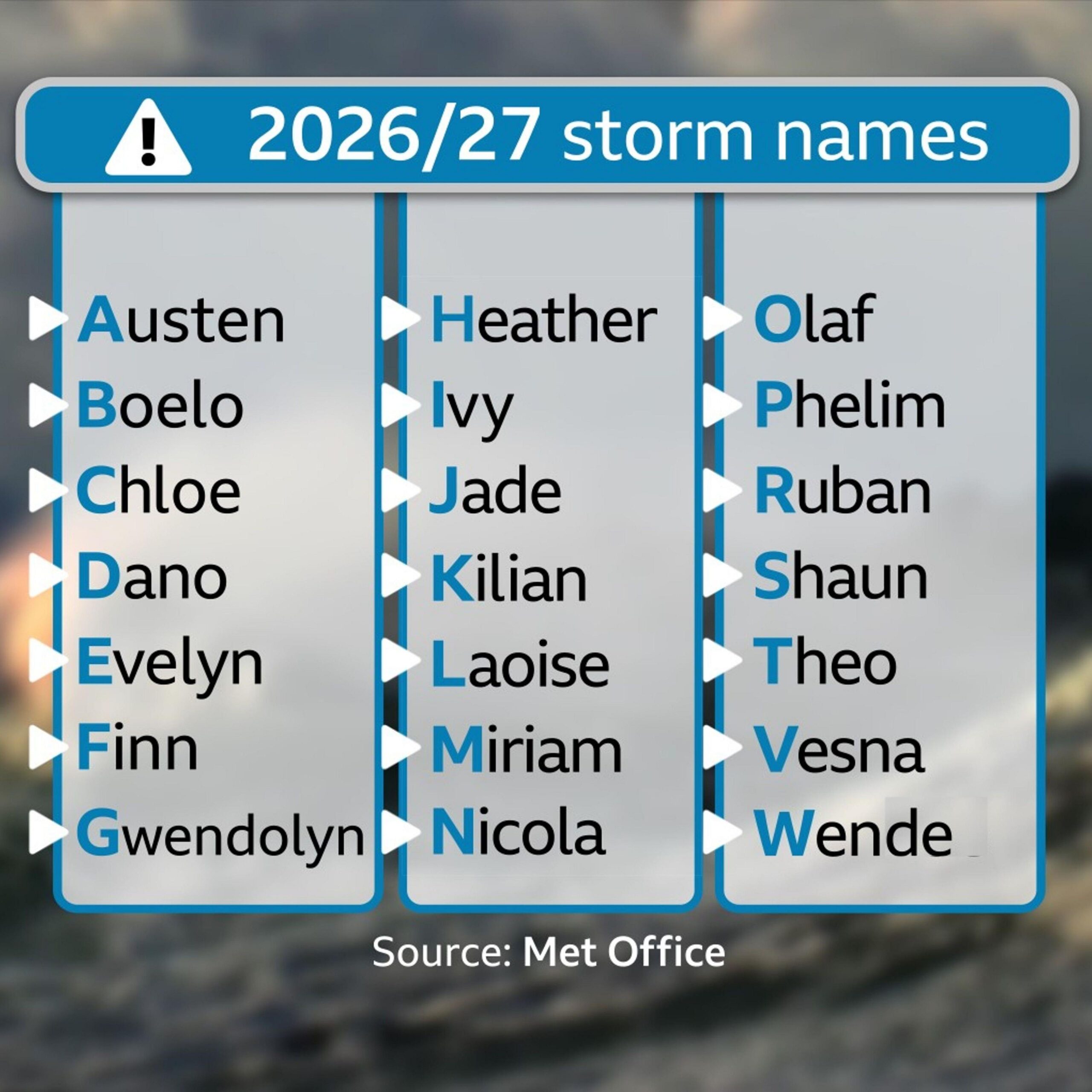 Image source, BBC Weather
Why are storms named?
In the UK, storms are named when they are likely to cause disruption or damage that could lead to an amber or red warning being issued.
This decision is based on both the potential impact of the weather and how likely it is to occur.
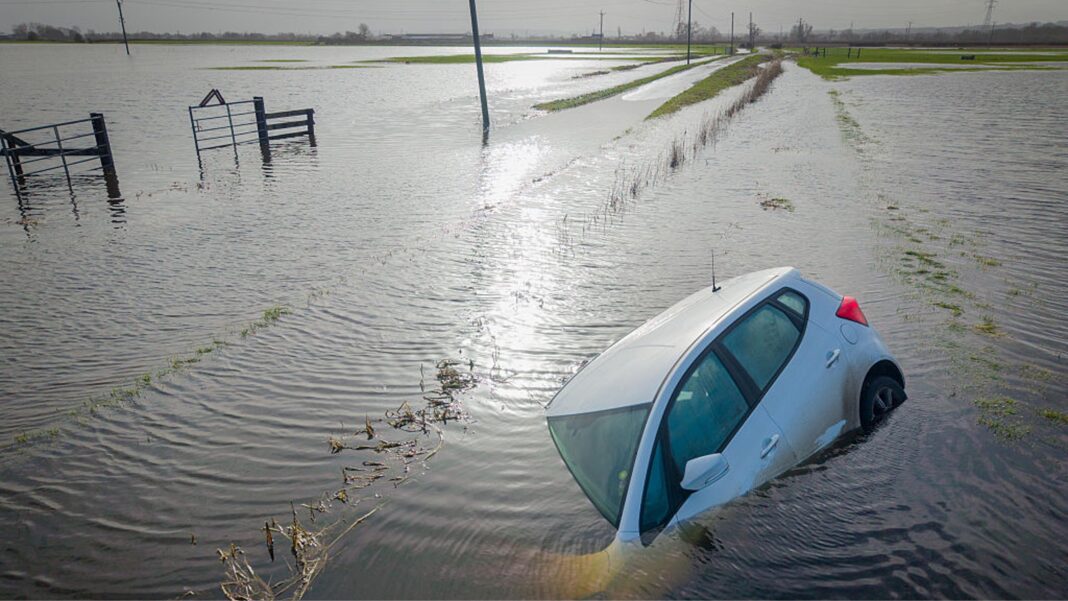
Names are typically given to storms where impacts from strong winds are expected, although other weather-related effects are also taken into account such as heavy rainfall or snow which may lead to flooding or travel disruption.
Using one official system to name storms helps to share clear and consistent information about severe weather, making it easier for the public to stay safe.
The 2026-2027 marks the eleventh year of storm naming in the UK.
How are storm names chosen?
Storm names are selected jointly by the Met Office, Met Éireann and KNMI, with the final list aiming to reflect communities across the UK, Ireland and the Netherlands.
In 2025 the three meteorology agencies invited nominations for names from the public.
More than 40,000 were submitted – we saw names such as Amy, Isla and Marty selected for the 2025/2026 storm season.
This year’s list continues to draw on those suggestions, reflecting not only popular choices, but also some of the personal stories behind them.
For example Austen was suggested in honour of Austen Nagle, the first director of the Irish Meteorological Service.
Chloe was selected by the Met Office after being nominated more than 130 times, including once by the mother of a five-year-old who is described by her mum as “fascinated by the weather” but can also “create a storm by herself” when she is tired.
And Ivy was nominated in honour of a nine-month-old Labrador puppy affectionately known as “the absolute destructor”.
Any remnant of a tropical storm or hurricane that crosses the Atlantic will keep its original name, for example ex-Hurricane Erin, which brought a large swell to South West England in August 2025 and was named ‘Storm Erin’.
To ensure consistency with the US National Hurricane Centre naming conventions, names that begin with the letters Q, U, X, Y and Z are not used.
Who decides when a storm should be named?
In Europe, there are five storm naming groups created from the meteorological agencies based in a similar geographic location.
The UK, Ireland, and the Netherlands form the western storm-naming group.
In the UK, storms are named when they are likely to cause disruption or damage that could lead to an amber or red warning.
Mostly this is because of strong winds but it could also be snow or heavy rainfall.
This decision is based on both the potential impact of the weather and how likely it is to happen.
However, it is worth noting that storms named by Met Éireann or KNMI due to forecast impacts in either Ireland or the Netherlands may not necessarily cause disruption here in the UK.
-
-
Published12 hours ago
-
-
-
Published12 February
-
-
-
Published21 August
-
-
-
Published10 November 2025
-