
First minister called for police interview over Garvaghy Road protests
 Image source, PA Media
-
Published
First Minister Michelle O’Neill has said she has received a letter from police investigating protests over the Drumcree parading dispute.
On Thursday, the police said they had begun issuing letters inviting people “reasonably suspected” of committing offences linked to the protests to interview.
Unionist politicians have called for action to be taken against O’Neill and other senior Sinn Féin politicians who took part in the protests against the Orange Order march down the Garvaghy Road at the end of last month.
On Friday, Portadown deputy District Master Alastair Power said there would be “serious consequences” if the Northern Ireland Secretary intervenes to stop the march.
It is the 13th day of deadlock between residents of the mainly nationalist Garvaghy Road and the local district lodge of the Orange Order.
The Parades Commission ruled that the march could go ahead with restrictions in place.
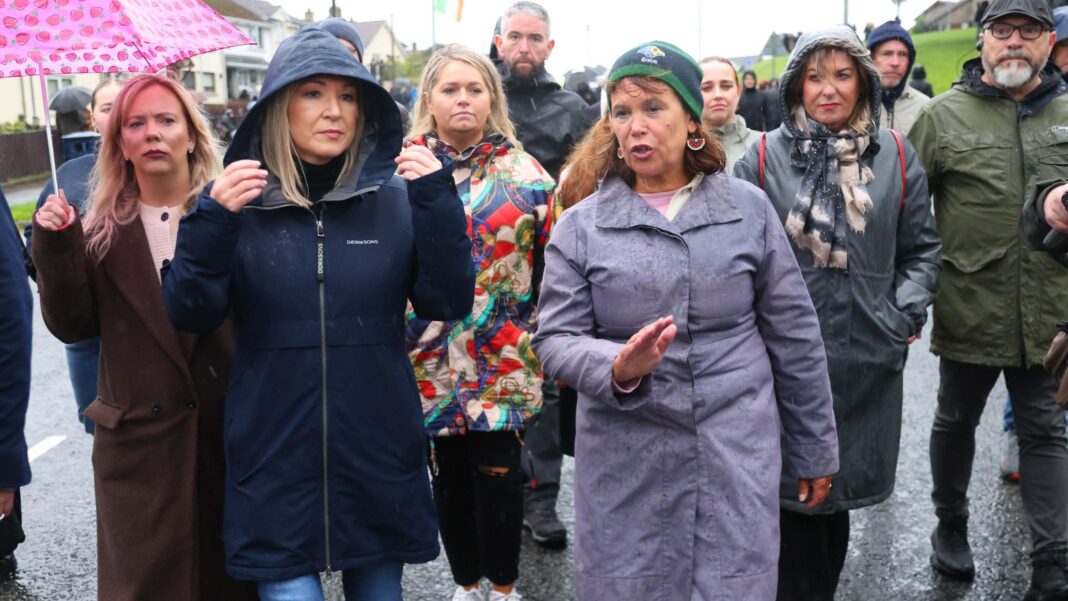
But the parade, from Drumcree Church into Portadown, did not happen due to a large protest on the Garvaghy Road.
O’Neill has previously defended her attendance at the protest, saying she was “proud to stand with the residents” and that “when the law is wrong, I will stand firmly against it”.
The police statement did not name anyone they planned to issue a letter to.
In a statement issued by Sinn Féin on Friday afternoon, O’Neill confirmed she had received a letter from the PSNI.
“I can confirm I have received a letter inviting me for a police interview in relation to a peaceful protest on the Garvaghy Road. I will co-operate with the investigation,” O’Neill said.
“For the last two weeks, I have stood in solidarity with the Garvaghy Road residents as attempts were made to force an unwanted Orange march through their community,” she said.
“I will continue to stand with the Garvaghy Road residents who should be allowed to live in peace and free from sectarian intimidation,” she added.
Earlier, Sinn Féin President Mary Lou McDonald said the party would “cooperate” in every way it could but that they remained “comfortable” in standing up for Garvaghy Road residents.
Sinn Féin MLA Deirdre Hargey also told the BBC that she had received a letter and would seek legal advice.
When asked by reporters on Friday how he would react if Northern Ireland Secretary Sir Chris Bryant intervenes and stops the Portadown District’s parade going ahead, Power said they would “obviously not be very happy”.
He said it would be the “first time the secretary of state has intervened on a lawful parade in over 30 years in overturning it”.
“We’re law abiding citizens and we will have to abide by the law but there will have to be serious consequences from the unionist community on that,” he said.
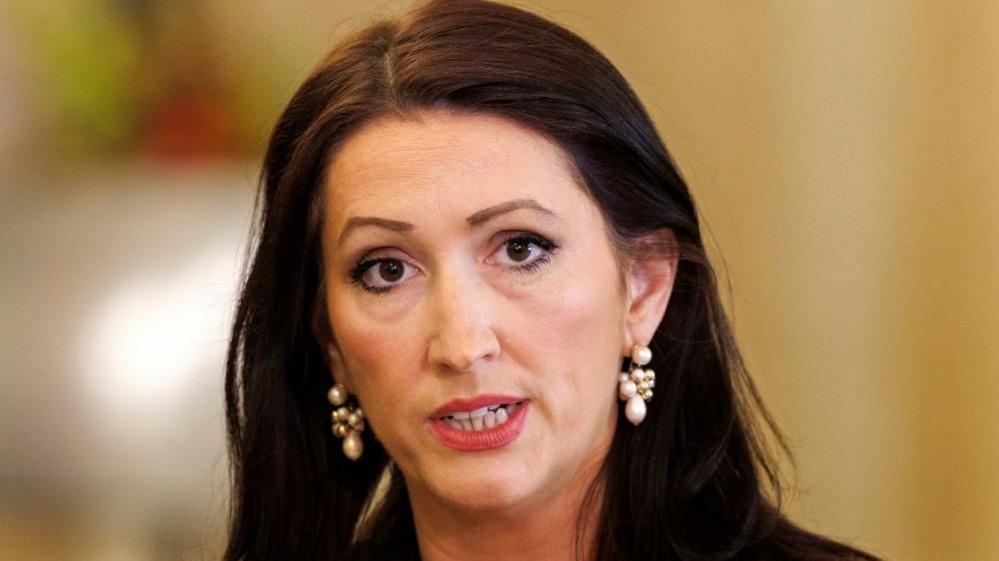 Image source, PA Media
Earlier, Deputy First Minister Emma Little-Pengelly, of the Democratic Unionist Party (DUP) told reporters she welcomed developments in the PSNI investigation, adding that the letters were “absolutely the right thing”.
“It doesn’t matter whether you are an ordinary citizen or first minister of the country, you have to be subject equally under the law.”
Little-Pengelly also defended her attendance at the business engagement, after the DUP previously said it could not be “business as usual” at Stormont in response to Sinn Féin’s involvement in protests on Garvaghy Road.
She said she did not want to punish “the work we need to do in terms of growing our economy and investing in public services… just because of the deeply reckless behaviour of Michelle O’Neill and Sinn Féin”.
Speaking to The Nolan Show earlier, DUP leader Gavin Robinson said he expected “to see sanctions” for those investigated by the police.
Threats to Bryson and Lockhart
Loyalist activist Jamie Bryson held a press conference on Friday, alongside DUP MP Carla Lockhart.
He said he had personal details published online on Thursday.
“I have received over 1,500 abusive calls, over 280 voicemails, many with threats to kill, to murder me, my family, people around me, and things have just reached a level now where it’s totally unacceptable,” he said.
Lockhart appealed to people to “step back” from making threats to her and Bryson.
She said: “People can fight us on our politics and our policies, and they may not like what we say and I’ll take anyone on with regards to my politics.
“But when it gets personal and when you see and hear these threats online all it takes is for one person to just seriously think ‘I really don’t like those people’ and I firmly believe it’s getting to that point.”
What is the Drumcree dispute?
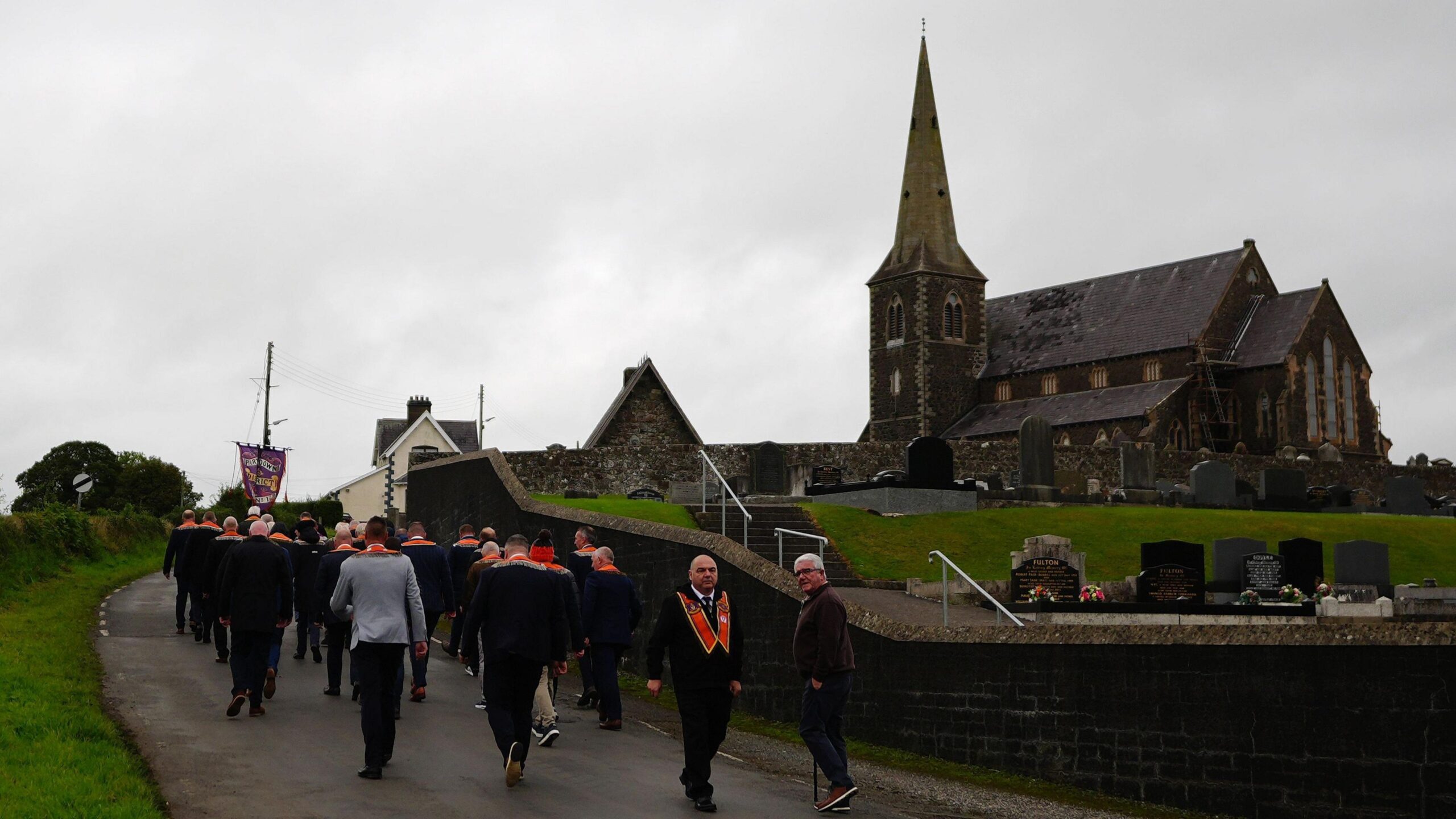 Image source, PA Media
It is more than a week since the decision to allow an Orange Order march down the Garvaghy Road on Sunday, 27 September.
That morning, up to 1,000 people – including politicians such as O’Neill – blocked the road, preventing Orangemen marching from Drumcree Church a mile to the west.
Since then, residents have maintained a constant presence around the road while Orangemen have also repeatedly tried to march the route before being turned back by police.
The stand-off has caused considerable political fallout in Northern Ireland, with O’Neill facing a vote of no confidence over her involvement in the protest.
The vote is due to fail because it requires cross-community support at the Northern Ireland Assembly.
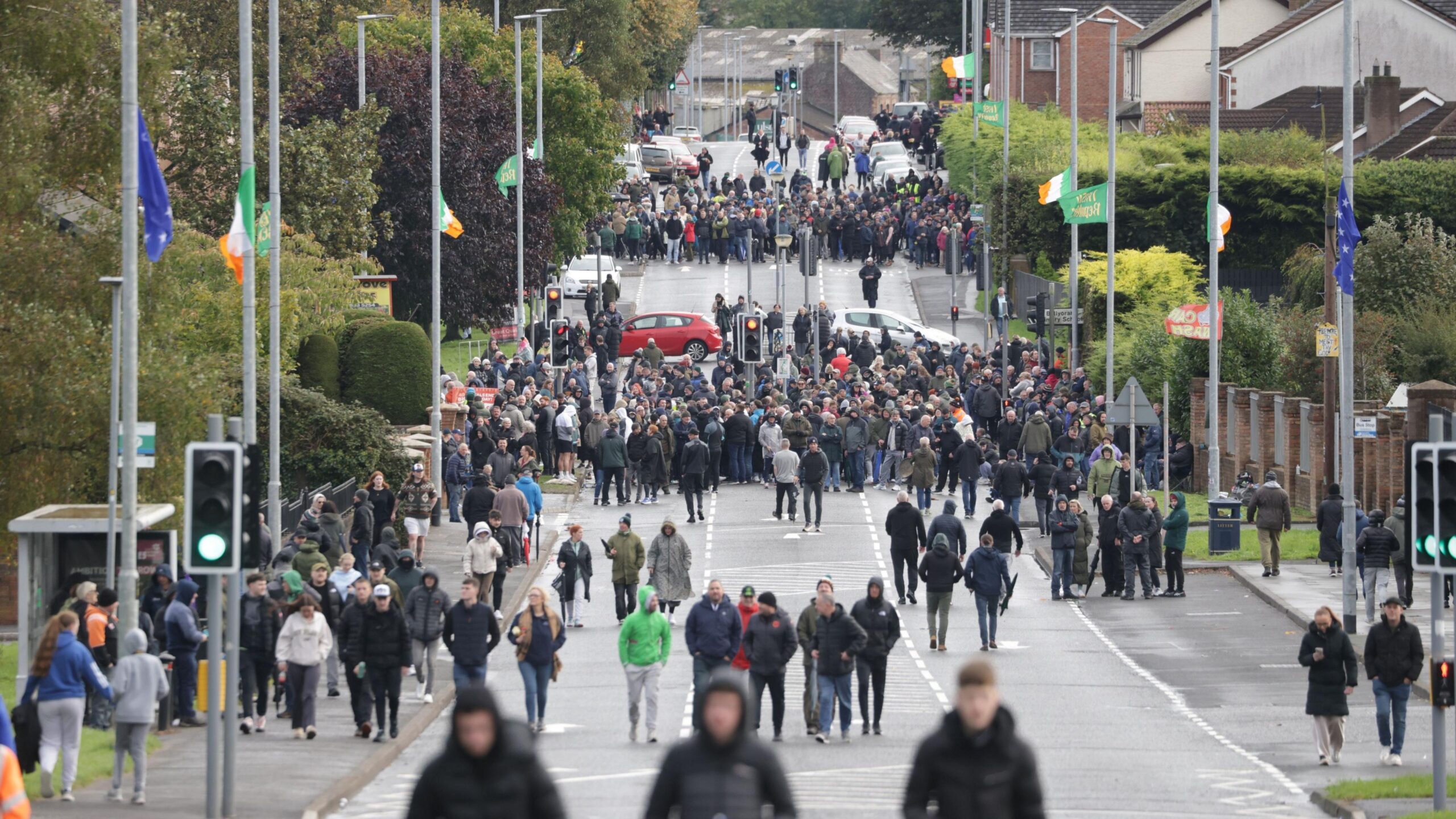 Image source, PA Media
Drumcree was one of Northern Ireland’s most serious parading disputes, when stand-offs in the mid-to-late 1990s over attempts by the Orange Order to march along the Garvaghy Road were accompanied by riots, roadblocks and killings.
When the Orange Order was prevented by police from walking down the route in July 1995, there was a tense stand-off. It was the same for the next three years.
The Parades Commission began operating in 1998 to regulate parades and try to defuse tension around marches.
Its decision not to allow a march down the Garvaghy Road that summer has been challenged by the order for the past three decades.
Earlier this year the Parades Commission decided that the march could go ahead with restrictions in place after its original decision to stop the march was overturned in court.
Meanwhile, the Court of Appeal is considering its ruling in a legal challenge brought by the residents to block the march going ahead.
-
-
Published18 hours ago
-
-
-
Published1 October
-
-
-
Published3 days ago

-