


This post was originally published on this site.
‘No guarantees’ – joyful Glasgow cannot banish all Commonwealth doubts
-
Published
Glasgow has performed the surgery the Commonwealth Games needed to keep it alive.
Eleven days. 674 medals. Thousands of happy fans.
But this is only the start of the recovery.
The Indian city of Ahmedabad now stands where Victoria did four years ago – as the next hosts of an event that will celebrate its 100th anniversary in 2030.
Victoria pulled out. Can Ahmedabad give certainty it won’t?
“I don’t think one can give any guarantees,” Raghu Iyer – chief executive of the Indian Olympic Association – told BBC Sport.
It was a note of caution that showed questions about the Games’ future had not been banished as the 2026 Games closed on Sunday evening.
-
Why the Commonwealth Games are important to NI athletes
-
Published5 hours ago
-
-
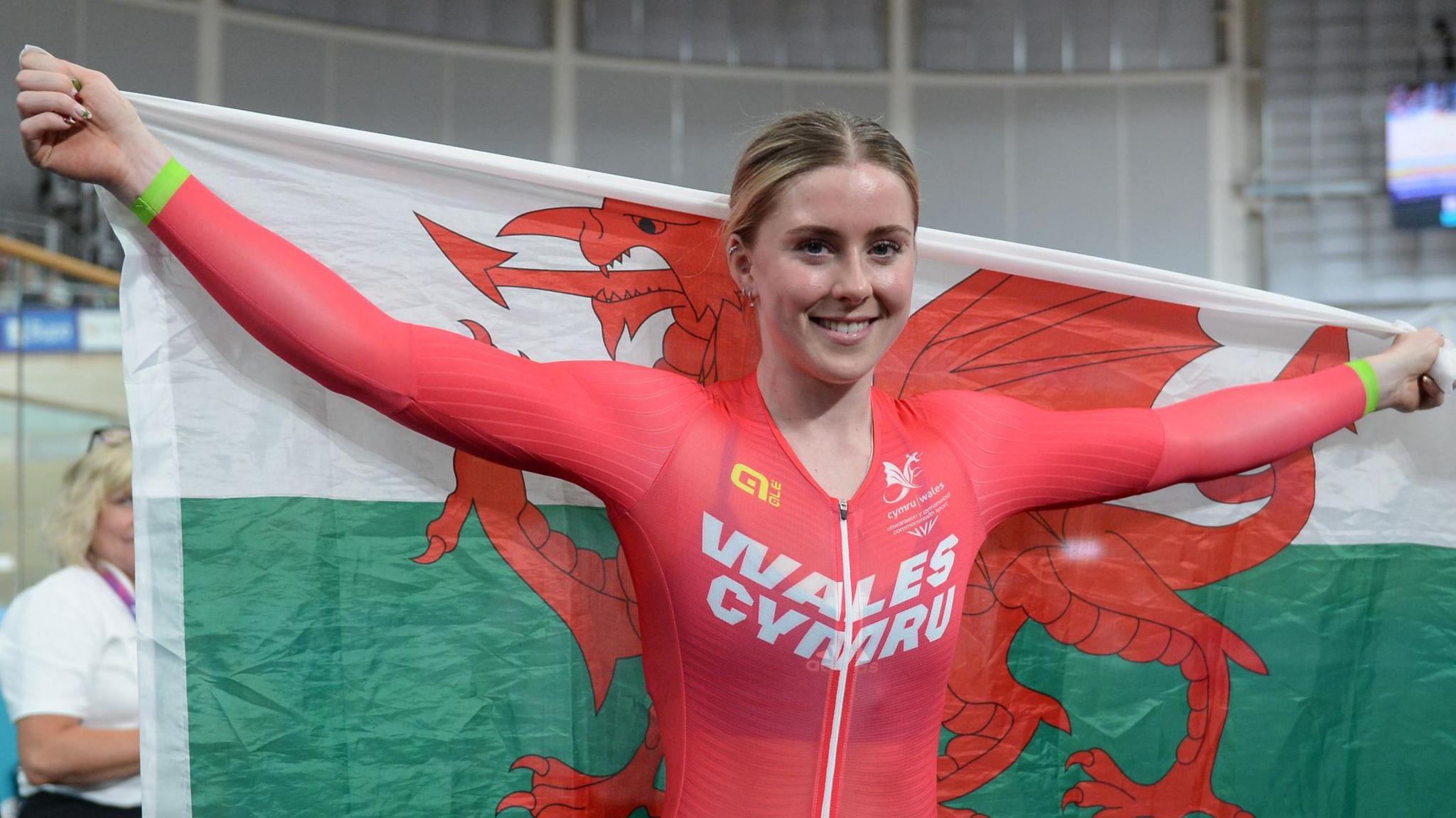
‘A huge success’ – Wales win 31 medals at Glasgow Games
-
Published6 hours ago
-
After Victoria withdrew in 2023, Glasgow answered the SOS call – and organisers say the past 11 days in the Scottish city have “exceeded all expectations”.
Yes, there have been grumbles – including from those who have seen parking spaces outside their houses taken – and taxi drivers and shop owners the Games have passed by.
On the ground, though, this felt like a meaningful event.
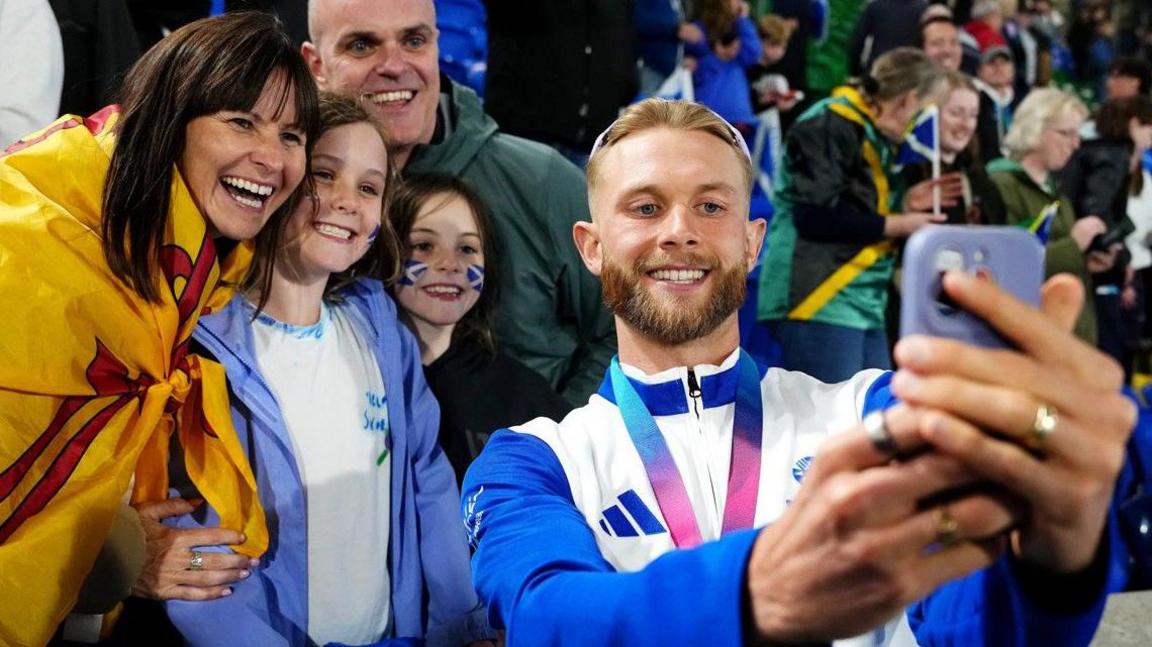
Ticket sales of 434,000 were well down from 1.5 million for Birmingham 2022, but they were always going to be given the smaller venues for this scaled-back edition. It has been rare to enter a venue and not find a joyful, engaged crowd.
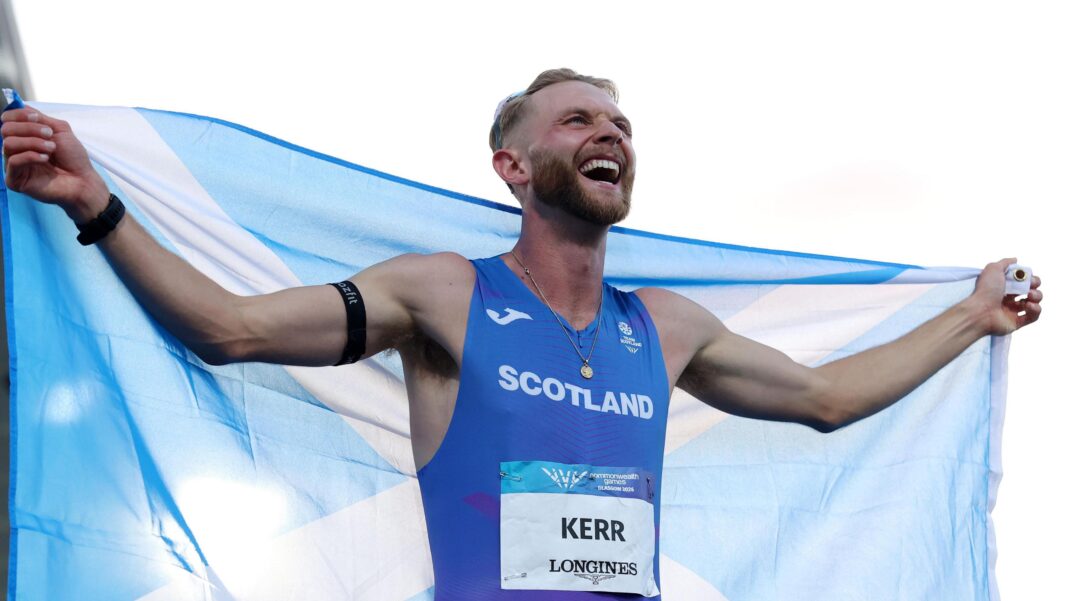
There was plenty of excitement for fans, too – Josh Kerr’s golden homecoming at Scotstoun, Angharad Evans making the swimming pool floors shake, and Neil Fachie’s emotional victory on his return to the Sir Chris Hoy Velodrome.
They also celebrated Jamaica’s seismic netball win over Australia. Live sport rarely fails to deliver.
But a nagging question has remained throughout: is anyone else watching?
Big names such as Kerr and Adam Ramsay-Peaty – with his emotional reaction to taking bronze in the pool – broke out of this Glaswegian bubble, but what else?
Organisers said their social media views passed those of Birmingham within the opening few days and highlighted record-breaking television figures in Australia and New Zealand, where the Games were free-to-air.
Still, without that same coverage in the UK, these Games have – at times – drifted by.
Glasgow 2026 was also hurt by the absence or late withdrawal of big-name competitors, particularly in athletics, which missed Keely Hodgkinson, Katarina Johnson-Thompson and Dina Asher-Smith.
The Games’ differing relevance between sports was again clear – for netball, this remains the pinnacle and is treated as such; for others, it is a stepping stone. Many narratives focused on the “next generation”.
Eighteen-year-old Jersey swimmer Filip Nowacki was perhaps the most exciting name to emerge, but gymnasts Ruby Evans (Wales) and Reuben Ward (Scotland) and England track cyclist Henry Hobbs, who won two golds and a bronze, were others.
Swimmer Faye Rogers impressively brought her success at the Paralympics back to Glasgow with gold in the pool – and then competed in the non-para event as well.
Cyclist Emma Finucane turned her three Olympic medals in Paris into four Commonwealth golds in Glasgow.
All will have their eyes on Los Angeles in 2028.
To play this video you need to enable JavaScript in your browser.
This video can not be played
But what does this all mean for the future of the Commonwealth Games?
A move to October for Ahmedabad will free athletics from a scheduling tussle with the European Championships. It will, though, extend a gruelling season and give athletes a different decision to make.
That the next Games are seen as a step towards India hosting the Olympics and Paralympics – possibly also in Ahmedabad – should help ensure their success.
The main venue will be the 120,000-seater cricket stadium which bears the name of Prime Minister Narendra Modi.
Given the issues at Delhi 2010, plenty will be watching with interest.
But as the number of sports rises – not beyond 20, as was planned for Victoria, but to 17 from the 10 in Glasgow – so will costs.
They were slashed from £800m here, but the budget for Ahmedabad 2030 is almost double Glasgow’s £160m. Therein lies a conflict.
This version has been billed as a template for the future, but immediately there is change. A financial and logistical circle needs to be squared.
To play this video you need to enable JavaScript in your browser.
This video can not be played
The specific sports returning for Ahmedabad will be interesting too.
While the Olympics have recently added skateboarding, surfing and breakdancing, the Commonwealths – with India having a big say – look set to reintroduce cricket, shooting, archery and hockey.
Cricket, though, would be another sport for which this event does not represent the biggest prize.
The BBC has been invited back to the negotiating table for broadcast rights, too.
But perhaps most significant is the fact sports, nations and thousands of athletes still want to be here – each for many different reasons.
“I always looked up to it as a little girl and wanted to compete at a Commonwealth Games,” said 5,000m runner Rose Davies – part of the Australia squad that won 70 of the 216 golds.
“It is a big part of our development and one of the goals an athlete has.”
Tarona Taafaki looked more broadly after winning Tuvalu’s first Commonwealth medal.
“It means there’s a start, there’s a beginning, and right now it just the beginning of what Tuvalu can reach in the future,” she said.
If that drive remains, so will hope for the future.
-
-
Published4 hours ago
-
-
-
Published4 hours ago
-
-
-
Published10 hours ago
-