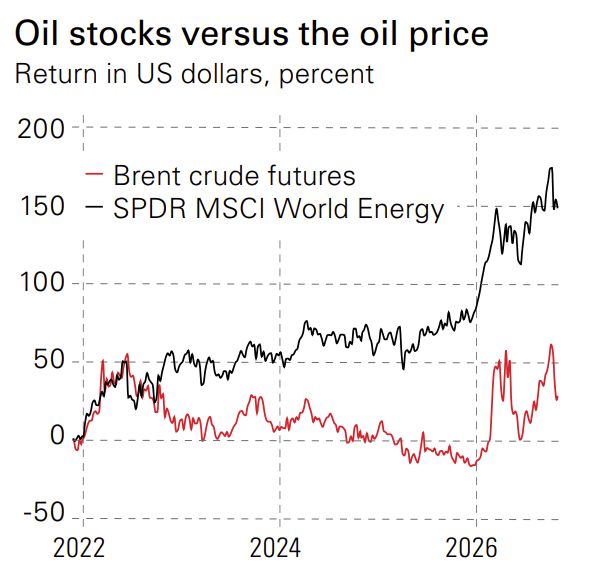
Oil stocks were a safe bet when I first started writing in MoneyWeek more than 20 years ago, “peak oil” was a mainstream fear. The idea that oil and gas supplies would fail to keep up with rising demand seemed very plausible, leading to the assumption that prices would be much higher in future. Almost nobody would try to make the same argument today.
The US shale revolution in the early 2010s transformed the supply outlook for oil and gas. Meanwhile, continued gains for renewables – both from improved technology and government incentives to increase their use – has given us more alternatives to meet future energy demand.
Oil is not going away soon – it will be hard to replace in sectors such as aviation and shipping. But the structural trend is adequate capacity to meet weak demand growth and subsequent decline, even if there will be plenty of cycles within that.
Start your trial of MoneyWeek today
Get unparalleled financial insight, analysis and expert opinion you can profit from.
Start your trial
Sign up for MoneyWeek’s free twice-daily newsletter.
Join more than 165,000 subscribers and keep yourself informed with latest financial news, insights and expert analysis to help you understand what really matters when it comes to your finances.
Join more than 165,000 subscribers and keep yourself informed with latest financial news, insights and expert analysis to help you understand what really matters when it comes to your finances.
Still room for oil stocks
Despite this, I still hold some oil and gas stocks. In 2020 after prices had crashed in the pandemic, it seemed an obvious move: oil would not stay that low forever and the majors were trading cheaply relative to the cash they should generate even under pessimistic assumptions.
(Image credit: Future)
Crude oil subsequently rose above $100 per barrel again, before dropping back to $60. This would probably have been low enough to cause US shale producers to slash investment, leading to an eventual rebound, but we never got to confirm that theory, because the US and Israeli attacks on Iran sent prices soaring again.
However, the lesson is clear: in today’s market, high oil prices readily boost supply, even with the majors staying disciplined about costly new projects. So we should be alert when the International Energy Agency (IEA) says production outstripped consumption by almost two million barrels a day (mbpd) in October and may reach a 4.5 mbpd surplus next year.
There are caveats, even if one assumes that estimates of how well Gulf production and exports have recovered are entirely accurate (which is not certain). Stockpiles have been drawn down and need to be rebuilt, which could support demand and prices. Global refining capacity is tight (down 10%, in part due to attacks in the Middle East and Russia), meaning that refined-product stockpiles are also low and refining margins can stay high. Still, if there is a lasting ceasefire in the Gulf, the large potential downside for oil and oil stocks is obvious.
The Gulf crisis is the primary reason why it has paid to hold the State Street SPDR MSCI World Energy ETF (LSE: ENGW)in the MoneyWeek portfolio recently. We added this back in 2024 on the basis that it was a good hedge against such risks while being cheap and unloved. Its strong performance this year validates that thesis, but also indicates that investors increasingly expect higher crude prices to be sustained. That seems unlikely if tensions ease. So while it is futile to try to guess whether there will be a lasting ceasefire, we should be ready to take some profits if one starts to seem more likely.
This article was first published in MoneyWeek’s magazine. Enjoy exclusive early access to news, opinion and analysis from our team of financial experts with a MoneyWeek subscription.