
Jerez de la Frontera, with its historic bodegas, lively tabancos, and hearty tapas scene, was recently voted Spain’s capital of Gastronomy. Just down the road on the banks of the Guadalquivir, Sanlúcar de Barrameda (completing the sherry triangle alongside Jerez and El Puerto) showcases the town’s exceptionally dry manzanilla sherry and a host of well-priced restaurants serving everything from hearty Andalusian stews (guisos) to prized langoustines. Further south, Barbate has some of the world’s freshest bluefin tuna—you know it’s good when around 70 percent is exported to Japan—caught using complex almadraba fishing net techniques dating back to the Phoenicians.
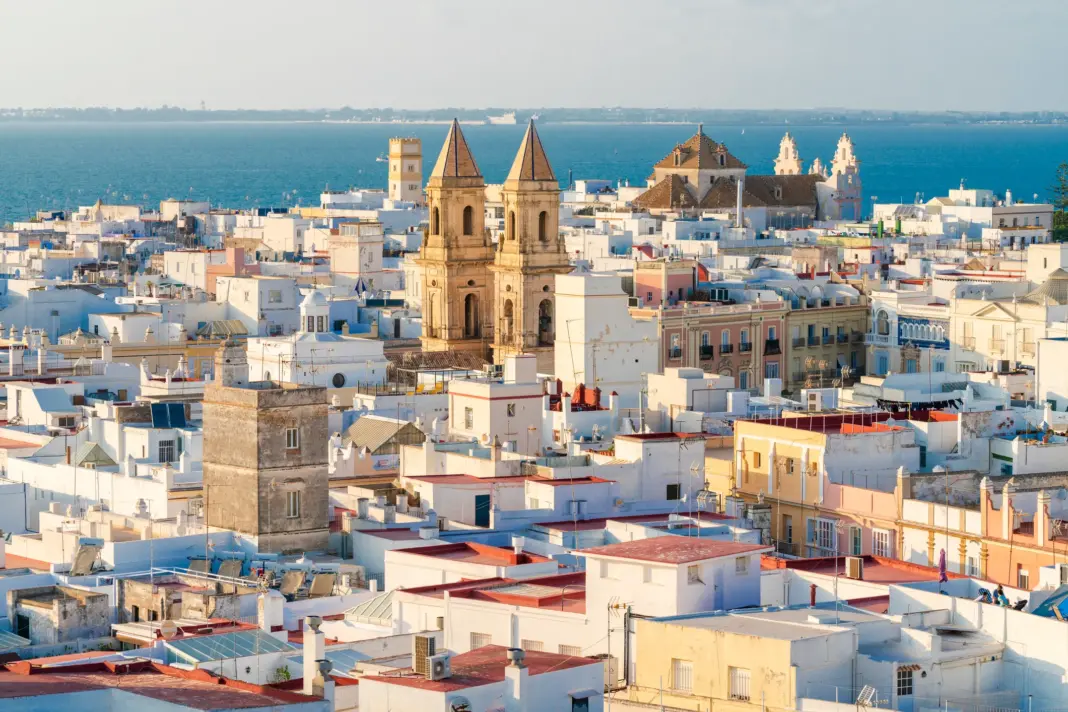
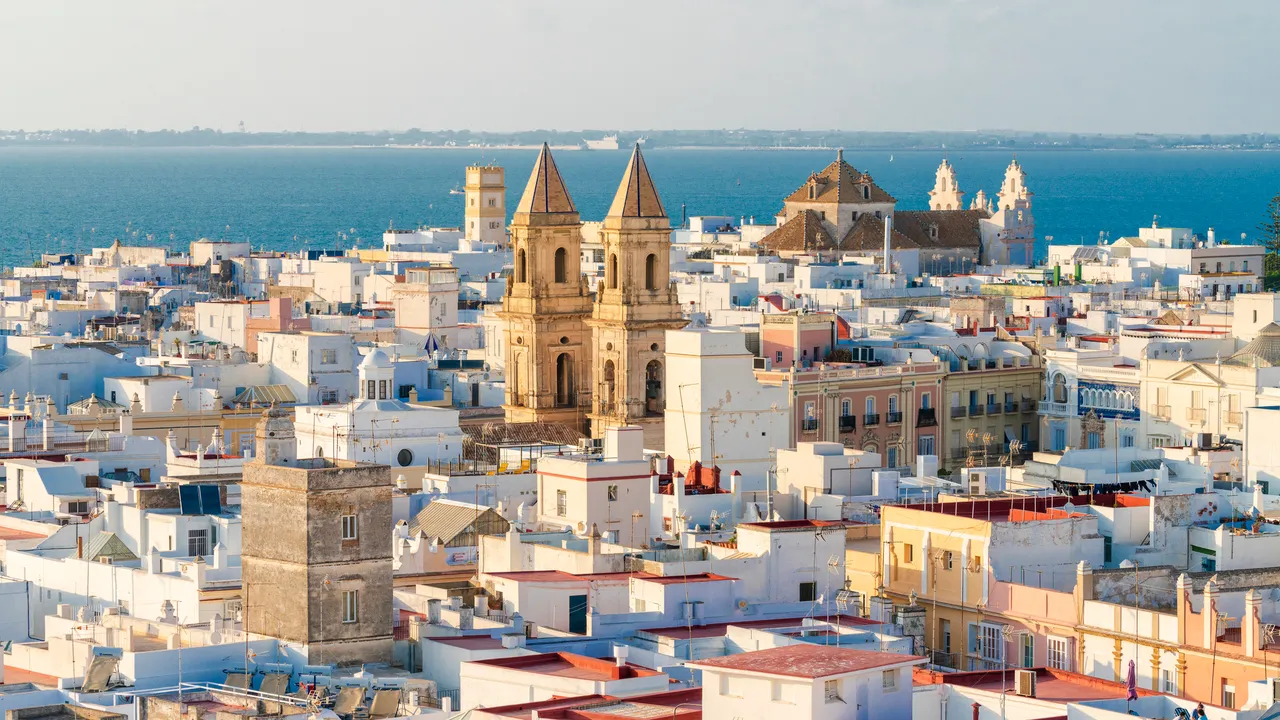
Yet it’s the city of Cádiz, founded by the Phoenicians as Gadir in around 1200 B.C., that is perhaps the beating heart of the province’s culinary brilliance. Old town Cádiz sits on an island-like inlet connected to mainland Spain by a long, narrow sandy peninsula. Its pastel-colored buildings, romantically decayed by the salty sea air, have earned it the nickname “Spain’s little Havana.” Beyond a constellation of top-notch restaurants, the walkable, picturesque historic center is a maze of narrow cobbled streets, Roman ruins, and a golden horseshoe-shaped inner-city beach called La Caleta.
Naturally, a city lashed by the wild Atlantic Ocean excels at one culinary discipline: fresh seafood. Central to daily life here is Mercado de Abastos, one of Spain’s oldest fresh food markets, dating back to 1838. Within its crumbling walls, veteran gaditanos (local folk known for their warmth and quick wit) haggle for shellfish, fishmongers peddle everything from fresh sardines to prized tuna, and seagulls the size of pugs circle above searching for stray offcuts.
Food lovers might prefer propping up a high table at Gadisushi, an unassuming sushi stall where the toro sashimi, prawn gyoza and scallops with miso butter are all superb. Though Cádiz’s main food market isn’t strictly seafood-focused, there’s everything from olive oil and regional cheeses (Sierra de Cádiz) to empanadas and cakes—those in the know usually opt to select a fish from Marisco Camilo and take it to nearby Bar Carrusel, where they’ll fry it for only the cover charge (order a couple of cañas and some olives to keep them sweet).
The main foodie neighborhood is La Viña, a palm-tree-lined barrio chock-a-block with busy restaurants and bars. At the heart is Casa Manteca, probably the most famous tavern in town. Rick Stein dined there on his Long Weekends, and it’s since been mentioned by every travel guide in the land—for good reason. The corner bar offers a window into old Spain: expect dusty sherry bottles, walls crammed with yellowing bullfighting photos, and classic local tapas options. Pair a sheet of chicharrones with a fino sherry, or local Payoyo goat cheese with a glass of palo cortado.