
This post was originally published on this site.
Only wins can stop England’s curfew hokey-cokey
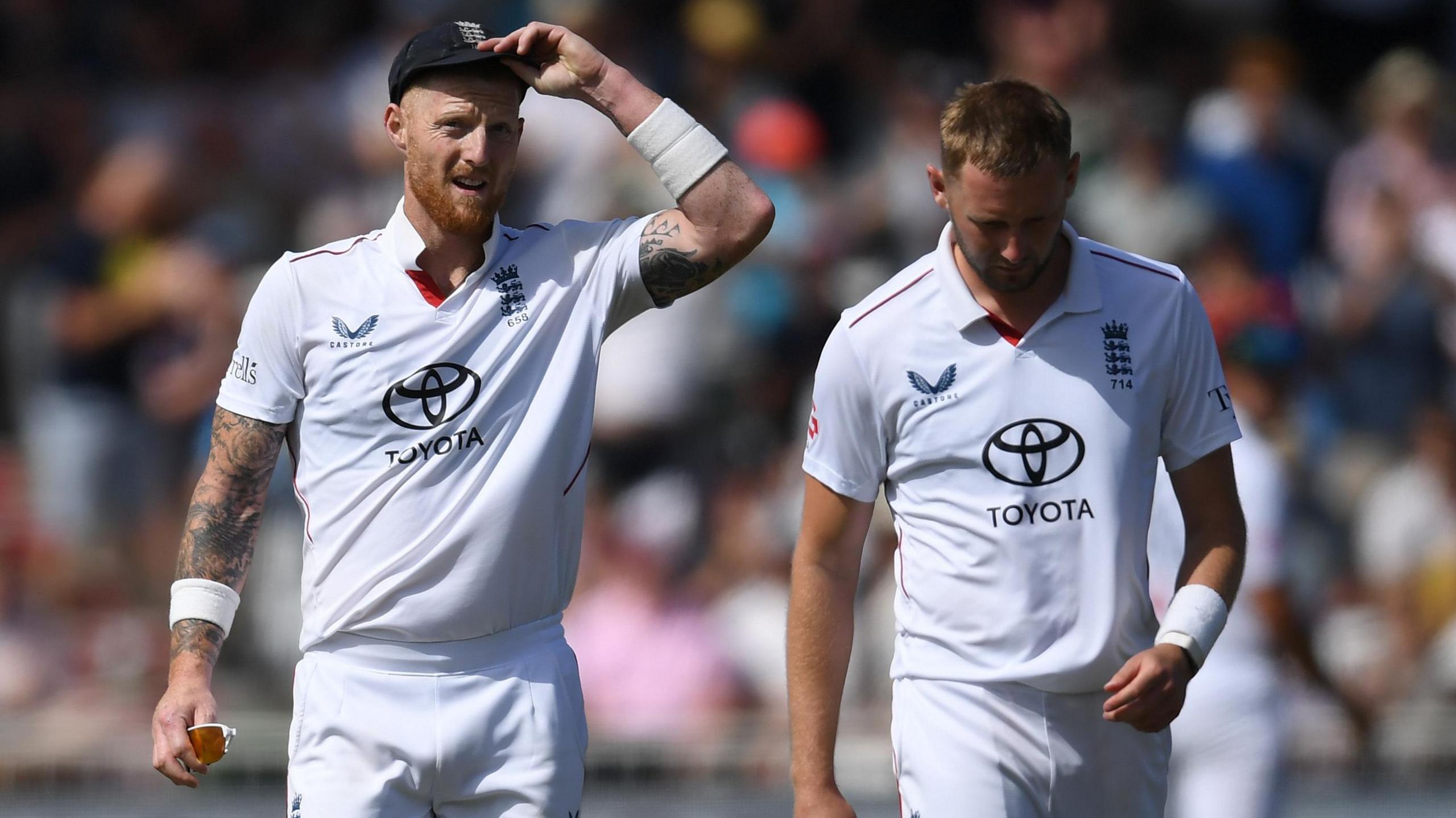 Image source, Getty Images
-
Published
“We are grown men and we know how to behave,” said Joe Root.
“As an international cricketer you are always representing the badge. We are a group of adults and we feel we can be treated like that.”
Root did not say these words in 2026, but in his first stint as England captain in 2017.
It was the eve of an Ashes tour, one on which Root was without Ben Stokes because of the incident outside a Bristol nightclub.
The trip to Australia included the Jonny Bairstow-Cameron Bancroft ‘headbutt’ and Ben Duckett tipping a drink over James Anderson. The low point was Moeen Ali, a practising Muslim, being asked by a local journalist if he and the rest of the England players would be able to “stay out of the pub”.
The midnight curfew imposed on that tour lasted more than four years until it was banished in 2022.
What is it about an away Ashes that drives Englishmen to drink? Trouble on the latest trip resulted in the return of the curfew in January yet, seven months later, Root’s comeback as captain has seen the curfew, erm, put to bed.
Goodness knows what it says about the state of the England men’s team that the subject of ‘when grown men should go to bed’ has been live for almost a decade.
You can be forgiven for struggling to keep up with England’s hokey-cokey over the curfew in the past few months.
As a quick recap, rules that were introduced to the white-ball team in January were kept in place for the Test side at the beginning of the home summer.
After the first Test, captain Stokes and Gus Atkinson broke the curfew. Director of cricket Rob Key, fed up after a winter of misdemeanours, floated the idea of a total alcohol ban, while also admitting Atkinson didn’t know the curfew was in place.
Head coach Brendon McCullum conceded there was some “ambiguity” around the regulations at the same time Stokes and Atkinson were cleared of any wrongdoing. Stokes came back, then retired.
Last month, England issued new guidelines to players, with the curfew still in place and advice for alcohol not to be drunk on the days immediately before, during, or immediately after a match.
-
England scrap midnight curfew after seven months
-
Published16 hours ago
-
Then McCullum was sacked as Test coach. His last act in charge of both the Test and white-ball teams was to relax the drinking guidelines so England’s T20 side could celebrate their series win against India.
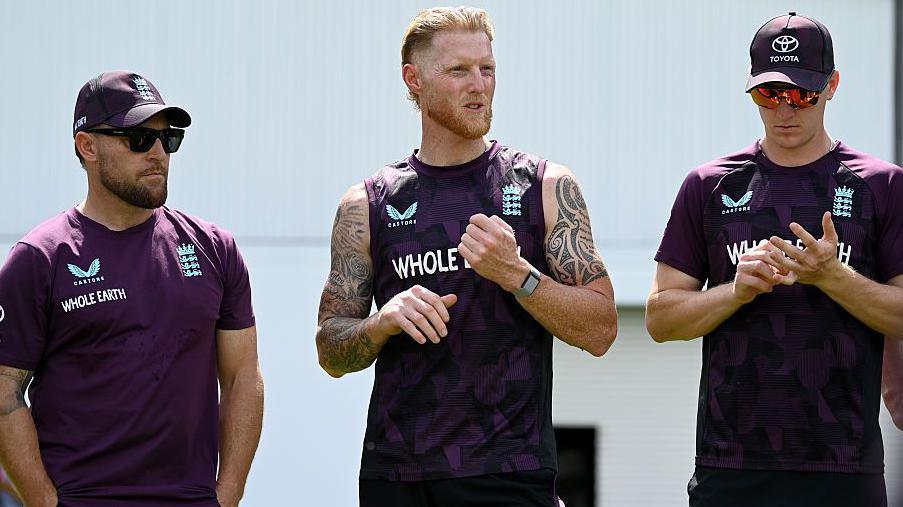
Now the curfew is gone, under the instruction of Root and McCullum’s replacement as Test coach – his great mate Stephen Fleming.
The England and Wales Cricket Board see Fleming as a grown-up, and he has made a grown-up move, one that also includes the curfew being lifted from a white-ball team still led by McCullum and Harry Brook.
McCullum is said to be supportive of players taking responsibility for their behaviour, which begs the question as to why he went along with the curfew in the first place.
Perhaps this is not a problem specific to this group of England players. Last week, Stokes rejected the idea that England have a drinking culture, instead suggesting the whole game has an unhealthy relationship with alcohol.
And that is not to say it is a crime every time a beer touches the lips of a cricketer.
In 2022, when England stunned New Zealand at Trent Bridge to give birth to the Bazball movement, the players celebrated on the dressing room balcony with a few drinks, then kicked on into the early hours and the Mega Munch takeaway in Nottingham.
After the Ashes of 2005, probably England’s greatest series win, celebrations were led by a swaying Andrew Flintoff on an open-top bus through the streets of London.
Even this past winter, there’s a decent chance Travis Head put away more than the England players. It’s just that Head was scoring runs and Australia were winning.
Former cricketers will argue that any drinking taking place now is nothing worse than what was consumed in years gone by – Ian Botham, Allan Lamb, Phil Tufnell and the rest.
But perhaps that’s exactly the point. Cricket has not moved with the times. You wouldn’t catch famous Arsenal swillers Paul Merson and Tony Adams saying Declan Rice and Viktor Gyokeres could match them drink for drink.
It is also not fair to pin a drinking culture only on elite players. Cricket has a relationship with alcohol right down to the grassroots of the game.
I play league cricket (badly), mainly as an excuse to have a few beers.
On a Saturday, I couldn’t really ask my partner to look after our two children just so I can go to the pub with 10 of my mates. Instead, I have to keep up the pretence of trying to score runs and catching the ball as a wicketkeeper. The cricket is a hindrance to getting to the bar.
Not that cricket will be too different to other amateur sports – back to the pub after Sunday league football, meeting in the bar at the tennis club, drinking games after a rugby match.
Has cricket kept up with the professional versions of those sports? Very much open to debate.
But these wider problems of the entire game are not an excuse for an England team who, frankly, would be given a pass for endless hours after midnight if they were winning.
Trouble is, they aren’t, with only two victories in their past 10 Tests. The reputational damage that has been suffered over the past year will only be fixed by success on the field.
The first opportunity to start putting things right comes with three matches against Pakistan, beginning next week. After that, England’s Test future is about as tough as it gets, with the major series coming away to world champions South Africa this winter, a home Ashes against Australia next summer, then five Tests in India in early 2028.
Does lifting the curfew enhance their chance of winning those series? Maybe treating the players like grown-ups off the field helps on it.
“If you want guys to take responsibility on the field, they’ve got to feel like they can be grown adults off it and make good, strong decisions off it,” said Root on Wednesday.
Either way, England must decide their stance and stick to it. Much like constantly changing an opening pair does little for the team’s output of runs, flip-flopping on rules around behaviour does not create a winning environment.
Curfew or no curfew, England can only rebuild on the field, not in the bar.
Win Tests, series and trophies, then they can go to bed as late as they please.
-
-
Published8 January
-
-
-
Published21 December 2025
-
-
-
Published8 June
-