
This post was originally published on this site.
Some 24 years since Channel 4’s pioneering coverage of Serie A ended, James Richardson remains inexorably linked to ‘calcio’ for British football fans.
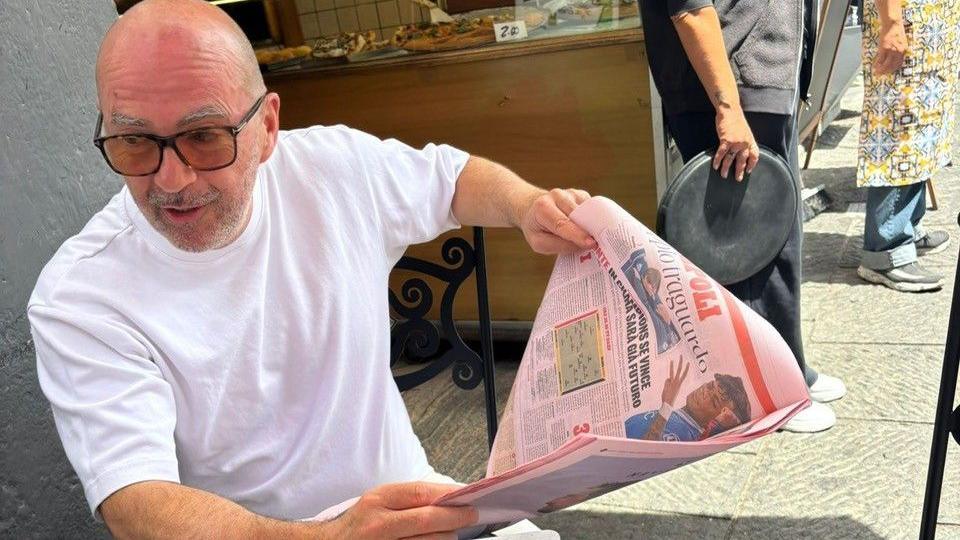
Invariably sitting in a sun-drenched piazza in some impossibly exotic Italian city, Richardson would talk the viewers through the week’s news in Italy’s top flight with a cappuccino and a pink sports newspaper.
All delivered with an easy wit and sophistication that made the coverage feel less like a football championship and more like a stylish gap year.
Richardson returns to our screens on Monday evening at the Diego Maradona Stadium for Napoli against Bologna, which is live on BBC Alba from 19:35 BST.
Gazza and Gazzetta, a match made in TV heaven
Gazzetta, which ran from 1992 to 2002, garnered a huge following at a time when televised live football was relatively scarce.
Sky had snapped up the rights to the newly formed Premier League in England and, while the Scottish Premier Division, as it was then called, was available free to air, Serie A offered something unmistakably different.
It wasn’t just the kits (think Sampdoria, Fiorentina or AC Milan), it was the star players from across the globe, exorbitant transfer fees and enormous stadia, many of which remain architectural marvels.
Richardson was both presenter and cultural tour guide who brought it all to life. He describes it as “a magical era…when giants scored goals in Italy and was totally different to anything else on offer at the time. There wasn’t the blanket coverage of football we see now”.
Richardson explains he got the job with Channel 4 almost by accident.
Channel 4 acquired the rights to Serie A principally to follow the fortunes of Paul Gascoigne, who had joined Lazio from Tottenham Hotspur in 1992.
“I knew someone who worked at the company producing the coverage, happened to speak Italian and was cheap, so I got the job,” Richardson explains.
“Paul was the catalyst for the whole thing, it just so happened to be the place where all of the world’s best were playing.
“We had no money for a studio, but the producer, Neil Duncanson, was the person who came up with the idea of me reviewing the papers in a cafe.
“It started with a brilliant 3-3 between Sampdoria and Lazio and so began with a real blast. It was a fantastic period and one people still recall with a lot of affection.”
Big names made art of football look effortless
 Getty Images
Even during the core Gazzetta years, AC Milan and Juventus dominated the title race much in the same way the Old Firm have done in Scotland, but Richardson recalls the strength of Italian football at the time as adding to the general appeal.
“Between 1989 and 1998, nine of the 10 European Cup finals had an Italian side in them,” he says. “Four were won. It was the kind of dominance not seen since.”
It seemed that every club had a wealthy local “padrone” as Richardson calls them, each of whom had seemingly endless sums of lira to lavish on the world’s best.
“They would curry favour in their city, demonstrating their largesse by spending large sums of money on players that they didn’t always need,” he explains.
Arguably that sums up what made Italian football so compelling.
“AC Milan and Arrigo Sacchi drove what made Italian clubs so successful in that era,” Richardson suggests. “Sacchi’s story is incredible. They were far and away the best club in the world at the time.
“Some of the presidents were a bit mad and fans seemed to enjoy hearing stories of a successful season being rewarded by a certain padrone with the gift of a horse to their coach.”
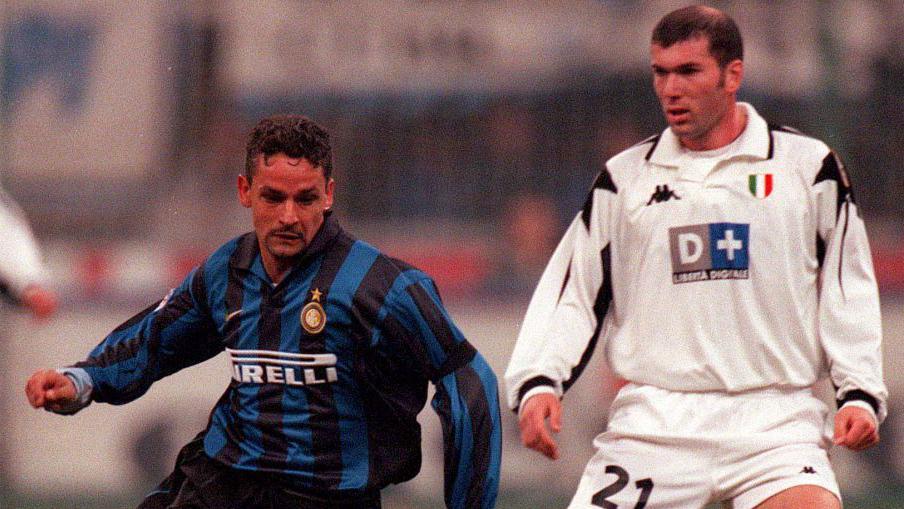
His favourite interview? Roberto Baggio, perhaps the most famous Italian player of the 90s. The Divine Ponytail who had lit up Italia 90.
Combining grace with technique and a seeming moodiness, Baggio summed up the attraction of football in Italy.
In the pre-internet days, scarce access to these foreign stars made them even more interesting.
“There was something so special about him, he had a mystique,” Richardson recalls.
“I also loved Vialli, a thinker, incredibly nice guy, who came from a noble family in Italy and reached the top of the game. It remains quite unusual to have that kind of back story.”
Then there were the imports, Gabriel Batistuta, Ruud Gullit, George Weah, Zinedine Zidane, the original Ronaldo. World transfer records routinely broken, seemingly season on season. Goals from another planet weekend on weekend.
In Italy, the term is “Sprezzatura” – the art of making style look effortless. This was Serie A in the 90s and Richardson was there for all the big moments.
“I was in the San Siro for George Weah’s famous goal against Verona and Youri Djorkaeff’s volley against Roma,” he says. For younger readers, both are worth watching on YouTube.
“It was the era of the great number 10s, none more so than here in Naples and Diego Maradona, albeit he predated the Gazzetta days.
“There was a poetic beauty to that, even when a lot of the teams were set up defensively. The 10 was the one player who got free licence and, as such, they were venerated.”
‘Scots have cemented places in club histories’
No Scot played in Italy in the 90s. Not since Joe Jordan [AC Milan and Verona] and Graeme Souness at Sampdoria in the 80s had a Scot been seen in Serie A.
However, now with far less money than in the glory days of the 80s and 90s, Italian clubs have recognised that there is value to be had from the Scottish market.
“Serie A used to have a lot of money and doesn’t anymore, but the league has been enriched by the influx of Scottish players,” he suggests.
“Liam Henderson was the first in the modern era and was an enormous success at Bari. Clubs know Scottish players are terrific team-mates, skilled, have a physicality and do good transfer business. Look at Aaron Hickey and the profit Bologna made.
“Lewis Ferguson won the Bulgarelli No.8 award in 2024, awarded to Serie A’s best midfielder, and last season Scott McTominay was player of the year in Napoli’s Scudetto winning season.”
Richardson says McTominay has become Napoli’s clutch player with an ability to “drag his team-mates through games”.
“The Scots in Serie A have already cemented their place in their club’s history, particularly in the case of Ferguson and particularly McTominay,” he says. “In the city of Maradona, McTominay has now become a symbolic figure. There can be no greater testament to what he has achieved.
“Naples is a completely different place to the rest of Italy, I spent 10 years there. Billy [Gilmour] and Scott have immersed themselves. Different to the days of Denis Law and Jimmy Greaves not enjoying Italy in the 60s.
“I am delighted it has worked out so well for the Scots in Naples. In McTominay’s case, to come to the home of the greatest footballer in the world, to get your face on the wall alongside Maradona, I think there’s a lot more story to be told here with Scott.”
Richardson suggests that all that has only increased the appetite of Serie A clubs to bring in more Scottish players.
“I was surprised when I heard that BBC Alba had acquired Serie A rights, but it makes total sense,” he adds. “Why did Football Italia start? Because Gazza came to Italy.
“It’s the same dynamic for Alba and the Scottish players. The fact that it’s free-to-air is absolutely tremendous.”
As a general affection for the 90s appears to capture the zeitgeist, who better than Richardson to be introducing live coverage as Napoli look to secure a Champions League place.