
This post was originally published on this site.
Burnham unveils plan to get rough sleepers off streets for Christmas
-
Published
Every rough sleeper in England will be offered accommodation this winter, the prime minister has said.
Andy Burnham made ending rough sleeping his first pledge when entering Downing Street in July and now says he wants “to get everyone in for Christmas”.
Emergency accommodation will be provided to end the need for rough sleeping alongside practical support for any health needs, as part of a £442m package.
Conservative shadow housing secretary Sir James Cleverly said Burnham promised to end rough sleeping in Greater Manchester when mayor of the area but “failed because he didn’t do the hard work necessary”.
Burnham’s pledge seeks to build on the success of Everyone In, a Covid pandemic-era scheme that saw thousands of rough sleepers housed in hotels and temporary accommodation.
About 37,000 people were helped by that scheme, following its launch in March 2020. The charity Shelter found that about a quarter of them had found settled accommodation, in the form of housing lasting at least six months., external
The PM’s announcement comes with an additional £102m in new funding, taking Burnham’s total commitment to tackling rough sleeping to £442m since becoming prime minister.
The money is said to be “fully funded” within the Ministry of Housing, Communities and Local Government.
As well as providing immediate support to get people off the streets, the funding is also designed to deliver more than 1,000 homes over the next three years to provide rough sleepers with permanent accommodation.
The funding will also provide “intensive wraparound support”, typically psychiatric and drug and alcohol services to help people rebuild their lives.
Burnham said he did not believe “anybody should be forced to sleep rough”.
He added: “And actually when you do leave people sleeping rough it can often cost more to the state because people can be in and out of A&E, in and out of hospital beds and sometimes in contact with the police.”
The prime minister said the government funding “may not fully get us there” as he appealed to charities and faith organisations to help ensure an offer is made to everybody who needs it.
He added: “We did it in the pandemic. We can do it again.”
The government said areas facing the greatest pressures will get the largest share of support.
It added guidance will make clear the need to ensure “adequate and accessible provision” for female rough sleepers, who it says are often underrepresented in official statistics and can be at greater risk of violence, abuse and exploitation.
Rooms in shared flats or houses, B&B accommodation, warm spaces for short-term refuge and supported lodgings are among the types of accommodation mentioned in the guidance that could be used to bring people in off the streets.
For the Conservatives, Sir James said the PM’s pledge lacked a plan for delivery.
He said: “As with many of his other commitments, there is very little detail on how this one will be paid for.”
The previous Conservative government had pledged to end rough sleeping by 2024.
According to official data, there were an estimated 4,793 people sleeping rough on a single night in England in the autumn of 2025, external, a 96% increase in five years.
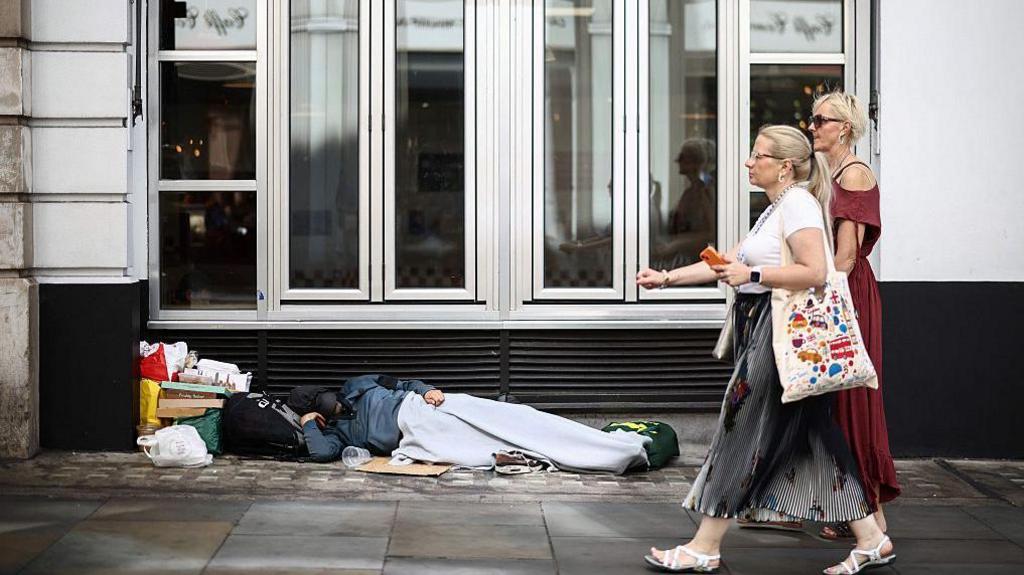
Rough sleeping is the most visible form of homelessness, and does not include people staying in temporary accommodation like hostels, or sofa surfing.
However, the annual snapshot is seen as significantly undercounting the extent of the problem due to strict rules over how the data is collected.
Liberal Democrat housing spokesperson Gideon Amos said “sticking plasters won’t fix the homelessness crisis”, adding a “proper long-term plan” is needed to prevent people finding themselves “back on the streets once the festive headlines fade”.
He urged Burnham to commit to a Lib Dem target to build 150,000 social homes every year.
Deputy Reform UK leader Richard Tice also criticised Burnham’s efforts to tackle homelessness while Greater Manchester mayor.
He described the government’s new plans as “yet another vague announcement with no substances which uses our most vulnerable for political point-scoring”.
The Bed Every Night scheme which Burnham set up while mayor now provides more than 600 beds a night for people who might otherwise be on the streets.
Housing Secretary Angela Rayner, challenged about the recent year-on-year increase in rough sleeping in Greater Manchester, told BBC Radio 4’s Today programme that the lack of a national programme meant “everybody knew that Greater Manchester was the place where you got the support”.
-
Burnham unveils plan to get rough sleepers off streets for Christmas
-
Published1 hour ago
-
-
Plan to end rough sleeping is unrealistic, says support group
-
Published22 July
-
-
Former rough sleepers on PM’s ‘ambitious’ plan
-
Published23 July
-
Jasmine Basran, head of policy at Crisis, said the homeless charity welcomed the announcement and believed an end to rough sleeping was possible.
“What we also want to see in the longer term is interventions to prevent people from being forced to sleep rough in the first place.”
She urged departments across government to work together to address the issue – saying too many people being discharged from hospital or leaving care were ending up on the streets.
Sarah Elliott, Shelter’s chief executive, called Burnham’s pledge a “game-changing move”.
She said “tackling the most visible form of homelessness is a strong start” but urged the prime minister to act on his promise to build more council houses to help people living in temporary accommodation.
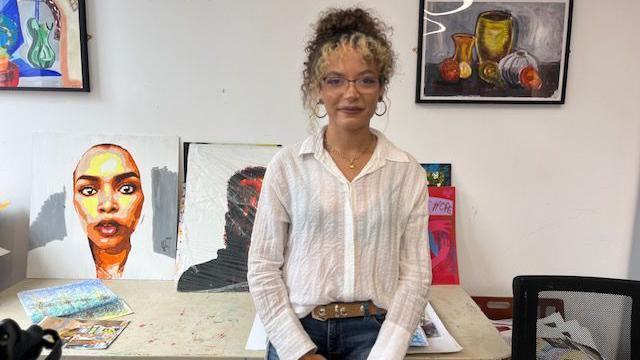
Chloe, 27, from London, ended up rough sleeping last year after spending time in contact with care and foster services growing up.
She slept in parks away from the centre of the city to try and to stay hidden, and says no rough sleeper would turn down a bed if it came with the right support.
“The possibility of ending homelessness is amazing. [But] things like hidden homelessness have been normalised, with people sofa-surfing and living paycheck to paycheck, I think there are certain foundational things that need to be addressed first to make sure the scope of help is there.”
Chloe was helped by Crisis who housed her in temporary accommodation and now has a place to study at film school.
She still thinks that the scheme will be welcomed by the majority of rough sleepers.
She said: “In general, people on the street want a home. People usually end up coming back to homelessness for mental health or financial reasons.
“So if that could also be addressed, there is no person sleeping on the street right now who wouldn’t want some type of security.”
Meron has been sleeping in a tent in a tunnel in central London for about two months.
He says he became homeless after his three-month contract at an Amazon Warehouse ended.
“People leave their rubbish out. There are cars, loud music, it’s not dangerous but I can’t sleep. I keep applying for jobs but I can’t find one.”
He is originally from Eritrea and came to the UK by himself three years ago.
“I’m looking for any job and when I get a job I’ll get a house. But I’m applying for jobs outside of London because it’s too expensive.”
Get in touch
What do you think of the prime minister’s plans to end rough sleeping? Share your views and stories with us.

Sign up for our Politics Essential newsletter to keep up with the inner workings of Westminster and beyond.