
This post was originally published on this site.
Police say Nottingham attacks were ‘not preventable’
-
Published
A police force has said the Nottingham attacks were not “reasonably foreseeable or preventable”, a public inquiry has heard.
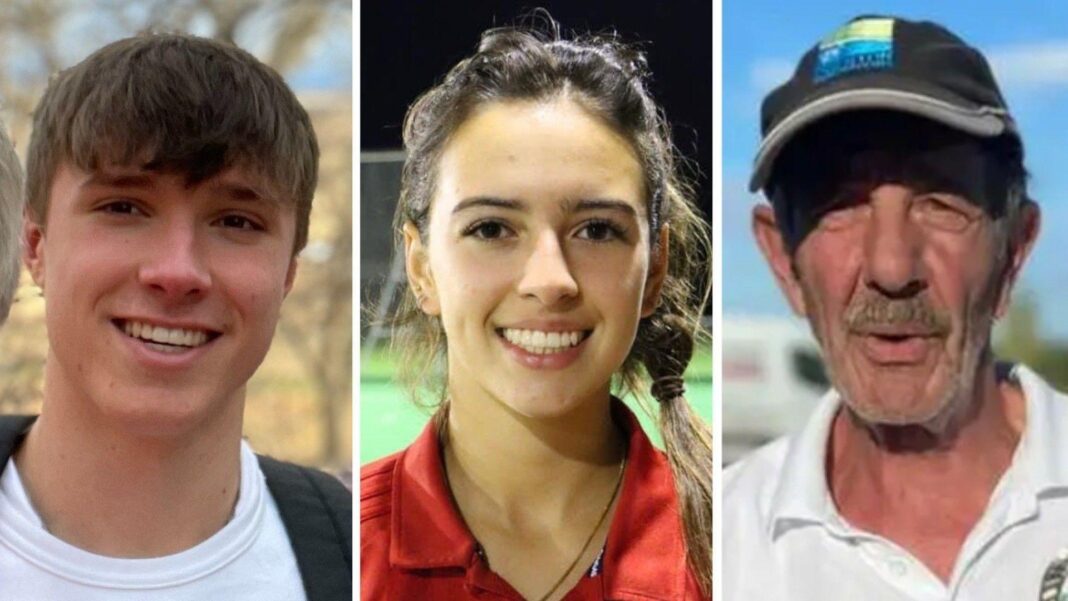
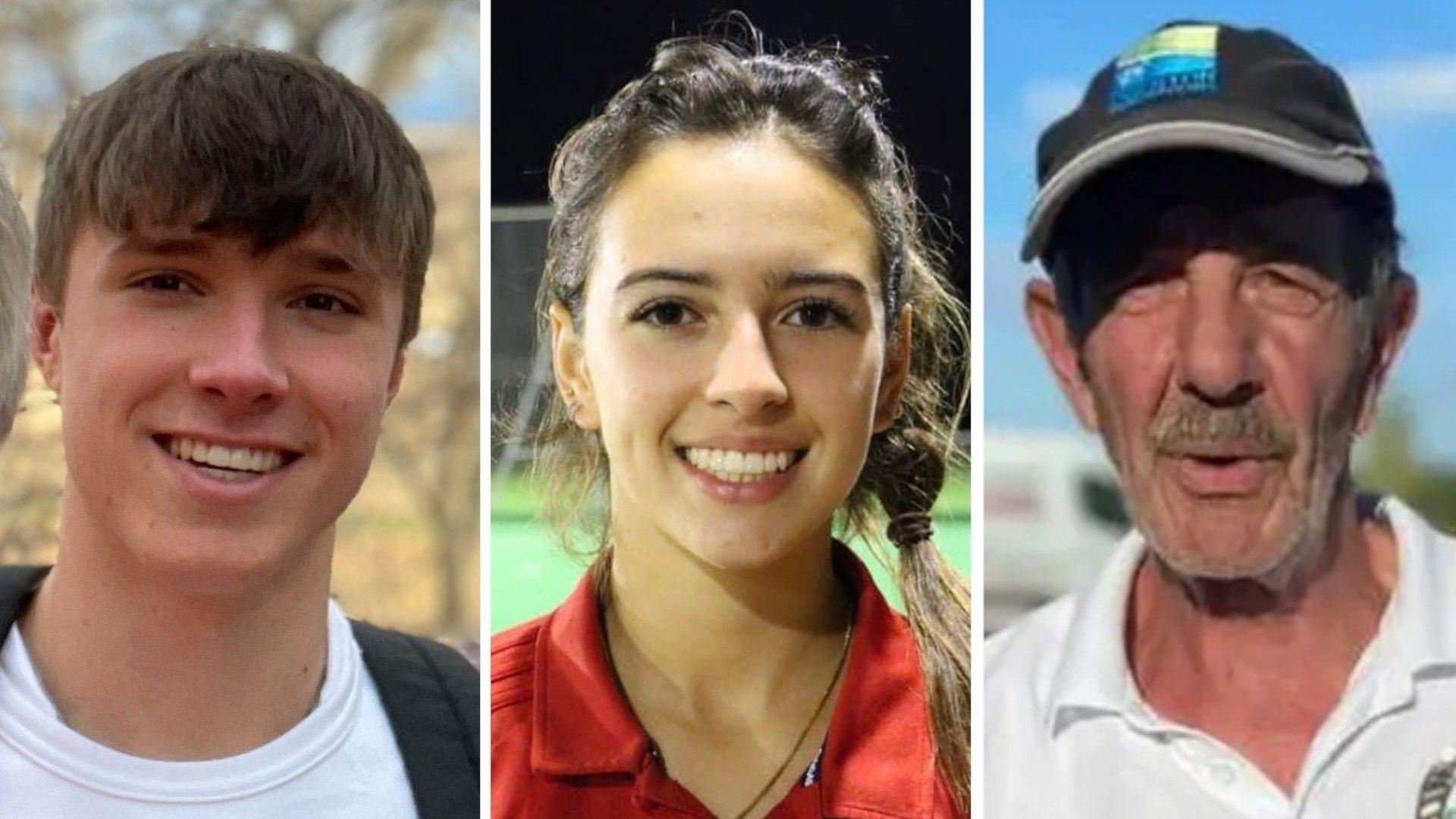
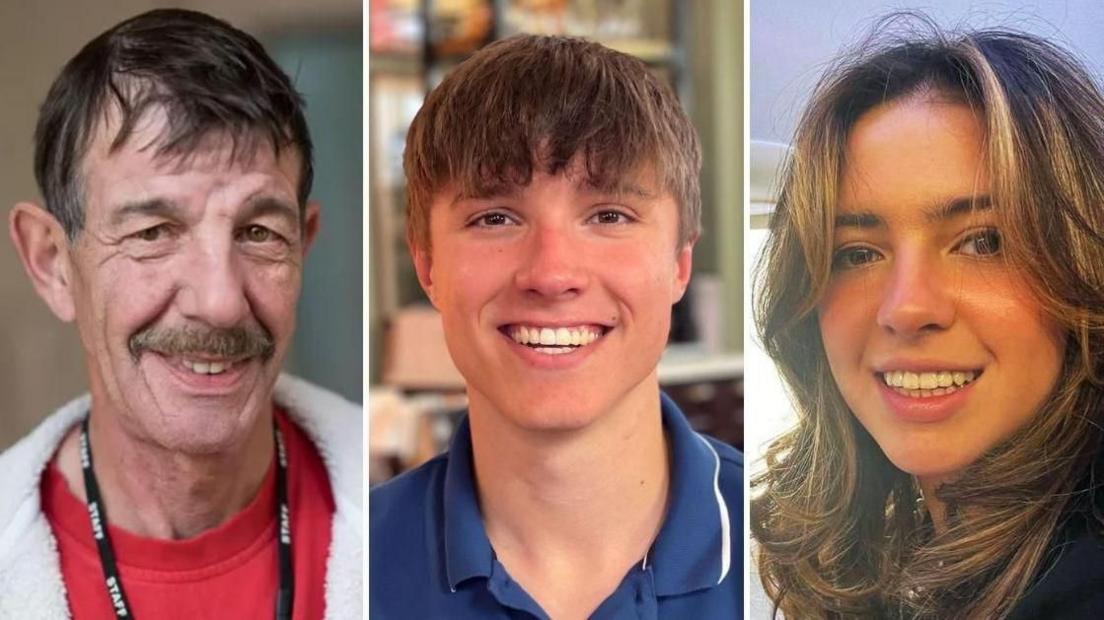
Valdo Calocane – who was diagnosed with paranoid schizophrenia in 2020 – stabbed to death Barnaby Webber, Grace O’Malley-Kumar and Ian Coates, and tried to kill three others, in a spate of attacks on 13 June 2023.
Nottinghamshire Police dealt with Calocane on 10 or 11 occasions between 2020 and 2022, but John Beggs KC – representing the force – said police “cannot manage dangerous paranoid schizophrenics”.
At the Nottingham Inquiry, external – which has been examining the attacks – Beggs challenged the idea that any police mistakes before the killings were missed opportunities.
Calocane admitted three counts of manslaughter on the grounds of diminished responsibility, and three counts of attempted murder.
Following Calocane’s sentencing to a hospital order in January 2024, a series of failings by authorities emerged, including the police, which led to calls by the affected families for a statutory public inquiry.
The statutory, judge-led, inquiry began in February this year, and laid bare the extent of failings in Calocane’s care and his previous interactions with police, including the failure to execute an arrest warrant for Calocane, which was still outstanding at the time of the attacks.
On Wednesday, addressing the inquiry chair, retired senior judge Deborah Taylor KC, Beggs said: “We respectfully invite you to avoid the mindset that a mistake or an omission by an officer represents a missed opportunity to prevent this tragedy.
“The appropriate question might be – missed opportunity to do what precisely?
“The police cannot manage dangerous paranoid schizophrenics.”
Nottinghamshire Police has maintained throughout its evidence that if the warrant had been executed, it was unlikely to have prevented the attacks from happening.
That view has been disputed by the bereaved families, including their legal representative, Tim Moloney KC, who previously said any attempt to suggest arresting Calocane would not have made a difference would be “cowardly and insulting”.
Beggs said a “low-level to high-level community order, we suggest is the likely outcome”.
Some members of the bereaved families left the hearing room as Beggs continued.
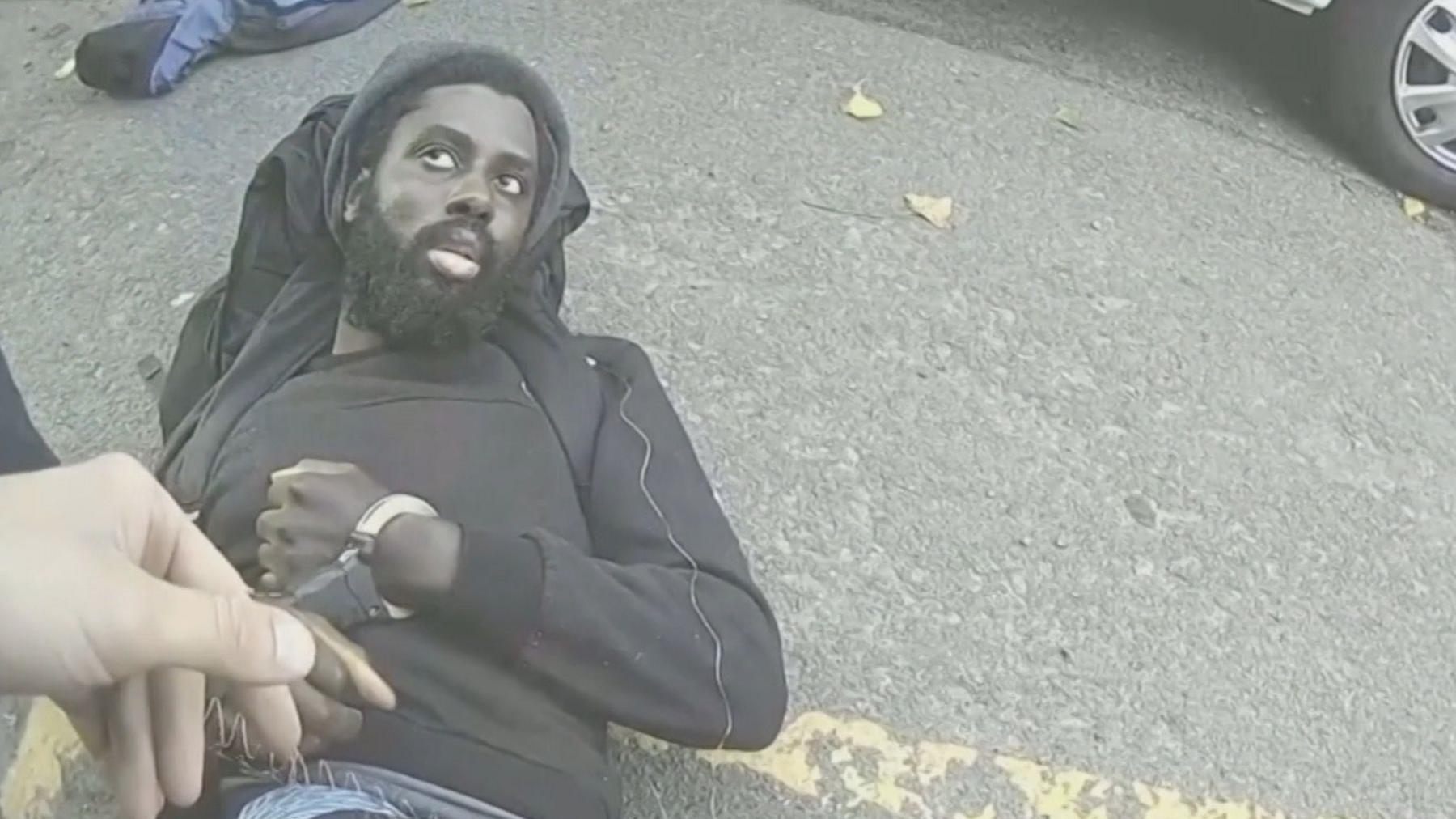 Image source, Nottinghamshire Police
The inquiry evidence previously revealed that between 2020 and 2023 – after Calocane had become unwell – he was involved in a number of incidents of violence and aggression, including breaking into his neighbours’ homes, assaulting his housemates and attacking a police officer.
In May 2020, Calocane – who is being referred to throughout the inquiry as VC – broke into the flat of a woman, minutes after being released by police following an earlier incident.
The woman, known to the inquiry as Feven, fell from a first-floor window in an attempt to escape, was left with a fractured spine, and required surgery.
On Tuesday, the inquiry heard Nottinghamshire Police had not disclosed the discovery of documents found in a bin at Calocane’s address, which contained a list of explosives, until June this year.
On the documents, Calocane wrote bullet points on one page about explosives under the heading “thoughts”, including TNT and nitrate fertiliser.
The inquiry heard they had not been made available by police to the Crown Prosecution Service (CPS) or to psychiatric experts.
The inquiry heard further violent assaults by Calocane on colleagues at warehouses in Nottinghamshire were also not disclosed to the inquiry team until after the public hearings had taken place.
This included an assault on a colleague in a warehouse in Eastwood in 2021 and another in Normanton in February 2023.
Continuing his evidence on Wednesday, Beggs said: “All of the interactions with the police and VC from my constabulary were borne of mental illness.”
He added there was “no escalation of VC’s behaviour” and that the incidents of him breaking into neighbours’ homes showed “no evidence of his intention to hurt anyone”.
To play this video you need to enable JavaScript in your browser.
This video can not be played
However, when challenge by the chair, Beggs said VC hurting someone was a “possibility”.
Beggs added: “Whilst shortcomings by individual Nottinghamshire officers in specific incidents have been identified and largely accepted by those officers, either in their statements or in their live evidence, the June attacks were not reasonably foreseeable or preventable on the information known to Nottinghamshire Police.”
Beggs also addressed Nottinghamshire Police’s response on the day of the attacks.
In evidence, the inquiry heard how there was a lack of communication between officers on the day of the attacks, and how the bereaved families waited hours for confirmation that their loved ones had been killed.
The initial attacks on Barnaby and Grace were also assumed by the force incident manager at the time as a “robbery”.
Ian’s body, the inquiry heard, was left at the scene for about 15 hours. A forensic tent had not arrived at the scene where Ian died to cover his body for more than two hours.
Beggs told the chair: “On 13 June, Nottinghamshire officers and staff attended the scenes of the carnage inflicted by VC quickly and they managed the victims and the evidential scenes well.”
Challenging Beggs, Taylor said: “Well just a moment there – what about the evidential scene with Ian Coates and what happened there? Would you say that was well managed?”
“Overall it was well-managed,” Beggs replied.
Taylor said: “The fact that he was there for 12 to 15 hours for that?”
Beggs went on to say the force was “not saying it was perfect”, but added “no evidential degradation was suffered as a result of delay”.
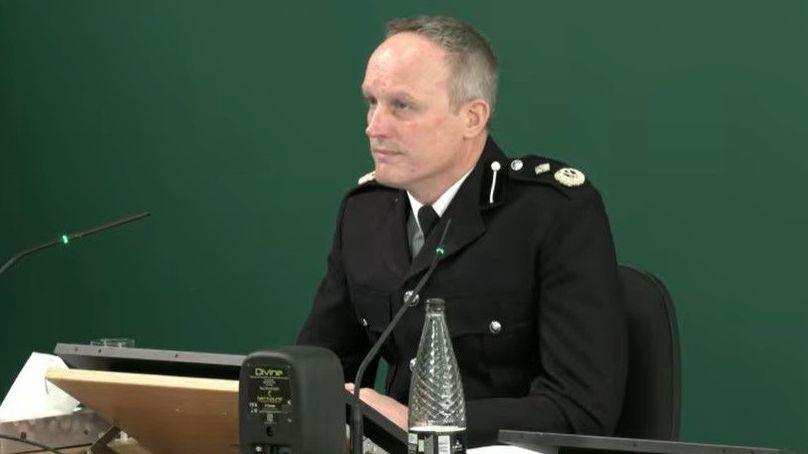 Image source, The Nottingham Inquiry
The inquiry also heard evidence of misconduct by police officers and staff in the aftermath of the attacks, including inappropriate access to the case and digital evidence.
Two officers were also disciplined for sharing insensitive WhatsApp messages about the attacks.
The force acknowledged it failed to deliver information to the families in a “consistent, clear and timely manner” and failed in its management of misconduct.
Beggs added: “However, fair and objective analysis of the evidence shows that there was no attempt, however much the media may report it, by senior officers to cover up any matters from the bereaved or survivors of the public.”
He also highlighted the demand on the police and the mental healthcare system in his closing submissions.
Beggs said when policing was “running hot all the time, the risks of things going wrong increases”.
He added: “We respectfully observe that there is little point this inquiry making recommendations that create further demand on the services which struggled to cope with existing demand, and unless new money is injected into policing and/or mental health services, the current mental health crisis will continue.”
Taylor will have until May 2027 to complete a final report on her findings and make any recommendations.
Get in touch
Tell us which stories we should cover in Nottingham
Listen to BBC Radio Nottingham on Sounds and follow BBC Nottingham on Facebook, external, on X, external, or on Instagram, external. Send your story ideas to eastmidsnews@bbc.co.uk, external or via WhatsApp, external on 0808 100 2210.
-
-
Published20 hours ago
-
-
-
Published1 day ago

-
-
-
Published22 July
-
-
-
Published6 June
-
-
-
Published5 June
-
-
-
Published4 April
-