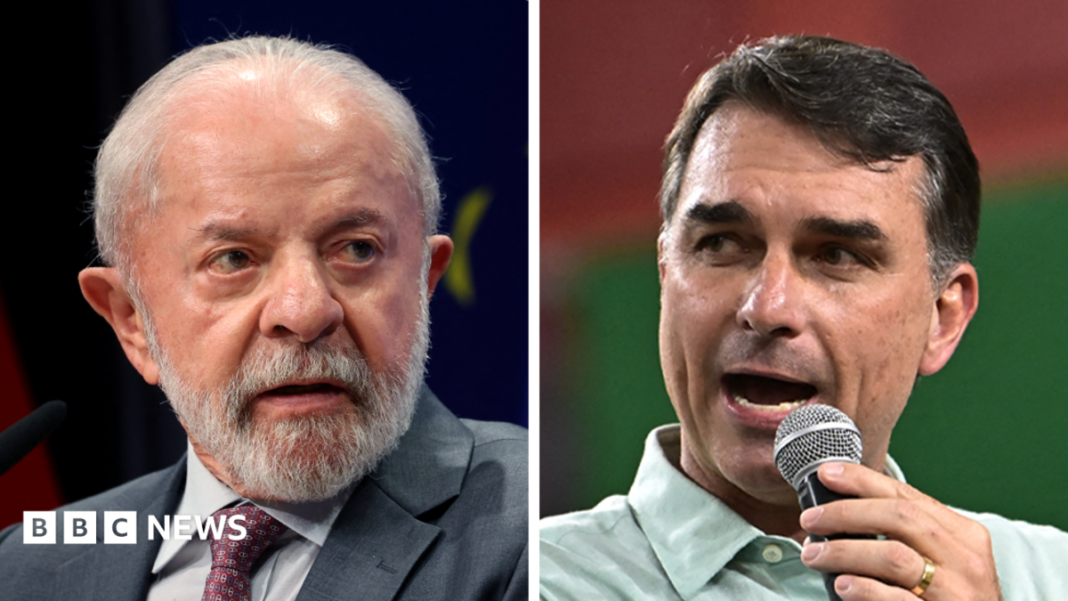

Polls close in Brazil as Lula and Flávio Bolsonaro remain neck and neck
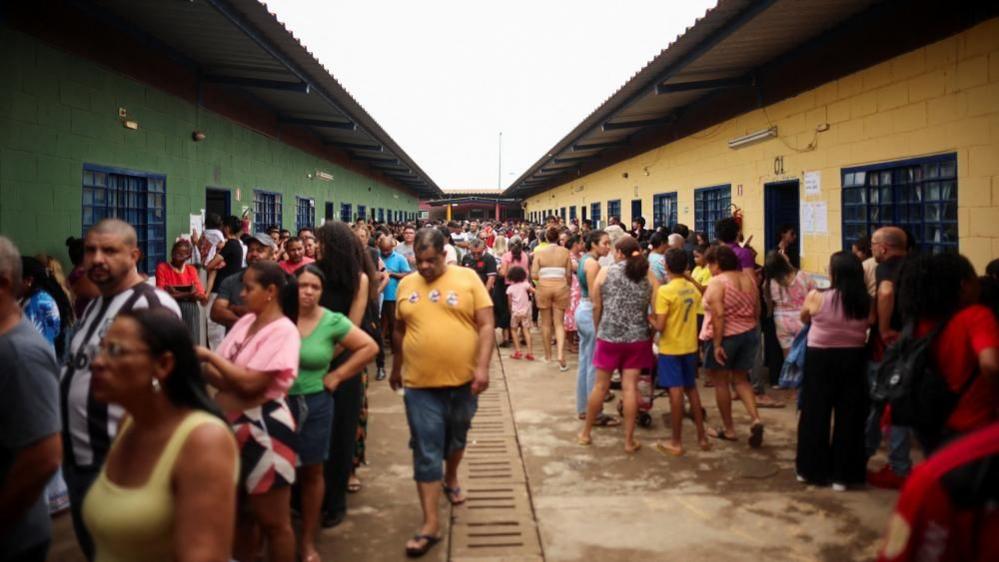 Image source, Reuters
-
Published
Polls have closed in Brazil’s general election, after voters queued in long lines for a tight first round of the presidential race.
After casting his ballot, 80-year-old left-wing President Luiz Inácio Lula da Silva warned that the choice was between democracy and “barbarism”.
His challenger, right-winger Flávio Bolsonaro, 45, said he wanted to “free the Brazilian people”.
The result is forecast to be close. BBC Brazil’s poll aggregator shows that the gap between Lula and Bolsonaro is only two points. If no candidate gets more than 50% of the vote, the election will go to a run-off on 25 October.
According to Brazil’s Superior Electoral Court (TSE), more than 158.7 million Brazilians, including one million people abroad, are eligible to vote in the election.
Lula is challenged by 11 candidates, although BBC Brazil’s poll aggregator suggests that candidates other than Lula and Bolsonaro will get only about 10% of the vote.
The TSE has not set a fixed time for the release of the official results, but they are expected within hours because voting is electronic and in previous elections results have tended to come quickly.
A victory for Bolsonaro would extend a wave of wins across Latin America by right-wing candidates aligned with US President Donald Trump, while Lula’s re-election would create problems for Washington, which has clashed with his government over trade and security.
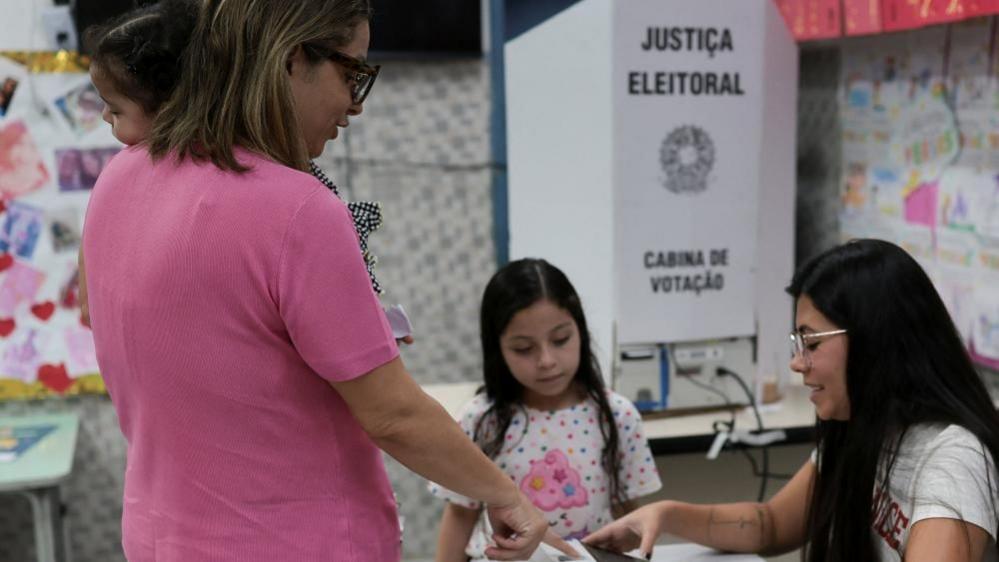 Image source, Reuters
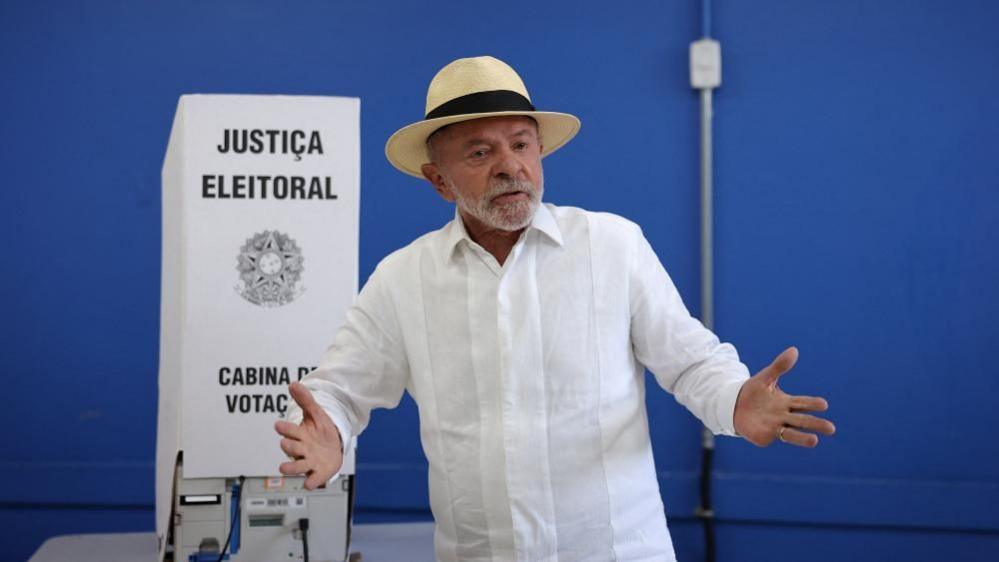 Image source, Reuters
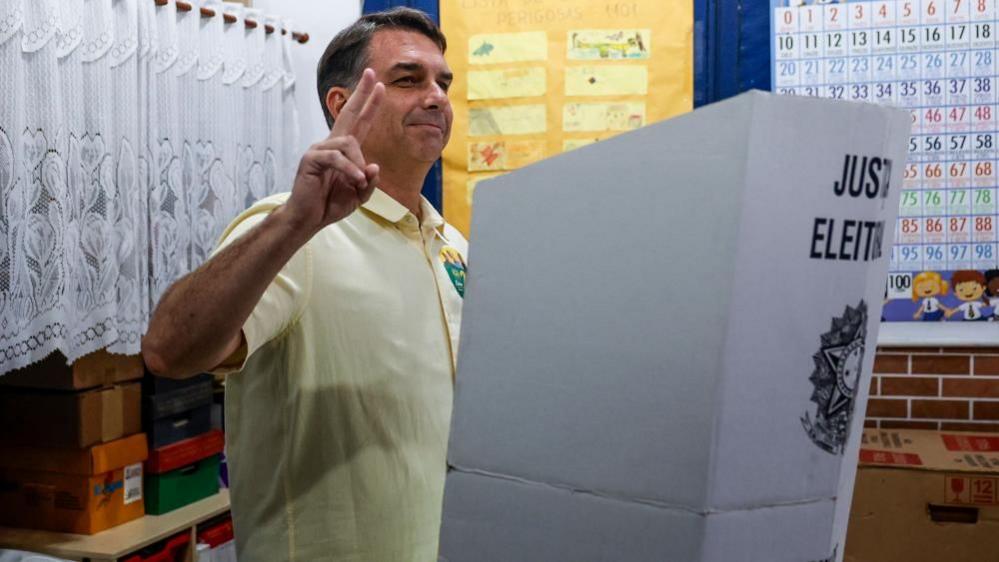 Image source, Reuters
Some countries, from which Brazilians living overseas are able to vote, have already released preliminary vote count data.
In China, Lula won 56.63% of the votes, while Bolsonaro came in second with 31.33%. Lula also won in countries including South Korea, New Zealand and Saudi Arabia.
In Israel, however, Bolsonaro won 74.40% of the valid votes. He also won 71.59% of the valid votes in Japan.
Today’s result will also determine the composition of the Senate from February 2027 onwards, as 54 of the Senate’s 81 seats are being contested, representing two-thirds of the chamber.
Currently, the largest bloc in the Senate is Bolsonaro’s Liberal Party (PL), followed by the Social Democratic Party (PSD), which has served in a coalition government under Lula.
In the last election four years ago, Lula narrowly defeated Flávio Bolsonaro’s father, Jair. But the tumultuous aftermath of the election, which saw Jair Bolsonaro convicted of plotting a coup after thousands of his supporters stormed the Brazilian Congress, has had a lasting impact on the nation’s political life and this election.
Jair Bolsonaro is serving a 27-year sentence for plotting a coup and is barred from standing for office.
Because of recurrent health problems, he is currently under house arrest rather than in a cell, but he has been prohibited from posting on social media or making public statements.
Despite these restrictions, there is little doubt that Flávio Bolsonaro has his father’s backing.
-
-
Published2 hours ago
-
-
-
Published1 day ago
-
-
-
Published26 September
-