
This post was originally published on this site.
Protests in Ukrainian cities against Zelensky’s removal of defence minister
To play this video you need to enable JavaScript in your browser.
This video can not be played
-
Published
Protests have been taking place in several Ukrainian cities against President Volodymyr Zelensky’s surprise dismissal of popular Defence Minister Mykhailo Fedorov.
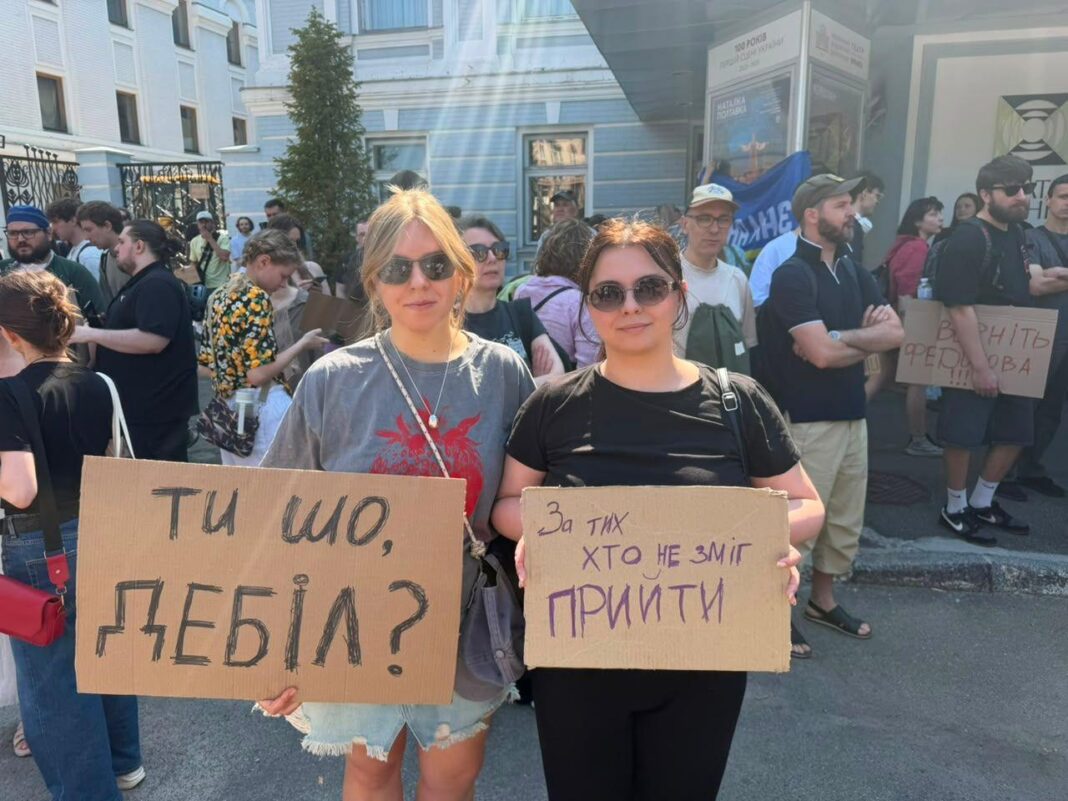
A crowd of people – mostly young – gathered in Kyiv on Thursday morning, holding up signs reading “Hands off Fedorov” and “Stop sabotaging victory!” and chanting “Shame!”.
Zelensky’s decision has causing significant upset among commentators and the military as well as parts of civil society.
The rumours that the end of Fedorov’s tenure was related to tensions between him and Commander-in-Chief Oleksandr Syrskyi were all but confirmed by Fedorov himself and Zelensky.
On Thursday, Fedorov revealed he had suggested to Zelensky that Syrskyi and Chief of the General Staff Andrii Hnatov should be replaced.
Zelensky, speaking at a press conference with UK Prime Minister Keir Starmer, acknowledged that the conflict between the General Staff and the defence ministry had been “systemic” and occurred “at various levels”, and that Syrskyi and Fedorov would only work together with his mediation.
“When the president said he did not plan to replace Syrskyi, I… said I would learn to work with him,” Fedorov said at his own press conference. But “all the initiatives we proposed were blocked,” he added.
“Instead of finding a way of defeating Russia asymmetrically – which is the commander-in-chief’s job – he’s found a way of splitting our country,” Fedorov said of Syrskyi.
In a curt message, Syrskyi wrote on Telegram that he was “proud” of the defence operation that was mounted around Kyiv in 2022 when Russian troops were closing in and said he would continue to “focus on the war and on an effective strategy”, before wishing Fedorov “continued success”.
Fedorov, 35, was appointed only in January but has been credited with energising the ministry, heading a drive against corruption and using data to analyse and try to improve performance on the front line.
MPs were due to vote on Thursday on the proposed replacement as defence minister, Ihor Klymenko, who currently heads the interior ministry – but Zelensky said his was only one of the names being considered and that no official proposal had been submitted yet.
As part of Zelensky’s reshuffle, parliament approved the appointment of state oil and gas boss Serhiy Koretsky as prime minister, after Yuliia Svyrydenko resigned earlier this week.
-
Starmer pledges ‘cast-iron support’ for Ukraine on final visit as PM
-
Published3 hours ago
-
-
Ukraine strikes Russian ships near Crimea, escalating attacks on fuel supplies
-
Published7 days ago
-
-
Russian attacks kill 14 as Ukraine hits Black Sea oil tankers
-
Published18 hours ago
-
Fedorov also revealed that Zelensky offered him to stay on his team as an adviser, but that he refused.
He was not seeking to antagonise the president, he explained, saying he was “confident” that Zelensky “hears the Ukrainian people, knows what to do, and the situation will be 100% resolved”.
“I don’t believe he has yet chosen a side in the Syrskyi matter. I spoke with him today and said that I am acting according to my conscience,” he said.
“This is the worst mistake Zelensky has made during his entire presidency,” Oleksandr, a Ukrainian soldier, told the BBC.
He had signed up to the army earlier this year because he trusted Fedorov’s team and vision, he said: “I don’t know anyone who supports the decision to replace him. Not within the army, not in society.”
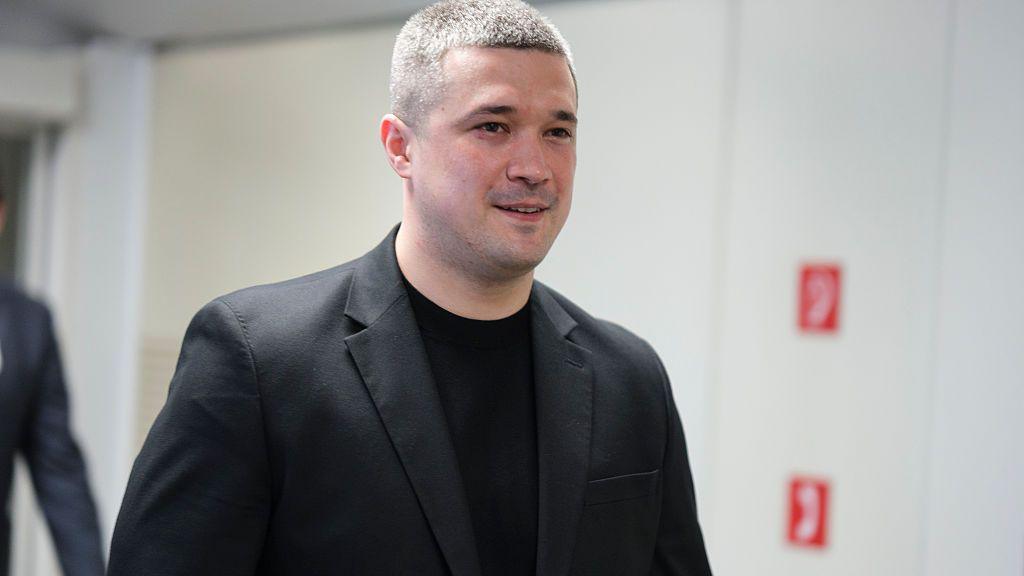 Image source, Getty Images
“I have lots of friends in the military. Lots of them died. I don’t want this to go on,” Maria Lavrynets, 31, told the BBC at a protest in Ivan Franko square in central Kyiv. “We see [Fedorov’s] results. We see the motivation of the soldiers, we should stand for them.”
“People wanted to come out, and that’s right. I understand, I hear, and I even react to what society is saying,” Zelensky said when asked to comment on the protests.
When he was brought in, Fedorov set off to restructure the defence ministry, which many in Ukraine see as too bogged down in bureaucracy and old Soviet-era attitudes.
A former minister of digital transformation, he was active from the early days of Russia’s full-scale invasion in 2022 in setting up a volunteer “IT Army of Ukraine” to launch cyber-attacks against Russians.
Later, he led a successful fundraising campaign called the Army of Drones and brought in elements of “gamification” to the war, designing a system that awarded Ukrainian military units with credits for hitting Russian assets.
Fedorov’s focus on drones, high-tech warfare and procurement continued after he became defence minister.
In the early days of his tenure he also asked SpaceX founder Elon Musk to stop Russia from using Starlink satellites for drone attacks – a move that caused considerable disruption to Russia’s frontline operations and advance.
His ministry also played a significant part in Ukraine’s recent attacks on the Moscow-occupied Crimean peninsula, which last month Fedorov vowed to “cut off” from Russia entirely, with the use of mid-range drone strikes.
In a Facebook post shortly after his dismissal, Fedorov listed his achievements and said he would “continue… to defeat the enemy through asymmetry, speed of innovation, and organisational strength”.
Prominent blogger Serhii Sternenko, whom Fedorov brought in as an adviser, hailed his former boss as “the best minister of defence in our entire history” and bemoaned the “bureaucratic obstacles and artificial delays” he said had stood in the way of deeper reform.
Another former adviser – a tech expert nicknamed “Flash” – said being part of Fedorov’s team had been an honour and added: “I had access to various systems and could analyse the actions of our enemy. I could predict their next steps. I will no longer be able to do that.”
Pavlo Yelizarov, a renowned drone unit commander, resigned from his position of deputy commander of the Ukrainian Air Force in protest at Fedorov’s sacking – a move he called “a great evil for the country’s defence capability”.