
This post was originally published on this site.
 Getty Images
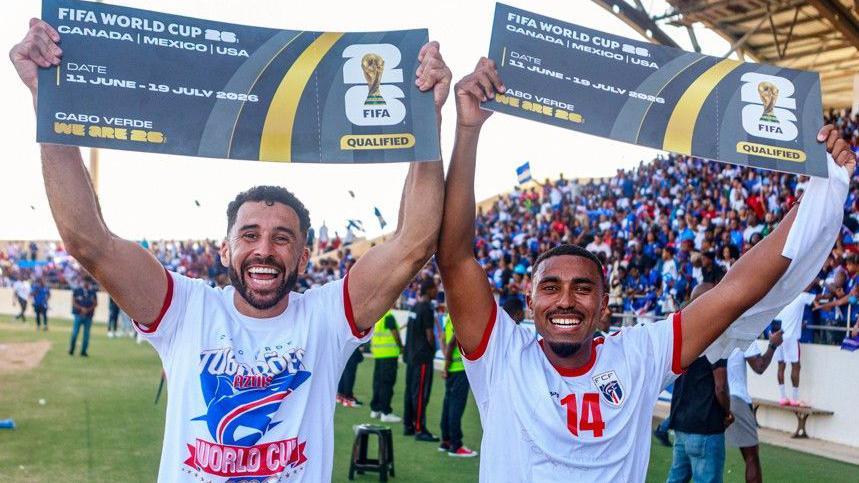
He was recruited on social media to play for a tiny island nation 3,000 miles from where he was born, and now a former Dublin bank worker looks set to face Spain at the World Cup.
Roberto Lopes’ story sounds so far fetched even Hollywood scriptwriters might consider it implausible.
“I was not enjoying the work,” says the 33-year-old about his desk job as he reflects on a wild, inspirational journey, from being a white-collar worker in the Republic of Ireland to playing for Cape Verde at their first World Cup.
The defender, nicknamed ‘Pico’, was a newly qualified mortgage adviser 10 years ago, playing part-time for Bohemians in the League of Ireland.
Then, in 2017, Dublin rivals Shamrock Rovers offered Lopes a chance to give up his day job and throw himself into a full-time football career.
He has not looked back.
Lopes is expected to start for minnows Cape Verde when they face 2010 world champions Spain on Monday in Group H in Atlanta (17:00 BST kick-off).
The former Republic of Ireland Under-19 player’s first appearances for the Blue Sharks came in 2019.
Rui Aguas, the team’s coach at the time, made contact via business network LinkedIn when he discovered Lopes’ father, Carlos, was from Cape Verde – a country made up of 10 islands in the Atlantic Ocean off the west coast of Africa.
 Getty Images
Former Benfica striker Aguas’ original message was written in Portuguese and Lopes, who still plays for Shamrock Rovers, unintentionally blanked him.
“I thought it was a spam message and I took no notice of it,” he tells BBC Sport. “And then about nine months later, he messaged me back, saying, ‘Hi Roberto, have you had a chance to consider what I said to you?’.
“I felt so rude for not having replied to him months earlier.
“I copied the message and put it into Google Translate and it basically said, ‘We’re looking at getting new players into the Cape Verde squad and would you be interested in declaring for Cape Verde?’.
“I was absolutely buzzing with that. I was like, ‘Yep, 100% I’d love to be a part of the squad’.”
It has been a whirlwind few months for Lopes, a regular starter for the Blue Sharks over the past seven years.
Days after helping Cape Verde qualify for the World Cup, he became a father for the first time after his wife, Leah, gave birth to son Diego.
“From when I was a young child, and I imagine every aspiring footballer when they were young, they wanted to play at the highest level possible and, for me, it doesn’t go any further than the World Cup,” adds Lopes.
“Being able to represent my family playing for the national team and being able to put our family name out there at one of the biggest sporting events in the world fills me with great pride.”
‘A historical moment for our country’
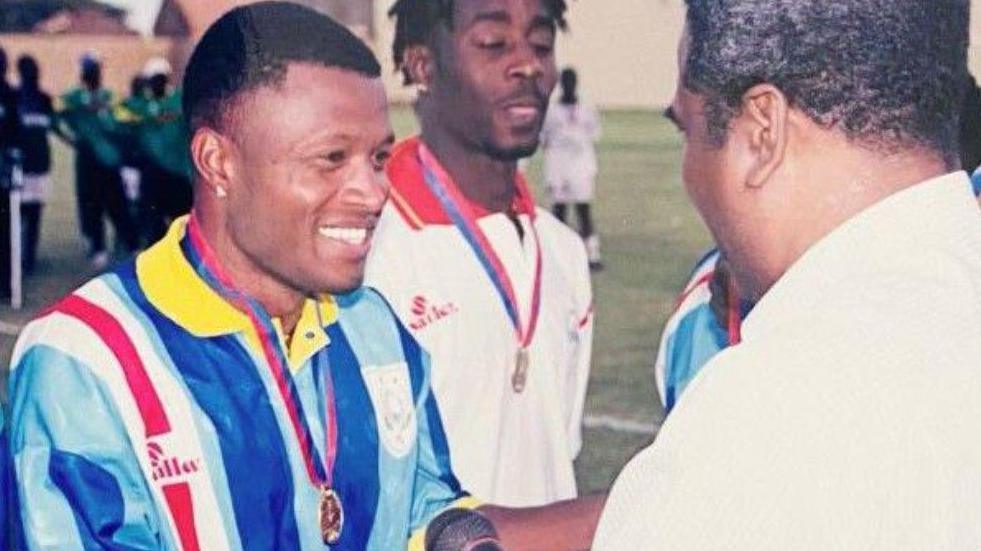 Anselmo ‘Jair’ Ribeiro
Cape Verde’s appearance at the 2026 World Cup, where they will also face Saudi Arabia and Uruguay, looks set to provide one of the feel-good tales of the tournament, an underdog story for the ages.
When Anselmo ‘Jair’ Ribeiro played for the Blue Sharks, they were ranked 182nd in the world and the prospect of them appearing at the tournament seemed unthinkable.
Jair, who helped his country win the Amilcar Cabral Cup – a regional competition for countries in the west of Africa in 2000 – tells BBC Sport: “I used to tell people where I was from and they’d ask: ‘Where’s that?'”
Back then the former midfielder and forward had to pay for his own plane tickets so he could play for Cape Verde, who are now 67th in the world rankings.
It has been an astonishing rise for the country – home to around 525,000 people – who only joined Fifa in 1986.
To play this video you need to enable JavaScript in your browser.
This video can not be played
Since then they have qualified for the Africa Cup of Nations four times, while they are about to become one of the smallest nations in terms of population to ever play at a World Cup.
Indeed, some locals have likened the former Portuguese colony’s participation as the biggest thing to happen since independence was gained on 5 July 1975.
Although football is the number one sport, the Cape Verdean Football Federation has just seven full-time staff, while tickets for international home matches are sold in local bakeries and petrol stations.
“We’ve been building up to this moment for years,” says Jair, now 51. “I think about my grandfather, my grandmother. I get so emotional talking about it because they aren’t here to witness this historical moment for our country.”
‘The rest of the world said: No chance, no way’
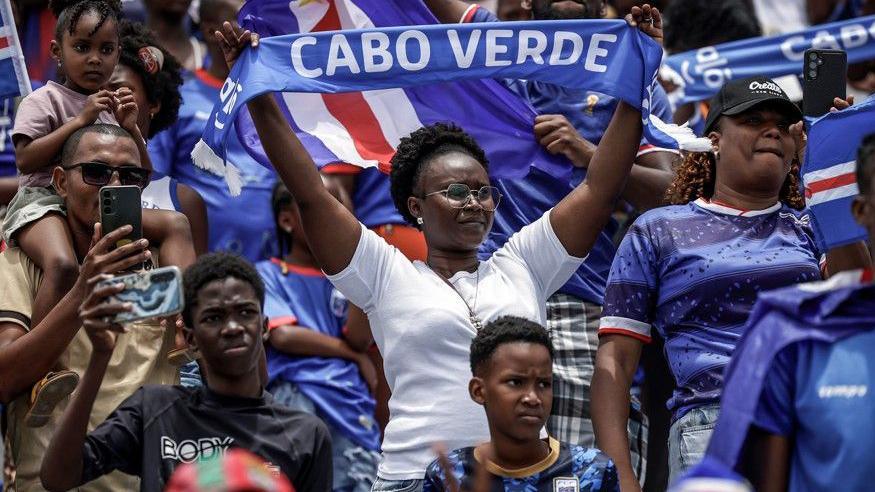 Getty Images
At Thony’s Barbershop in Dorchester, a vibrant and diverse neighbourhood a few minutes’ drive from downtown Boston, an inflatable blue and white shark hangs from the ceiling.
The Blue Sharks may appear small fry at this World Cup compared to heavyweights like Spain, but they are dreaming big in this part of Massachusetts after Fifa expanded the 32-team format to 48 for the finals co-hosted by the United States, Canada and Mexico.
There are blue, white and red scarves on display and on one of the walls is a pennant that reads Federacao Cabo Verdiana de Futebol (Cape Verdean Football Federation).
“My customers don’t just come for a haircut – they come to talk,” owner Antonio Alves tells BBC Sport.
“We’re one big family. We have conversations about life, politics and sport.”
Since Cape Verde qualified back in October, there has only been one topic of conversation.
“It means everything that Cape Verde will be playing in the United States at the World Cup,” adds Alves, who left his birth nation for America at the age of 18 before taking over his father’s business.
Cape Verdeans arrived in Massachusetts in waves of migration from the 1850s as whalers and seamen. The state is home to the largest Cape Verdean population in the United States, with estimates ranging from roughly 70,000 to over 90,000 residents.
Alves regularly returns to his homeland to support the team and was in the 15,000-capacity national stadium in Praia, the capital, when the Blue Sharks beat Eswatini to book their place at the finals and leave fans shedding tears of joy.
“The rest of the world said, ‘No chance, no way are Cape Verde getting this close’. But here we are,” he says.
Alves and his wife, Neuza, have helped fund tickets to allow children across Cape Verde to attend international matches in Praia.
“Every kid playing football in Cape Verde has a dream to become a professional player,” he adds. “Every island you go, on every corner, you will find kids playing, some of them barefoot. They just want to play.”
Alves will be making the 1,000-mile journey from Boston to Atlanta for Cape Verde’s historic first World Cup game, but the giant television in Thony’s Barbershop will be showing the game live for the locals to watch.
“There will be free snacks, free drinks, you know, for people to come and enjoy,” he says.
“This is the power of sport. There are a lot of people in this community who don’t follow football, but they’ve been coming into the shop to ask questions.
“When’s the game? Where’s the game? Can I watch? Can I go? Can I come to the shop?
“This is the power of sport, getting people together.”
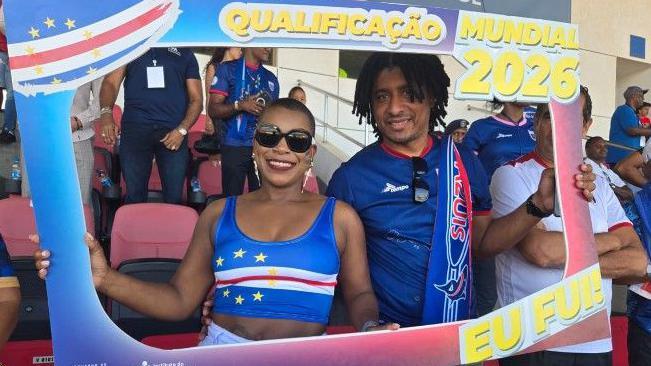 Antonio Alves