
This post was originally published on this site.
Report on Jewish diaspora finds biggest rise in antisemitism in UK
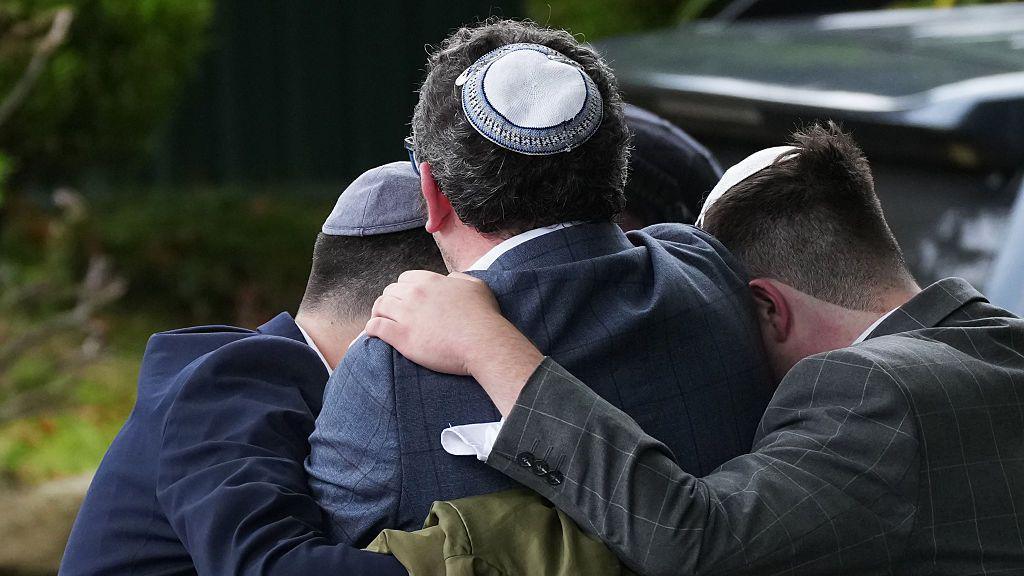 Image source, Christopher Furlong/Getty Images
-
Published
The UK recorded the biggest rise in antisemitic incidents last year of any country with a major Jewish population outside Israel, according to a new report.
The report, published by the J7 Large Communities’ Task Force Against Antisemitism, external, also found that 2025 had been the deadliest year for Jews living outside Israel in more than three decades.
The task force is a group of organisations representing the seven largest Jewish diaspora communities.
It found that antisemitism in Argentina, Australia, Canada, France, Germany, the UK and the US – which together are home to more than 90% of the world’s Jewish population outside Israel – remained at record levels.
Reported antisemitic incidents across the seven countries have risen by 136% since 2022, the year before the Hamas attacks on southern Israel and the start of the war in Gaza, while violent incidents have risen by 97%.
The UK was one of only three countries where reported antisemitic incidents increased in 2025, alongside Argentina and Germany. Incidents recorded in the UK rose by 5% compared with the previous year – the largest increase among the seven countries.
Although reported incidents fell in 2025 in the US, Australia, Canada and France compared with 2024, every country remained significantly above levels before 7 October 2023.
In 2025, 20 people were killed in antisemitic attacks, the highest annual death toll since the bombing of a Jewish community centre in the Argentinian capital Buenos Aires in 1994.
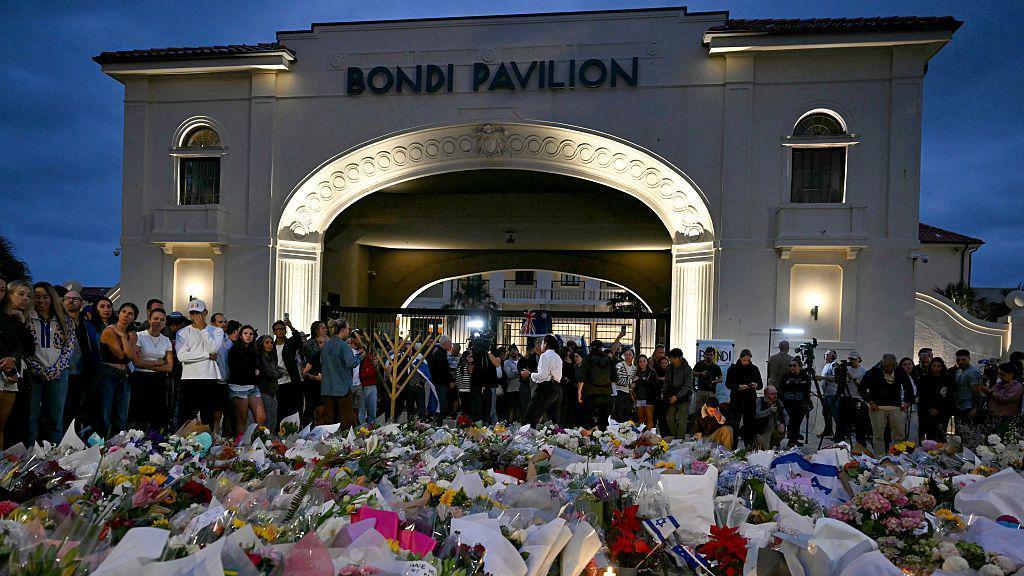 Image source, AFP via Getty Images
In Australia 15 people, including a 10-year-old girl, were killed after two gunmen opened fire at an event celebrating the Jewish festival of Hanukkah on Bondi Beach in Sydney – the deadliest antisemitic attack on the Jewish diaspora this century.
In the UK, Melvin Cravitz and Adrian Daulby were killed during an attack on Heaton Park synagogue in Manchester on Yom Kippur, the holiest day in the Jewish calendar.
In the US, two Israeli embassy staff were shot dead outside an event for young diplomats at a Jewish museum in Washington DC. A man pleaded guilty to first-degree murder after a grandmother in Boulder, Colorado, was killed when Molotov cocktails were, prosecutors say, thrown at a gathering in support of hostages held in Gaza.
Whilst countries differ in their approaches to tackling antisemitism – from toughening laws to improving education – they also identify common experiences, with near universal concern about the role of social media and artificial intelligence.
“Violent antisemitic attacks don’t just start with violence,” Marina Rosenberg of the US-based Anti-Defamation League, one of the organisations behind the report, told the BBC, adding that they often “start with words on social media”.
She said: “Social media has been used in the past few years as a place for radicalisation for different groups and individuals, including those that later go on a violent spree against a synagogue or a school – and now AI is part of it.”
Lord Mann, the UK government’s independent adviser on antisemitism, called for a “clear, calm and methodical” approach to tackling anti-Jewish hatred, warning that governments which avoidede their responsibilities contributed to the problem.
Angela Rayner, the secretary of state for housing, communities and local government, told the BBC she was “appalled by the horrific rise of antisemitism in the UK”. “It is intolerable,” she said.
“Across government, we’re also working with international partners, including the J7, to strengthen the global fight against antisemitism and stand up for Jewish communities wherever they face discrimination, abuse or violence,” she added.
The government recently announced a £251m funding boost to help police forces protect Jewish communities across England.
The Board of Deputies of British Jews told the BBC it was urging the government to deliver on measures to “strengthen Jewish community security, tackle antisemitism in schools, universities and public life, and ensure social media companies are held accountable for the spread of anti-Jewish hatred”.
Board president Phil Rosenberg told BBC Radio 4’s Today programme the rise in antisemitism was “symptomatic of something more dangerous that affects everybody”, not just Jewish people.
He spoke of an “open sewer” of online hate that he believes has got much worse recently, with the stifling of debate and the actions of hostile foreign states.
Barry Frankfurt, chairman of a north London synagogue, told the BBC he had seen the nature of antisemitism change in his lifetime – from people shouting at him through a car window and swastikas daubed on gravestones to something “a lot more frightening”.
“This is now will someone be shot dead at a synagogue, will someone be stabbed outside a kosher shop, will a synagogue be firebombed,” he told the BBC.
An independent review on antisemitism in schools and colleges in England is due to report to the government this autumn.
In a joint statement, the J7 Large Communities Task Force Against Antisemitism said: “Antisemitism in our seven countries is no longer a surge; it is our new normal.
“Governments must stop reacting after Jews are attacked and start acting before, with real security funding, stronger laws and social media platforms that enforce their own rules.”