
This post was originally published on this site.
The 68-year-old has been a familiar voice across multiple sports for decades
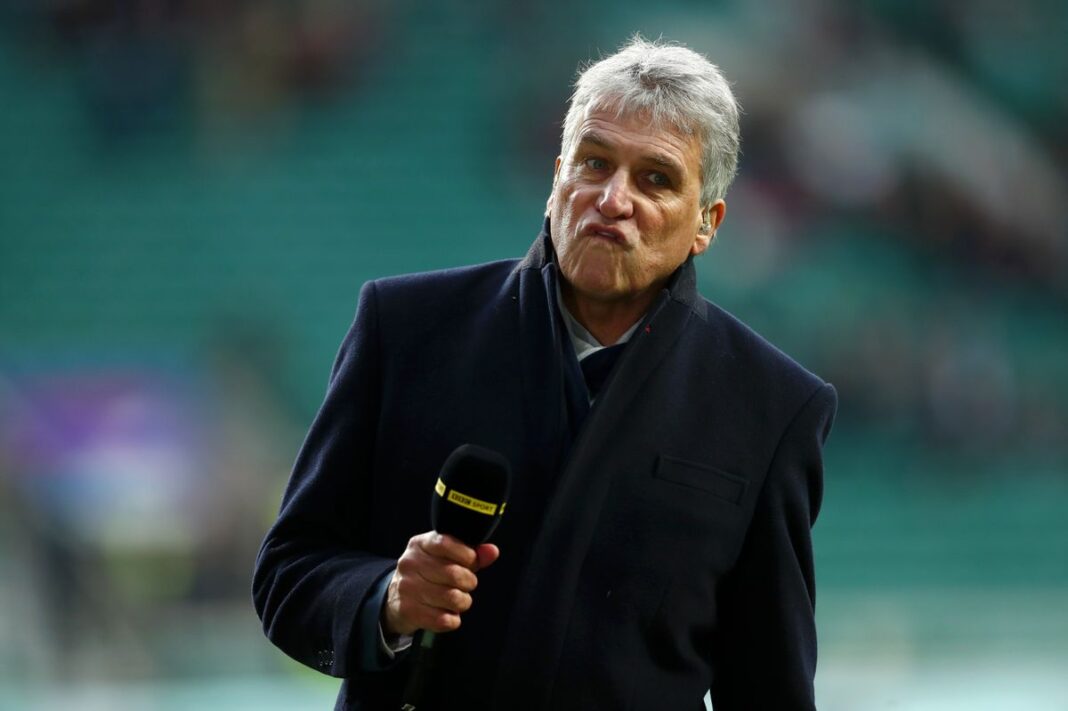
Former BBC presenter John Inverdale has admitted he “ruined” his body by playing rugby too long as he opened up on his love for the sport and his latest move into a new radio venture.
The 68-year-old, a familiar voice across multiple sports for decades, said his biggest regret came on the rugby pitch after extending his playing days well into his late 40s with Esher.
“I’m ruined from top to toe,” he told The Telegraph. “A big mistake to carry on playing that long.”
Inverdale continued turning out as a centre until the age of 48, only stopping after a brutal incident in a match against Staines left him with a five-inch gash to the head that required 10 stitches.
The injury ultimately brought an end to a playing career that had long outstayed its welcome physically.
Despite that his passion for rugby remains undimmed. It is a sport deeply rooted in his upbringing, influenced heavily by his father, who was chairman of the Royal Navy Rugby Union. Inverdale went on to become one of the game’s most recognisable broadcasting voices, calling some of its biggest moments.
Among them none stand taller than the 1995 Rugby World Cup final in Johannesburg, a day he still describes as the highlight of his career.
“A 747 flew over Ellis Park unannounced and a part of me thought: ‘This might be some kind of terrorist,’” he recalled. “Even the crowd went quiet. But then you saw the message: ‘Good luck Bokke’ underneath. The sigh of relief, it’s impossible to exaggerate.”
Inverdale later stepped away from presenting rugby coverage in 2021, taking up a role within the Rugby Football Union, representing National League clubs, a move that marked a shift away from front-line broadcasting.
His time at the BBC, however, remains a defining part of his career. A mainstay across radio and television he became known for his conversational style and ability to connect with audiences, particularly on radio.
Reflecting on the BBC he said: “It’s an integral part of the fabric of this country. Some people will say they don’t like it… but if you turn the dial can you really find something else where you say: ‘Yes, that’s what’s happening’?”
He acknowledged the challenges facing the BBC in the modern era, describing its role as an “impossible task” in trying to cater to all audiences, but insisted it still plays a crucial role in national life.
Now Inverdale is embarking on a fresh chapter with the launch of a new station, Track Radio, which aims to blend sport and music in a different format to traditional coverage.
“It has always been a mystery to me that this hasn’t been done,” he said. “So many musicians love sport, so many people in sport love music… so why don’t we give it a go?”
The station will look to offer a more relaxed and “sophisticated” alternative to existing sports radio, mixing analysis with music rather than wall-to-wall match commentary.
For now Inverdale is operating behind the scenes in an advisory role, likening himself to a Ryder Cup captain guiding the project.
“I’m like the Ryder Cup captain but that doesn’t mean I’ve stopped swinging a club,” he added. “We’ll see.”