
This post was originally published on this site.
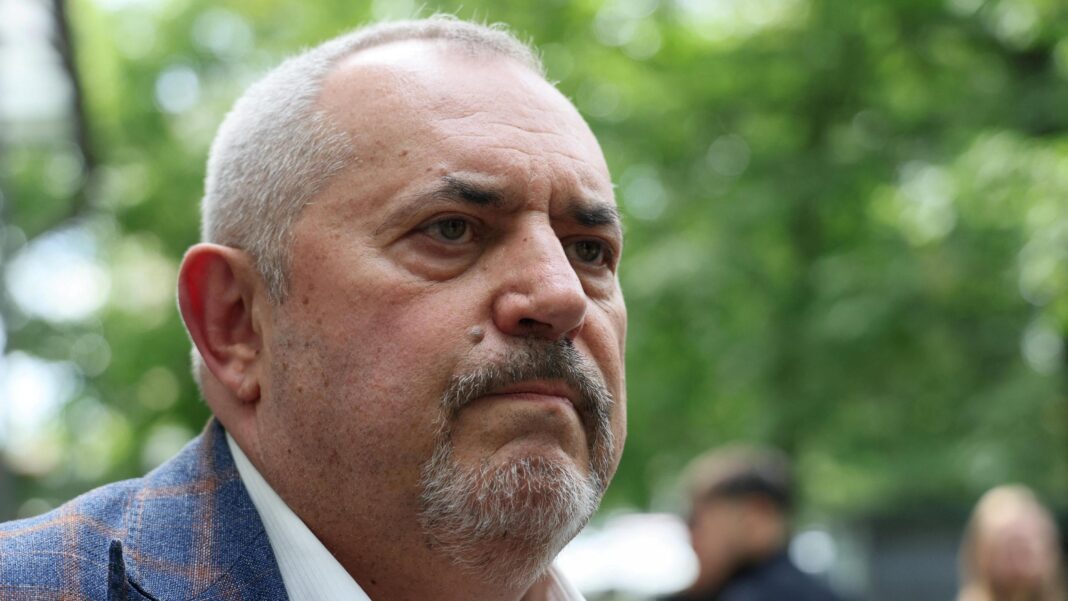
Russian anti-war politician Boris Nadezhdin detained by police
-
Published
An anti-war politician who tried to challenge Vladimir Putin at the last Russian presidential election has been arrested, according to his social media account.
Boris Nadezhdin was taken to a police station in a town west of Moscow on Monday morning, weeks after announcing he would run as a candidate in September’s Duma (parliamentary) elections.
“They took him from his home,” his press secretary told BBC Russian. “The reason for his detention is unknown.”
Last week, Nadezhdin was designated a “foreign agent” by the justice ministry and accused of spreading false information about the Russian government and calling people to take part in unauthorised rallies.
The label would have prevented him from taking part in September’s elections.
“What is there to say? I will continue to live and fight,” he commented.
“This is unlikely to change anything in my political biography. I will continue to run for the State Duma and collect signatures.”
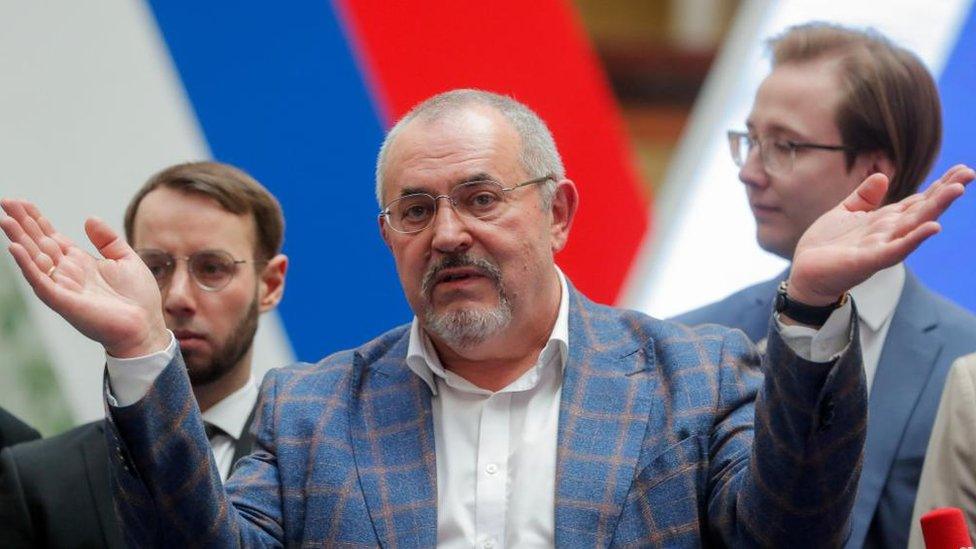
In early 2024, Nadezhdin attempted to run as a presidential candidate on an anti-war manifesto, calling for an end to the hostilities in Ukraine.
At the time, he told the BBC that he was supported by “dozens of millions of people” who did not want “Russia to be in this track of authoritarianism and militarism”.
He also said that if he was elected president his first task would be to “stop the conflict with Ukraine, and then to restore normal relations between Russia and the Western community”.
However, his criticism of Putin remained measured, leading some to speculate the Kremlin would allow him to run so as to give the election the illusion of being fair.
Nadezhdin was eventually prevented from standing by the Russian electoral commission weeks before the vote took place, on the grounds that more than 15% of the signatures he submitted with his candidate application were flawed.
He contested this but was ultimately unable to run, as were any other credible opposition figures.
On 18 March 2024, Putin claimed a landslide victory which ushered in a fifth term in office.
The next presidential election is scheduled for 2030, when Putin will be 78. A constitutional amendment passed in 2020 reset his term limits, allowing him to remain in power until 2036.
Earlier this year, when the Kremlin began restricting internet access for millions across the country and Russia’s economic crisis deepened, Nadezhdin told the BBC that people were “beginning to understand that there is a direct connection between their everyday problems, like healthcare, food prices, problems with internet and the politics of Vladimir Putin.”
The Kremlin now wields near-total control over the Russian political landscape, and it is unlikely that anybody would be allowed to challenge Putin’s rule.
The opposition figures who could have offered Russian voters an alternative are either in jail, in exile or dead.
-
-
Published8 February 2024
-