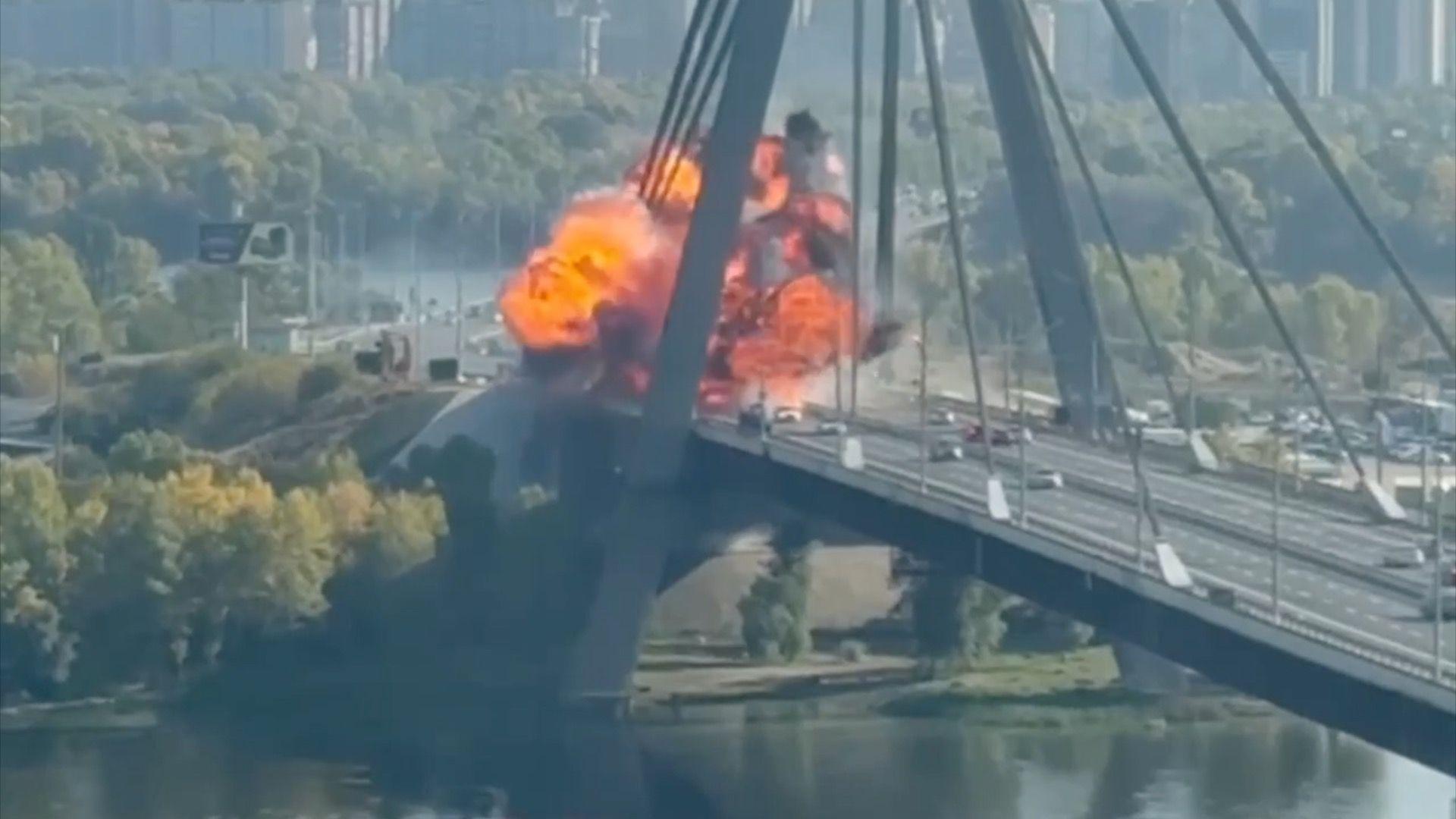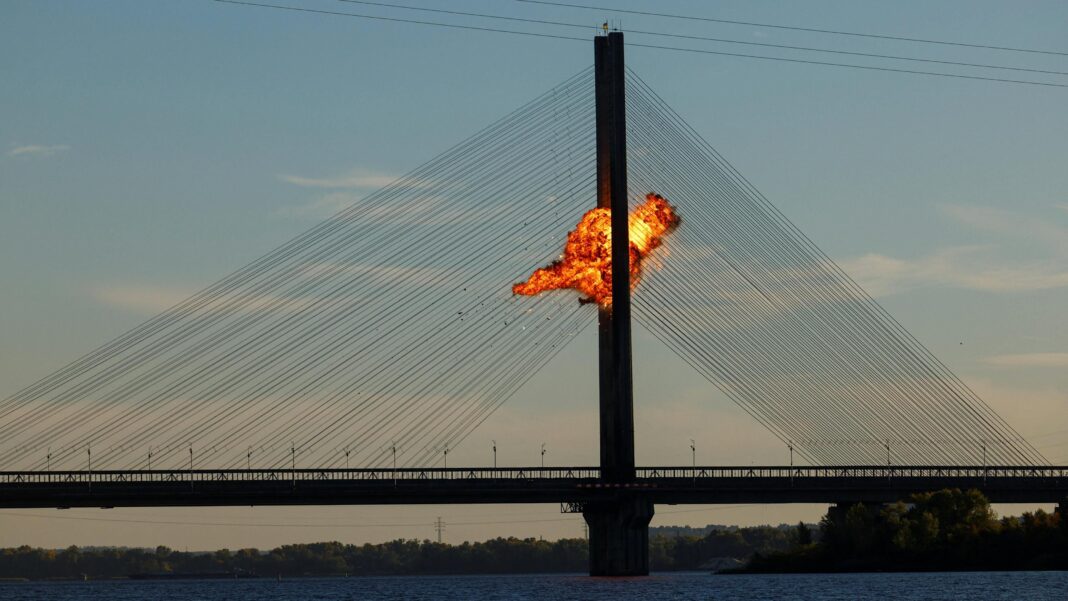

Russian strike on buses kills 33, say officials, as deadly attacks on Ukraine surge
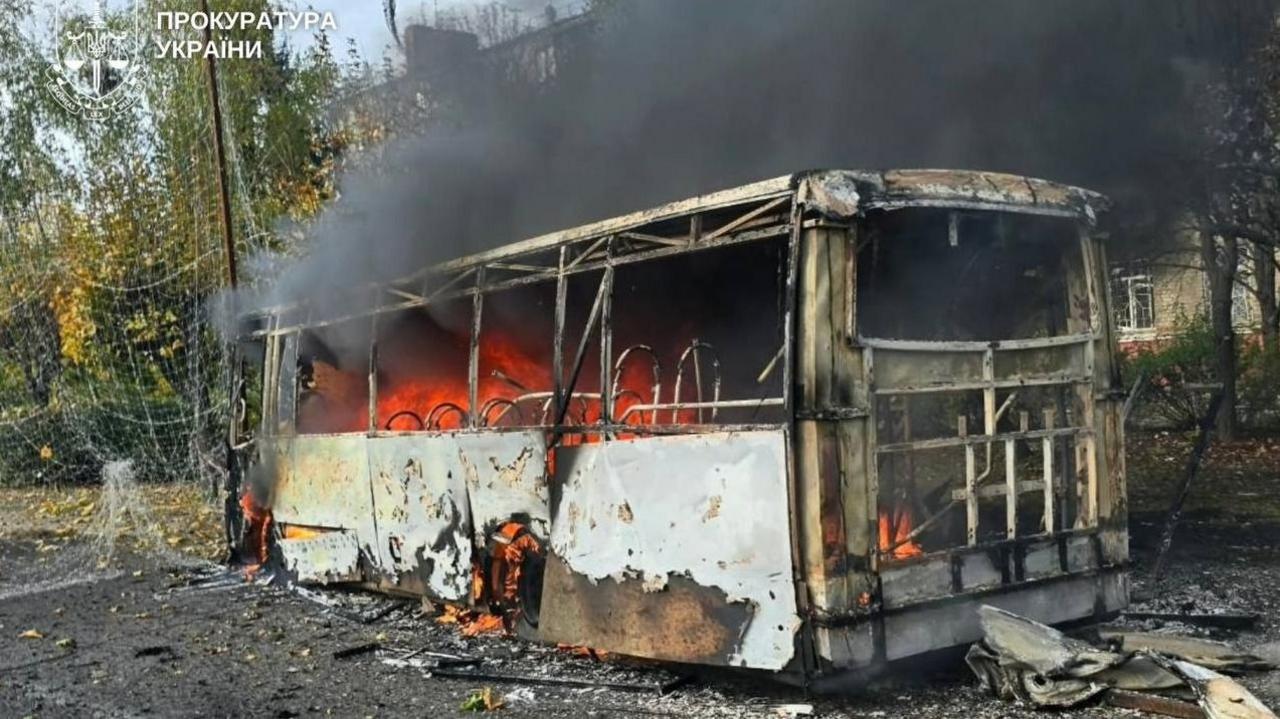 Image source, Prosecutor General’s Office
-
Published
Thirty-three people have been killed in a Russian glide bomb attack on two civilian buses in the frontline city of Kramatorsk, rescue officials say.
Another 18 people were wounded, said Donetsk regional head Vadym Filashkin, accusing Russia of targeting a bus carrying passengers to kill as many civilians as possible.
Images posted by local prosecutors showed the burning metal shell of the bus along with debris and some of the victims on the road.
Kramatorsk and neighbouring Slovyansk are part of a so-called fortress belt that Russia is trying to seize as part of Vladimir Putin’s claim to the entire Ukrainian industrial region of Donbas.
However, Thursday’s attack follows a dramatic surge in Russian attacks across the country and a heavy increase in civilian casualties.
Russia is now launching constant air raids against Ukraine, with sirens ringing throughout the day in the capital Kyiv. According to the UN, Ukraine saw more civilians killed by August this year than were killed in all of 2025.
In one single attack that destroyed a five-storey block of flats in Pryluky east of Kyiv early on Wednesday, 22 people were killed, including five children. Three of the children were only one year old.
Moscow is yet to comment on the latest attack, however rescue officials said the attack caused a fire on two buses that were both carrying passengers.
Filashkin appealed to anyone who was still in the Donetsk region to move to safer regions of Ukraine.
Given the sharp deterioration of security in the two neighbouring cities, he said all public transport had been ordered to stop. The safety of civilians was paramount, and “we have no right to risk the lives of passengers and drivers”, he said.
Moscow has often cited the “liberation” and “protection” of the predominantly Russian-speaking Donbas as justification for the full-scale invasion of Ukraine. It is made up of two regions – Luhansk and Donetsk – and with most of Luhansk under Russian control, the Kremlin is also aiming to capture remaining 20% of Donetsk territory still held by Ukraine.
-
Children killed while they slept as Russian missile kills 22 in block of flats
-
Published2 hours ago
-
-
Civilians told to flee Ukraine’s fortress cities as Russia bids to control Donbas
-
Published11 September
-
Zelensky offered his condolences to families and loved ones affected by the latest attack and said Ukraine’s partners needed to provide “concrete action through new defence packages for the protection of Ukraine”.
Ahead of the Pryluky attack, the Ukrainian leader had warned this week of warned of intelligence suggesting plans for a major Russian onslaught, and in Kyiv families responded by heading to metro stations for shelter.
Such warnings are for now one of the best defences Ukrainians have.
Interceptor missiles are in short supply around the world, so Ukraine has little chance to stop incoming Russian ballistics.
Both Russia and Ukraine have intensified long-range strikes on each other in recent months, with Russian attacks targeting Ukrainian data centres and logistics warehouses.
For much of the war Kramatorsk acted as a logistics and supply hub for the Ukrainian military, however it has now come under almost daily Russian attack as its military moves closer to the east of the city.
Glide bombs in particular have been launched at Slovyansk and Kramatorsk. The bombs are fitted with winglets so they glide towards their target rather than simply fall. In late August as many as nine glide bombs were fired at Kramatorsk in one day.
Kramatorsk City Council described the strike as a “horrific crime committed by the Russian army against the civilian population”.
“Once again, the Russians have struck a location where there are absolutely no military targets.”
-
-
Published5 days ago
-
-
-
Published2 days ago
-