
This post was originally published on this site.
Russians seek answers over hundreds missing after Ukraine’s 2024 incursion
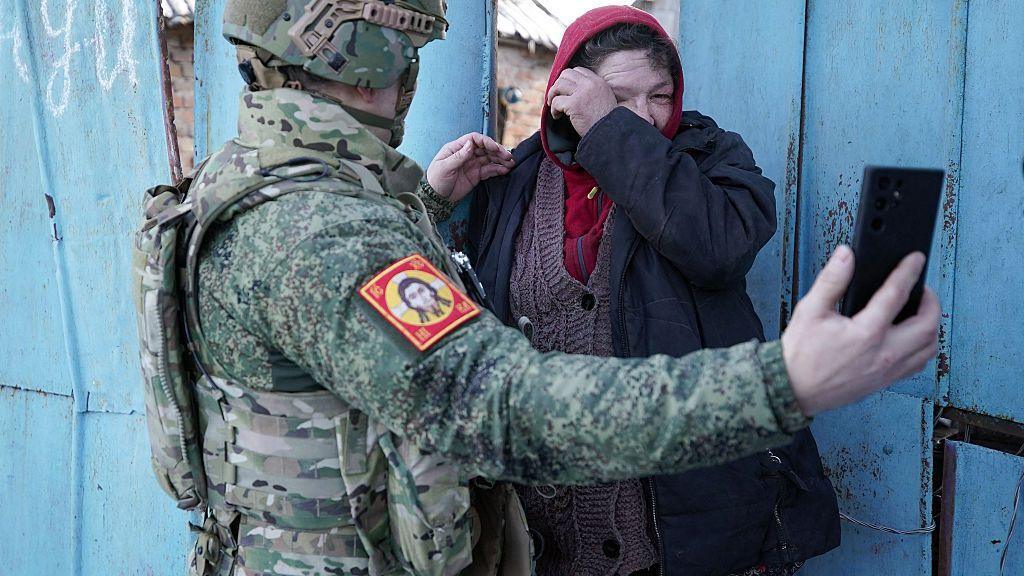 Image source, AFP via Getty Images
-
Published
“I used to have complete faith in our country,” says Lyubov. The last time she spoke to her mother was a day after Ukrainian forces broke into Russia’s Kursk region more than two years ago.
Now she feels “resentful towards the [Russian] state”, in a country where most people avoid criticising the full-scale invasion unleashed on Ukraine in February 2022.
The local governor says more than 300 Russians are still missing in Kursk region, but no-one really knows the true figure.
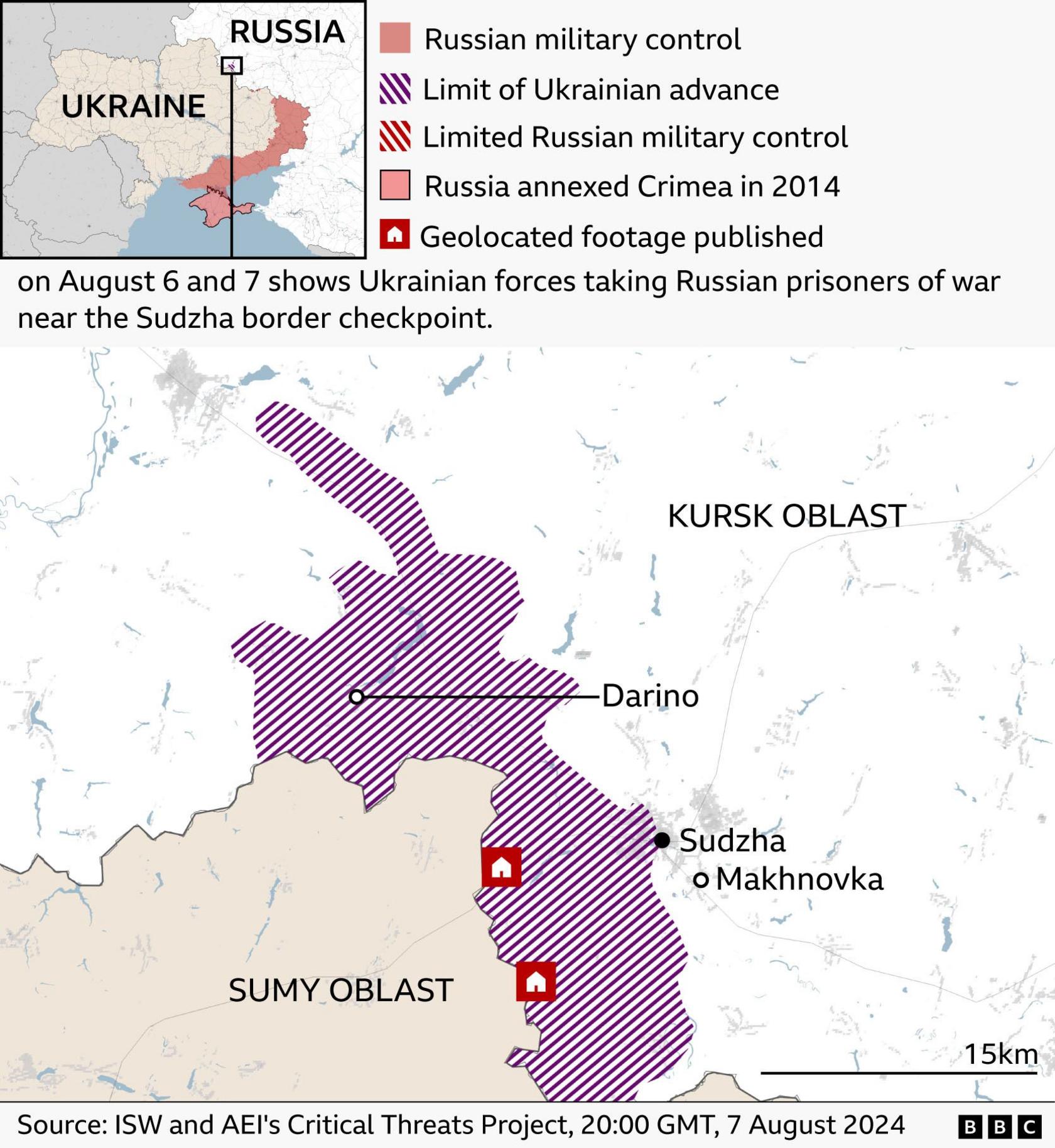
Lyubov says she tried to persuade her mother to leave her village in the Sudzha area, but blames Russian state TV “propaganda” for her refusal to listen. Some 2,000 people remained in the settlements captured by Ukraine’s military, Russian authorities estimate.
“The state channels were convincing viewers that ‘everything is under control: two or three days, and it’ll be just as it was before’,” she recalls.
She still fails to understand why Russian authorities could not stop Ukrainian soldiers storming two border checkpoints in August 2024, taking around 40 prisoners and bombing a convoy carrying Russian soldiers.
Within six days they had overrun more than 777 sq km (300 sq miles) of Russian territory, as Ukraine’s military sought to divert Russian forces away from their front-line offensive.
For most of the next eight months, mobile and internet links were down.
Russia’s foreign ministry repeatedly accused Ukraine of war crimes against civilians: allegations rejected in Kyiv as completely unfounded.
Nearly 200 Russians sent a letter to Ukraine’s President Volodymyr Zelensky, Russia’s President Vladimir Putin and the United Nations, asking them to organise a humanitarian corridor to evacuate civilians.
It never happened and, by late autumn, battles raged as Russian forces sought to retake the territory.
Lyubov and others who had lost contact with their loved ones began to form groups.
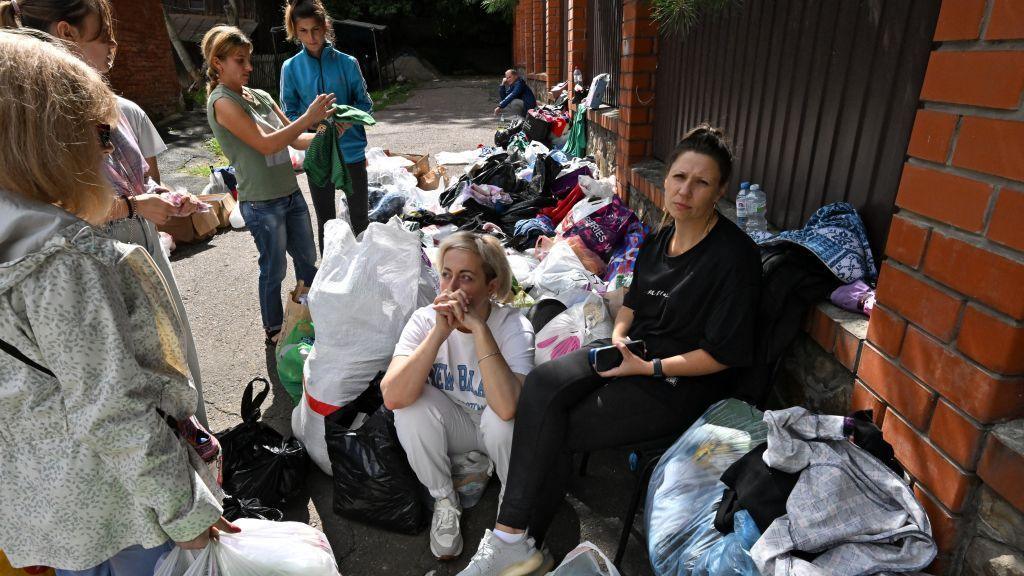 Image source, AFP via Getty Images
One resident, whose family friends had also stayed behind, began compiling a list of people she saw on videos published by the Ukrainian military and journalists. Then she began detailing those believed to have died and where they were buried.
“At first, in a panic, you try to do something – anything – to find some sort of information,” she said. “Taking action brings a certain sense of relief, and that’s how you can cope with the stress.”
Soon about 1,000 names were on the list.
Lyubov wrote to the Red Cross and Kursk interior ministry appealing for help, but had no response.
Early in 2025, Russia’s human rights commissioner published a list of 517 Kursk residents reported missing. The list mixed up names of the missing with those who were searching for them, and the families said it was like a “slap in the face”.
“Publishing something like this is the height of incompetence and a lack of basic respect for people,” said one young woman whose parents had gone missing, in a video shared online.
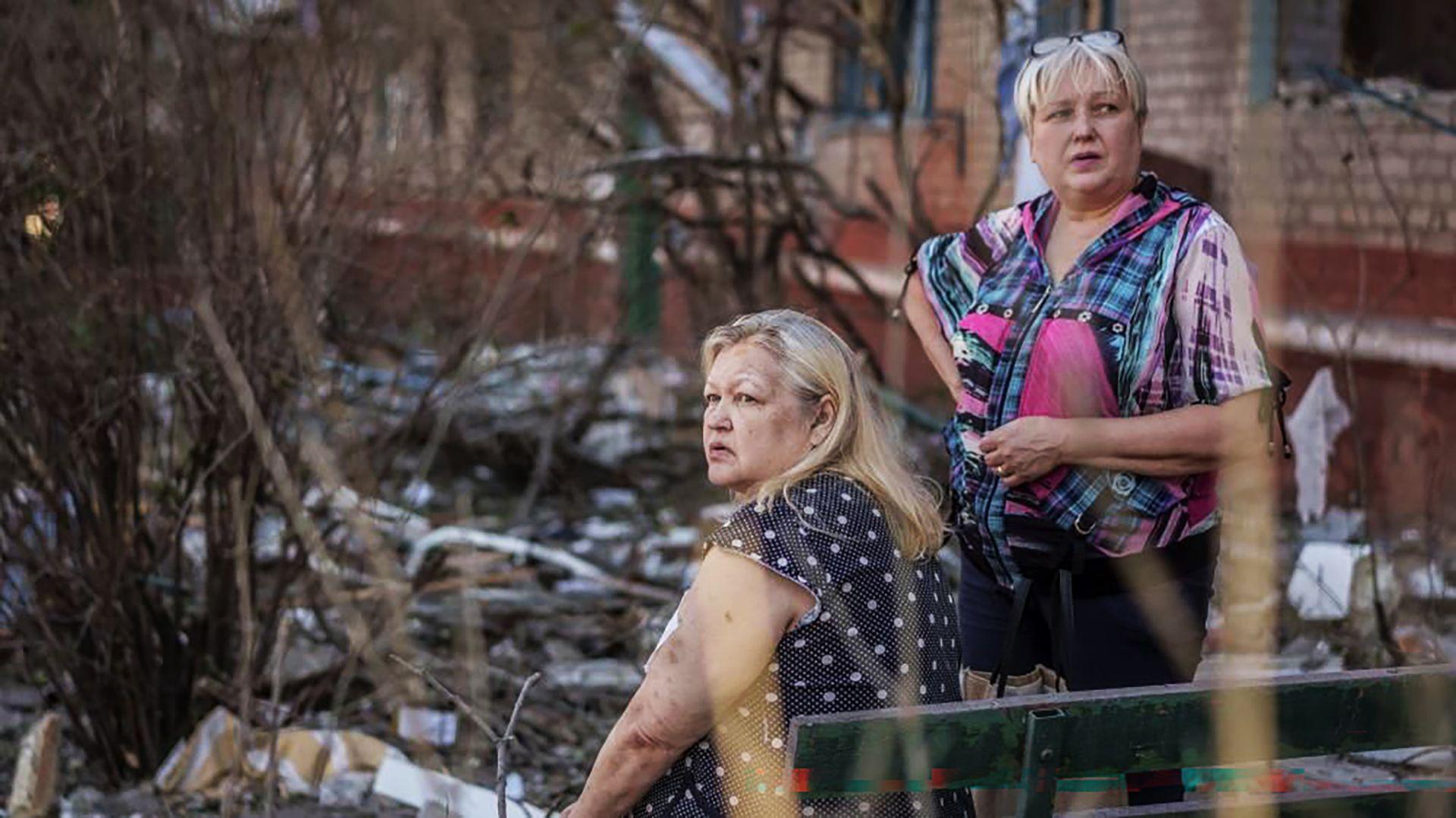
Heavy fighting had been reported in late 2024 in the village of Darino, where Lyubov and mother were from, and authorities said that 90% of it had been destroyed.
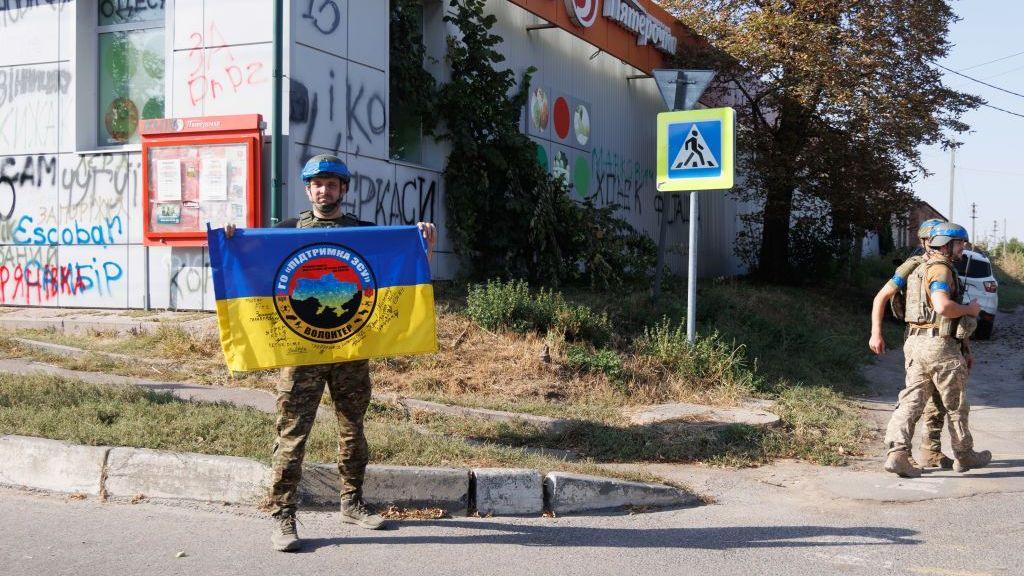 Image source, AFP via Getty Images
The Russian military regained control of the village and then began evacuating those who had survived, and the bodies of those who had not.
One of the evacuees got in touch with Lyubov, telling her she had lived with her mother for the past few weeks. Her mum had passed away, she explained, following a head injury in circumstances that remain unclear.
A few other elderly people had also died, she said, unable to cope with wartime conditions.
Lyubov waited in vain for her mother’s body to be brought out, while other families had no idea if their relatives were alive or dead.
People complained no-one was searching for their loved ones and that there was no single list of those missing.
Lyubov heard that the bodies of neighbours who died alongside her mother had been taken away from Darino in April, but her mother’s body was still missing.
She tried and failed to get an answer from the authorities: “They wouldn’t listen, and everyone just kept saying that it was dangerous there, and no-one was going to deal with it right now.”
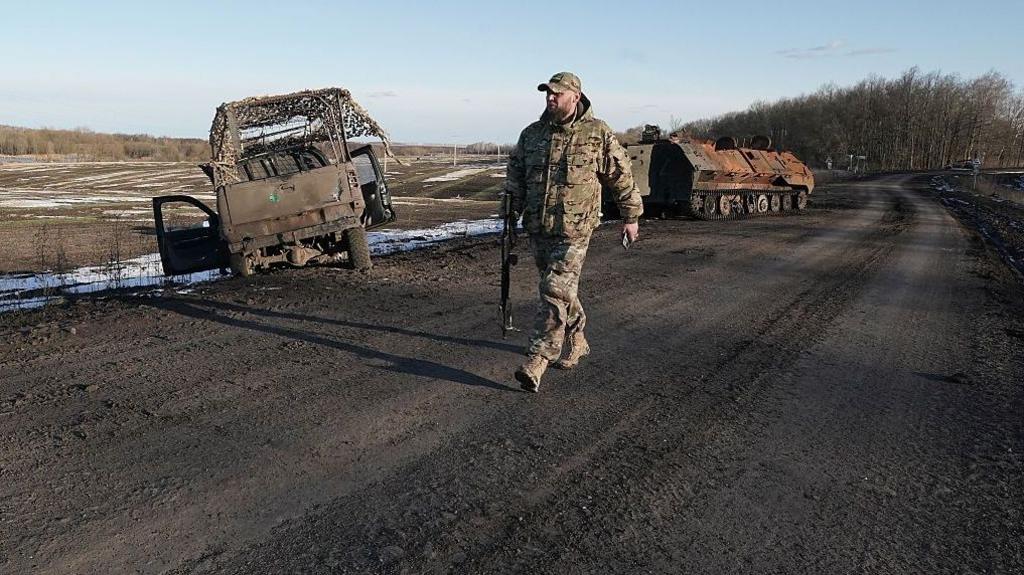 Image source, AFP via Getty Images
The head of one local village council, Yuri Tkachev, was among volunteers who went to retrieve the bodies of civilians, from the streets or from nearby fields.
“It’s hard for people to know – or rather not to know – what has happened to their loved ones, whether they’re being held captive or have died, and where they died,” he said.
Body bags and fuel for vans taking part in the evacuations were paid for either by the volunteers themselves or with donations, but not by authorities.
Although regional officials met the group searching for the missing several times in the second half of 2025, relatives complained it made little difference.
Lyubov was still searching for her mother’s body, until she visited the mortuary last October during a trip to the regional capital Kursk.
“I just asked: ‘A woman born in 1949 from the village of Darino – are there any unidentified bodies?'”
The official turned his laptop screen towards her and immediately she recognised her deceased mother in a photograph from April 2025.
She was lying on her side in the street, her knees bent. Lyubov tried not to look too closely. She recognised her mum’s face and an old jumper, which she wore while she worked.
She had provided a DNA sample in January but was told it had been lost, so her mother’s body had been in the mortuary unidentified for several months.
She had wanted to bury her mother in their home village, but for now that is impossible, so she has been cremated and her ashes sit in Lyubov’s apartment in Belgorod, about 100 miles away.
She is bitter that the government failed to stop the incursion, that it did not evacuate residents when it could, and that it persuaded them the situation was not serious.
Asked by the BBC to comment on this story, there was no response from the Kursk governor, Russia’s human rights commissioner or the Russian Red Cross.
The command of Ukraine’s Territorial Defence Forces and Ukraine’s human rights commissioner of Ukraine said all the civilians they had evacuated from Kursk region had been handed over to Russia.
Lyubov thinks back to when she used to ride her bike across the border into Ukraine to shop for sausages, yarn and ice cream.
“We went to see them, and they came to see us. And now not one of these villages exists any more.”
-
-
Published2 days ago
-
-
-
Published2 days ago
-