
This post was originally published on this site.
When self-promotional content worked
The clearest result came from Ahrefs Evolve, our new SEO & AEO conference.
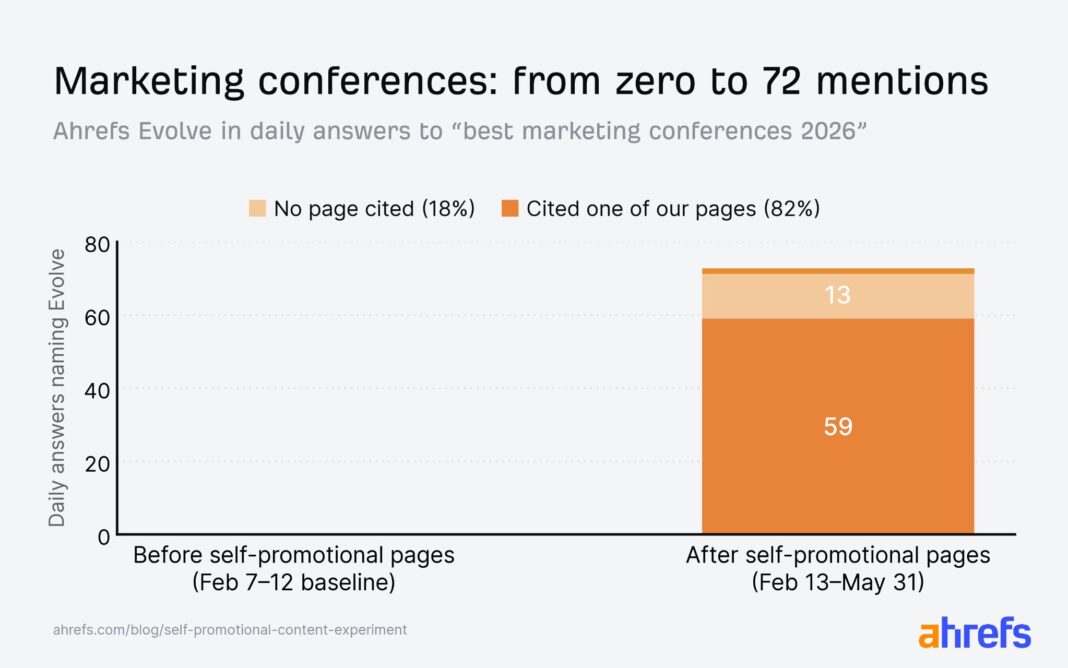
Instead of looking only at total brand mentions, I looked at places where a specific AI assistant, answering a specific query, had not mentioned the brand at all during the Feb 7–12 baseline.
After the first pages went live on Feb 13, Evolve broke into 72 of those previously empty slots. Of the 72 new Evolve mentions in prompt-engine slots that had been empty before publishing, 82% appeared in answers that cited one of our pages.
That’s the cleanest evidence that the pages did something. The brand went from absent to present, and four times out of five, our page was the cited source.
Promoting Ahrefs Brand Radar told the opposite story.
Ahrefs was already an established brand, so AI assistants named it across many relevant searches with or without our help. When Ahrefs broke into a previously empty slot, only 6% of those new mentions came from answers that cited one of our pages. The other 94% came from third-party content.
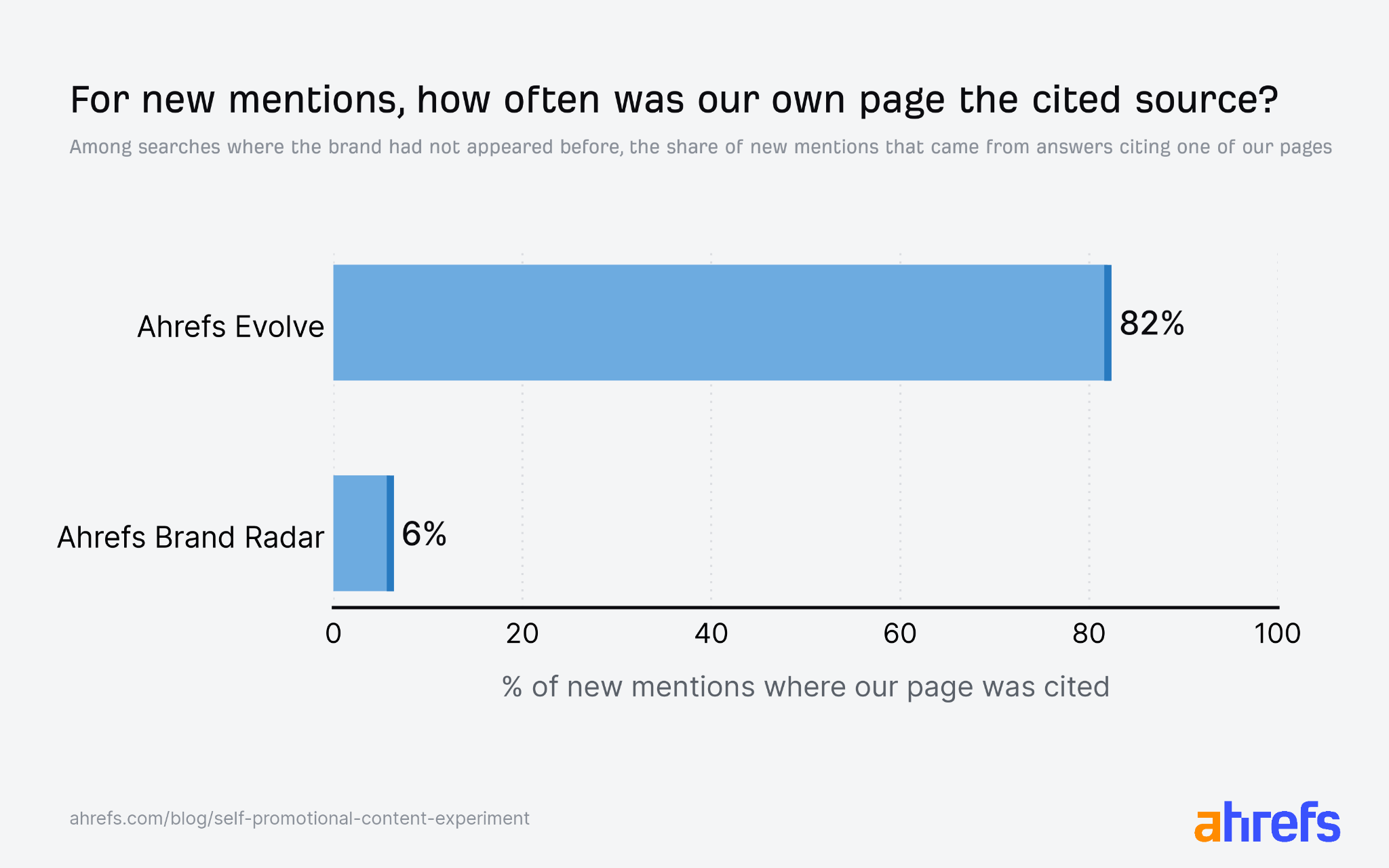
So the self-promotional pages seemed to matter much more for the new brand than the established one. For Ahrefs Evolve, the content often acted like the bridge between “not mentioned” and “mentioned.” For Ahrefs Brand Radar, AI already had plenty of other sources to work from.
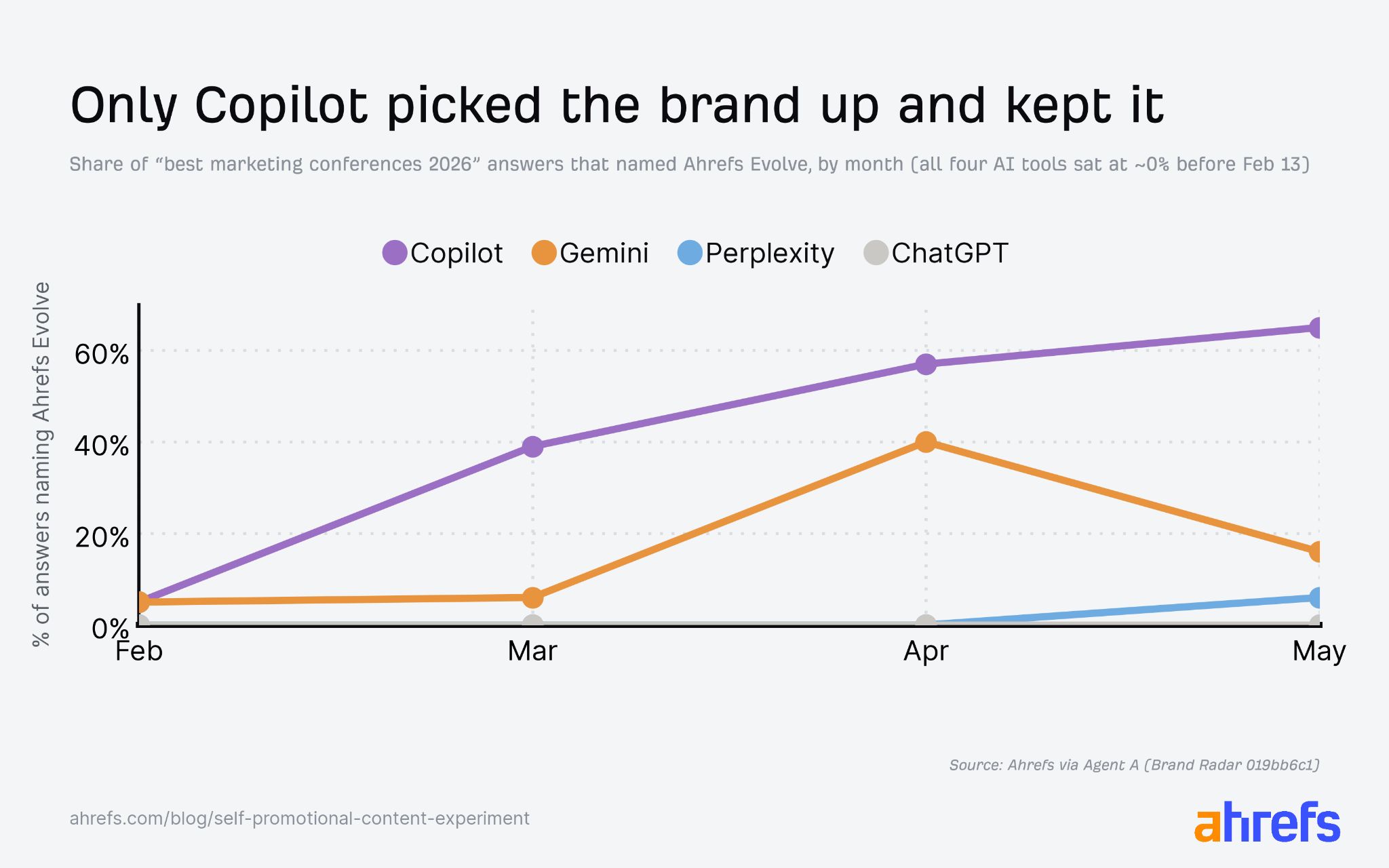
Copilot was the AI assistant with the most mentions. Evolve went from essentially zero before launch to 39% of Copilot answers in March, 57% in April, and 65% in May. Gemini picked it up too, but less steadily. Perplexity barely moved. ChatGPT never named Evolve for this query at all.
And just for the record, here are some of the pages I created to promote Brand Radar and Ahrefs Evolve: