
This post was originally published on this site.
‘Skimpflation’ warning as tinned mackerel alternative hits more supermarket shelves
-
Published
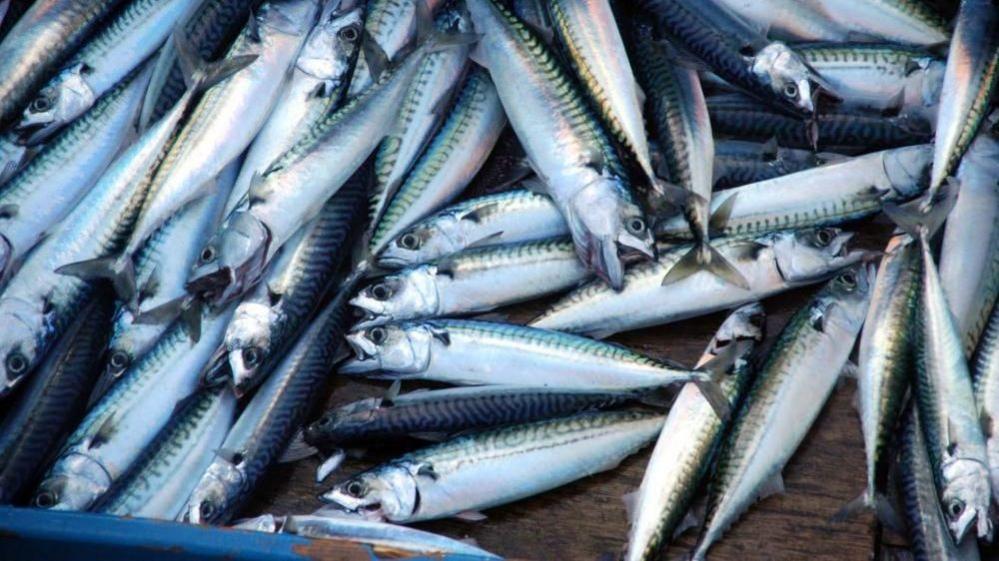
A growing trend of supermarkets selling a cheaper, less nutritious alternative to tinned mackerel is an example of “skimpflation”, a consumer group has said.
Princes – which supplies major supermarkets – has substituted jack mackerel, an entirely different species, for mackerel, with similar tins also being sold by Lidl.
The switch has been spurred by dwindling stocks of Atlantic mackerel after years of overfishing, with its Chilean counterpart more sustainable and a third of the cost.
“It’s a real concern when manufacturers quietly downgrade everyday staples like these as shoppers can end up paying the same price for a product that delivers significantly less nutritional quality,” Sue Davies, head of food policy at Which?, said.
Jack mackerel contains about half as much omega-3 and around a third as much vitamin B12 as traditional mackerel.
The shift has prompted complaints from some consumers over differences in taste and texture, as well as concerns about how clearly the replacement fish is being labelled.
Princes announced last October, external that it was changing all of its tinned mackerel products to jack mackerel, saying the species meets the Marine Stewardship Council’s sustainability standards.
The firm said its jack mackerel products were “clearly identified” and had been introduced following extensive product and consumer testing, describing it as having a “milder flavour and meatier texture”.
Lidl is selling jack mackerel under its house brand. Lidl GB said it was “committed to sourcing fish and seafood from responsibly managed fisheries”.
Davies from Which? said: “While manufacturers face genuine supply chain pressures and sustainability challenges, they have a responsibility to shoppers to be completely upfront when they change a product’s recipe.”
She added: “Skimpflation – quietly changing ingredients to cut costs – has become increasingly common, but it can feel particularly sneaky as shoppers may not realise a product has changed until they get it home and eat it.”
‘Mackerel war’
Despite its name, jack mackerel is not a type of mackerel. Jack mackerel belongs to the Carangidae fish family, while traditional mackerel belongs to the Scombridae family.
Until December 2025, under UK law, Carangidae species could only be marketed as “jack”, “scad”, “trevally” or “horse mackerel”.
But shortly after Princes launched its new product as “jack mackerel”, the Department for Environment, Food and Rural Affairs changed its rules to permit the labelling.
Industry figures reposted by seafood market intelligence platform Undercurrent suggest wholesale Chilean jack mackerel costs roughly one-third as much as Atlantic mackerel.
The Scottish Pelagic Fishermen’s Association said there was the potential for confusion, saying “consumers should be able to clearly understand what they are buying”.
CEO designate Hannah Fennell said: “If retailers move away from Northeast Atlantic mackerel, they are unfairly punishing the UK industry while instead sourcing a different, less omega-3-rich species from the other side of the world with a significantly higher carbon footprint to the UK market.”
The switch follows the so-called “mackerel war”, a long-running dispute between the UK, Iceland, Greenland, Norway, the Faroe Islands, the EU and Russia over shared mackerel catch quotas.
The countries have repeatedly failed to agree a unified system for sharing stock and setting catch limits in line with scientific advice.
Mackerel catches in the north-east Atlantic have exceeded the levels advised by scientists by an average of 39% over the past 15 years, according to the Marine Stewardship Council (MSC).
Stocks have plummeted by roughly three-quarters over the past decade, according to the International Council for the Exploration of the Sea (Ices).
The intergovernmental body has advised slashing the quantity of north-east Atlantic mackerel caught in 2026 by roughly 70% to allow the stock a chance to recover.
Last year, the Marine Conservation Society said the Atlantic mackerel population was at “breaking point”.
The severe depletion of mackerel numbers has led to the fish losing its MSC certification, meaning it no longer complies with many retailers’ sustainability policies. Chilean jack mackerel, in contrast, is MSC-certified.
In February, Waitrose said it would suspend sales of fresh, chilled and frozen mackerel due to overfishing concerns, while tinned products would be phased out as existing stock was sold.
The Marine Conservation Society heralded the move as “leading and decisive”.
The switch to jack mackerel is being felt beyond the UK, with supermarkets in the Netherlands no longer selling Atlantic mackerel and at least one supermarket in Sweden switching to jack mackerel.
-
-
Published2 days ago
-
-
-
Published17 August
-