
‘Something will change’ – questions for Australia after South Africa defeat
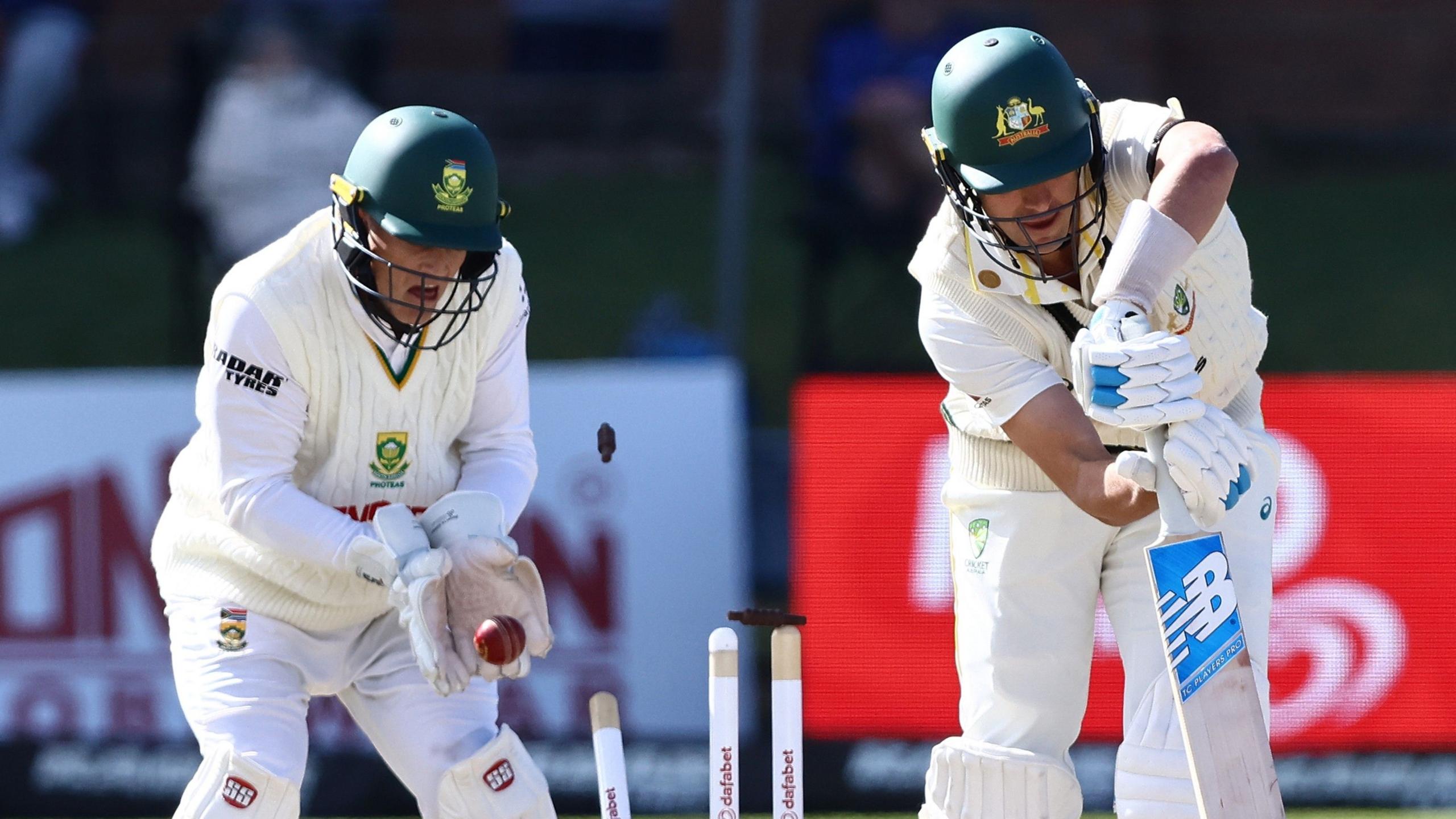 Image source, Getty Images
-
Published
Second Test, Gqeberha (day five of five)
South Africa 425-9 dec: Bavuma 179, Jansen 85; Boland 5-81
Australia 99 & 295: Head 121; Rabada 4-77, Mulder 3-64
South Africa won by an innings and 31 runs
Some Test defeats feel more consequential than others.
Some can be brushed aside as a bad day. Others point to issues that run deep. For Australia, this capitulation on the Cape feels like the latter.
In losing to South Africa by an innings and 31 runs, Australia surrendered their lead in the series with one match to play.
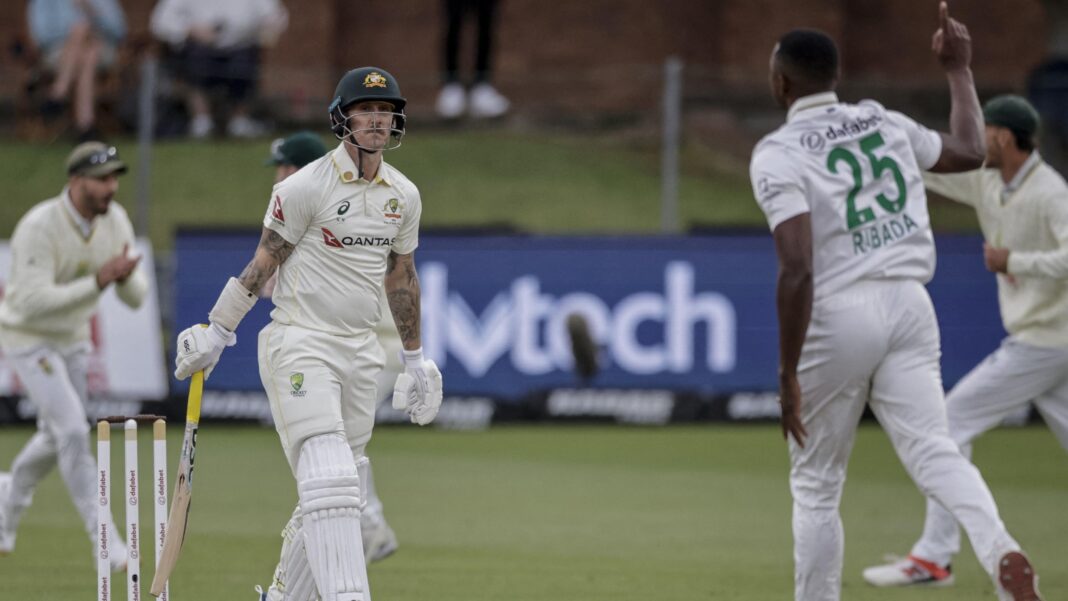
There was fight on day five: Travis Head scored 121 and nightwatchman Scott Boland survived for 166 balls to take the match into the final session, but Pat Cummins’ side still had to follow-on for only the third time this century and lost in little more than three days’ play around the rain.
The momentum built in Durban has been swept away.
“It is not just this Test,” said former Australia bowler Jason Gillespie on ABC Grandstand.
“We are talking about the batting and a lack of options and performance. Something will change.”
‘McDonald is getting impatient’
It is, of course, little more than a week since South Africa were the ones facing these questions.
They made three changes after Australia won the first Test in Durban.
Eyes are now on the tourists’ selectors and this series coming before contests against New Zealand, India and England only adds extra intrigue.
A stony-faced Australia coach Andrew McDonald refused to be drawn on potential changes on Wednesday, but hardly gave ringing endorsements of his batters.
“I can’t defend that,” McDonald said of Australia’s first-innings collapse to 99 all out.
Attracting the most attention is number three Marnus Labuschagne, who has gone 47 innings without an international century to equal the Australia record.
His inexplicable second-innings dismissal, when he hit spinner Simon Harmer to long-on for 39 as Australia tried to save the Test, was the fourth time he has fallen in the thirties in six innings since the Ashes.
“Some of the hardest part of batting at number three is getting in,” said Cummins, when asked to guarantee whether Labuschagne will keep his place.
“He is doing that. We need to turn those 30s into bigger scores. He knows that.”
In that run of wasted starts, Labuschagne has been bowled missing a flick to leg, missed another to be pinned lbw, drove a spinner straight to cover and whacked another to long-on.
“I got the feeling last night Andrew McDonald was getting very impatient,” former Australia batter Phil Jaques said on ABC.
“He wants a response from the batting group and Pat Cummins does as well.”
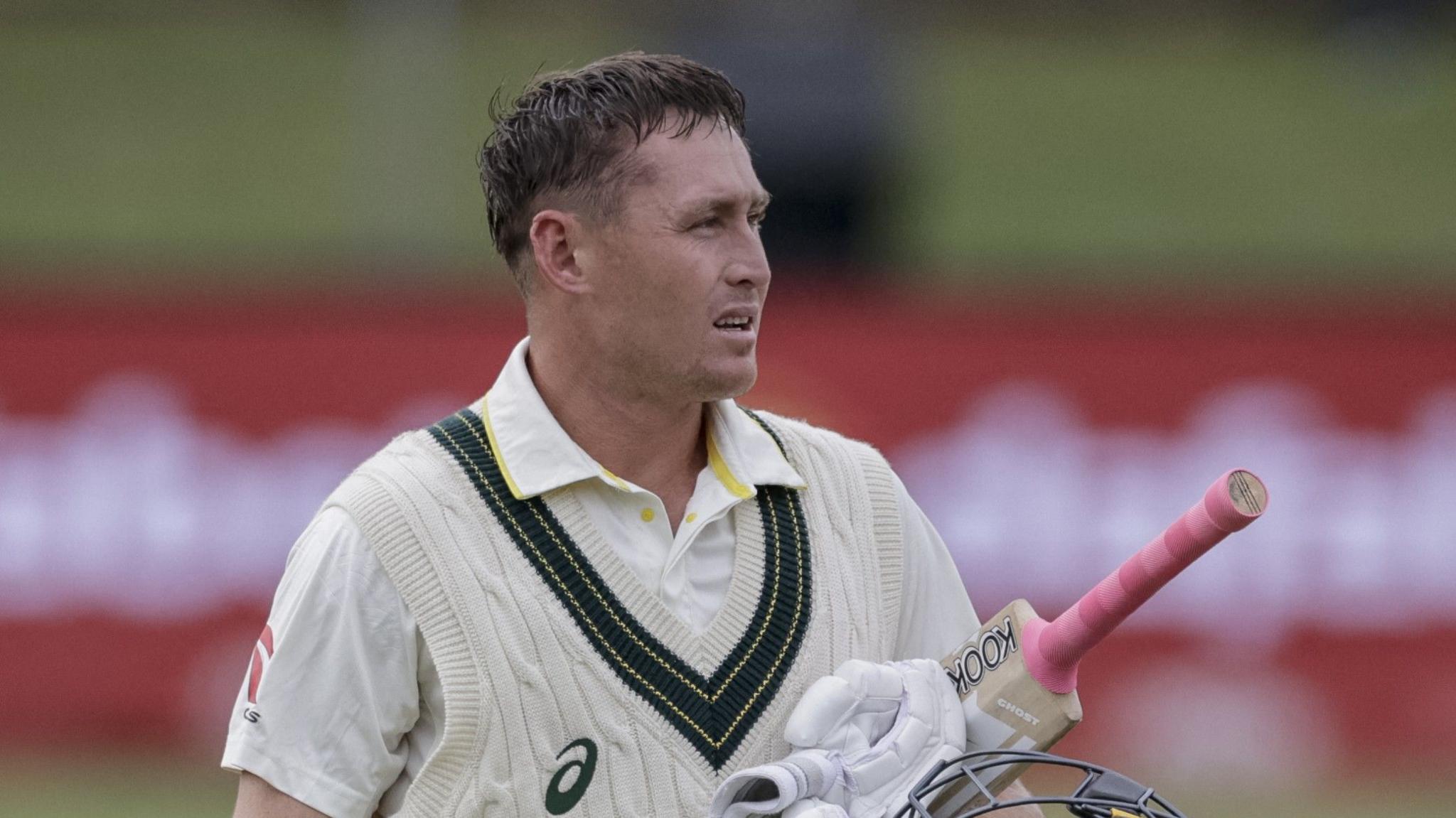 Image source, Getty Images
‘Hard to see how Maddinson will survive’
Amid all of the doubts, this Australia set-up has a history of backing its established players.
When Labuschagne was dropped for a Test against West Indies last year, he was recalled on the back of good domestic form at the start of the Ashes months later.
Former openers Usman Khawaja and David Warner were both backed through difficult times.
Still, after scores of eight and nought this week, on the back of another duck in Durban, opener Nic Maddinson is now under immense pressure for his place.
“It is hard to see how Maddinson will survive to Cape Town,” said Gillespie.
Dropping the 34-year-old would also bring the attention on to Australia’s selectors.
Maddinson was recalled to open in this series after a 10-year absence, despite primarily being a middle-order player.
“You would have to question the process of what happened in that selection room,” Jaques said.
“I feel for Nic. He is a good player and good fella but he hasn’t had a great couple of Test matches.”
Who else could come in?
In being recalled for this series, Maddinson became the ninth different batter to open for Australia since David Warner retired in 2024.
Like England in the days after Andrew Strauss, it is a problem proving tricky to solve.
If Australia do drop Maddinson, one solution would be to return to a batter who has filled the role before – Matt Renshaw.
Renshaw made 190 in the first Test but opened against Bangladesh last month before being moved to number five for this series.
Renshaw’s promotion would create a space in the middle order. Cameron Green and Josh Inglis are fit again. Either could retake that place.
Spin-bowling all-rounder Cooper Connolly is another option. The 23-year-old made his Test debut earlier this year but has only played 12 other first-class matches.
All-rounder Beau Webster is another incumbent under pressure, having gone seven innings without a fifty with scores of eight and 18 in Gqeberha. He is yet to make a century in his 12 Tests.
“Cooper Connolly will come in, possibly at the expense of Webster,” predicted Gillespie.
“Labuschagne keeps his spot, Renshaw moves to the top and a batter comes in the middle order – whether Green or Inglis.”
What about Nathan Lyon?
It all leaves Australia scrambling, having looked certain winners of this series when South Africa were 110-6 in their first innings.
Their best performer on the final day was Boland, who defended resolutely for more than three hours before being bowled by the impressive South Africa all-rounder Wiaan Mulder after taking five wickets in the first innings.
The performance of Boland restarts another debate; how do you get the 37-year-old, pace trio Cummins, Josh Hazlewood and Mitchell Starc, plus spinner Nathan Lyon into the same XI?
Lyon was the one to miss out here but Cape Town, where the series decider begins on Tuesday, is expected to turn.
“Boland has to play,” said Gillespie. “He was Australia’s best seam bowler.
“I don’t think it is a lock Lyon could play. You have [left-arm spinner] Matt Kuhnemann here and South Africa basically have all right-handed batsmen.
“It is going to be a long selection discussion.”
From holding all of the cards, Australia are now fielding all of the questions.
-
-
Published41 minutes ago
-
-
-
Published1 hour ago
-