

This post was originally published on this site.
If you’re looking to expand your corporation into a new state, there are specific steps you need to follow to guarantee compliance and maintain good standing. Start by researching the target state’s registration requirements and filing the necessary documents. You’ll additionally need to manage ongoing reports and taxes unique to that state. Comprehending these elements is essential, as they can greatly impact your operations. So, what comes next in this process?
Key Takeaways
- Research the new state’s registration rules and compliance requirements on the Secretary of State’s website.
- File a Certificate of Authority or Foreign Qualification to legally operate in the new state.
- Designate a registered agent in the new state for receiving legal documents and compliance notices.
- Monitor and manage annual report deadlines and state tax obligations to maintain good standing.
- Consult with professionals to navigate multi-state operations and ensure compliance with unique state laws.
Researching State Requirements and Name Availability

When you’re considering adding a state to your corporation, how do you start? First, visit the Secretary of State’s website for the state of incorporation to check specific registration rules, fees, and paperwork requirements.
You’ll want to utilize the state corporation search service to confirm your corporation’s name is available, ensuring it hasn’t already been registered by another entity.
Next, research whether the chosen state requires a “Certificate of Authority” or “Foreign Qualification,” as this is critical for legally operating your corporation within that jurisdiction.
Pay attention to state-specific tax obligations and annual report deadlines, as these can notably impact your corporation‘s compliance.
Finally, check for additional requirements, like designating a registered agent in the new state to receive legal and tax documents.
Filing Your Certificate of Authority or Foreign Qualification
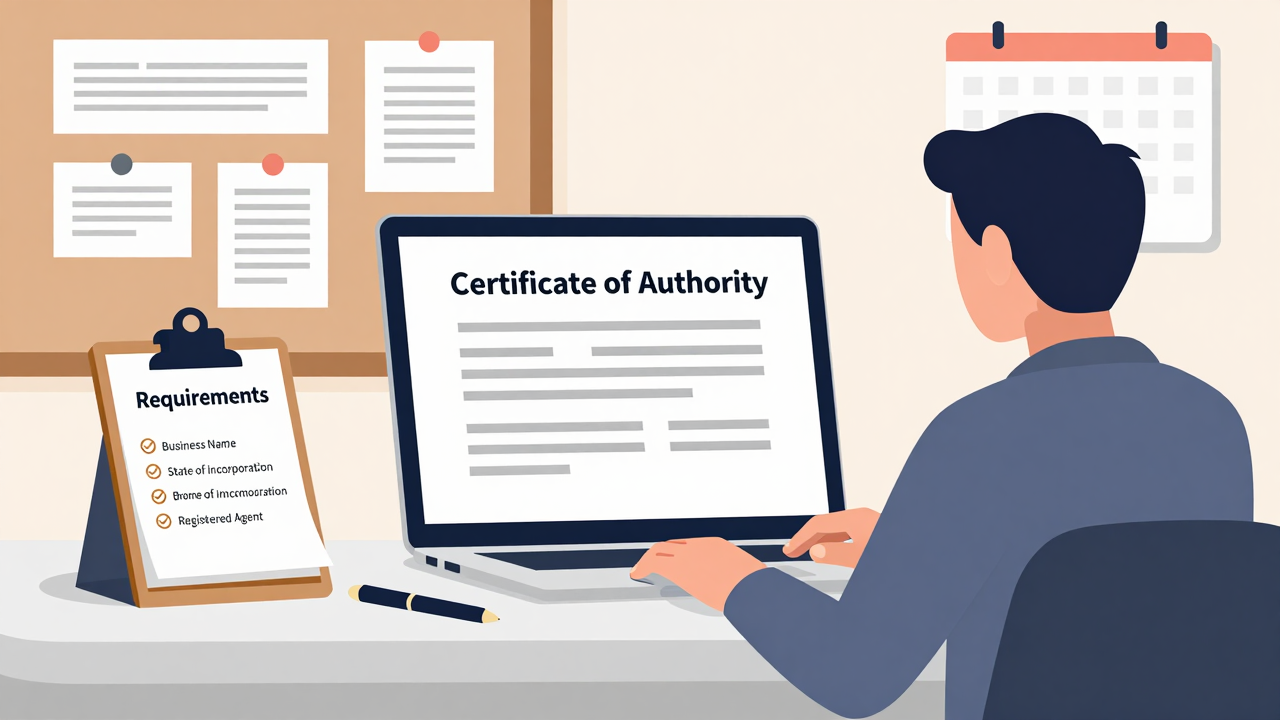
To officially operate your corporation in a new state, you’ll need to file a “Certificate of Authority” or “Foreign Qualification” with the Secretary of State in that jurisdiction. This form typically requires details like your corporation’s legal name, home state, principal office address, and registered agent information. Filing fees vary by state, usually between $50 and several hundred dollars, and many states offer online filing for your convenience.
Here’s a quick overview of what to expect:
| Aspect | Details |
|---|---|
| Legal Name | Your corporation’s name |
| Home State | Where your corporation was formed |
| Principal Address | Main office location |
| Registered Agent | Person/entity to receive legal documents |
| Filing Fees | $50 to several hundred dollars |
Once approved, this filing lets your corporation enter contracts, conduct business, and open local bank accounts. Remember to maintain a registered agent in the new state to stay compliant.
Compliance With State-Specific Regulations
When adding a state to your corporation, you need to understand the specific filing requirements that each state imposes, which can vary widely.
Compliance with zoning laws and annual reporting obligations is vital, as failing to meet these regulations can lead to penalties or loss of legal status.
Staying informed about these state-specific regulations will help you maintain good standing and guarantee your corporation operates smoothly.
State-Specific Filing Requirements
Grasping state-specific filing requirements is essential for any corporation looking to expand its operations into a new state. Each state has unique registration rules, so you’ll need to check the Secretary of State’s website for specific fees, required paperwork, and filing deadlines.
When filing for a Certificate of Authority or Foreign Qualification, you’ll provide details like the corporation’s legal name, home state, principal office address, and registered agent information. Be aware that filing fees can range from $50 to several hundred dollars.
Some states impose additional compliance obligations, such as publication requirements or annual reporting. Recognizing tax implications and annual report deadlines in the new state is critical, as non-compliance can lead to penalties or revocation of your corporation’s registration status.
Compliance With Zoning Laws
Comprehending the intricacies of zoning laws is crucial for any corporation planning to expand into a new state, as these regulations dictate where and how your business can operate. Each municipality has specific zoning ordinances that outline permissible business activities, making it imperative to review these regulations before proceeding. Noncompliance can lead to fines, forced closures, or legal disputes, emphasizing the need for careful research. You may likewise need to apply for zoning permits or variances, which could incur extra costs and time. Engaging with local zoning boards or planning commissions can provide valuable resources and guidance.
| Zoning Aspect | Importance | Actions to Take |
|---|---|---|
| Local Ordinances | Dictate business type | Research local laws |
| Compliance Risks | Fines/closures | Guarantee adherence to regulations |
| Permit Applications | Additional requirements | Apply for necessary permits |
Annual Reporting Obligations
Comprehending your annual reporting obligations is vital for maintaining compliance with state-specific regulations, especially if you’re operating in multiple states.
Corporations must file annual reports in each state where they’re registered, confirming basic company information and paying associated fees to stay in good standing. Deadlines for these reports vary by state, often aligning with the anniversary of your formation or the end of the calendar year.
If you fail to submit your reports, you risk penalties, including late fees, loss of good standing, or even dissolution. Furthermore, some states require extra documentation, such as financial statements or lists of officers.
As a result, tracking and managing these requirements is fundamental to avoid costly surprises and guarantee compliance.
Updating Corporate Bylaws and Record-Keeping

When you enter a new state, updating your corporate bylaws is essential to guarantee they align with local laws and reflect any changes in your corporation’s structure or operations.
You’ll need to establish clear procedures for amending these bylaws and maintain organized records of all changes, including minutes from meetings.
Consistent document retention practices not just support compliance but furthermore improve transparency, making it easier for you to respond to audits or legal inquiries.
Bylaw Amendment Procedures
Amending corporate bylaws is a significant process that guarantees your organization remains compliant with legal standards and can adapt to changing circumstances.
Typically, amendments require a majority vote from the board of directors or shareholders, as specified in your existing bylaws. Document all proposed changes in writing and record them in the corporate meeting minutes to guarantee transparency and compliance.
It’s important to review state laws, as some may impose specific requirements for amending bylaws, including filing notices with the Secretary of State.
After making any amendments, update your official records and distribute the revised bylaws to all board members and key stakeholders. Keeping a clear record of these amendments is crucial for legal compliance and can safeguard your corporation during audits.
Document Retention Practices
Effective document retention practices play an important role in maintaining your corporation’s compliance and organizational integrity.
Updating your corporate bylaws is critical to reflect changes in business operations, governance, or compliance requirements. This guarantees that your bylaws remain current and legally enforceable.
Furthermore, you need to maintain a thorough archive of corporate documents, including bylaws, meeting minutes, and financial statements. These records should be securely stored and organized for easy access.
Documenting all board meetings and major decisions in the minutes is fundamental for compliance and can protect against disputes.
It’s advisable to review and update your bylaws annually or after significant events.
Adopting a document retention policy can further help manage compliance and reduce legal risks effectively.
Managing Annual Reports and State Taxes

Managing annual reports and state taxes is vital for maintaining your corporation’s good standing and compliance with state regulations. Each state has unique requirements regarding the frequency and content of annual reports, which can be annual or even biennial. Failing to file these reports on time can result in penalties or loss of your corporation’s status.
Additionally, you must file taxes in every state where your corporation earns income, complicating your tax obligations. Staying compliant with state regulations is critical, as the consequences of neglecting these responsibilities can be severe.
Here’s a quick reference table to help you understand the requirements:
| Requirement | Description |
|---|---|
| Annual Report | Confirm company information annually |
| Filing Frequency | Varies by state (annual/biennial) |
| State Taxes | Required in each income-earning state |
| Penalties | Fines or loss of good standing |
| Consultation | Advisable to consult an accountant |
Staying informed will help you navigate these obligations efficiently.
Understanding the Implications of Multi-State Operations

When you expand your corporation’s operations into multiple states, you must navigate a complex terrain of legal, tax, and regulatory requirements that vary considerably from one location to another.
First, you’ll need to obtain a “Certificate of Authority” in each state where you plan to conduct business, allowing you to operate legally. Moreover, your corporation may face state income taxes in each state where it generates revenue, complicating your tax obligations.
You’ll also need to stay on top of each state’s annual reporting requirements and deadlines to avoid penalties, which can include losing your business status. The costs associated with doing business can differ markedly across states, affecting your profitability.
Finally, you must maintain a registered agent in each operational state, adding to your administrative responsibilities and ensuring you receive necessary legal and tax documents without delay.
Common Challenges and How to Overcome Them

Expanding your corporation into a new state can present a variety of challenges, particularly regarding managing the distinct filing fees and compliance requirements. These fees can range from $50 to several hundred dollars, depending on the state.
Furthermore, multi-state taxation intricacies require you to consult an accountant to guarantee compliance with tax obligations in each location where you generate income.
Missing annual reporting requirements unique to each state can lead to penalties or even revoked status, so it’s crucial to create a calendar system to track deadlines across jurisdictions.
Establishing a registered agent in the new state is also necessary for receiving legal documents, as failing to do so may result in missed notices and legal complications.
Finally, grasping state-specific laws and regulations can help you avoid costly surprises and guarantee smooth operations after your expansion, so invest time in researching these aspects thoroughly.
Next Steps After Successfully Adding a State

After successfully adding a state to your corporation, it’s vital to take proactive steps to guarantee compliance with that state’s specific requirements.
Start by filing the necessary annual reports, which usually involve updating your company information and paying associated fees. Next, monitor your state-specific tax obligations, as you’ll likely need to file state income taxes wherever your corporation earns income.
It’s likewise important to maintain a registered agent in the new state, making sure they can receive legal documents and respond swiftly to any compliance notices.
To avoid penalties, create a calendar system to track multi-state compliance deadlines.
Finally, review and update your corporate bylaws and operational practices to align with any new state regulations that could impact your corporation’s governance.
These steps will help guarantee your corporation operates smoothly and remains compliant in its new state.
Frequently Asked Questions

How to Incorporate in Another State?
To incorporate in another state, start by researching that state’s registration rules, fees, and deadlines on its Secretary of State’s website.
You’ll need to file a “Certificate of Authority” or “Foreign Qualification” form, providing your corporation’s legal name, home state, and registered agent details.
Expect filing fees to vary.
Make sure to maintain compliance with local regulations, including having a registered agent and tracking annual reporting requirements to stay in good standing.
How Do You Expand Your Business to Another State?
To expand your business to another state, start by researching that state’s registration requirements, including fees and paperwork.
Check the availability of your corporation’s name there.
Next, file a “Certificate of Authority” or “Foreign Qualification” form to operate legally.
Designate a registered agent in the new state for legal documents.
What Is the Easiest State to Incorporate In?
If you’re looking to incorporate, Delaware is often your best option. It offers flexible corporate laws and has a specialized Court of Chancery for business disputes.
You won’t face corporate income tax if you don’t operate within the state, making it financially appealing. The paperwork is minimal, and online filing simplifies the process.
Nevada likewise stands out, providing no corporate income tax and privacy protections for business owners.
Both states don’t require residency for directors or shareholders.
How Do You Expand Your Business to New Locations?
To expand your business to new locations, start by researching the registration requirements for each state.
Check the availability of your corporation name, ensuring it complies with local regulations.
You’ll need to file a “Certificate of Authority” or “Foreign Qualification” to operate legally.
Designate a registered agent in the new state to manage legal documents.
Finally, stay updated on ongoing compliance requirements, including annual reports and state taxes, to maintain good standing.
Conclusion

Adding a state to your corporation involves several key steps, from researching requirements to filing necessary documentation. You need to guarantee compliance with state regulations and keep your corporate bylaws updated. Don’t forget to manage annual reports and taxes to maintain good standing. By comprehending the implications of multi-state operations and anticipating challenges, you can navigate this process smoothly. Once you’ve successfully expanded, regularly review your business practices to guarantee ongoing compliance and operational efficiency.
Image via Google Gemini and Small Business Trends