
This post was originally published on this site.
Summer 2026 was UK’s hottest on record, Met Office says
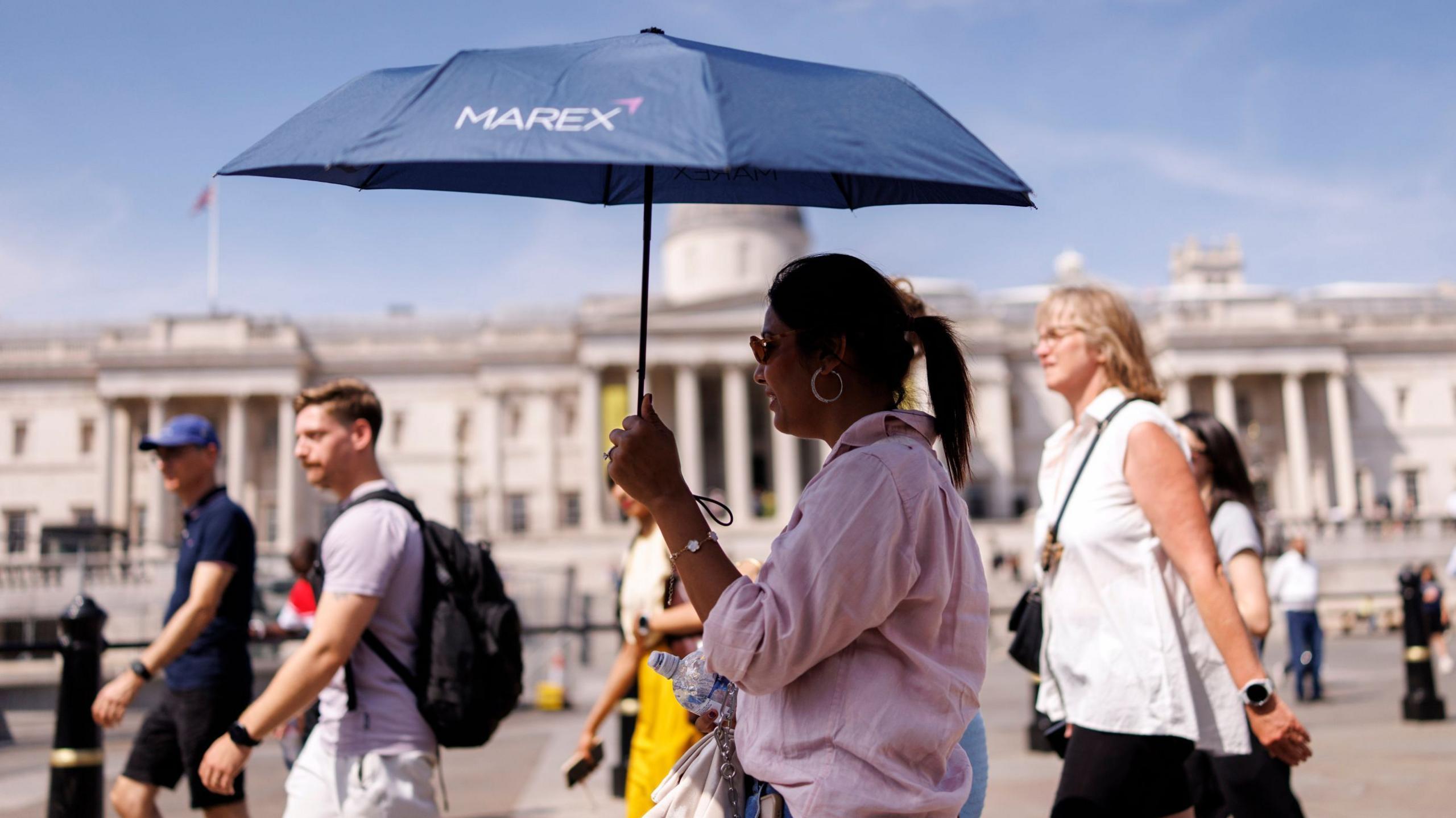 Image source, EPA
-
Published
Summer 2026 was the UK’s hottest on record, according to provisional data from the Met Office.
Provisional figures for the months of June, July and August show that the average mean temperature – which includes day and nighttime temperatures – was 16.5C, the warmest on record in a dataset going back to 1884.
It follows a spring and summer of persistent heat with five widespread heatwaves and 40 days of temperatures above 30C (86F), smashing the previous record of 34 days.
In a study on how this summer was impacted by human-induced climate change, the Met Office says the heat experienced this summer was made 130 times more likely.
Record summer likely despite a cooler end to August
For much of the summer, areas of high pressure have dominated the UK weather, with dry conditions and winds from continental Europe allowing temperatures to rise repeatedly.
While the second half of August brought a change in the pattern with cooler, wetter weather for many – overall temperatures have mostly remained around or above the seasonal norm.
At a more regional level, England, Wales and Northern Ireland also broke their respective mean temperature records for summer, while Scotland reported its joint-sixth warmest summer on record.
A summer of persistent heat
The highest temperature recorded this summer was 38.1C (100.6F) at Kew Gardens in London on 13 August.
This was, provisionally, the UK’s fifth-hottest day on record in terms of maximum temperature, but it didn’t meet the all-time high of 40.3C (104.5F) measured at Coningsby, Lincolnshire in July 2022.
However, it is the persistence of the heat this spring and summer that is remarkable and has broken numerous records.
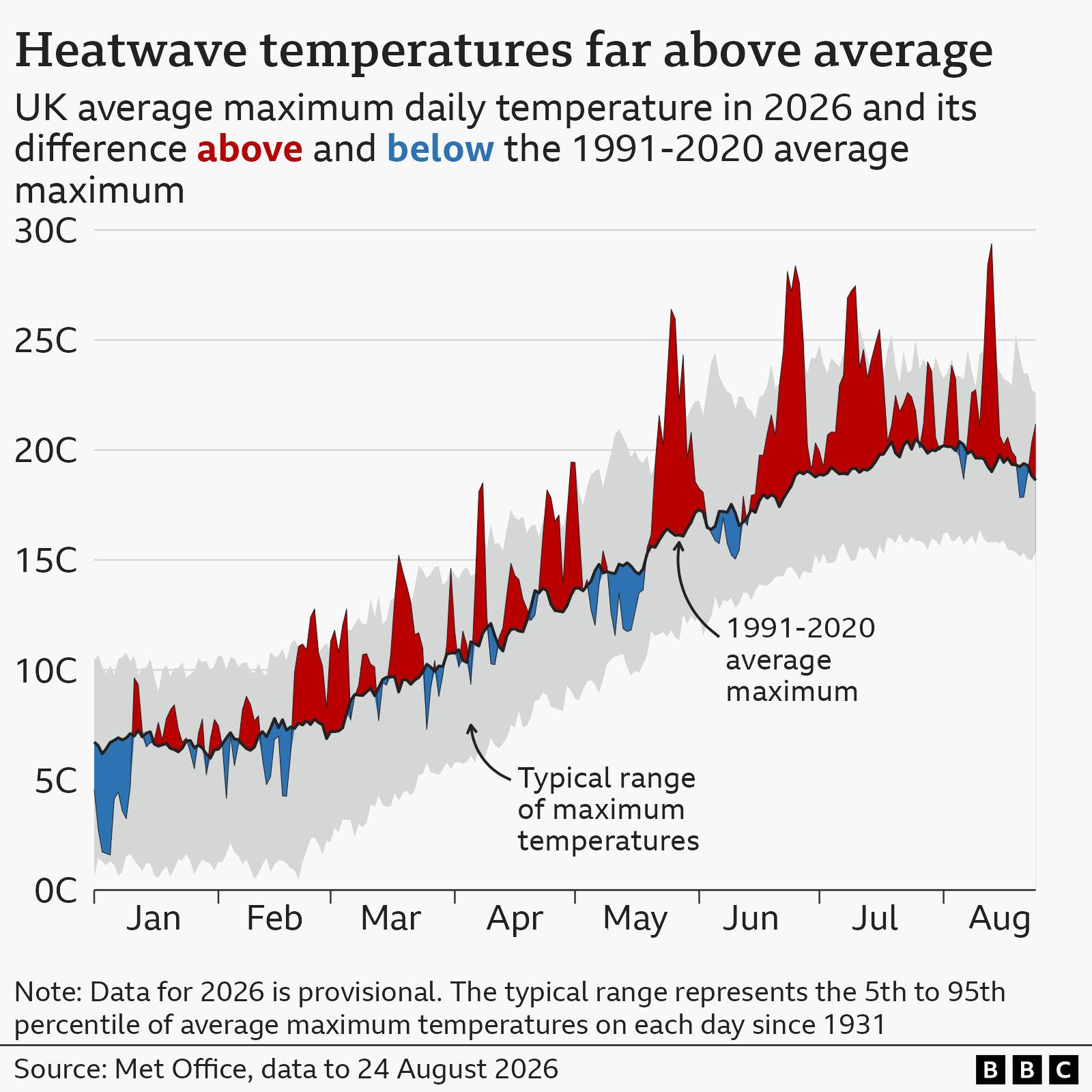 Image source, BBC / Met Office
-
A temperature of 30C or higher has been recorded on 40 separate days. The previous record was 34 days, set in 1995.
-
A temperature of 35C or higher has been recorded on 10 separate days. The previous record was five days, set in 1976 and matched in 2020.
-
A temperature of 35C or higher was recorded in four calendar months – May, June, July and August. The previous record was two calendar months.
-
A temperature of 37C or higher has been recorded on three separate days, which is a new record. 37C+ has only been recorded nine times in the UK – three of which have occurred this year.
There have been five widespread heatwaves, including one at the end of meteorological spring which broke the UK’s May temperature record by more than 2C.
Another in June broke the temperature record for that month too – with Lingwood, Norfolk reaching 38.0C on 26 June. The previous June high was 35.6C, in the historic summer of 1976.
July and August brought further heatwaves – including one that lasted for three weeks in some locations and another which delivered the highest temperature of the year.
The intense heat occurred partly because of how dry it was for much of the summer – with some areas seeing no measurable rainfall for more than two months, external.
Drought was declared in all of Wales and more than two-thirds of England and wildfires caused devastation in parts of the country.
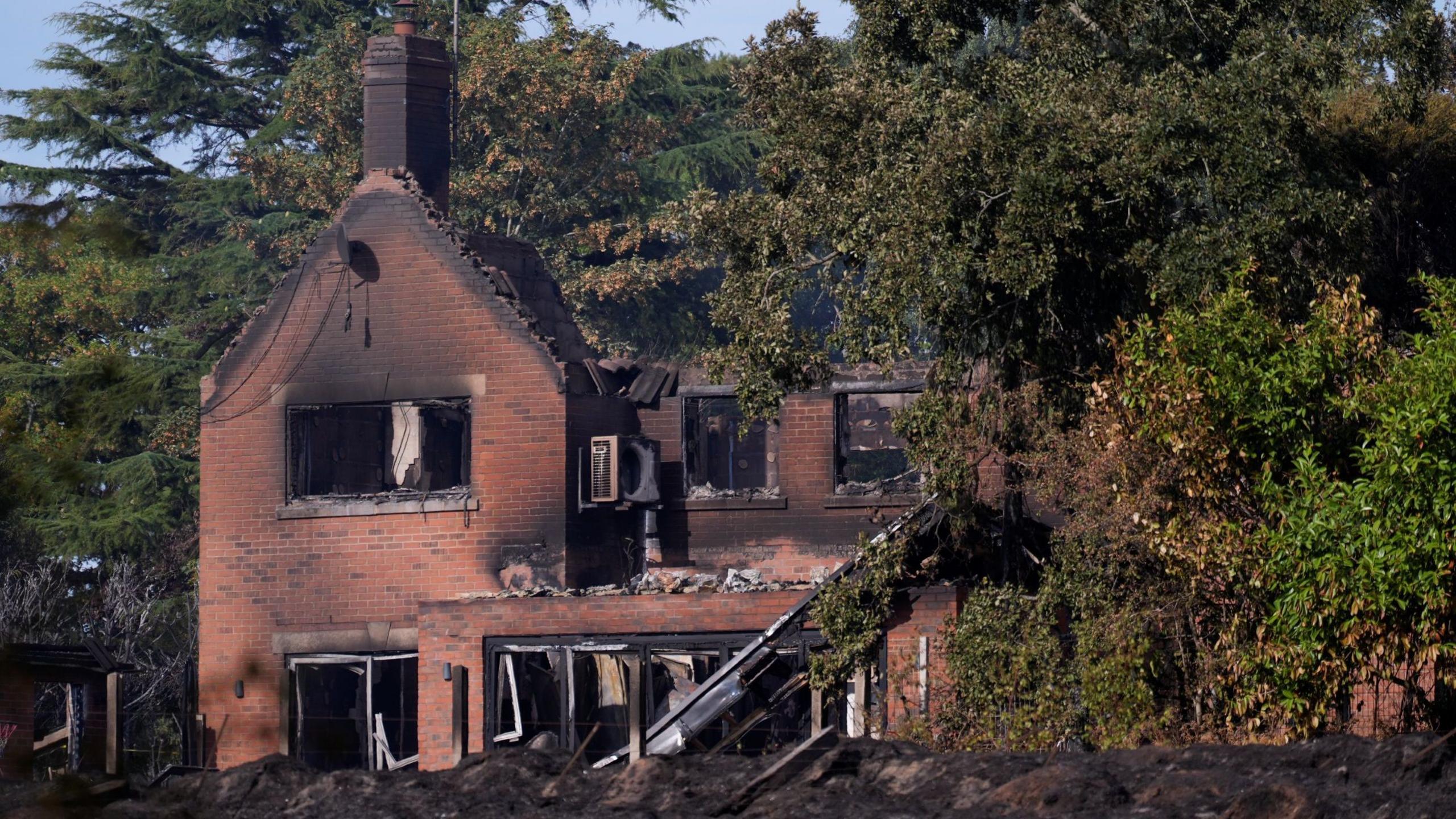 Image source, Peter Byrne/PA Wire
However, rain did fall in early June and wet weather returned in the second half of August, bringing some flash flooding.
Sheffield recorded over a month’s worth of rain in the week of 24-30 August – more than the city had seen across the rest of the season combined.
This summer is not expected to break any records for dryness across the UK as a whole.
UK weather is now happening in a warming climate
There is something striking about the way the UK’s summer temperature record is being broken.
In a climate that isn’t changing, new records should generally become progressively rarer, because every time a record falls, it raises the bar for the next one.
Think about a 100m race. Every time someone sets a new world record, the target becomes harder to beat. And records are typically broken by tiny margins. In June 1991, for example, Leroy Burrell ran 9.90 seconds, beating Carl Lewis’s 1988 world record of 9.92 seconds by just two hundredths of a second.
Now look at the UK temperature record. All five of the UK’s hottest summers on record have occurred since 2000, external. And until last year, the margins between them were tiny: the four hottest were separated by just five hundredths of a degree.
Then came 2025. The record jumped by 0.34C. Now, just a year later, it looks like that record has gone too.
“Record-shattering” sounds like the kind of language we journalists would use. In fact, it is a term climate scientists use for records broken by unusually large margins. Research suggests, external these big jumps become more likely if the climate is warming rapidly.
So why is this happening so quickly here? The UK sits on the western edge of Europe, the fastest-warming continent on Earth – warming at roughly twice the global rate.
There are a few reasons for that. Land heats up faster than the oceans, parts of Europe stretch into the rapidly warming Arctic, and changes in weather patterns have favoured more frequent and intense summer heatwaves.
Scientists are still working out exactly how much each factor contributes, but the result is clear: the background climate in which British weather happens is getting warmer.
None of this means the UK will break its summer record every year. Weather will always give us cooler summers as well as hotter ones. But the pattern is becoming unmistakable: records that once marked the extreme edge of the UK’s climate are being overtaken with remarkable speed.
So the question is not whether the UK will experience summers hotter than this one. It is how often they will come – and how much hotter they might be.
-
-
Published7 hours ago
-
-
-
Published21 August
-
-
-
Published21 August

-