
This post was originally published on this site.
Suspected crime boss Daniel Kinahan appears in court after extradition
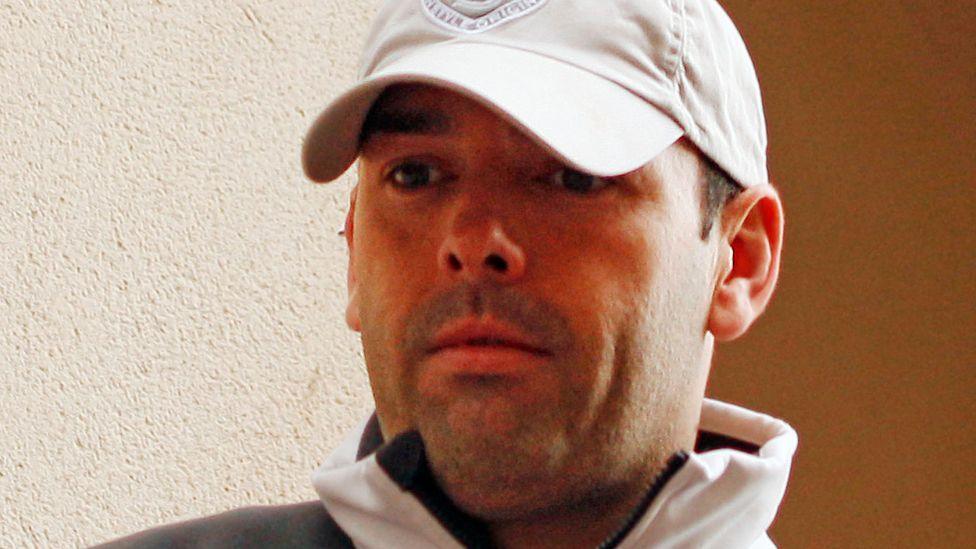 Image source, Solarpix
-
Published
Suspected crime boss Daniel Kinahan, one of the world’s most wanted men, has appeared before a Dublin court after being extradited from Dubai.
He has been charged with directing the activities of a criminal organisation between 18 October 2015 and 6 April 2017.
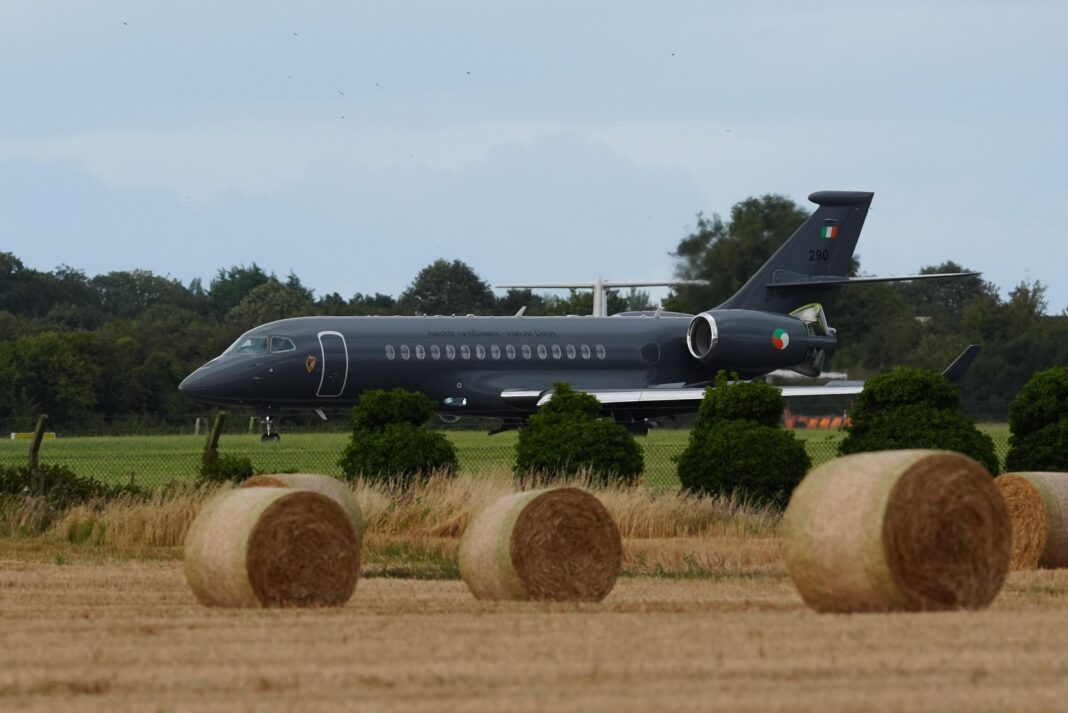
An Irish government jet carrying the 49-year-old landed in Dublin after 18:00 local time. He was arrested and charged upon his arrival.
Following a 13-minute non-jury hearing at the Special Criminal Court, he was remanded in custody until 5 October.
Kinahan was arrested in the United Arab Emirates (UAE) in April. He appealed the extradition order over the past few months but his attempts were unsuccessful.
The National Crime Agency (NCA) has previously said that the Kinahan cartel has been responsible for importing tonnes of drugs and firearms around the world and has also been linked to more than a dozen gangland murders.
Kinahan was not only wanted by the authorities in Ireland – the US Treasury Department once described the Kinahan cartel as one of the most dangerous in the world.
The US government imposed sanctions on Kinahan in April 2022 after identifying him and other member of his family as leaders of the Kinahan organised crime cartel.
He fought attempts to extradite him back to his native country, where the Kinahan cartel was involved in a long-running gangland feud that claimed 18 lives.
A large-scale security operation was in place ahead of Sunday’s hearing.
Ahead of the extradition, the Irish Prison Service bought a bulletproof and bombproof van which can be used to escort prisoners who are considered high-risk.
Garda Commissioner Justin Kelly said the arrest shows the force’s determination to “target transnational organised crime groups” alongside international policing partners such as Dubai police.
He added it shows the value of the force’s relationship with the authorities in the UAE, the Irish ministry of justice at judicial level, and “on a police-to-police basis”.
‘I won’t be getting bail’
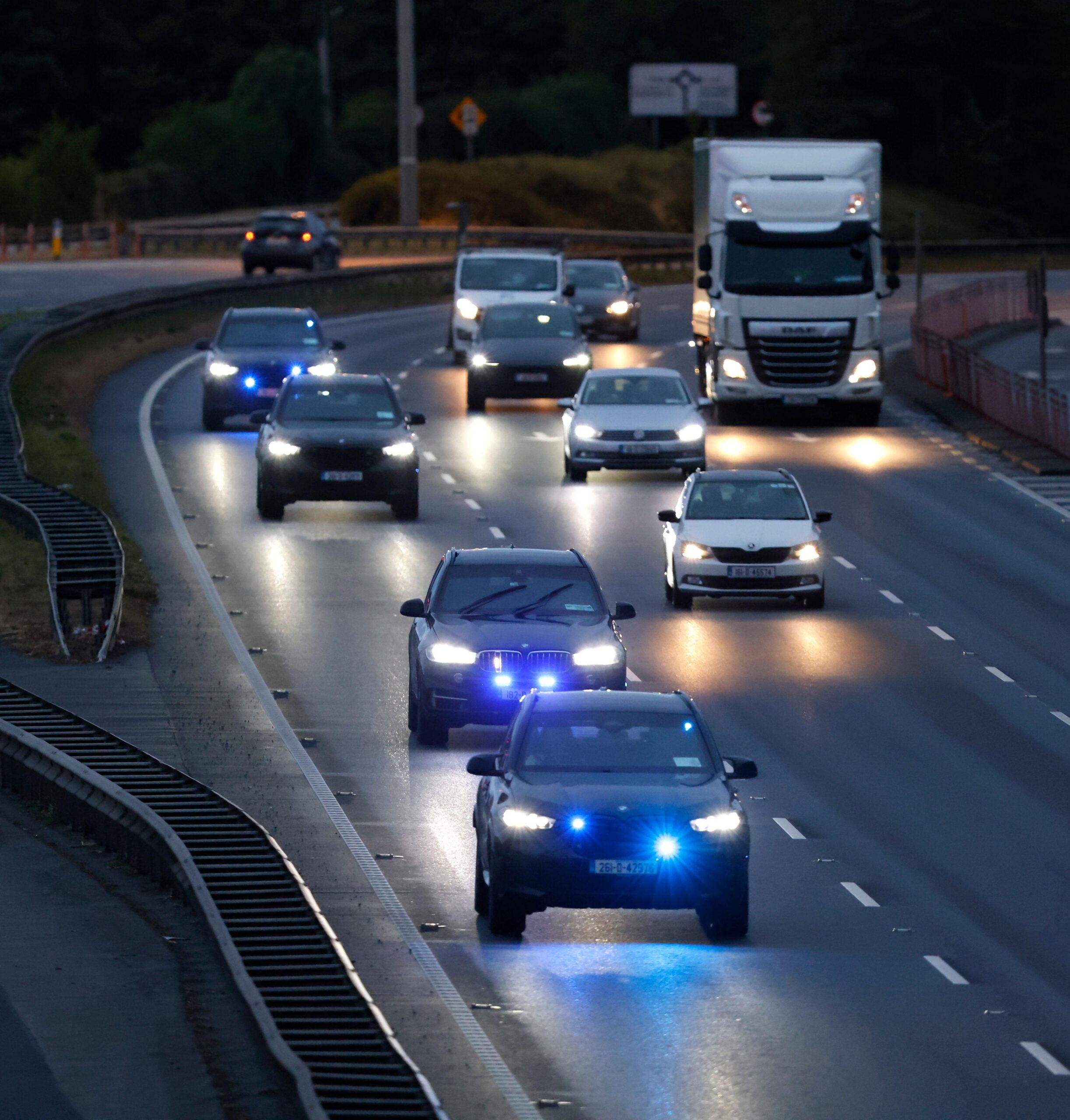 Image source, PA Media
Kinahan arrived at Baldonnell Casement Aerodrome on Sunday evening, where gardaí arrested and charged him.
He was directly transported under heavy police guard to the Criminal Courts of Justice in Dublin.
All the benches were full in a packed courtroom of journalists, a number of solicitors from the Director of Public Prosecutions (DPP), some members of the public and court clerks.
In court, Kinahan was sitting on a wooden bench and wearing a black hooded top.
He appeared before judges Patrick McGrath, Sarah Berkeley and Fiona Lydon, and rose to his feet when the three judges took their places.
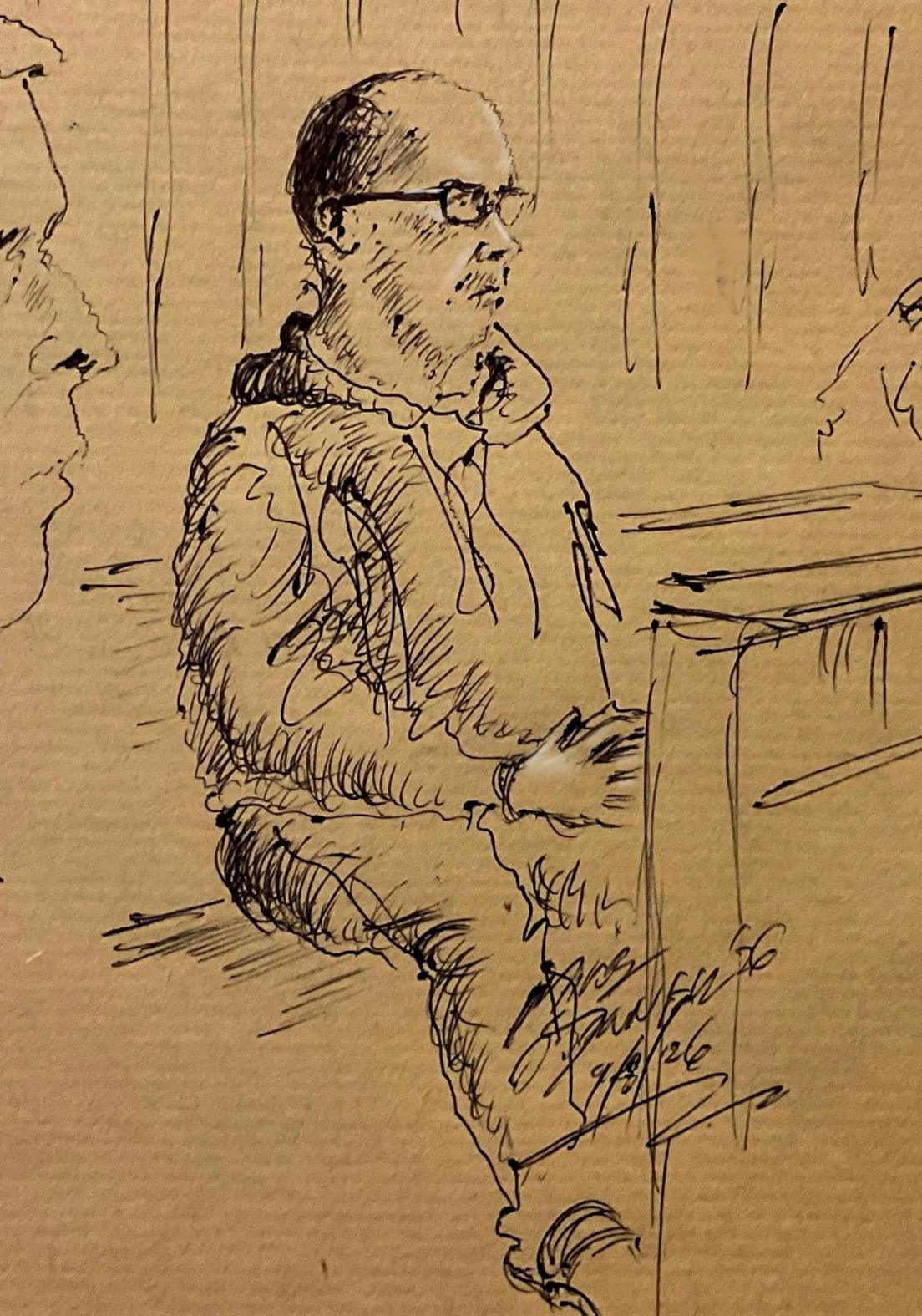 Image source, Mike O’Donnell
Kinahan did not have legal representation, and told the court that he did not have time to arrange this.
When Judge McGrath suggested that he should be charged today and legal representation arranged later on, Kinahan replied: “If I have time, yes.”
Det Sgt Colm Davison told the court he arrested Kinahan earlier that evening.
Judge McGrath asked Kinahan if he would like to appear at the next court sitting in person or via videolink.
Kinahan asked if he had to “decide now” and it was explained to him he could make a decision later and notify the governor in the prison.
Judge McGrath explained to Kinahan he could file an application for bail through the High Court.
Kinahan replied: “I think we all know I won’t be getting bail, but thank you for your time.”
‘Landmark of judicial cooperation’
The UAE and Ireland have an extradition treaty and on Sunday justice ministers from both jurisdictions issued a joint statement welcoming Kinahan’s extradition.
“The Irish national is regarded as one of the most high-profile individuals sought for prosecution in connection with transnational organised crime and is accused of directing an organised crime organisation,” it stated.
Irish Justice Minister Jim O’Callaghan described the extradition as a “landmark of judicial cooperation between the two countries”.
He also commended “the professionalism, efficiency, and diligence demonstrated by the UAE judicial authorities throughout the extradition proceedings”.
His UAE counterpart, Abdullah bin Sultan bin Awad Al Nuaimi, said it underscored “the steadfast commitment we have to supporting global efforts to combat transnational organised crime”.
The extradition agreement was previously used to extradite Sean McGovern, a “senior lieutenant” in the Kinahan organised crime group.
He was sentenced to 24 years in prison in June for directing the activities of a criminal organisation.
What is the Kinahan cartel?
According to former Garda Commissioner Drew Harris, the gang is estimated to have made more than €1bn (£857,870,000) globally from its activities.
The US Treasury Department has in the past compared the gang to crime organisations such as Italy’s Camorra, Mexico’s Los Zetas and Japan’s Yakuza.
A reward of up to $5m (£3.7m) has also been offered by the US for information on Daniel, his father Christopher Snr and brother Christopher Jnr.
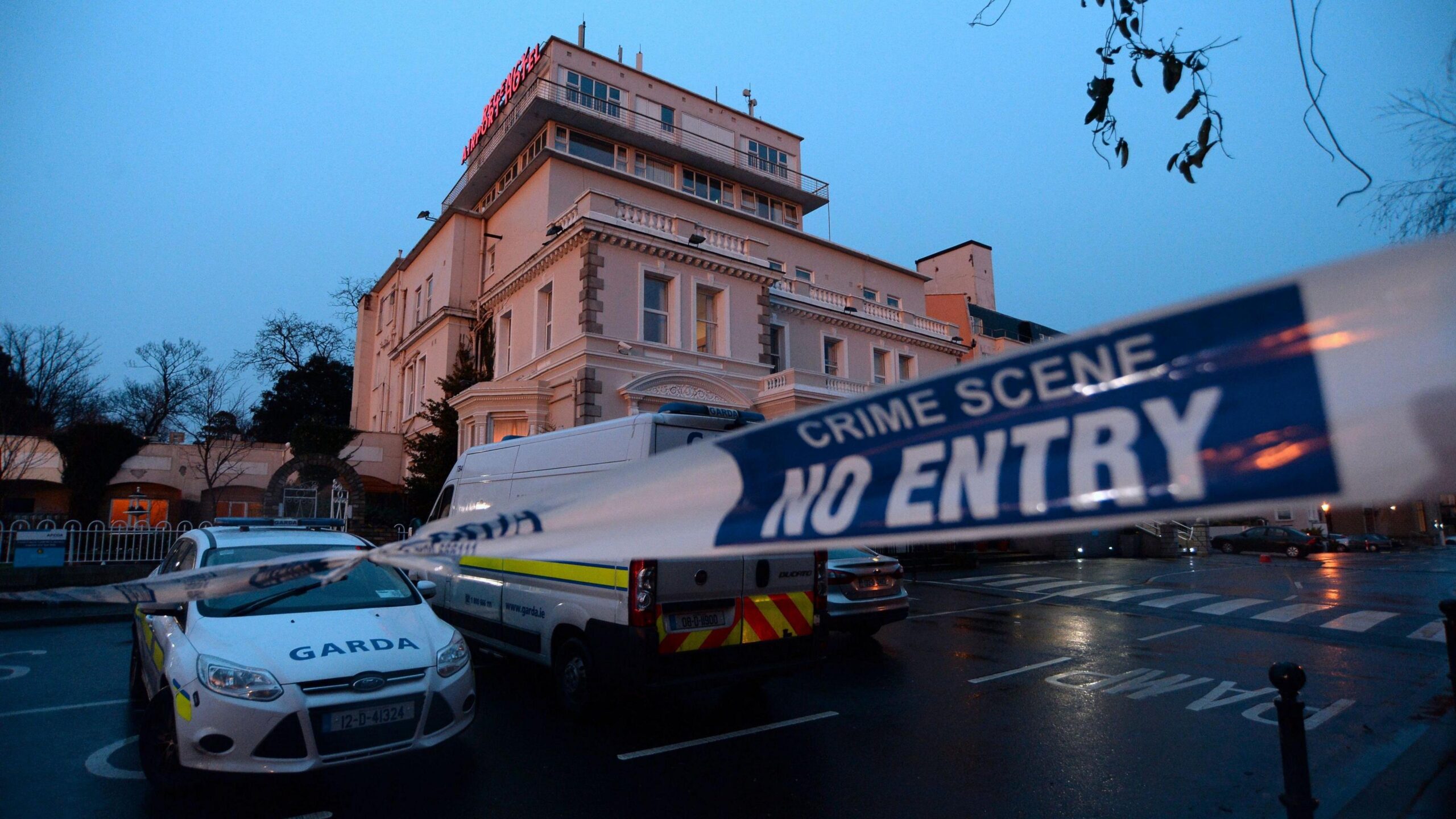 Image source, CAROLINE QUINN/GETTY IMAGES
In 2022, Thomas Kavanagh, who the NCA said ran the group’s criminal operations in the UK, was jailed for 21 years alongside Gary Vickery and Daniel Canning, who were sentenced to 20 years and 19 and a half years respectively.
The NCA said evidence showed they were responsible for cocaine imports estimated to be up to £23.4m, and cannabis imports worth about £6.4m.
Kinahan himself became a target for murder and escaped an attempt on his life during a fatal shooting at a Dublin hotel in 2016.
He left Ireland and spent time living in Spain and more recently in Dubai, where a warrant for his arrest was issued by the Irish courts in April.
Daniel Kinahan’s lawyer previously told BBC Panorama that he has no criminal record or convictions and allegations about him being a crime boss are false and have no evidential basis.