
Based in Oregon, she moved into trucking after working in warehouse operations, retail logistics support and dispatch assistance for a local transportation company, roles that gave her an early, practical understanding of how freight actually moves.
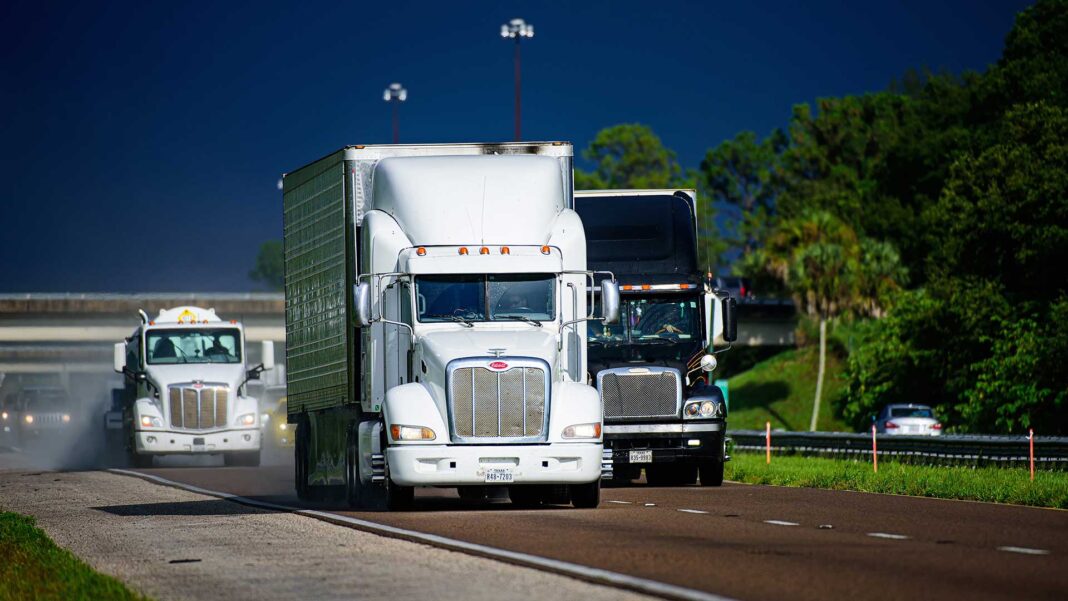
That background shaped the way she approached driving once she earned her Commercial Driver’s Licence. Rather than treating the job as a series of individual trips, Carlson has built her career around systems: route planning, communication with dispatch, and consistent on-time delivery across regional and long-haul freight throughout the western United States. She has carried construction materials, refrigerated goods, consumer products, agricultural shipments and industrial equipment, work that has taken her through mountain passes, coastal highways and busy urban freight corridors in most weather conditions the Pacific Northwest can produce.
Within the industry, Carlson is known less for any single achievement and more for consistency: thorough pre-trip inspections, dependable communication, and a reputation among dispatchers for being easy to work with under pressure. She has also taken on an informal mentoring role with newer drivers, particularly women entering the field, sharing what she has learned about building credibility through reliability rather than volume.
Carlson sees professional driving as a business relationship as much as a physical skill, one built on trust between driver, dispatcher and customer. She plans to remain in transportation for years to come, with an interest in eventually moving into formal driver training or safety education. In this interview, she talks about how she approaches the operational side of trucking, what has changed in the industry, and what she looks for in the drivers she mentors.
Interview With Suzanne Carlson
You worked in warehouse and dispatch roles before you started driving. How did that shape your approach once you got behind the wheel?
It gave me a different starting point than a lot of drivers have. I had already seen freight from the other side: how a delay in one truck ripples through a whole schedule, how dispatchers juggle competing demands, and how much a warehouse depends on a driver showing up when they said they would. So when I started driving, I didn’t just think about my own trip. I thought about what my timing meant for everyone downstream of me.
How do you think about the relationship between a driver and a dispatcher?
It’s a working partnership, and it only functions well if both sides can trust the other’s information. A dispatcher needs to know that when I say I’ll be somewhere at a certain time, that’s accurate, not optimistic. In return, I need to trust that the load details and timing I’m given are realistic. I’ve found that drivers who communicate clearly and early, even when the news is bad, tend to get treated as a priority when things go wrong.
What does a typical freight route look like for you in terms of planning?
I plan with more than the map in mind. Weather, time of day, known congestion points and the type of cargo all change how I approach a route. A load of refrigerated goods has different tolerances than construction materials, and that affects how much buffer I build into a schedule. Planning well means a load arrives on time without the final hours of the trip becoming a scramble.
You’ve driven in a wide range of conditions across the Pacific Northwest. How has that shaped your decision making?
Conditions here can change within the length of a single route. You can leave a coastal town in fog and be dealing with mountain snow a few hours later. What that has taught me is to treat a plan as a starting point, not a fixed commitment. The drivers I respect most are the ones who adjust early rather than waiting until conditions force their hand.
How has the industry changed since you started?
The tools available to drivers now give far better visibility into weather, traffic and vehicle diagnostics than when I began. That’s useful, but it hasn’t replaced judgement. Technology can tell you what’s happening on the road ahead. It still takes a driver to decide what to do with that information.
You’ve mentored newer drivers informally, including women entering the field. What do you focus on with them?
Mostly the habits that don’t show up on a licence: how to communicate with dispatch when something goes wrong, how to read a load sheet properly, how to manage fatigue over a long haul rather than pushing through it. Technical driving skill is only part of the job. The drivers who last are the ones who treat it as a career with its own standards, not just a series of shifts.
What do you see for yourself in the years ahead?
I want to stay involved in transportation, and I’m interested in moving further into training and safety education down the line. I think there’s a lot of value in taking what’s normally passed on informally, driver to driver, and making it available in a more structured way. For now, I’m still focused on the day-to-day work of driving well and running my routes like a business.