

Farmers around the world face a pressing problem: The equipment they use to till, plant, and harvest their fields is killing their margins. Studies have estimated that soil compaction can reduce yields by 20% to 60%.
Plowing can help, but it’s a laborious and expensive task that harms soil health in different ways. Muju Earth has developed an alternative, the Aeropod, that automatically aerates the soil without machinery or robotics. The startup says it can promote better soil health while cutting farmers’ tilling costs by half or more.
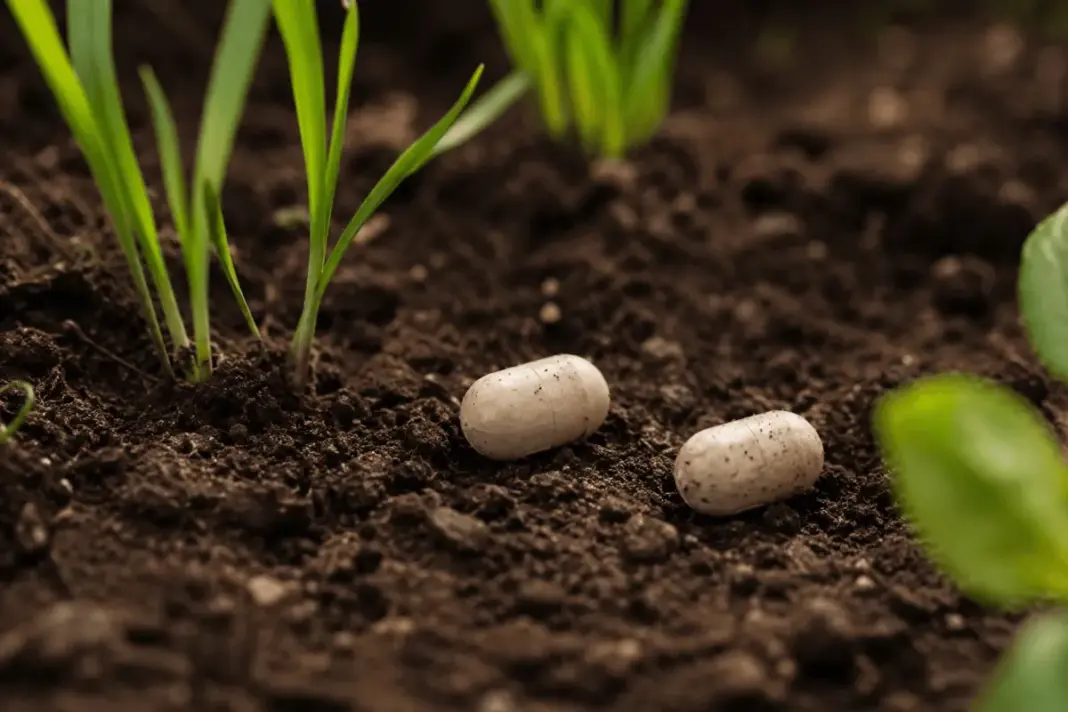
The device is “built like a seed, it sows like a seed, and it ships like a seed,” Ifeoluwa Afolayan, the company’s co-founder and CEO, told TechCrunch. The device is about the size of a fingernail, and farmers drop it in the soil alongside their seeds using the same equipment. There’s no need to till the soil in advance.
“It just really seems like a no-brainer,” Afolayan said.
After the Aeropod is exposed to a combination of temperature, pressure, and moisture, it bursts open, loosening the soil and creating small channels that let air, water, and roots move through it more easily.
[embedded content]
Muju Earth — one of the 200 startups in this year’s Startup Battlefield at TechCrunch Disrupt in San Francisco in October — has tested its devices in lab settings and is embarking on paid field trials this fall in the U.K. Nine farmers are participating, and the startup has more than 30 on a waitlist.
Its initial target market is onion growers in the U.K. since onions are particularly sensitive to soil compaction, Afolayan said.
Tilling a field once might cost around £250 to £400 per hectare when factoring in labor costs, diesel, and wear and tear on equipment, Afolayan said. The Aeropod should produce similar results at just £100 per hectare, Afolayan said.
The Aeropod was born during Afolayan’s and co-founder Wangyang Hu’s time at Imperial College London, where they sought to design a product that would improve farmers’ bottom lines while also aiding soil health. The Aeropod’s development was driven by a single question: “How do you make this as simple as sowing a seed?” Afolayan said. “That’s the most equitable practice across every farmer on the planet.”
In addition to farmers, the startup has also heard from companies developing biologic amendments — products added to soil, often containing living microbes, that boost or replace chemical fertilizers. Because those companies’ products work best in aerated soils, they’re interested in pairing with the Aeropod.
But Afolayan said that farmers have been leading adoption. Most of the marketing to date has been inbound. “The best thing about Aeropod is the farmers intuitively understand the proposition,” she said.
Muju Earth is one of 200 startups in this year’s Startup Battlefield, a pitch competition in which 20 finalists will present on the main stage at TechCrunch Disrupt, taking place October 13-15 at Moscone West in San Francisco.
When you purchase through links in our articles, we may earn a small commission. This doesn’t affect our editorial independence.