
This post was originally published on this site.
Phil McCannNorth West

Abandoned buildings have for decades been unlawfully and dangerously explored by those who have argued they are using their cameras to capture their unseen inner beauty before a wrecking ball arrives to destroy the history hidden inside.
People have been ‘urban exploring’ since the dawn of the internet, sharing stories and photos on messaging boards, before filming their ‘urbex’ adventures to post on sites like YouTube.
This first wave of enthusiasts saw and still see themselves as ‘urban historians’, albeit historians who are often trespassing.
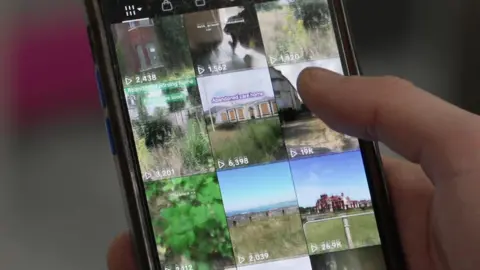
But they told the BBC that ‘urbex’ is being taken over by a new generation of explorers, who are much more likely to be children inspired by the popularity of the genre on TikTok to put themselves at risk in the hope of becoming influencers.
TikTok said its guidelines do not allow content that “shows or promotes dangerous activities” or which are “likely to be imitated and that could cause significant physical harm”.
A list of five videos posted to TikTok and shared with its press office by the BBC which depict urban explorers filming inside an abandoned asbestos factory in Greater Manchester remain on the platform.
One was filmed by a boy who confirmed to us that he was under 18.
The owners of the factory in Rochdale have warned trespassers risk disturbing asbestos fibres, which can cause cancer if even small amounts are breathed in.
The trend has also led police forces to appeal to parents to warn their children of the dangers of going into abandoned buildings.
Urbex is also popular, but to a lesser extent, on Instagram, whose owner Meta did not reply to the BBC’s request for a comment.
 TikTok
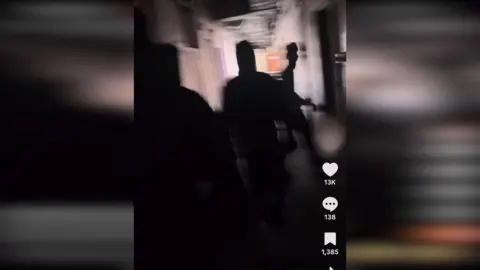
The BBC has been able to confirm that boys under the age of 18 are behind a number of accounts on TikTok which feature explorations of power stations, slaughterhouses, care homes, bunkers and even private houses across the North West.
Liam, who did not want to give his surname to protect his future job prospects, is now 18 but started filming himself exploring abandoned buildings in Merseyside when he was 12.
He told the BBC urbex’s popularity among under 18’s had “definitely grown even since I started it and that wasn’t that long ago”.
“With YouTube there was a lot more vlogs (video blogs) and very much older generation people taking you through the histories of the buildings with voice-overs, and now it’s just short little clips, a lot of them bad quality, clearly done by children just messing about.”
Abandoned factories, nightclubs, schools and hospitals all feature on his TikTok channel, where Liam makes clear he does not break in or cause damage to the places he documents.
 TikTok
‘Children messing about’
With 4,200 followers, Liam said his hobby has inspired him to study photography at college which he hopes to use to pursue a career in TV or film, but he acknowledges he is taking risks with his personal safety and the law.
He said the increased popularity of the genre on TikTok and Instagram had also fuelled younger trespassers who trash the buildings or even set fire to them rather than just filming them for social media.
Liam said urbex videos “shouldn’t be promoted” by TikTok’s algorithm, despite the effect such a move could have on his own follower numbers.
“I feel like children shouldn’t be doing it but I don’t think there’s much we can do to necessarily stop that other than landowners boarding up their buildings and keeping (them) safely secured.”
Trespass is often regarded as a civil rather than a criminal matter, and so can lead to court action from landlords, but there are circumstances when those trespassing can be prosecuted for committing criminal offences.
 Urbandoned
Academic Bradley Garrett from the University of Sydney has previously embedded himself with urban explorers in London and has written a number of books on the subject.
He agreed there had been a surge of teenage urban explorers and said many of them were putting themselves at unnecessary risk to “become influencers” and even to make money.
Garrett said most of the urban explorers he met a decade ago were in their 20s or 30s and had “a deep interest in either history or architecture”.
“For a lot of young kids it’s a moonshot for them.
“They think ‘If I can go out and get into these places and get amazing photos and garner a huge amount of likes I can become an influencer and build my own career'”.
“It’s all down to social media, it comes down to likes and it comes down to people wanting to get attention essentially”, he said, adding that many child explorers he has come across lack basic safety knowledge.

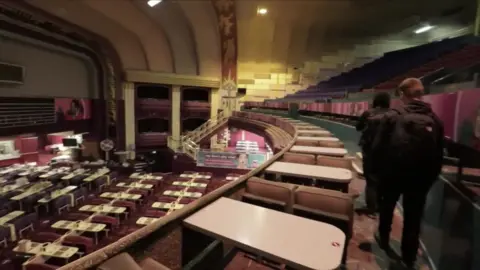
Urban exploring has taken Alex and Alistair across the UK and Europe into abandoned prisons, leisure centres and what they refer to as ‘asylums’ in longer videos on YouTube for the 146,000 subscribers to their ‘Urbandoned’ channel.
Both men, from Greater Manchester, are 24 but began urbex when they were 14.
They also never give their surnames, but say it’s renewed social media popularity has created new problems.
Alistair said there is now only a “really short window” to explore a site as there are now so many people visiting unexplored areas, posting on social media, and often leaving sites “trashed”.
Alex said younger people were attracted by the “short-form content” served up by TikTok and Instagram Reels.
“It’s possible we’ve inspired it, so we would like to say you really shouldn’t follow our footsteps unless you’re completely sure about what you’re doing and you take it really seriously”, Alistair said.
‘Privacy invasion’
Alex said he is also worried some younger enthusiasts were not respecting what he regards as urbex etiquette, especially when it comes to exploring abandoned houses.
“You 100% should not be going through someone’s personal property, especially if you are recording that and then posting that because that is a complete invasion of people’s privacy. These people are still human and still have families”, he said.
But the longer-form content filmed by Alex and Alistair and their contemporaries can be just as dangerous.
The duo said they had also explored an abandoned asbestos factory some years ago, Alistair said they wore “hazmat suits with complete protection of the skin and eyes”.
Ryan Swindells from Cheshire Fire and Rescue Service warned there was no safe way to explore an asbestos factory, and said the substance was in fact the biggest risk in exploring most abandoned buildings.
“If you’re walking anywhere near where the asbestos is and it’s been disturbed, it’s been broken, all the fibres will get into the air and it’ll go into your lungs and it latches onto your lungs.
“Once it’s in there it won’t come out ever.”

There are also more general risks associated with urbex, Swindells said.
“If you go there and you get hurt or you fall down somewhere, that means then a fire and rescue service is going to have to respond, meaning firefighters are going to put their lives at risk unnecessarily because we don’t have to be in there in the first place”.
A senior Merseyside police officer urged parents last year to “please talk to your children about the dangers of entering empty and derelict buildings”, after a spate of trespass incidents in Southport.
But despite repeated warnings, emergency services have not so far overcome what is driving many younger people to take risks with their safety and the law to urban explore.
“It’s driven by this desire to make money out of this – the more likes people can get the more they can possibly commodify the photography they’re getting in these places”, Garrett said.
Liam said that, for many of his contemporaries, the drive was a more basic instinct: “It felt like something I shouldn’t be doing, but just a bit of excitement.”